
One more week to go until we launch the Caftan Woman's Blogathon! If you haven't signed up, or haven't chosen a topic yet, you still have time!
See you next Friday, May 6th!
One more week to go until we launch the Caftan Woman's Blogathon! If you haven't signed up, or haven't chosen a topic yet, you still have time!
See you next Friday, May 6th!


“The Caftan Woman Blogathon – Honoring Patricia Nolan-Hall” will be hosted here at Another Old Movie Blog and by Patty at Lady Eve’s Reel Life on Friday, May 6th.
On March 7th, the classic film blogger world lost one of its greatest writers and champions of classic film, Patricia Nolan-Hall, also known as The Caftan Woman, the name of her delightful blog. You can visit her blog here.
Paddy was very supportive of other bloggers, and eagerly contributed to many blogathons, always graciously commenting on the posts of others. It seems fitting to celebrate her time with us with a special blogathon in her honor.
Here’s the banner above, designed by Patty Schneider, to place on your blog to advertise the blogathon. (The photo of Paddy is courtesy of her sister, Maureen Nolan, used by permission.)
The range of topics on which to write is wide open, since Paddy’s interest and knowledge of pop culture was quite broad. You might post on a movie or TV show she liked and wrote about, a genre you both loved, or about any topic she discussed on her blog (it wasn’t always about TV or movies), or about a comment she might have left on your own blog. You may post on any music, TV, or films from the silent film era through the 1960s, or spotlight stars or character actors from those decades. Share your memories, the laughs, and the inspiration of this witty and kindly woman.
You can name your topic by leaving a comment on this post. A blogathon page with all the entries will be posted here at Another Old Movie Blog and Lady Eve’s Reel Life on Friday, May 6th. When you publish your post, link back to that page and leave a comment with your link so we can update the roster.
Be sure to visit each other’s posts and comment. You know Paddy would.
***********************
Another Old Movie Blog -- The Case of Charlie Chan and The Caftan Woman.
Make Mine Film Noir -- Union Station (1950)
A Shroud of Thoughts -- Perry Mason episode "The Case of the Final Fade-Out"
Once Upon a Screen -- Remember Caftan Woman and her Words
Lady Eve's Reel Life -- Champagne for Caesar (1950)
Pale Writer -- Our Dancing Daughters (1928)
A Person in the Dark -- The Binding Ties Made of Film
Hometowns to Hollywood -- TBD
Laura's Miscellaneous Musings -- Has Anybody Seen My Gal? (1952)
Let Yourself Go...To Old Hollywood -- Ida Lupino, TBD
The Stop Button -- Ball of Fire (1941)
Vienna's Classic Hollywood -- Paul Lukas
By Rich Watson -- Saturday Night at the Movies


But Peter Gunn was not the usual glum, hard-drinking private eye who trusted neither dames nor the police, who were usually rivals. Gunn enjoyed a monogamous relationship with girlfriend Edie, played by Lola Albright. She was a singer at Mother’s bar and jazz club. Mother was played by Hope Emerson in the first season, and by Minerva Urecal the last two seasons.
Gunn didn’t have an office with his name on the door. Mother’s was his “office” where they took phone messages for him. Gunn was a connoisseur of “cool” jazz that was flying eastward from California in those days. Henry Mancini wrote the Peter Gunn theme, a tune so unrelentingly cool and forever identifiable with Peter.
There was jazz in each episode, and the start of the show usually featured a short ripple of thumping bass to glide us into the action, before a burst of trumpet flashed the title of the show across the screen.
Peter was not bitter, hardened like other TV or movie PI’s, but he was serious and questioning. But with that slight amused smirk whenever he spoke to suspects, criminals, stool pigeons or even Mother and Edie, he seemed to find life an enjoyable and entertaining puzzle that he watched like a fly on the wall.


There were others in Gunn’s orbit and his relationships with them show a lot about Craig Stevens’ deftness at playing the role, and at creator/producer/sometimes writer and director Blake Edwards’ intelligent creativity. Gunn always smoothly sat down when talking to informant Babby, played by Billy Barty. One suspects this was not just because Mr. Stevens was tall and Mr. Barty was a “little person,” but rather because the director knew that sitting to make himself less towering over the little man was part of Gunn’s empathetic character and not just for the convenience of a camera shot. Gunn never uttered "small” jokes, and if he smiled it was because Babby was a pool shark of no little bravado, who gave valuable information but expected to be well paid for it like the businessman he was.
Gunn was inevitably courtly to women, and indeed, treated “Mother” protectively, like his mother. For an ultra-cool guy who liked jazz, had an upscale apartment with tasteful works of art, Gunn was a square, and daring to be so may have been his coolest moments. He charged a high fee for his talents, but sometimes did pro bono work if his heart was touched. He was a conundrum, and that was the most special quality about him. You couldn’t figure him out, and you’d come back episode after episode to try to do just that.

In two years, Diahann Carroll would be the first Black actress to win Broadway’s Tony Award, and in eight more years, she would be the first female Black actress to star in her own television show in a non-stereotyped role: Julia (1968-1971), but it had been only four years since Nat King Cole’s TV show debuted and was canceled, and opportunities for Black actresses mostly involved domestics. It was no big deal having her on Peter Gunn; Pete took it for granted she belonged anywhere she wanted to be.


Pete visits a couple of his sources, one a kooky hack musician, and the other a glum bartender, and both know something but tell him very reluctantly because they want to do the right thing but don’t know what the right thing is. It’s a common malady in Pete’s world.
He is directed to visit a bar across the river. Pete lives in a town that is always nameless and through which runs a working port river that is always shrouded in fog and full of dead bodies. He pulls his flashy car up to the classy joint, and we see he is being followed. Pete’s always being followed.

She is followed by a tight combo; the horn has a mute. Pete, his superior knowledge of cool jazz, releases a slight, appreciative smile as he watches her. When he tries to speak to her after her number, she tells him she must change and to wait at the bar.
She never shows up. Pete pumps the dour manager, who reluctantly gives him the address of her apartment, because he wants to help but doesn’t know what’s the right thing to do.

She’s the down-and-out clarinetist’s wife. She faked her death. He’s just gotten out of prison, a jealous monster who wants to kill her. A shot rings out. Pete has been followed here. (But of course) and now the jealous husband knows where she is.


For more great posts on classic TV, visit the 8th Annual Favourite TV Show Blogathon at Terence Towles Canote's A Shroud of Thoughts blog here.
This one's for you, Paddy.
********************
Jacqueline T. Lynch is the author of Ann Blyth: Actress. Singer. Star. and Memories in Our Time - Hollywood Mirrors and Mimics the Twentieth Century. Her newspaper column on classic films, Silver Screen, Golden Memories is syndicated nationally. Her new book, a collection of posts from this blog - Hollywood Fights Fascism - is available here on Amazon.

Twitter photo - posted by Maureen Nolan
The classic film blogging community is mourning the loss of Patricia Nolan-Hall, known as Paddy, known as The Caftan Woman.
She was a lady of intelligence, keen humor, and enormous generosity. I’ve posted before on this wonderful person here and also here, and her kind and insightful comments to my posts are peppered throughout this blog, but to really appreciate her knowledge of classic film and television, you need to read her blog here.
My deepest condolences to her family and friends, most especially to her beloved children and husband whom she shared with us; but also, to the classic film bloggers who loved her, and for whom as well this is a heartbreaking loss.

It would be fitting to hold an annual blogathon in her name, since she participated in so many and was such a faithful and supportive commenter on other’s blog posts.
I loved her, and one of my wishes in life was to one day meet her in person. I will think of her all my days and with every old movie I sit down to watch, wondering what she might have thought of it. We are lucky that she left a written record of so many. It is a testament to her noble spirit that so many in our classic film blogging community who never met her will miss her so much. I hope that tribute of their love and respect for her might be of some small comfort to her family.
May angels guide her to her rightful place in heaven, now that her valiant struggle is over. She was, as her father might say, “a dandy.”
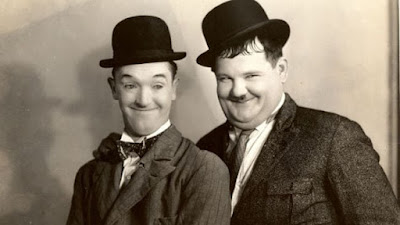
I've mentioned before on this blog that I never was really "introduced" to classic films as a child; there were just on TV, used as filler the way infomercials are now. They were not curated, they were cut up with commercials, and they were on pretty much anytime -- at least until sign-off when TV went dark in the wee hours. It was easy to become very familiar with classic films when I was young because they were easily accessible, and they were a daily part of free TV.
Of course, in the 1960s, the 1940s were only "20 years ago," so the images we saw did not seem nearly as remote in the mists of time as they perhaps might today to a young person.
However, despite this world of old movies being easily navigable on a do-it-yourself basis, there were a few TV hosts out there who presented old movies, and Hal Stanton's beat was "The Wonderful World of Laurel and Hardy." He hosted this show on Sunday afternoons from 1965 to 1968 on WWLP, Channel 22 in Springfield, Massachusetts.
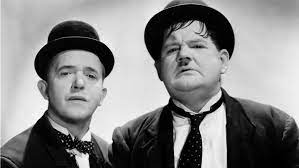
Hal Stanton lived his enjoyment of Laurel and Hardy. He was Grand Sheik of the Night Owls "tent" of the international brotherhood of The Sons of the Desert. He had joined in 1965, just about when his program started, and he founded the Night Owls branch of western Massachusetts.
Born in Pennsylvania, he later settled in western Mass., worked for a number of movie theaters, eventually retiring as an executive after a long career with Bay State Film Productions. He was 86 when he passed in 1998. Mr. Stanton actually corresponded with Stan Laurel for a couple years in the early 1960s and even spoke with him once by phone, which he recorded and played on his show.
There are, as I understand it, some 150 "tents" of The Sons of the Desert worldwide, and they gather to have a dinner and watch Laurel and Hardy films, with hearty toasts, and fez hats, and blazers with the club escutcheon, parodying the fraternal groups that Laurel and Hardy lampooned in The Sons of the Desert (1933).
Mr. Stanton was also a Shriner and a Mason, so perhaps he embraced the silliness of The Sons of the Desert with the aplomb of one who knows how fraternal organizations should be conducted. Of course, The Sons of the Desert was not a service organization like the Shriners or the Masons, but it did do a kindness to two little kids watching solemnly on Sunday afternoons, as Stan Laurel and Oliver Hardy tried their best, once again, to get out of another scrape.
********************
Jacqueline T. Lynch is the author of Ann Blyth: Actress. Singer. Star. and Memories in Our Time - Hollywood Mirrors and Mimics the Twentieth Century. Her newspaper column on classic films, Silver Screen, Golden Memories is syndicated nationally. Her new book, a collection of posts from this blog - Hollywood Fights Fascism - is available here on Amazon.
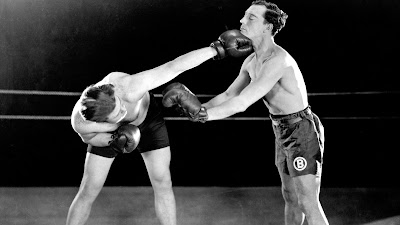
Some of the movies from 1926 that are now in public domain include:
Battling Butler with Buster Keaton
The Son of the Sheik with Rudolph Valentino
Don Juan with John Barrymore, Mary Astor, and Warner Oland
3 Bad Men – which we covered here in this previous post.
Beau Geste with Ronald Colman
La Bohème by King Vidor with Lillian Gish
Flesh and the Devil – John Gilbert and Greta Garbo
The General with Buster Keaton – which we covered here in this previous post.
Here are previous posts on Public Domain Day 2020 and 2021.
********************
Jacqueline T. Lynch is the author of Ann Blyth: Actress. Singer. Star. and Memories in Our Time - Hollywood Mirrors and Mimics the Twentieth Century. Her newspaper column on classic films, Silver Screen, Golden Memories is syndicated nationally. Her new book, a collection of posts from this blog - Hollywood Fights Fascism - is available here on Amazon.
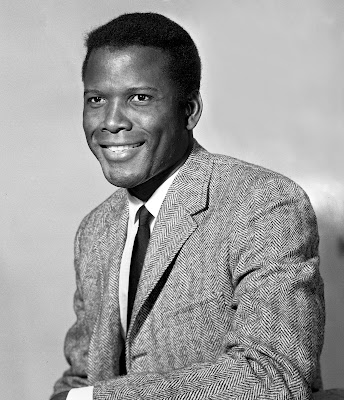
He was driven and he was talented, and he was truly great in that he aspired to and achieved greatness. He can be admired for many achievements in his life, but what I will miss most about him is that he was a man of his era. I will miss the movies of deep social comment that don't seem to be made anymore, and I will miss an era of elegance and glamor at the Oscars that has long since faded away under the auspices of a cruder generation that doesn't seem to know how to behave in such a venue, or indeed, in public.
I'm glad Sir Sidney came to us when he did, and was not struggling to launch his career in films in say, the 1930s when the kinds of films which he made in the 1950s and 1960s were not being made. He was a man of his time, thankfully, and we are the better for that.

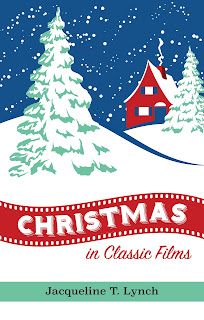
And to reveal the cover of my upcoming book, Christmas in Classic Films. It's a collection of essays from this blog and some new material, and though I had intended it to come out this month, some other things got in the way and so I'll be offering it as a pre-order on Amazon probably sometime in the spring, with publication at the end of next summer at several online shops. I'll keep you posted.
The design is by your friend and mine, Casey Koester, whom you might know from her excellent Noir Girl blog, which I encourage you to visit.
Thank you all for the pleasure of your company this year. See you in 2022!

This
is the final film in our series on holiday movies. I’ll link to the other movies we discussed
below. This series was meant to lead up
to the release of my newest book—a collection of essays on Christmas classic
films, but life, as the saying goes, got in the way. That book will have to wait a little longer,
and I’ll discuss that more next week.

It
is a look at the travails of Christmas through the eyes of a child, yet it is
narrated by the adult the child has become and we also see the parents’ and other
grown-ups’ view of things. There is no
linear story, but the movie is told in splintered vignettes woven together as
Christmas draws ever closer, with the anticipation of marking off the calendar.
Directed
by Bob Clark (who also has a short role as “Swede,” the guy to whom Ralphie’s
father brags about his Major Award), the movie was co-written by humorist Jean
Shepherd (who also appears briefly in line waiting for Santa) from his series
of semi-autobiographical stories.

Darren
McGavin is his father, or “the Old Man.”
I love him in this role. He is
the perfect curmudgeon with the soft heart who eventually grants the boy’s
wish. His thrill at watching his son
open the box is priceless. His
grumpiness is true to life and hysterical.
My favorite line of his: “You used up all the glue on purpose!” He reminds me of my own father.


It’s hard to say if the blueprint of this movie—script, casting, storyboard, cinematography—is a masterwork of brilliance in the planning or if the sum total of the movie’s parts were just a happy accident. There is a feel of serendipity about the film and where it takes us.

The Orphan Annie decoder was a particular topic of discussion in my family, as my mother, who as a child in the 1930s—and a huge Orphan Annie fan (I learned the theme song at her knee as a young kid…”Who’s the little chatterbox, the one with pretty auburn locks? Whom do you see, it’s Little Orphan Annie….”)—and who could not afford to send for the decoder to get Annie’s secret messages, cleverly figured out the cipher key herself on paper. She would not affirm that each message was about Ovaltine, the sponsor, but agreed the commercialism was pretty heavy-handed.
“Fragile—must be Italian,” and not sticking your tongue to cold metal are scenes so indelible this must be the one film where the plot—even though there is one—seems unnecessary at times.

About the only aspect of Christmas missing from the movie that many of us would identify with is the religious themes and overtones, which we catch only a glimpse of at the beginning of the film with the church choir singing on the street corner. Missing are the mysteries of the Nativity, which most kids comically mix up and about which they come to very strange conclusions. I have always personally enjoyed the kids’ reenactment at church of the First Christmas with unruly shepherds, sheep that won’t stand still, and angels that shove Wise Men when they step on their line. The theatricality of Christmas could be another movie, but it’s not something Ralphie has to endure. He has enough on his plate.

There is a poignant note of sadness in that. Never to have topped the Christmas when you were eight years old?
Perhaps that is because as children, all our experiences, big and small, happy and sad, hit us so acutely. It is not just believing in Santa or in wishes that come true, but rather that we live the season so passionately, down to our bones.
We look for messages in Christmas films, if only because most of them, at least the modern Hallmark versions, bludgeon us with them. If A Christmas Story has any message for us, it is just to take the holiday season for what it is, make the best of it, and keep your sense of humor. And if there are any good memories, keep them. Treasure them. Stretch them in the retelling. They will sustain us long after the much-desired presents of childhood have been broken and thrown out.

I wish you all a very Merry Christmas.
The films in this series were:
Cover Up (1949)
The Lemon Drop Kid (1951)
Fitzwilly (1967)
It Happened on 5th Avenue (1947)
Big Business (1929)
Beyond Tomorrow (1940)
Jacqueline T. Lynch is the author of Ann Blyth: Actress. Singer. Star. and Memories in Our Time - Hollywood Mirrors and Mimics the Twentieth Century. Her newspaper column on classic films, Silver Screen, Golden Memories is syndicated nationally. Her new book, a collection of posts from this blog - Hollywood Fights Fascism - is available here on Amazon.


