IMPRISON TRAITOR, PEDOPHILE, AND CONVICTED FELON TRUMP.
Showing posts with label The Shop Around the Corner. Show all posts

Sunday, December 24, 2023

Merry Christmas!

 A very Merry Christmas for those who celebrate!


Recently, I was interviewed by Gregory Wakeman for the BBC website on The Shop Around the Corner (1940)  which we previously discussed here.  Have a look at the article at this link.


*******************


Get your copy of CHRISTMAS IN CLASSIC FILMS here at Amazon in print or eBook...

...and here at Barnes & Noble, Apple, Kobo, and a variety of other online stores.

  ************

Jacqueline T. Lynch is the author of Ann Blyth: Actress. Singer. Star. and Movies in Our Time - Hollywood Mirrors and Mimics the Twentieth Century and Hollywood Fights Fascism and Christmas in Classic Films. TO JOIN HER READERS' GROUP - follow this link for a free book as a thank-you for joining.


Thursday, December 23, 2010

"Holiday Affair" - 1949

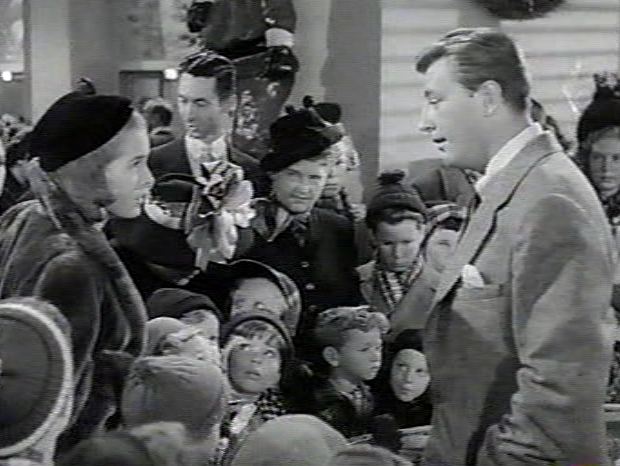
“Holiday Affair” (1949) could almost be an extension of the “war stories” series we did a couple weeks ago, with its examination of a war widow still fighting the good fight on the home front. The trouble is, the war’s over and she cannot make herself move on.

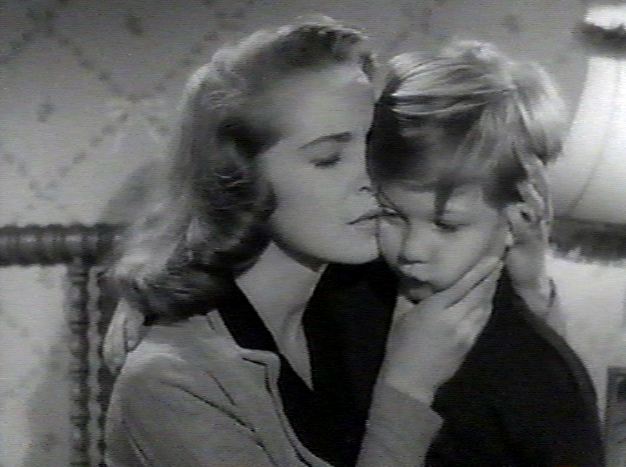
Janet Leigh plays the single mother of little Timmy, played with all-American boy golly gosh sweetness by young Gordon Gebert. Master Gebert has a cute line when, given a present he especially wanted, replies, “I’m so happy if I was a dog, my tail would be wagging.” It’s something a six-year would say.

A war widow, Janet Leigh still keeps the lamp in the window by subconsciously, and sometimes consciously, raising her boy to be a replacement for his father, and by not allowing a new husband and father a place in her heart.

Not that Wendell Corey isn’t trying. He plays her attorney beau, a steady, nice guy with an easy, intelligent manner who waits patiently for her to accept his marriage proposal, washes the dishes with her, and meanwhile works hard at being Timmy’s pal. Timmy is ambivalent, for his mother is raising him to be, like her, self sufficient and needing nobody but each other.

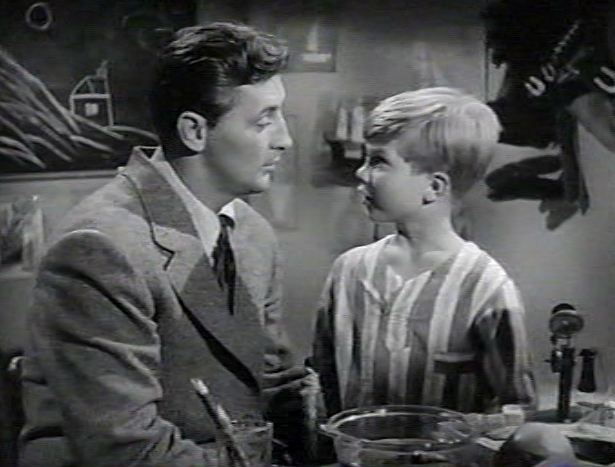
Enter Robert Mitchum, just as good at being a charming sweetie as he is being a sadistic scary guy. Who’d have thought? He and Miss Leigh cross paths in a department store, and continue to cross paths throughout the movie in situations both coincidental and contrived. He wins Timmy over first with his playfulness and man-to-man camaraderie, but Janet Leigh is more resilient. He has to hammer home some painful truths to her before she allows the war to be finally over.

I like the scene where Mitchum and Corey ruminate on how it doesn’t seem to snow as much as when they were kids, and how Corey muses it might have something to do with the atom bomb.

As we mentioned in our last post on “The Shop Around the Corner”, we’re looking at a commercial Christmas in these posts. What had been a cozy and quaint 1930s gift shop on a snowy Budapest side street in that movie becomes a bustling downtown post-war department store here. The kind of scene for which many old movie buffs are, in these days of mega malls and online shopping, nostalgic for, despite how the inconvenient dressing up and taking a cab downtown would seem today.

We love this old stuff, but I wonder if we have the guts and stamina, and patience for it?

Particularly clever is the use of electric trains, the iconic Holy Grail of Christmas presents, and also a foreshadowing of a cross-country train trip Mr. Mitchum intends to take to start his life over.

When the opening credits roll, we are shown a train barreling by, and as the camera pans back from the countryside, we see that it is nothing more than a toy electric train setup in a store toy department. Robert Mitchum takes center stage, part Pied Piper and part pitchman, as he demonstrates the marvelous toy trains to the rapt audience of kids. He is a salesman here, a hero to his young customers, a bane to the suspicious floorwalker who keeps an eye on him.

Janet Leigh buys a train, but not for her little boy who would kill for one. She is a comparison shopper incognito, a kind of commercial spy who investigates prices, quality of merchandise, buys trains and then returns them. Mr. Mitchum is on to her, but when he fails to report her to the manager, his floorwalker nemesis turns him in, and he’s fired. Out of job at Christmas.

His dream is to travel to California and work at a boat building business, but he needs the dough to get there. Still, he buys Timmy the train he won’t otherwise get for Christmas, and puts himself next in line behind Wendell Corey for Janet Leigh’s hand in marriage. If she can just realize the fact that she’s free to marry.

A couple of good scenes are the Christmas dinner with Janet Leigh’s in-laws, a kindly elderly couple, played by Esther Dale and Griff Barnett, doting on the grandson who reminds them so much of their deceased son. Wendell Corey and Robert Mitchum also have seats at the table, and for a while it’s very pleasant how these grownups behave so grown up, suppressing their own angst and desires for the sake of Christmas.


They give toasts, and when it’s Mr. Mitchum’s turn, he frankly states his case, in lawyer-like fashion, to the lady and her lawyer that he wants to marry her. Rarely has a personal confrontation come off as so classy.

It’s also a punch in the gut for Wendell Corey to have to sit through it, for Janet Leigh who fears it, and for her in-laws, who gamely suffer the logical discussion of who is better to be their grandson’s next father, a replacement for their son.

Another good scene is when Mitchum calmly blasts her between the eyes with self knowledge at its most uncomfortable, of what she is doing to herself and her son by not letting go of her widowhood.


Likewise when Wendell Corey breaks off with her, acknowledging to her what he has known for some time, she just doesn’t love him. It’s killing him, but he faces it stoically. Neither men try to beat each other’s time; they just want the facts which Janet Leigh is too frightened, or guilty to face.

Just before the end credits roll, we see a real train trip and watch Robert Mitchum take off on his new life adventure, but not alone. Just as at the beginning, the camera pulls back and the train cleverly becomes a toy again on a new train setup with tiny palm trees of his California destination. It’s like “Holiday Affair Meets Gumby.”

By the way, this film was released on Christmas Eve, 1949. In this previous post, we covered how most Christmas-themed movies were not released during the holiday at all.

Thanks for shopping with me this week. And for carrying the packages. You can put them down, now. For those who celebrate Christmas, I wish you a peaceful and pleasant holiday.

For all readers of this blog, I have a gift (should you choose to accept it, as they used to say on “Mission Impossible”). For today only you can order my novel “Meet Me in Nuthatch” FREE from Smashwords. This is an ebook, which can be downloaded to any ebook reader in different formats, and can also be downloaded to your computer and read on your computer without needing any Kindle or Nook or other ereader. When you go through the checkout, put in this coupon code: JQ29S -- and your book will be free.

Merry Christmas.

Monday, December 20, 2010

The Shop Around the Corner - 1940

The Shop Around the Corner (1940) nostalgically shows us the finely delineated everyday moments that are more trying, require more patience and courage, give more delight and a bigger emotional rush than even the most hectic modern countdown to Christmas. Reportedly director Ernst Lubitsch’s favorite film, it is no one wonder, for there is so much of his personally constructed Gemütlichkeit. It begins with the lilting, breezy dance orchestra music we hear at the opening and closing credits.

We’re going shopping this week with a look at the commercial aspect (though incidental) of Christmas as seen through this film, and on Thursday, with Holiday Affair (1949) here.

There are so many charming aspects to The Shop Around the Corner, most especially that the minor character actors play major roles, including many beautiful solo moments that complement the major stars here: Margaret Sullavan and James Stewart.

You’ll remember Felix Bressart from a slew of films, even if you don’t know his name. Here he is the elder shop clerk who assiduously avoids the blustering boss with whom he knows he can’t win, and seems to bring the warmth of his simple home where he is “Papa” to his wife and children, into the gift shop where he and his fellow employees have a kind of second home. We last saw him in this post on Portrait of Jennie (1949) where he played the befuddled movie projector operator.

You’ll remember Sara Haden as Aunt Milly from a long parade of Andy Hardy movies. She is the old maid secretary here instead of the old maid aunt. Charles Halton is the detective, also seen in dozens of movies in minor roles, probably you’ll recall him as the bank examiner in It’s a Wonderful Life (1946).

William Tracy is a standout as the clownish, clever delivery boy, likable and conniving, who eventually gets a promotion and lords it over the new delivery boy.

The new boy is played by a young Charles Smith, who could tear our hearts out with his gentle innocence and hopefulness.

Josef Schildkraut, who won the Best Supporting Oscar for The Life of Emile Zola (1937), continues to prove his versatility as the two-faced sales clerk always trying to stab his fellow employees in the back (we’ve all known them).

There is Frank Morgan, just off The Wizard of Oz (1939), who skillfully trades his customary comic confusion for a more dramatic role as the fussy boss, Mr. Matuschek, whose personal anxieties and ultimate near-tragedy affect his entire staff.

All these players make the movie seem like an ensemble piece, where the last shall be first. Still, there is a major plot line for the two stars apart from the goings on in the store.

Especially good in his role is James Stewart, the head sales clerk, a man who must be a buffer between the mercurial whims of the boss, and the helpless junior staff. Mr. Stewart has the ability to play that kind of young man who, while being street-wise and knowing the odds of life are stacked against him, manages to balance his wry pragmatism with a brave idealism that buoys him. He walks a fine line in his relationship with his boss, and with his secret love, a woman he knows only by her letters. We saw recently with Love Letters how much can be won, and lost, in precious correspondence and the allure of a well-turned phrase.


Margaret Sullavan plays the newest member of the staff, who cleverly and with chutzpah manages to charm a disinterested lady customer into buying unmovable merchandise, thereby getting herself a job and starting her role as a thorn in the side of James Stewart. They are combative throughout the film, but each has a secret. Eventually, we come to understand that the anonymous pen pal letters they write to prospective sweethearts are actually written to each other.

The story has been remade in several incarnations, including the post here on In the Good Old Summertime (1944). But this version has a charm all its own, and I think a good part of it is Lubitsch’s setting the story in Budapest during the Depression. I love the signs all written in Magyar, including our many peeks at the currency tabs on the cash register.


Miss Sullavan, with her Dresden doll features and her precise stage speech with her throaty voice seems to carry the illusion of Europe, as does, ironically, James Stewart. We may see him usually as his “Mr. Smith” icon, the all-American idealist. But there was also something, as mentioned above, of a practical, doubting, soberness to James Stewart’s portrayals, as if he is someone who was fooled once and is determined not to be taken in again. His gentlemanly reserve fits well here in this middle European gift shop.

I love Felix Bressart’s low bows when shaking hands. The Americans and the Europeans in the cast seem to blend well together, without parody.

Made in 1940, while World War II stripped away the independence and the lives of many, many Europeans, we may well guess that this is Mr. Lubitsch’s tribute, and perhaps farewell, to a more peaceful era in Europe. Hitler may have been well forming his plans in the 1930s, but there is still in this movie something decidedly nostalgic, something Habsburgian about this setting. It might be the cigarette boxes that play “Ochi Tchornya” (Dark Eyes), or the courtly shrug of the shoulders attitude that one must make the best of things in this troubled world.

The commercial aspect of Christmas here is gently expressed. Certainly, Frank Morgan exhorts, and bullies, his employees into gearing up for the hoped-for Christmas rush. Christmas Eve, a light snow without sleet or the slightest breeze falls on the shoulders of the shoulder-to-shoulder crowd in the street, teased by decorated window displays. Mr. Morgan’s gift shop does the best business since 1928, the last Christmas before the Wall Street crash.

I like James Stewart’s line to Felix Bressart when they discuss the excitement of getting a bonus, the anticipation of opening the pay envelope and wondering how much. “As long as the envelope’s closed, you’re a millionaire.”

We sense the boss is made the happiest when, after inquiring after the Christmas Eve plans of his employees, who all have somewhere to go, his newest staff member, young Rudy, is all alone this night. Boss, alone himself, joyfully invites delivery boy to a first-rate restaurant feast as Mr. Morgan learns the true spirit of Christmas, not from ghosts, but by his own errors, his near-tragedy, and his gratitude that life does go on in spite of how much of a mess we make of it sometimes.

If you’ve not seen The Shop Around the Corner, TCM is showing it tonight.

Come back Thursday for Robert Mitchum and Janet Leigh in a much larger department store setting in Holiday Affair here.


*********

Jacqueline T. Lynch is the author of Ann Blyth: Actress. Singer. Star. and Memories in Our Time - Hollywood Mirrors and Mimics the Twentieth Century. Her newspaper column on classic films, Silver Screen, Golden Memories is syndicated nationally.

Related Products