IMPRISON TRAITOR, PEDOPHILE, AND CONVICTED FELON TRUMP.
Showing posts with label film noir. Show all posts

Thursday, November 14, 2024

Possessed - 1947


Possessed
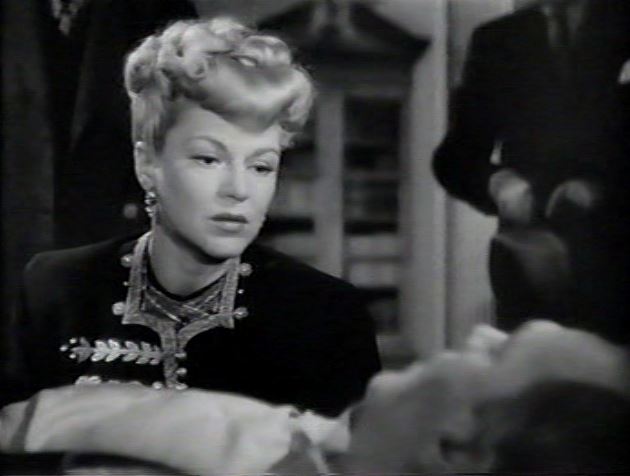
(1947) starring Joan Crawford presents a mixture of dreamlike quality and cold, hard, and even bitter reality.  There are times when her character seems to skillfully navigate these realms, and at other times is only helplessly tossed in the unexpected currents between them.  In some scenes, we don’t know where she is in control and where she is not, and that is perhaps the most interesting facet of this film and points to Crawford’s real skill as an actress.


This is my entry into the Classic Movie Blog Association’s “A Haunting Blogathon: In the Afterlife.”  See more great posts from these terrific bloggers here.


The movie begins in a fog (or smog)-shrouded Los Angeles with Miss Crawford stumbling in a trance on lonely city streets in the twilight.  She appears without makeup, emotionally wounded, whimpering the name “David,” like someone lost, searching.  She is almost somnambulant but perks up when she sees men who might be David, but turn out to be strangers, and she is in an agony of sorrow and worry.  These are real city streets, and we’ll note that in the scenes set in actual locations, Joan Crawford’s state of mind is weak and confused, but on the artificial soundstage sets, she is in full command of herself.  At least at first.


When she enters a drugstore (add this to our collection of movie drugstore scenes), she collapses and an ambulance is called. She is whirled through the real Los Angeles into a real Los Angeles hospital, rolled on a gurney through endless halls where our viewpoint is only the ceiling, with bright lights above and the faces of interns and nurses leaning over to peer at us.  An ER doc leans right into our face with his light.  Joan, and we, are ordered to be taken to “psycho.”


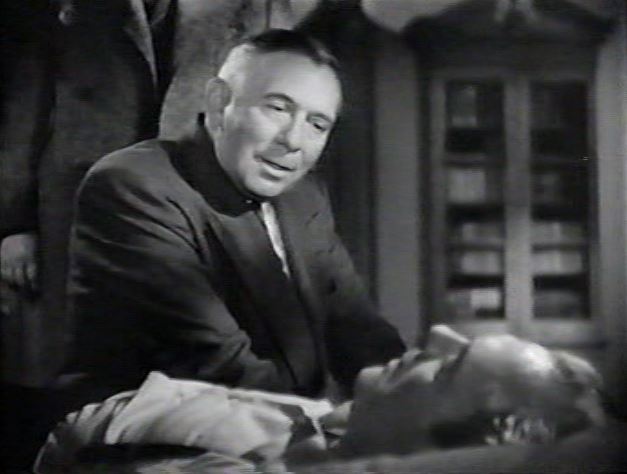
The Psychopathic Department is kept behind locked doors and Crawford’s room has windows on the bars, so for a moment we are taken back to the nightmare years when mental illness reduced one in the eyes of society to that of an animal—but this post-war noir captures an era where curiosity about mental health led to progressive, if admittedly slow, changes.  We see a grim, tired, elderly doctor, played by Stanley Ridges, take on Joan as a patient, with a young doctor to learn—and to whom he can spout medical jargon and plot exposition. 


As he gives her an injection of some psychotropic drug, he prods her to talk and we are inevitably launched into our first noir flashback.   There are, of course, several.


David is Van Heflin, a self-possessed scamp and free spirit, the kind who doesn’t like to be tied down—at least not by Joan Crawford.  They enjoy a cozy evening in his lakeside cabin, as he plays a Schumann piece for her on the piano.  He is an engineer with a gift for mathematics, clearly educated in the arts as well, but down to earth enough to be wryly dismissive of whatever bores or does not serve him.  Joan, whom he feels is smothering him, is beginning to fall into both categories.  Like many men of his generation, and certainly enough of them in noir films, he is jaded by the war.  “Blame it on the army, blame it on the war, blame it on anything you like,” he says as to why he wants to break up with her.  She doesn’t accept the explanation.


We may be both sympathetic and impatient with Miss Crawford, as we see early on her need to cling to him.  He wants to go away for good, and she is heartbroken.  Yet, she is not helpless.  Not yet.  The scene shifts and we see she is actually a nurse, on private duty to a wealthy man’s invalid wife.  The man is played by Ramond Massey.  He appears enigmatic at first, but will later show infinite patience and mercy.


The wife is demanding, accusing, and we may feel we are being set up for somebody wanting to knock her off to get her out of the way.


Unfortunately for Joan, Van Heflin continues to have a connection to her through Raymond Massey, when Mr. Massey, spending the summer with his invalid wife in a nearby lakeside home, hires him for an engineering job in Canada.  In a moment alone with Heflin, we are jolted by the shift in her personality from a competent nurse, crisp and efficient, to a suspicious, screaming and somewhat nutty woman accusing Heflin of seeing another woman.


We are wrenched back to the psych ward and Doc Stanley Ridges proclaims she has split personality with a persecution complex.  We dive back into another flashback.


Massey’s wife has drowned in the lake beside their vacation home.  Police drag the lake in the nighttime for her body, which is found.  At an impromptu inquest held in his home, the death is proclaimed accidental, as the woman liked to walk near the water, and was felt to be despondent.  Interrupting the proceeding is a teenage girl and a small boy.  They are Massey’s children, who have been away in boarding school.  The daughter, played by Geraldine Brooks, accuses Joan Crawford of killing her mother.  Her mother’s letters to her were full of accusations of Joan carrying on with Mr. Massey behind her back.


As with any good mystery or noir, there are these such incidents that pop up that make certain people look guilty, and then certain other people, and then we’re not sure we can trust anyone.  Geraldine Brooks plays a not-too-dissimilar role here as she played in Cry Wolf, also made in 1947 (covered in this previous post) – that of a sensitive, somewhat mercurial young woman at first angrily spurning and then being drawn with needy affection to an older sister-type newcomer to the fold.  She had a lovely quality of being believably earnest and making us concerned over her walking a tightrope between making wise decisions and foolish ones. 


But we are immediately distracted by the prospect that Joan could have bumped off her patient, though she seems to have no yearning to be with Mr. Massey and become Geraldine’s new stepmother.  Ah, but Mr. Massey wants her to stay and take care of his little son.  Then he wants her to be his wife.


Did he bump off the missus to have Joan?


Joan is still seething over the reappearance of Van Heflin in her life when he is hired by Massey and comes to confer with him in his richly wood-paneled study about drilling for oil in Canada.  Just as the oil and coal industry today and its minions decry solar and wind power in a jealous competition for profits, Heflin and Massey joke, “Here’s to oil and down with atomic energy.” 


Joan taunts Heflin when he treats her with sly civility but otherwise has no interest in her.  


She tells Massey she is quitting her job now that the invalid is dead—she knows she needs to get away from Heflin—but he abruptly asks her to marry him.  She laughs a little hysterically—more a sign of her increasingly brittle mental health than rudeness, but she accepts and acknowledges she does not love him.  Mr. Massey here begins an extraordinary role as a humble, kindly, and gentle husband who counts himself lucky to be with her. 


He doesn’t seem like the kind of guy to kill anybody.  Did he kill his wife?


Geraldine is told of the coming nuptials and is not happy, but she concedes to Joan that her father told her how sick her mother was, and that her death was not Joan’s fault.  Joan, in a patient and magnanimous gesture—or maybe just looking for an out—declares she won’t marry Massey if Geraldine doesn’t want her to, and that makes Geraldine feel bad.  They make up, and we have another shift in the story.


The wedding reception is in the Massey’s mansion, and who arrives but Van Heflin, glib, confident, and apparently relieved Joan is somebody else’s problem.  With his smart-aleck greeting to her frosty one, we have to wonder if he’s back just to tease her, and if his cynical charm hides a mean streak.  He comes upon Geraldine Brooks.  She remembers him from when she was a little girl, actually having proposed to him when she was eleven.  Van is amused and interested and—uh-oh, Geraldine might be getting a little serious.  We will discover soon that Van is getting serious, too.


Joan is furious and warns Geraldine to stay away from Van, but not out of motherly concern.  She’s still obsessed with him, and in the sane moments when she’s on the arm of her husband as the new lady of the manor, we might briefly forget the depth of her obsession.  But something happens again, even a small look or gesture, and she beings to spiral into angst and fury.


In a very complicated and fascinating sequence, Joan, having left a concert hall after Van Heflin shows up to join the flirtatious Miss Brooks, and now alone in the mansion on a dark and stormy night, the tension from her obsession with Van Heflin manifests itself in hallucinations.  The clock is loudly ticking, driving her nuts.  Van brings Geraldine home, and after her laughing, “We fooled her, didn’t we,” Joan confronts her.  Geraldine is cold with her again, and again accuses her of killing her mother to be with Massey, and Joan shoves her down the stairs, killing her.


Joan is shocked, frozen at the sight of Geraldine’s body crumpled at the foot of the stairs below. 


Suddenly, the front door opens and Geraldine enters, home from the concert.  The entire previous scene happened only in Joan’s mind.  She’s losing it, and Geraldine is sweet to her, is concerned about her, but does not know what is wrong.  Joan knows what’s wrong. 


She’s cracking up.


Sent to a medical doctor by Massey, she is defensive and walks out of the office, but confesses to Massey that his first wife is haunting her.  Massey takes charge and brings her back to the lake house so she can face her torments and all the creepy shadows there.  At one point left alone, crying, she walks toward the camera, walking toward the door buzzer that seems to call her, “Louise…”  It sounds like bandleader Alvino Rey’s “Stringy” steel guitar talk box.  “Looo-w-e-e-z-ze…”  The sound stands your hair on end, and suddenly this movie has morphed from a film noir to a mystery to a horror film.  Joan screams, and Massey comes to the rescue, comforting her, demonstrating that his first wife’s ghost is not here.


She wails that she is afraid, and confesses that she killed his first wife, helping her to commit suicide.  It’s a powerful scene by Joan as she breaks down and cries.  Massey tells her she wasn’t even there when his wife drowned.  Joan was in the village on her night off. 


Joan is relieved but amazed she had nothing to do with the death, and thanks him profusely, and we sense that they might have a happily ever after ending with a genuinely consoling marriage.  Massey takes her to dinner and they are prepared to enjoy themselves at last—but wouldn’t you know it, Van Heflin’s there at the restaurant with Geraldine.  They are engaged. 


He is just as uncomfortable seeing Joan as she is of seeing him; her obsession for him has at last made him awkward rather than dismissive.


Joan gets pointedly chatty, non-stop, laughing, trying too hard, and the others notice.  When she is alone with Geraldine, she urgently tries to warn her off Van.  To Van she remarks, “I told you once I’ll do anything to keep you and I will.”  She has turned from begging to threats.


Massey, meantime, wants to get her some psychiatric counseling, but she accuses him of wanting to put her away.


She drops in on Van, this time with a gun.  She uses it.  But she does not say, “If I can’t have you, nobody can,” instead she says, “You’re not going to marry her.  You’re not good enough for her.”  True that.


Back to the psych ward with kindly Doc Stanley Ridges again, and she mumbles “David,” and then, “I killed him!  I killed him!”


Doc meets with Massey and discusses the long work of her recovery.  Joan is not responsible, he says, for her actions, but does not know if the jury will agree.  It is a new world of understanding of mental illness, a glimmer of light among the noir shadows.  Raymond Massey will stand by her, and see her through whatever happens.


Directed by Curtis Bernhardt, it’s a film of skillful twists and turns.  Joan Crawford soundly delivers one of the best performances of her career, turning manic, angry, fearful, sorrowful, and desperate in a tour-de-force of closeups that reveal a vulnerability she perhaps preferred to conceal in other movies with broader, more theatrical performances. 


As many film buffs know, this was not her first movie called Possessed.  We might call it Re-Possessed, as the first film, from 1931, quite different in tone and topic, featured Joan Crawford playing opposite Clark Gable.  There she is a girl from the wrong side of the tracks gaining a position in high society in the wicked city as Gable’s mistress. 


We’ll talk about that next week.


Have a look at more posts in the Classic Movie Blog Association’s “A Haunting Blogathon: In the Afterlife” from these great bloggers here.

 ************

***************

My new non-fiction book, CHILDREN'S WARTIME ADVENTURE NOVELS - The Silent Generation's Vicarious Experience of World War II -- is now available in eBook here at Barnes & Noble, Apple, Kobo, and a wide variety of other online shops.

Or here from my Shopify store if you want to buy direct from me and avoid the big companies.

And it is here in eBook, paperback print, and hardcover, from Amazon.

From Cherry Ames, to Meet the Malones, from Dave Dawson to Kitty Carter - Canteen Girl, the Silent Generation spent their childhood immersed in geopolitical events through the prism of their middle grade and young adult books.  From the home front to the battlefield, these books are a window on their world, and influenced their hard-working, conformity-loving generation.


Thursday, August 15, 2013

Crack-up - 1946


Crack-up (1946) takes us to the art world, not usually the sphere of film noir, but this brooding little mystery is unabashed in its take on salons of high culture and waterfront thugs.  Especially appealing is abating this quirkiness by casting veteran priest-coach-boring nice guy Pat O’Brien as the hero.  Pat was 47 when this picture was made, seems a bit long in the tooth for some of the stunts he (or rather his stunt double) is required to do, but his brand of sly, knowing maturity is particularly suitable for this protagonist who must solve the mystery with his brains and his expansive knowledge of art.
I also like that the plot hinges on a phone call he gets regarding his ailing mother, and how he rushes to see her in the hospital.  Real men worry about Mom.
Since this is a mystery, I’ll try to side step the spoilers, but there are some interesting scenes that push the plot along for their atmosphere.  First, we have the pulsating theme music over the opening credits and sounds like the rhythmic pounding of train wheels. A train figures prominently in the mystery.  Look at the lettering on the title.  Just that tells you we’re in for real noir.  Them’s real noir fonts.

We begin with Pat O’Brien in a crazed fit, smashing his fist through the glass doors of a New York City museum, tangling with a cop—in a hall of marble statues where a broken figure of a nude male topples to the floor and smashes—there’s a little artistic symbolism for you.  Pat passes out, psychotic or drunk, we don’t know.  Pat works at the museum.  The museum administrators, in a late meeting, are shocked and try to hush the matter up when detective Wallace Ford wants to haul him in.
Good old Wallace Ford.  He deserves a post of his own someday, for many reasons.
Ray Collins is a doctor on the board of the museum, the voice reason in this mess.
Claire Trevor is a society dame and magazine writer who appears in a different outfit and a different hairdo every time we see her.  She sparkles, but she’s a regular dame.  We gather she and Pat were an item once, and he’s still interested enough in her to be jealous and sarcastic of any man who takes her to dinner, like Herbert Marshall. 
Our old favorite Mr. Marshall is typically elegant and eloquent here as an international man of mystery.  We don’t really find out who he is or what his game is until nearly the end of the movie.  Mr. O’Brien does not disguise his distrust and disdain for him.
Pat is a docent at the museum and gives lectures on art.  (How many cool film noir guys do that?)  We are told that the museum curators regard Mr. O’Brien as revolutionary—in their eyes not a good thing—and that if it weren’t for his service record, they might have sacked him long ago.
This being film noir, nine times out of ten, the protagonist is a war vet trying to adjust to this weird new world he’s come home to but doesn’t recognize.  Especially interesting is that later we get some background on O’Brien’s war record—he worked for the Allied Reparations Committee investigating the Nazi theft of precious works of art. 
We trace Pat O’Brien’s psychotic disturbance to a train wreck he claims he was just in, though there are no reports coming to Wallace Ford that a train wreck has occurred.
Now we go to the requisite flashback as Ray Collins asks Pat to tell them what he remembers happened to him today.
We pick up from Pat’s docent job and his lecture, and the call about his mother.  When Pat rushes to the train station to start his frantic journey to see his mother in the hospital, we follow him pretty much step-by-step—the ticket line, the empty commuter car filling with nighttime stragglers getting off work late, a sarcastic butcher boy selling fruit, magazines and cigarettes.  There’s a guy half-dragging his buddy who appears to have had a little too much to drink.
The train car is already a place of tension because of Pat’s anxiety about his mother and trying to reach her as soon as possible.  He glances with impatience at the people around him, not studying them with interest, but as if they are adding to his annoyance and tension.  We hear the omnipresent sound of the train wheels, which seem to grow louder.  Pat seems to grow acutely aware of all the sounds and images around him, and so we, too, focus on these sensations.
He looks out the moisture-tinged train window, and sees in the distance, around a kind a bend in the track, a beam of light.  To his horror and ours, it appears to be another train on the same track.  Look at Pat’s frozen expression as he’s mesmerized by the sight, a sense of unavoidable doom.  Suddenly, the train whips around the bend and heads right toward us.  The flash of light splashes across his train window, and we hear screams.


Then the flashback ends and we are back in the present.  He is physically and mentally exhausted.
He is told by Wallace Ford that his mother is fine.  She was never in the hospital.  There was no train wreck.  They all think Pat is cracking up, and his clothing reeks of alcohol.
Poor Pat, baffled and shaken, and doubting his own sanity, is released by Ford for the time being, but the museum fires him.  You can’t have a loony giving lectures on Salvador Dali in the gallery.  Pat fears he really is cracking up, like other ex-GIs he’s known.  He confesses, “It’s the one fear everybody had.
Claire Trevor and her apparent new beau, Herbert Marshall, take Pat back to his apartment.  It’s all messed up, as if somebody has overturned everything looking for something.  We also see Pat is being tailed.
Pat, scared, but wanting to get to the bottom of this, even if it means he proves he’s a nut, tries to retrace his steps according to what scraps he can remember.
He goes to the train station, rides the same train, tries to track down the same butcher boy or others who might remember seeing him.  Nobody saw him, nobody remembers him.  We are filled with the same sense of tension as before, afraid another “wreck” will happen.  Just at the pivotal moment, that train that looks as if it’s on the same tracks comes barreling at us again, and Pat is panicked.  Then-whoosh!  It passes by.  It was a double track.  The conductor calls out the name of the next stop.
Aha.  Pat realizes this was the moment something must have happened to him.  He gets off at that stop, and the station master in this tiny, empty depot remembers him from the night before, as a drunk guy being dragged off the train and into a car.
Now he knows he’s not crazy, but he’s in somebody’s way.  Mr. O’Brien is mad and on the hunt.
A murder occurs meanwhile, and he’s implicated, and Wallace Ford is after him, so Pat takes it on the lam.  We are taken to a penny arcade where he meets up with Claire Trevor trying to help him hide.  It’s a neat setting, showing what typical urban penny arcades were like in the day, a place for grownups and not kids—see the “No Minors” sign—because there’s nickelodeon peep shows and stuff.
 
Pat slugs people.  He x-rays masterpieces.  He appeals to the mousy secretary of his museum boss to help him investigate a forgery connection to the museum.  Even Mary Ware, played by Mary Ware, is not what she seems.
We go to a cocktail party, end up at a rusty freighter at the wharf, where Pat saves a valuable canvas from a fire.  Ultimately, we have a showdown between Pat and the mastermind of the mysterious gang, and we discover the reason for his psychotic episode at the beginning of the film.  It might seem like a slightly goofball ending after all that noir atmosphere, but it’s a fun movie, especially for being offbeat.  Keep an eye out for Ellen Corby as a maid.
But, especially keep your eye on the graying middle-aged action hero with the knowledge of art history, a devotion to his mom, and a growing paunch at his belly.  Pat O’Brien was lucky to get the part with so many younger pretty boys in Hollywood, but none of them would probably be as interesting.  He earned it, because he gives it not so much an “edge” as a burnished shine. 
 
Besides, film noir protagonists are supposed to be world-weary and haunted—and who is more tired and cynical, and has as deep a back story as a middle-aged man?
As we discussed in last week’s Adventure in Manhattan, also about art theft, the surprise mystery or what we do not expect from a film doesn’t have to be a shocking plot device.  It can just be a little quirk that sticks out and fools us—and intrigues us.
 
***
 
Here's a preview of the cover of Dismount and Murder - number three in my cozy mystery series.  The book will likely come out in November, and I'll post more about that in weeks to come.  The artwork here is by the amazing Casey Koester, the Noir Girl.


Monday, March 7, 2011

Strange Bargain - 1949

Strange Bargain (1949) is film noir stepping out of the shadows and into the living room. It’s a great example of what happens when middle America adopts a new fad, tames it, and makes it into something quick, convenient, easily digestible, and appropriate for family audiences. Noir as mainstream entertainment.

It’s not the first time we have suburban America as a scene of the crime and a haven for criminals, Alfred Hitchcock’s Shadow of a Doubt (1943) is a great example of this. Strange Bargain doesn’t have the eeriness, or the humor of Shadow, but it’s not meant to copy Hitchcock; it’s meant to cash in on a powerful new tide in moviemaking of the day.

No back alleys, no dames or molls, no whackos or mobs, or lonely car trips on deserted highways, here. Oh sure, we’re in Los Angeles, but not that Los Angeles. The movie begins innocuously with a paperboy riding his bike down a cozy suburban street, flinging the newspaper at a smiling Jeffrey Lynn, the master of the house on his sunny front porch. It looks like Andy Hardy’s neighborhood. All is right with the world. Not for long.

We quickly meet Mr. Lynn’s family at breakfast: the supportive homemaker wife played by Martha Scott who never gets to sit down and eat, the precocious son who wants a new bike but can’t have one because Pop doesn’t make enough money and they’re behind the bills.

The boy is played by Michael Chapin, whose know-it-all chatter gets on one’s nerves after about 30 seconds. Younger daughter, played by Arlene Gray, who never made a movie after this, is easier on the ears, and she gives her annoying big brother some fantastic glares.

Martha Scott tells Jeffrey Lynn he should ask the boss for a raise. When he gets up the nerve and does, he gets fired.

Jeffrey Lynn, so even-tempered in this role, comes off as an extremely passive character, but there are moments when his quiet reactions are quite moving. The first is when he asks for the raise, fingering the telephone cords on the two phones on his boss’s desk nervously, and then, sitting in a chair to hear the bad news, his shocked expression and low, hoarse “Fired?”

Here is a footnote to the character and a signpost to the era: “I’ve been with the firm 12 years. I guess I expected to spend the rest of my life here.” It’s a sentence both pitiable and enviable, from our economic perspective.

But the horrors are not over this day for our Mr. Lynn. The boss takes him for drinks after work, and we see that he did not intend to fire Mr. Lynn out of animosity or poor job performance. The company is broke. The boss is broke. But, he has a plan to help them both. The boss is played by Richard Gaines, who we last saw as the hysterical boor Mr. Pendergast in The More the Merrier. He also played an officious snob, but less comical, in The Enchanted Cottage which we reviewed here. Gaines was just as good at drama as he was at comedy, but his role is small in this film.

He dies.

Mr. Gaines’ plan, as laid out to his horror-stricken employee Jeffrey Lynn, is to kill himself for his insurance money. That will get his family out of debt and provide for his widow and high-school-aged son. Gaines asked Lynn’s help to make his suicide look like murder, so the insurance company will pay off. He offers Lynn $10,000 to do this.

Of course, Lynn refuses, but later that evening the boss calls him at home, tells him the plan is going into action. Jeffrey Lynn rushes over to the boss’s mansion to try to talk him out of it. Too late. Body on the floor. He has no choice now. He must make it look like murder or the widow and son will be left with nothing.

Here we have the film noir element of a man caught in a web of deceit and treachery which he did not devise, but to which he consented, and he must try and backpedal his way out. Except he just gets deeper and deeper.

Where we part company with more edgy film noir movies is the constant reminder Jeffery Lynn is not a stranger in a strange land; he is on home turf. He is as rooted to his suburban community as the tree in his front yard. He is not alienated from society; he is society. I like the mention of his kids going to the neighbors’, who have a TV, to watch wrestler and early TV superstar Gorgeous George. It’s also a cute bit when the daughter, lying on the living room rug, playing with her movie star trading cards, “I traded Cary Grant to Mary for a Dick Powell and Jane Greer. Gee, I hope I didn’t make a mistake.”

Meanwhile, the boy kneels in front of his dad’s chair, reading the back side of his dad’s newspaper. I remember doing that. Young Michael is fascinated by murder and delights in the thought of the police giving the murderer, “a one-way ticket to the gas chamber.”

His wife and his know-it-all boy play a Greek chorus, innocently haunting Lynn about how terrible the event is, and how the famous police detective will hunt down suspects and find the truth. (Later she passes a kinder judgment on her husband, “You’re a man and men are always making mistakes.” And then to soften the blow, adds, “Even women make them, sometimes.” Quite a concession on her part; that’s not something we women usually let on.)

Jeffrey Lynn’s expression of horror has long since turned to one of sickening dread. It’s a race to see if he can keep from falling completely apart before the end of the movie. Every sound, every passing headlight makes him flinch. The cat jumping off a shelf just about gives him a heart attack. Grimly, he wipes the blood off his hat brim, his steering wheel, his hands.

The famed, dogged police detective is played by Harry Morgan, and in a coincidence that has to make anybody smile, is named Lt. Webb.

We are not-too-subtly set up from the beginning of the movie that Lynn is falling into the no-way-out of most noir films, but gradually the film turns a different direction and becomes a traditional mystery. This occurs from clues we are allowed to discover partly through Harry Morgan’s interviews with everybody who is associated with the deceased, and party through Jeffery Lynn’s own open and sympathetic personality that makes everybody come to him with their concerns.

He becomes a surrogate father figure to the boss’s son, who has a piece of information he withheld from the police. The widow wants Lynn to run the firm, even though he is only an assistant bookkeeper, because she distrusts the boss’s business partner. The business partner also latches on to Mr. Lynn and offers him a promotion.

We discover hidden motives, and lies, and most importantly…and most surprisingly…we discover it wasn’t suicide. The boss really was murdered.

Jeffery Lynn, despite his passive demeanor, is a noble, staunch Samaritan in his sympathy and his unwillingness to finger any of the usual suspects. He worries about everybody, even though he is suspect number one.

We slide back into the realm of traditional noir with the traditional flashback telling the solution.

But the solution didn’t stick, evidently. Some of you Murder She Wrote fans will remember the episode from 1987 called “The Days Dwindle Down” where Jessica Fletcher solves a continuation of this case. Among the notable guest stars in this episode were Jeffrey Lynn, Martha Scott, and Harry Morgan reprising their roles from 38 years previously.  Like true film noir, the flashbacks, and the trouble, never ends.

********************

Jacqueline T. Lynch is the author of Ann Blyth: Actress. Singer. Star. and Memories in Our Time - Hollywood Mirrors and Mimics the Twentieth Century. Her newspaper column on classic films, Silver Screen, Golden Memories is syndicated nationally.  Her new book, a collection of posts from this blog - Hollywood Fights Fascism - is available here on Amazon.


Related Products