IMPRISON TRAITOR, PEDOPHILE, AND CONVICTED FELON TRUMP.
Showing posts with label Raymond Massey. Show all posts

Thursday, November 14, 2024

Possessed - 1947


Possessed
(1947) starring Joan Crawford presents a mixture of dreamlike quality and cold, hard, and even bitter reality.  There are times when her character seems to skillfully navigate these realms, and at other times is only helplessly tossed in the unexpected currents between them.  In some scenes, we don’t know where she is in control and where she is not, and that is perhaps the most interesting facet of this film and points to Crawford’s real skill as an actress.


This is my entry into the Classic Movie Blog Association’s “A Haunting Blogathon: In the Afterlife.”  See more great posts from these terrific bloggers here.


The movie begins in a fog (or smog)-shrouded Los Angeles with Miss Crawford stumbling in a trance on lonely city streets in the twilight.  She appears without makeup, emotionally wounded, whimpering the name “David,” like someone lost, searching.  She is almost somnambulant but perks up when she sees men who might be David, but turn out to be strangers, and she is in an agony of sorrow and worry.  These are real city streets, and we’ll note that in the scenes set in actual locations, Joan Crawford’s state of mind is weak and confused, but on the artificial soundstage sets, she is in full command of herself.  At least at first.


When she enters a drugstore (add this to our collection of movie drugstore scenes), she collapses and an ambulance is called. She is whirled through the real Los Angeles into a real Los Angeles hospital, rolled on a gurney through endless halls where our viewpoint is only the ceiling, with bright lights above and the faces of interns and nurses leaning over to peer at us.  An ER doc leans right into our face with his light.  Joan, and we, are ordered to be taken to “psycho.”


The Psychopathic Department is kept behind locked doors and Crawford’s room has windows on the bars, so for a moment we are taken back to the nightmare years when mental illness reduced one in the eyes of society to that of an animal—but this post-war noir captures an era where curiosity about mental health led to progressive, if admittedly slow, changes.  We see a grim, tired, elderly doctor, played by Stanley Ridges, take on Joan as a patient, with a young doctor to learn—and to whom he can spout medical jargon and plot exposition. 


As he gives her an injection of some psychotropic drug, he prods her to talk and we are inevitably launched into our first noir flashback.   There are, of course, several.


David is Van Heflin, a self-possessed scamp and free spirit, the kind who doesn’t like to be tied down—at least not by Joan Crawford.  They enjoy a cozy evening in his lakeside cabin, as he plays a Schumann piece for her on the piano.  He is an engineer with a gift for mathematics, clearly educated in the arts as well, but down to earth enough to be wryly dismissive of whatever bores or does not serve him.  Joan, whom he feels is smothering him, is beginning to fall into both categories.  Like many men of his generation, and certainly enough of them in noir films, he is jaded by the war.  “Blame it on the army, blame it on the war, blame it on anything you like,” he says as to why he wants to break up with her.  She doesn’t accept the explanation.


We may be both sympathetic and impatient with Miss Crawford, as we see early on her need to cling to him.  He wants to go away for good, and she is heartbroken.  Yet, she is not helpless.  Not yet.  The scene shifts and we see she is actually a nurse, on private duty to a wealthy man’s invalid wife.  The man is played by Ramond Massey.  He appears enigmatic at first, but will later show infinite patience and mercy.


The wife is demanding, accusing, and we may feel we are being set up for somebody wanting to knock her off to get her out of the way.


Unfortunately for Joan, Van Heflin continues to have a connection to her through Raymond Massey, when Mr. Massey, spending the summer with his invalid wife in a nearby lakeside home, hires him for an engineering job in Canada.  In a moment alone with Heflin, we are jolted by the shift in her personality from a competent nurse, crisp and efficient, to a suspicious, screaming and somewhat nutty woman accusing Heflin of seeing another woman.


We are wrenched back to the psych ward and Doc Stanley Ridges proclaims she has split personality with a persecution complex.  We dive back into another flashback.


Massey’s wife has drowned in the lake beside their vacation home.  Police drag the lake in the nighttime for her body, which is found.  At an impromptu inquest held in his home, the death is proclaimed accidental, as the woman liked to walk near the water, and was felt to be despondent.  Interrupting the proceeding is a teenage girl and a small boy.  They are Massey’s children, who have been away in boarding school.  The daughter, played by Geraldine Brooks, accuses Joan Crawford of killing her mother.  Her mother’s letters to her were full of accusations of Joan carrying on with Mr. Massey behind her back.


As with any good mystery or noir, there are these such incidents that pop up that make certain people look guilty, and then certain other people, and then we’re not sure we can trust anyone.  Geraldine Brooks plays a not-too-dissimilar role here as she played in Cry Wolf, also made in 1947 (covered in this previous post) – that of a sensitive, somewhat mercurial young woman at first angrily spurning and then being drawn with needy affection to an older sister-type newcomer to the fold.  She had a lovely quality of being believably earnest and making us concerned over her walking a tightrope between making wise decisions and foolish ones. 


But we are immediately distracted by the prospect that Joan could have bumped off her patient, though she seems to have no yearning to be with Mr. Massey and become Geraldine’s new stepmother.  Ah, but Mr. Massey wants her to stay and take care of his little son.  Then he wants her to be his wife.


Did he bump off the missus to have Joan?


Joan is still seething over the reappearance of Van Heflin in her life when he is hired by Massey and comes to confer with him in his richly wood-paneled study about drilling for oil in Canada.  Just as the oil and coal industry today and its minions decry solar and wind power in a jealous competition for profits, Heflin and Massey joke, “Here’s to oil and down with atomic energy.” 


Joan taunts Heflin when he treats her with sly civility but otherwise has no interest in her.  


She tells Massey she is quitting her job now that the invalid is dead—she knows she needs to get away from Heflin—but he abruptly asks her to marry him.  She laughs a little hysterically—more a sign of her increasingly brittle mental health than rudeness, but she accepts and acknowledges she does not love him.  Mr. Massey here begins an extraordinary role as a humble, kindly, and gentle husband who counts himself lucky to be with her. 


He doesn’t seem like the kind of guy to kill anybody.  Did he kill his wife?


Geraldine is told of the coming nuptials and is not happy, but she concedes to Joan that her father told her how sick her mother was, and that her death was not Joan’s fault.  Joan, in a patient and magnanimous gesture—or maybe just looking for an out—declares she won’t marry Massey if Geraldine doesn’t want her to, and that makes Geraldine feel bad.  They make up, and we have another shift in the story.


The wedding reception is in the Massey’s mansion, and who arrives but Van Heflin, glib, confident, and apparently relieved Joan is somebody else’s problem.  With his smart-aleck greeting to her frosty one, we have to wonder if he’s back just to tease her, and if his cynical charm hides a mean streak.  He comes upon Geraldine Brooks.  She remembers him from when she was a little girl, actually having proposed to him when she was eleven.  Van is amused and interested and—uh-oh, Geraldine might be getting a little serious.  We will discover soon that Van is getting serious, too.


Joan is furious and warns Geraldine to stay away from Van, but not out of motherly concern.  She’s still obsessed with him, and in the sane moments when she’s on the arm of her husband as the new lady of the manor, we might briefly forget the depth of her obsession.  But something happens again, even a small look or gesture, and she beings to spiral into angst and fury.


In a very complicated and fascinating sequence, Joan, having left a concert hall after Van Heflin shows up to join the flirtatious Miss Brooks, and now alone in the mansion on a dark and stormy night, the tension from her obsession with Van Heflin manifests itself in hallucinations.  The clock is loudly ticking, driving her nuts.  Van brings Geraldine home, and after her laughing, “We fooled her, didn’t we,” Joan confronts her.  Geraldine is cold with her again, and again accuses her of killing her mother to be with Massey, and Joan shoves her down the stairs, killing her.


Joan is shocked, frozen at the sight of Geraldine’s body crumpled at the foot of the stairs below. 


Suddenly, the front door opens and Geraldine enters, home from the concert.  The entire previous scene happened only in Joan’s mind.  She’s losing it, and Geraldine is sweet to her, is concerned about her, but does not know what is wrong.  Joan knows what’s wrong. 


She’s cracking up.


Sent to a medical doctor by Massey, she is defensive and walks out of the office, but confesses to Massey that his first wife is haunting her.  Massey takes charge and brings her back to the lake house so she can face her torments and all the creepy shadows there.  At one point left alone, crying, she walks toward the camera, walking toward the door buzzer that seems to call her, “Louise…”  It sounds like bandleader Alvino Rey’s “Stringy” steel guitar talk box.  “Looo-w-e-e-z-ze…”  The sound stands your hair on end, and suddenly this movie has morphed from a film noir to a mystery to a horror film.  Joan screams, and Massey comes to the rescue, comforting her, demonstrating that his first wife’s ghost is not here.


She wails that she is afraid, and confesses that she killed his first wife, helping her to commit suicide.  It’s a powerful scene by Joan as she breaks down and cries.  Massey tells her she wasn’t even there when his wife drowned.  Joan was in the village on her night off. 


Joan is relieved but amazed she had nothing to do with the death, and thanks him profusely, and we sense that they might have a happily ever after ending with a genuinely consoling marriage.  Massey takes her to dinner and they are prepared to enjoy themselves at last—but wouldn’t you know it, Van Heflin’s there at the restaurant with Geraldine.  They are engaged. 


He is just as uncomfortable seeing Joan as she is of seeing him; her obsession for him has at last made him awkward rather than dismissive.


Joan gets pointedly chatty, non-stop, laughing, trying too hard, and the others notice.  When she is alone with Geraldine, she urgently tries to warn her off Van.  To Van she remarks, “I told you once I’ll do anything to keep you and I will.”  She has turned from begging to threats.


Massey, meantime, wants to get her some psychiatric counseling, but she accuses him of wanting to put her away.


She drops in on Van, this time with a gun.  She uses it.  But she does not say, “If I can’t have you, nobody can,” instead she says, “You’re not going to marry her.  You’re not good enough for her.”  True that.


Back to the psych ward with kindly Doc Stanley Ridges again, and she mumbles “David,” and then, “I killed him!  I killed him!”


Doc meets with Massey and discusses the long work of her recovery.  Joan is not responsible, he says, for her actions, but does not know if the jury will agree.  It is a new world of understanding of mental illness, a glimmer of light among the noir shadows.  Raymond Massey will stand by her, and see her through whatever happens.


Directed by Curtis Bernhardt, it’s a film of skillful twists and turns.  Joan Crawford soundly delivers one of the best performances of her career, turning manic, angry, fearful, sorrowful, and desperate in a tour-de-force of closeups that reveal a vulnerability she perhaps preferred to conceal in other movies with broader, more theatrical performances. 


As many film buffs know, this was not her first movie called Possessed.  We might call it Re-Possessed, as the first film, from 1931, quite different in tone and topic, featured Joan Crawford playing opposite Clark Gable.  There she is a girl from the wrong side of the tracks gaining a position in high society in the wicked city as Gable’s mistress. 


We’ll talk about that next week.


Have a look at more posts in the Classic Movie Blog Association’s “A Haunting Blogathon: In the Afterlife” from these great bloggers here.

 ************

***************

My new non-fiction book, CHILDREN'S WARTIME ADVENTURE NOVELS - The Silent Generation's Vicarious Experience of World War II -- is now available in eBook here at Barnes & Noble, Apple, Kobo, and a wide variety of other online shops.

Or here from my Shopify store if you want to buy direct from me and avoid the big companies.

And it is here in eBook, paperback print, and hardcover, from Amazon.

From Cherry Ames, to Meet the Malones, from Dave Dawson to Kitty Carter - Canteen Girl, the Silent Generation spent their childhood immersed in geopolitical events through the prism of their middle grade and young adult books.  From the home front to the battlefield, these books are a window on their world, and influenced their hard-working, conformity-loving generation.


Thursday, February 12, 2015

Abe Lincoln in Illinois - 1940


Abe Lincoln in Illinois (1940) carries both historical insight while at the same time being remarkably and most startlingly current in its message.  Surely writer Robert E. Sherwood made no attempt to be prescient, in the same way Abraham Lincoln seemed to foresee his own doomed future, but we may take as a sad state of fact that all life is a cycle and we must continually fight the same battles every couple generations. 

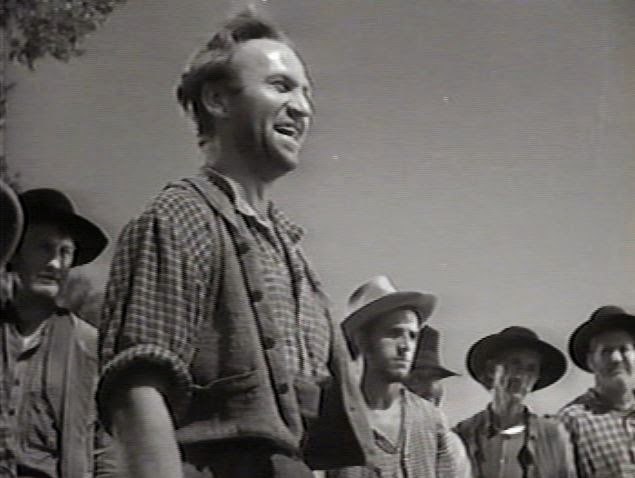
We celebrate Lincoln’s Birthday today with probably the best movie ever made depicting Abraham Lincoln, both in script, and in characterization by Raymond Massey, who played this role on Broadway before Sherwood adapted his own script for the screen.  John Cromwell directs, and we are treated to a nineteenth century fairy tale land of innocence and danger, but always familiar because it is part of our American consciousness—the log cabin, the reading by firelight, the lusty backwoodsmen who “wrassle” and drink, the hoop skirts, the stovepipe hat, but stringing everything along is the message of a gentle, reluctant man, sometimes self-admitted blunderer, who is idealistic enough to expect better from his country, and pragmatic enough to know “a more perfect union” wasn’t going to happen without an awful lot of trouble, and that some in the dysfunctional family of states would have to be dragged kicking and screaming to the table.  Behind all, shaping his journey and shouldering it, are his periods of depression that threaten his nimble mind, sap his courage, and crush his soul.

We covered another Lincoln biography here when Walter Huston took the role in 1930.

Raymond Massey’s Abe Lincoln is not a schoolroom saint.  He is flawed, human, and beset by troubles that include a nagging wife, certainly the most homespun and prosaic of incidents that ride the coattails of his more Herculean crisis—that of publically standing against slavery, and of trying to keep the union together when so many preferred it to be dissolved.  He makes compromises, he allows himself to be shepherded into the political process by backroom dealers.  Our American democracy is on display here for all that is good about it and all that is shady.

Election night, with vote tabulations cast by magic lantern onto a screen, and crowds cheering everything by torchlight, with relentless tinny tapping of Morse code relaying results from across the country—which is presented by a crude map of states and territories and pins—is no less accurate and no less exciting than were it covered ad nauseam between commercials on CNN.

That Raymond Massey, for whom Abe Lincoln was his signature role, was, and probably remains the best actor to have played him, was able to convey Lincoln’s self-deprecating humor, his cleverness, his anxiety, his good nature all at once is a splendid feat of acting.  His manner of speech is a marvel and mesmerizing.  However, he was helped along by the very legacy we have of Lincoln’s personality in context of the opinions of his countrymen.  There are fewer films in which George Washington is depicted, largely because we still, I think, don’t know how to approach the father of our country.  He remains a schoolroom saint in many respects, as least for the non-historian. 

We know more about Lincoln, and he has become a flesh and blood, more down-to-earth person to us in large part probably because so much was written about him in his own day that was extremely critical.  The Confederacy, of course, considered him an enemy, up to and including the nutcase who murdered him.  John Wilkes Booth’s act was borne of cold, deep-seated hatred, political resentment, and vengeance.  Such an action is not an anomaly; it is the end result of resentment carried to the extreme.  Then—and today.

But there were many in the North who felt just as much antagonism for Lincoln, even if they did not carry their anger to such extremes.  Lincoln was dogged by critics every step of his years as President, in his own party, in his own cabinet, by some of his own generals. 

All Presidents are met with criticism while in office, especially from the opposing political party; that is normal and the sign of a healthy democracy.  But few Presidents are reviled and mocked and vilified to the extent Lincoln was.  We may add Franklin Delano Roosevelt in this category, for his programs to lift the nation out of the Great Depression were all hated by those who considered them communistic.  FDR, just as Lincoln, was considered by those who felt they had a great deal personally to lose under his administration, as dangerous anti-American radicals.

And they were two of our greatest Presidents, who brought us through two of this nation's great periods of crisis, and we know them for their flaws as well as for their great deeds.  It’s a funny kind of paradox that those who hate to the extreme shine an accusatory light not only on their intended enemy, but on themselves.  Lincoln’s detractors, including those who mocked the Gettysburg Address, are regarded as fools today, standing on the wrong side of history.  So are the factions into the early twentieth century who felt that child labor was necessary and that without it, our economy would collapse; that if women were allowed the right to vote family values would collapse; etc. and we could go on about those who fear equality for others because it might mean they would lose their own enviable position in society, or their own imagined moral superiority.

Massey delivers, in a depiction of a Lincoln-Douglas debate on a wooden platform under torchlight:
“All men are created equal except Negroes.  If we are to accept this doctrine of race or class discrimination, what is to stop us in time of decreeing all men are created equal except Negroes, foreigners, Catholics, Jews, or just poor people?”

Stephen Douglas, played here by Gene Lockhart, upholds slavery as it is decreed lawful by the Supreme Court.  We could certainly draw similarities to a Supreme Court bought by special interests today, could we not?

Lincoln further warns that we are sliding into a morass where “there is no right principle of action but self-interest.”

It is a literate script that carries us from Abe’s adventures, and misadventures, as a young man, his doomed love for Ann Rutledge, his business failures, his start as a lawyer, his troubled courtship of Mary Todd.  John Cromwell’s direction is artistic and full of feeling. We look down over the shoulders of these historical figures, we look up at them, we stand in the doorway and watch their turmoil.

A few high points:  Mr. Massey’s singing of the old campaign song for William Henry Harrison and John Tyler: “Tippecanoe and Tyler Too” and the crowd later singing the campaign song for Lincoln, “Lincoln and Liberty Too.

Stage actress Ruth Gordon gives a strong performance as Mary Todd Lincoln.  

Howard Da Silva (who originated the role on Broadway) is the town bully and eventual loyal supporter of Lincoln. 

Louis Jean Heydt as Mentor Graham, who tutors Abe in the law.  Look for Ian Wolfe as newspaper editor Horace Greeley.

Alan Baxter is Billy, the young law clerk Abe takes under his wing, who, almost like Mary Todd, nags him to take up the torch of politics and defeat slavery.  An interesting minor character, he is not fawning and idealistic; he is tortured, angry, and a kind of Greek chorus.  All the minor characters who stay in Abe’s life through the film visibly age with him, and it is a poignant thing to see.

The scene where Lincoln has just won the election and Billy explains the new President’s grim attitude by reminding us that the South has threatened to secede if he won.  Now, war is inevitable, and Lincoln is walking straight into it.  Literally.  As Massey is about to leave to the room, suddenly the double doors open and a there is a uniformed guard detail: at once a sign that he is the President, that he will need security because there are already threats against his life, and also as a portent of Civil War and the soldiers over whom he will have authority as Commander in Chief.


The final scene is Cromwell’s dramatic touch, as Lincoln stands on the train platform offering a curiously ominous farewell to Illinois as he is about to leave for Washington.  He won the election, but seems somehow the loser.  The train slowly pulls away, he manages a weak half-wave, and he slips into the darkness of the night, as we finally imagine, as he has done already, his doom.  It is not a moment of triumph; it is an eerie moment of foreboding as the train chugs away into the blackness.

Abe Lincoln in Illinois is such a fine achievement both as drama and as history, and works so well partly because of the skill of the writer, the director, and the actors, but also because we have the unique legacy of knowing all about Abe Lincoln and all about those who hated him.  Neither can hide from us, even this far away from 1860.

©Jacqueline T. Lynch, 2007-2015. All rights reserved. If you're reading this on a site other than Another Old Movie Blog, please be aware that this post has been stolen and is used without permission. 


********************************

My book on Ann Blyth's career--Ann Blyth: Actress. Singer. Star. will be published on June 18th. To that end, I’ll be looking for some help in the pre-launch phase, so I’d like to invite any blogger—film blogger or book blogger—to participate in a blog tour. I’ll be looking for blogs to schedule publicity-oriented posts beginning Monday, June 1st. The last day will be June 17th. If anyone wants to pick a day, please let me know so I can coordinate with others. Think of it as a kind of blogathon. On your day, you can post a review of the book (I’ll have ARCs – advanced reading copies - available in PDF form which I’ll email to you that you can read on your computer), or you can do a Q&A with me, or I can just send you a 250-word excerpt of the book, or you can just post the cover and a link to the Amazon page, if you will. Just a little something to spread the word. I will be posting here every day from June 1st through the 18th and I’ll be linking to your blogs, pushing traffic to you.

Among those 17 bloggers who participate, I’ll throw your names in a hat and pick five winners who will receive a print book of Ann Blyth: Actress. Singer. Star. when it is published on the 18th. The rest will receive an eBook file in whichever format you choose: ePub, Mobi, or PDF (Note, the ARC copies will not have the index).


Monday, April 12, 2010

"Prince of Players" 1955

In one way or another, my three blogs this week, “New England Travels,” “Tragedy and Comedy in New England” and this one, all intertwine with connecting stories about two historical events which occurred on April 14th. One is the assassination of President Abraham Lincoln, and the other, the Titanic hits an iceberg and sinks in the wee hours of the 15th. Today we begin, surprise, surprise, with a movie.

“Prince of Players” (1955) tells the story of Edwin Booth, possibly the most famous and accomplished actor of the 19th century. Noted especially for his Shakespearian repertoire, Edwin Booth played the tragedian with such depth onstage perhaps because he knew so much tragedy in his personal life, which seemed stage-blocked in life, and certainly in this movie, between two colossal bookends: his alcoholic and mentally ill father, the great actor Junius Brutus Booth; and his brother, actor John Wilkes Booth, who murdered President Abraham Lincoln.

Richard Burton plays Edwin Booth, and though his obvious command of both Shakespeare and the camera make Mr. Burton a pleasure to watch in this film, his portrayal of Booth was perhaps not exactly on the mark from an historical perspective. Edwin Booth did not follow in his famous father’s footsteps so much as he stumbled in them for many years before coming into his own as a great actor. Burton is polished from the start. Ironically, Booth’s own fame grew from what was seen as a more natural and heartfelt performance in his roles, rather than the very bombastic and artificial style of acting of the generation before him, which included his father, to some extent, his brother John Wilkes Booth.

And Edwin Booth did not speak with a Welsh accent. Despite the majesty of Shakespeare’s plays and the beauty of a talented thespian like Burton speaking them at full throttle, it would have been more historically accurate, and perhaps even more poignant, to demonstrate that these Booth sons were natives of an agrarian America, who plied their trade as actors in mining camps and saloons. They were from Maryland. They may not have sounded quite like Richard Burton.

It is also interesting that this film harkens back to a less sophisticated era when, conversely, even the most humble common dirt-poor worker was familiar with the works of William Shakespeare. Education was much harder to obtain then, but seemingly much more prized. Even a little was something to be savored.

Another acting brother, Junius, Jr. was omitted from the script, but though the film skips through different pivotal events in Edwin’s Booth life, it does a pretty fair job of illustrating the era. Raymond Massey plays the impossibly great, impossibly doomed patriarch, Junius Brutus Booth, with the kind of utter majesty Junius Booth himself must have demonstrated.

John Derek is the flamboyant, troubled John Wilkes Booth, competitive with his brother Edwin’s fame, firey and tempermental, lazy and charming, whose depraved act of murder deprived this country of one of its finest presidents. Derek demonstrates John Wilkes Booth’s impatience and hostility, his eagerness for the limelight at any cost, but since we don’t really see too much of his character, it is forced at us in a kind of simplistic cartoon image. Perhaps after a century and a half of legend, it’s hard to paint John Wilkes Booth any other way.

Maggie McNamara, fresh off her breakout role in “Three Coins in a Fountain” the year before, plays Edwin’s wife. It’s a 180-degree turn from the shallow prince-chasing girl of that film to the more nuanced 19th century young woman and actress she plays in “Prince of Players”. Reliable Charles Bickford plays Edwin’s manager. He is one of the few Hollywood actors who really looked comfortable in 19th century roles. Something so stately about his appearance and his speech that added to his believability.

The real joy for many viewers of this film is likely the very long, leisurely scenes from different plays by Shakespeare that get a nice showcase. “Richard III” in a mining camp out west, a snippet from “Romeo and Juliet” in the courtyard of a New Orleans bordello, and “Hamlet” of course, Edwin Booth’s signature role, on opulent stages lit by gas or candle footlights.

Early in the film, a drunken Raymond Massey applies his makeup in his dressing room singing Festes’ song “Hey, Ho, the Wind and the Rain” from “Twelfth Night”, and it is later reprised by a drunken Richard Burton bellowing out the same song in his magnificent Welsh choral voice.

Edwin’s source of genius, and his source of pain, is from his father, whom while a boy he attends on cross country tours like a page assisting a knight, until his dissipated father, from whom he has learned Shakespearean passages by rote, can no longer go on. Edwin must carry on the name, which in real life he did somewhat reluctantly, insecure about his own talent.

A rivalry develops between the brothers when John Wilkes Booth, with more dash and bravado than technical skill, tries to wrest the actor’s crown away from Edwin. But, he’s unable to do that, and with his increasing obsession over the South’s fortunes during the end of the Civil War, attempts to secure his fame in a different manner.

We get a re-creation of the night at Ford’s Theater in Washington, D.C., where President and Mrs. Lincoln went to see the comedy “Our American Cousin”. John Derek makes his way into the box, plays out the theatrical scene of assassination, hollers his infamous line, “Sic Semper Tyrannis!” which is the quote most often attributed to Booth. Derek looks like John Wilkes Booth, but this famous awful moment comes off as a tableau. Perhaps that is inevitable.

The end of the film shows a morose Edwin Booth, weighed down by the death of his young wife, and by his brother’s evil deed bringing shame on the family name. Actually, Edwin’s life was in danger for a time by angry mobs wherever he went, more than just the tomato throwing in this film.

If you’re interested in reading more on how Edwin heard the news of the assassination and what happened to him in those days, hop over to my “Tragedy and Comedy in New England” blog this Wednesday when we discuss the anniversary of that horrific moment when Edwin got snagged and helplessly entangled in his brother’s infamy.

“Prince of Players” is worth seeing for the eloquence of the Shakespearean scenes and for the history the film represents, but like most biopics of the day, is very simplistic in its telling and almost as notable for what it left out as what it left in. These are people and events worth another look, and one wonders why modern filmmakers have neglected this American tragedy and its compelling players.

Monday, January 19, 2009

Movies about the Presidents

As we celebrate tomorrow the inauguration of our 44th President, it’s interesting to consider that there really haven’t been a lot of movies made about our Presidents.

Hollywood’s heyday covered a lot of historic figures in movies that dramatized fact and fiction, sometimes without seeming importance for one over the other. In this parade of historical figures, the Presidents have been given short shrift. I can think of only a handful:

“The Flag” (1927) covered in this earlier blog post, Francis X. Bushman plays a brief role as a dashing George Washington in a story that is really more about Betsy Ross.

“Young Mr. Lincoln” (1939), Henry Fonda plays Honest Abe in this John Ford film.

“Abe Lincoln in Illinois” (1940). Raymond Massey, who many feel owned the role of Lincoln after portraying him in Robert Sherwood’s Broadway play, takes the helm as Commander in Chief in this John Cromwell film. Ruth Gordon plays Mary Todd Lincoln.

“Wilson” (1944), Alexander Knox plays Woodrow Wilson in this wartime-inspired patriotic piece.

“The President’s Lady” (1953). Charlton Heston plays Andrew Jackson the film about Old Hickory’s courtship with his wife, Rachel.

“PT 109” (1963). Cliff Robertson plays a pre-Presidential Navy Lieutenant John F. Kennedy.

The best I’ve seen among Presidential biographies belongs not to Hollywood’s Golden Age, but to HBO’s magnificent series on “John Adams” last year, based on the book by David McCullough. It’s a good thing to be reminded of our heritage from time to time, our strengths as well as our weaknesses, and biographical dramatizations help stir our imaginations if they cannot stir our memories. As the saying goes, you have to know where you’ve been to know where you’re going.

Hail to the Chief.

Related Products