Don't Be a Sucker (1947) is a U.S. government instructional film -- these days, we may even say inspirational film -- about the evils of allowing fascism to take hold over America. As this short (only a little over 17 minutes) was made just two years after the end of World War II when we should have been confident in vanquishing our fascist enemies, it is obviously prescient about a future when the allure of domination over our fellow men and women might return.
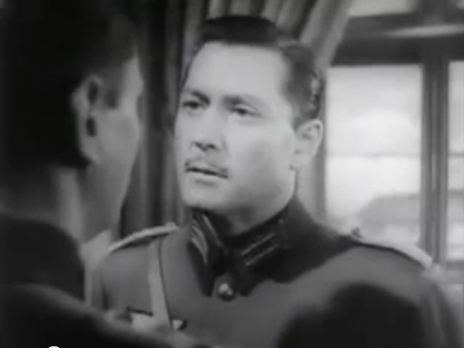
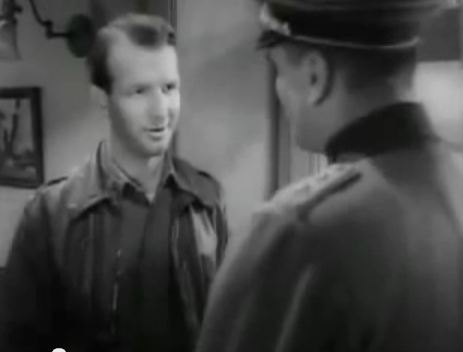
It stars Paul Lukas as an American immigrant warning young Bob Bailey about joining the siren's song of a street soapbox fascist, and how bad it got in Europe when men such as he fell prey to the false promises of authoritarianism.
Bob Bailey, old time radio fans will note, was the best insurance investigator Johnny Dollar among many who played the role in the program Yours Truly, Johnny Dollar.
Felix Bressart plays a brave, but doomed, university professor in the old country. Lloyd Nolan is the narrator.
Paul Lukas tells us, "Racial and religious hatred is just another of the mental and emotional diseases which are sweeping the world today as plagues and pestilences swept the world before science and education controlled them. This pestilence can be controlled, too."
One certainly hopes so. But not without education and critical thinking. Most especially, a free press, not one that's been bought and paid for.
When the soapbox blabbermouth denigrates foreigners, Blacks, Catholics...Bob Bailey almost succumbs to the fascist's reasoning and reassurance of his own superiority -- until the fascist lumps Freemasons in with the other undesirables. Bob is a Freemason, and he is more than insulted, he is shocked that he could be the next one in the detention camp.
The
Lemon Drop Kid
(1951) is primarily known for giving us the Christmas song “Silver Bells.” It sometimes happens that songs from films
become hits, but reportedly, the composers Jay Livingston and Ray Evans did not really
expect the song to become a perennial favorite. Somebody, perhaps with Damon Runyon smiling down on them from
heaven, played a hunch and put the song during the opening credits, used it as
a leitmotif in sentimental moments, and gave it the big production number that
even today, in an enjoyable but otherwise unremarkable comedy, warms the heart
and brings a great big smile.
The
song’s first verse is sung by William Frawley, a New York City gangster dressed
as a dubious street corner Santa Claus.Bob Hope and Marilyn Maxwell take it from there (Bob also dressed as Santa),
and they stroll the backlot city through gently falling snow, smoothly
avoiding large automobiles as they cross streets with a throng of
pedestrians.It’s an idyllic New York
City, and for a moment we believe, if not necessarily in Santa, then certainly
in Damon Runyon’s world of comical and sentimental mobsters who are really nice
underneath their bad English and bad habits.Runyonesque is word for which most writers have to tip their Fedoras
to Mr. Runyon; most of us do not get descriptive styles named for us.
The
movie had also been filmed in 1934, and William Frawley has the distinction of
being in both of them.However, the 1934
version, which was actually co-written by Damon Runyon, bears little resemblance
to the 1951 movie.Both feature a racetrack tout stumbling over various schemes to come out on top, but the 1951
version is more upbeat.
Bob
Hope flees a racetrack in sunny Florida to escape a mobster after him, and
lands in his home turf of New York City, desperately looking for a way to raise
cash to pay off the gangster by Christmas Eve, or he will be fitted for cement
shoes.
His
disgusted girlfriend, played by Marilyn Maxwell, does not have that kind of
dough, but she helps him in a farce he has devised to save his bacon.He gathers the forlorn elderly ladies of the
neighborhood, led by homeless Jane Darwell as Nellie Thursday, and puts them in
the mobster’s closed casino, calls it a home for elderly ladies, and gets a
license to operate as a charity.He gathers
all the hoods and pickpockets and ne’er to wells in town and enlists them to
stand on street corners as Santa and collect money, he says for the home – the boys
owe a lot to the warmhearted Jane Darwell who’s always helping them out – but Bob
really plans to turn the money over to the Florida gangster to save his own
neck.His rival in town, played by Lloyd
Nolan, is his biggest obstacle to success.
We
don’t really worry about Bob; he can take care of himself.It’s hard to keep track of all his lies and
tricks, but he manages to scrape by in the nick of time.The dialogue is fast and witty.
I
find myself craving lemon drops watching the movie, however, because Mr. Hope
keeps popping them, hence his moniker.
Another
song in the movie is sung by Bob and Marilyn Maxwell as a lullaby to the old
ladies, and its lyrics are quite clever and charming.“It Doesn’t Cost a Dime to Dream,” is breezy,
fun, and another great moment in the film.
But
“Silver Bells” which has been recorded by pretty much everybody who can sing,
has stood the test of time.It is conjures
a nostalgic image of window-shopping on a wintry street, of “the downtown”
where we used to go for Christmas shopping, of “the city” when it was filled
with friendly pedestrians, and the anticipation “soon it will be Christmas day”
of the coming festivities.Are they
bells rung by street corner Santas?Or
church bells?Or sleigh bells?Or the little bells that used to ring over
the door when you entered a shop?
The
charm of the song is its simplicity, and it is perhaps the simple images in our
memories of how we think about an old-fashioned Christmas that really makes the
holiday for us.An “old-fashioned
Christmas” is what you make it; it can be images of Victorian England, or the
1930s and 1940s hometowns of our classic films, and these images sometimes we blend
with memories of our own experiences in Christmases past: the 1950s, the 1960s,
the 1970s, the 1980s…someday someone is going to be nostalgic about going to
freestanding Walmart for Christmas, the way someone else today, right now even,
is feeling nostalgic about going to a 1970s mall.Silver Bells.It’s Christmastime in the city.Even if you’re nowhere near a crosswalk.
I
wonder if anyone will ever write a lovely, nostalgic Christmas song about ordering
presents from Amazon on your iPhone?
“Resisting Enemy Interrogation” (1944) is an intriguing film
partly because of what it accomplishes, and partly because of what it
represents.It was a training film made
by the Army Air Corps, but tells a story so skillfully that it was nominated
for an Academy Award for best feature-length documentary.Some well-known Hollywood stars appear in it,
and some unknowns who later became stars.
This post is part of the Fabulous Films of the 1940s Blogathon hosted by the
Classic Movie Blog Association.Please
visit the other blogs listed here at the CMBA website for more great films of
the Forties.
“Resisting Enemy Interrogation” is a short film, only just
over an hour, that shows a bomber crew being captured by the Germans.The film begins with the narrator, Lloyd
Nolan, who will also appear later on in the film as a US debriefing officer.Nolan drones the comfortable opening words, “Tired
of it all, gentlemen?”
The camera pans on a pleasant pastoral scene, but an
undercurrent of tension soon begins to filter through and we are brought to an
interrogation camp in this idyllic countryside where the men of this crew, and
us by proxy, will be put through a very serious test.How much will they reveal to the enemy?
The film was made by the US Army Air Corps First Motion Picture
Unit (or FMPU).We’ll discuss more about
this unique unit of World War II American forces next week.Hundreds of films were made by this unit,
some were for raising morale, some were meant for recruitment, but most were
like “Resisting Enemy Interrogation”, training films.
One of the marvels of US participation in World War II was
our country’s speedy production of war materials (we had a lot of ground to make
up when our enemies had spent a generation preparing for war), and also our
speedy preparation of fighting troops.We took hundreds of thousands of civilians with no military experience
and en mass turned them into warriors.Urgency and survival compelled us to act quickly.One of the best tools for doing this turned
out to be film.
The young people who became our fighting forces were the
first generation to have grown up watching movies.What better device to teach them?This was a new tactic for teaching, not only
for the military, and would lead to the use of multi-media in education ever
afterward.
“Resisting Enemy Interrogation” was not just a series of do’s
and don’ts.It had a story, and what may
be surprising to the audience is that the Germans here are not presented as
bombastic, evil, stupid stereotypes.They are the tricky enemy, to be sure, with no good intent.But we look over their shoulders watching
their efforts to deceive the Americans; we spend as much time observing their
viewpoint as their captives'.Their calm sleuthing
is set against the Americans’ anxiety.It
makes for a fascinating story.
As the American crew is led to their captivity, they are
warned by co-pilot Don Porter, “We will not talk.”He reminds them they are to provide to the enemy
only their name, rank, and serial number.As the movie unfolds, we see the many devious ways the Germans have of
extracting more information from them—using trickery, kindness, intimidation,
and even using simple small talk as a way of furthering how much information they
acquire.
The German head of command, played by Carl Esmond, whom you
may have seen in dozens of films and TV, is a clever, mannered chap who is
teaching a new officer (and us) about interrogation.He remarks, “Just as there is no such thing
as an innocent question, there is no such thing as a valueless statement.”
Anything the American men say can be useful to the
enemy.One by one, through the course of
this film, we see how they are tricked.If we found ourselves in the same situation we might be fooled in the
very same way.It all seems so innocent.
Like many of FMPU’s films, this had a cast largely of
unknowns, some of whom would later become more familiar to us.Don Porter plays an officer in the downed
bomber crew, easy going, and genuinely surprised to be given a nice room and
treated royally by his captors.Later in
the film when Commandant Esmond primes the pump by dropping hints that he
already knows all about the bomber’s mission, Porter shrugs, figures, oh, well,
if it’s common knowledge—and spills facts.
Kent Smith plays a German officer who was raised in the US,
and so with his knowledge and his comfortable camaraderie with the American
boys, tricks them into trusting him.
Hans Twardowski has minor role as a German Red Cross
representative, also out to trick the men into filling out Red Cross forms that
ask too much information.You may remember
him from “Casablanca” as a Nazi soldier.
James Seay plays the bomber crew Captain, most stalwart of
the group, yet even he slips up and gives information he has no idea he’s
giving.
Arthur Kennedy is a standout in the film as a cocky
crewmember who thinks he’s going to outwit the Germans by giving them false
info, but they are onto him and twist his words so that they find out the
truth.Kennedy gives a raw performance
as man who is clearly rattled by these mind games.
It’s interesting to watch the Germans cleverly sort out the
mystery of where the downed bomber came from, and where it was going.By putting together small bits of information
the men have unwittingly given them in unguarded moments, the Germans discover
where the next raid of American bombers is likely to come from and where their
next target is to be.
When that next bomber mission occurs, the Nazis are waiting
for them.They shoot down most of the
squadron of planes.The footage,
simulated obviously, of the American planes being shot down is not what that
first generation of boys who grew up on movies would have ever expected to
see.It is brutal, with planes on fire, with
machinegun fire ripping through crews, and images of blood spurting from the
heads and faces of pilots and gunners.The
lesson about not talking is driven home graphically.
Only a few crews from this mission limp home.They are debriefed by Lloyd Nolan, and
bewildered over how the mission could have failed so badly.
Rand Brooks has a small part as an American back at
the base, who grimly makes the accusation, “Somebody talked!”
George O’Hanlon, whom you might remember from a bunch of “Joe
McDoakes” shorts also appears back at the base.Mel Torme has a bit part as a pilot, though I confess I didn’t spot
him.
Craig Stevens plays a returning pilot back at the base as well,
interrogated by Lloyd Nolan after the disastrous mission.Nolan, in that wonderfully edgy, serious tone
that makes you pay attention to him no matter how quietly he is speaking, calms
the men and tells them that the only information they are ever to give is their
name, rank, and serial number.Above
all, don’t talk.
Then he looks right into the camera, right at us.“Don’t talk.Don’t talk.Don’t talk.”
We may never talk again.
The FMPU was comprised of men from all the different
Hollywood studios.Some of them were not
actually in the Army Air Corps, like Nolan, and like occasional guest actor Guy
Kibbee.The others who were, ranged from
actors, writers, directors, cameramen, many of whom served their entire hitch
here in Hollywood, and others who went on combat missions photographing the
war, or to serve in other units. More on that next week.
I’m not certain at this time the military rank of the men
who performed in this film or many other FMPU training films.I do believe Arthur Kennedy was a
sergeant.I believe Craig Stevens was a
corporal.Sgt. David Rose, incidentally,
composed the music score for this film.
The AMC channel broadcast a documentary in 1997 made by
Gregory Orr Productions called
“Hollywood Commandos”, about the First Motion Picture Unit, and we’ll be
discussing that next Thursday.
“Resisting Enemy Interrogation”, now in the public domain,
can be watched here on YouTube.
“Lady in the Lake” (1947) uses playful images of Christmas
in that clever brand of sarcasm used by only the best private eyes.And Robert Montgomery.
This is our second installment of A Very Gumshoe Christmas,
and we take up where “Alias Boston Blackie” on Monday left off…from B-movie to
classic noir.The loner detective grows
up, and grows cynical.Christmas throws
us off the trail from the start, but never Philip Marlowe.
There will be no plot spoilers, just a few impressions of an
unusual and daring film.
“Lady in the Lake” is famous foremost for its unique
first-person camera view, and for discussions back and forth by fans for
decades on how effective it is or isn’t.Obviously, the camera has some limitations—for one, it does not
accurately imitate the peripheral vision of the human eye.Some scenes may seem slow or unintentionally
comical to the modern viewer as the actors play directly to the camera.But this wild experimentation is exactly what
deserves our respect in an industry where “copycat” is the usual art form and
risks are rare.
Robert Montgomery, who we last saw here in “Night Must Fall”(1937) makes his official directorial debut with this movie, and also
stars.However, as he is playing the
lead, detective Philip Marlowe, we see all the action from his viewpoint, but
only see him a few times in the course of the film when he happens to look in a
mirror.
On another occasion, his shadow on a wall as he is talking
with Audrey Totter is his stand-in.
This may make the film frustrating for Robert Montgomery
fans who want to see him (the film was not a box office hit in part for this
reason), but true fans of Mr. Montgomery should appreciate his ingenuity in
crafting this film.
Audrey Totter, who we last saw here in “Tension” (1949), plays a
complex role of a magazine editor who hires Montgomery to find the missing wife
of her publisher boss, played by Leon Ames. Miss Totter should have gotten some kind of
prize for playing probably 99 percent of her work in this movie directly to the
camera.That is a workout, and she is a
lot of fun to watch; at turns scowling, flirting, pleading, and seducing. (Today is Miss Totter's 94th or 95th birthday - not sure of the year of birth. According to IMDb website she is residing at the Motion Picture and Television Hospital in California. A very happy birthday to a terrific and fondly remembered actress.)
Lloyd Nolan is excellent as a tough cop.He’s great in whatever he does,
and I actually would have loved to have seen him take the lead and play Marlowe
in this movie. His down-and-dirty growl of a
voice.
Tom Tully is the world-weary police chief.Jayne Meadows is a standout as a mercurial,
almost manic, woman who knows a lot more than she lets on.
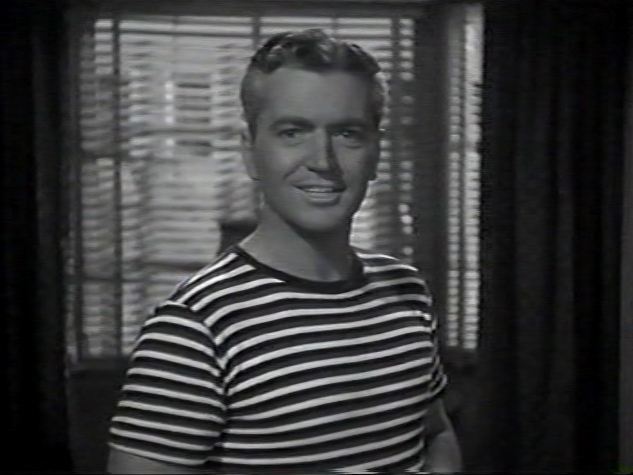
Dick Simmons is a smooth and deceptively
friendly gigolo. You can tell he's a gigolo by the striped jersey.
There are some lines tossed around that would make for a great
movie no matter how it was filmed.Audrey Totter, whose magazines are of the sensationalist pulp variety,
complains to an underling that a new magazine cover design needs more gore. "Not enough gore."
Montgomery, recovering from being slugged by the Southern “gentleman”
Dick Simmons remarks, “At least he had the decency to hit me above the
Mason-Dixon line.”
And Lloyd Nolan’s remark, “How does it feel dying in the
middle of someone else’s dirty love affair?” I love that line.
Despite the restriction of actors playing directly to the
camera, there are flashes of remarkable electricity to their performances,
moments akin to a stage actor’s reactions.Some of their responses and facial actions look almost
improvisational.
Because we are the camera’s eye, we see everything Montgomery
sees.Some of this gimmick is playful and
funny, as when Montgomery’s leering glance follows Totter’s curvaceous
secretary around the room, and with a sharp, somewhat jealous interjection by
Totter, our attention is swiftly brought back to the mollified Miss Totter behind her desk.
Sometimes the gimmick is quite eerie, as when we discover
bullet holes in a glass shower door, we approach and open the door, and our gaze
rests upon bullet-gouged porcelain tiles in the shower stall, falling down upon
the naked corpse crumpled on the floor.
Or when Montgomery, injured after a car wreck, crawls (and
so do we), hand over hand, across a road to a phone booth that seems a mile
away.
We are stared at.We
are flirted with.We are punched in the
face. We kiss Audrey Totter. She serves
us a highball. We notice a hundred different clues, and sometimes, as when
Montgomery lifts a phone receiver to his mouth and talks, we look at nothing,
like at the corner of a table, just as we would absently look at nothing while
we are concentrating on a voice in our ear.
All this would be enough to make a fun and very different
movie, but set during Christmastime, the director uses images of Christmas in a
very cavalier and smart aleck way.
We begin with the opening credits, which are title cards
designed to look like Christmas cards.Images of Wise Men, and holly, Santa, poinsettia, all the iconic
graphics and over them, a medley of Christmas carols in uplifting choral
arrangements that may make us think we are about to watch a heartwarming tale
of love and repentance.In a way, maybe,
but it’s a crooked road to repentance.
As the credits finish and the Christmas carols end, the last
title card reveals a handgun.We were
had.Trust nobody.
We start three days before Christmas.Robert Montgomery takes on a missing person
job, that soon turns into a murder investigation.All along the journey, though he is a man
without family and evidently has no Christmas plans, the yuletide follows close
on his heels, a shadow of irony.
We knock on doors and are faced with Christmas wreaths.He remarks to the gigolo Simmons, “I like
your tan.It’s very Christmassy.”
We intrude upon an office Christmas party, where a reserved
and gentlemanly Leon Ames hands out gifts to his employees.
In a scene with Audrey Totter, Montgomery confronts her with
conflicting evidence.He demands she own
up to secrets, and when he has found a gun that was used to murder, he hands it
to her gift-wrapped as a gruesome present.She plays the scene framed close to a desktop Christmas tree.Christmas stays in the tense scene like a
mocking clown.
Leon Ames takes him aside and want to hire him, too.He nervously picks at the tinsel on the
branch of a Christmas tree that juts out from the side of the frame.Christmas is pushy, demands attention and will not be
left out.
When we are arrested and interrogated by Tom
Tully, Mr. Tully is interrupted by a phone call from home.It is his little daughter, who wants Daddy to
come home and help her put up her stocking.With quick, wary glances to us, he indulgently listens to his daughter’s
prattle, even helping her through her recitation of “T’was the Night Before
Christmas.”It is offbeat, funny, and
very surreal.
I like the scene where, trying to escape Lloyd Nolan
hovering in the police station hall, we duck into the press room and find a “journalist”
lying on the table, speaking “pillow talk” into the phone to his lady friend, a
Racing Form by his head.
After a beating, a car wreck, and a belly full of people
lying to him, Montgomery is saved by Audrey Totter, who responds
to his emergency call and brings him, unconscious, to her apartment. She gives him a Christmas present: a robe she had bought for another man. Like earlier false clues that went nowhere,
even the gift to him is not a gift to him.Marlowe’s world is made up of lies.
On Christmas Day, they listen to “A Christmas Carol” on the
radio, which was an annual event back in the day, though it doesn’t sound like
Lionel Barrymore, and we blow streams of cigarette smoke as we regard Audrey
Totter lying contentedly on the living room couch, her eyes drinking us in,
across from where we are sitting.
When
the program ends, she snaps off the radio and resumes, as if picking up in
mid-sentence, the tale of her hardscrabble life.Only Scrooge could have interrupted her. She asks Montgomery what he did last Christmas Eve. He spent it in a bar. She spent it in a nightclub. This Christmas is an improvement, or should be if they weren't so depressed. Christmas offers redemption, but you have to trust it. These two lonely people have some serious trust issues.
I was a bit surprised at the can of pork and beans on the kitchen
counter.I would have thought Audrey
Totter was decidedly not a pork and beans person.
Montgomery has one task left, and, spying his quarry window-shopping
at a Christmas-decorated window, we have a final, very dramatic scene leading
to the conclusion of the case.The movie,
like detective Philip Marlowe, is flawed, but has guts.Teasing us with Christmas images in an
otherwise grim movie is an irresistibly smartass thing to do.
(Above have a look at the trailer, and also a newsreel of the Hollywood premiere.)
The movie “Peyton Place” (1957) opens with the joyous sound of church carillon chimes and stunning shots of New England pastoral scenes. The opening shots and score exude a sense of triumph and soulful beauty. A remarkable, clever, and somewhat astounding introduction to a story that had been up to that time one of the most controversial novels ever written, banned in most states and some countries for obscenity. Even today, the phrase “Peyton Place” carries the meaning of a morally corrupt community, a den of secrets, a bastion of promiscuity. You’d never know it by the inspiring travelogue over the opening credits.
The first few minutes of the film are really quite magnificent for establishing the setting, and the premise of the story. An outsider to this New England small town, who will be its new high school principal, drives through the countryside on his way to Peyton Place. Passing farms and fields, he arrives at a train crossing and must wait for the train to pass. He glances over to the dilapidated shacks by the tracks, and sees the downtrodden Cross family, whose story is to figure prominently in the film. He drives on, and we are left for the moment with Betty Field, the careworn mother trying to persuade her grown son not to run away from his violent, drunken stepfather, played by the wonderful Arthur Kennedy. We meet her lovely teenaged daughter Selena, played by Hope Lange, and when the slobbering Arthur Kennedy places a heavy hand on Miss Lange’s shoulder for a moment and she shudders, we have a premonition as to how things are going to play out for this wretched family.
We rejoin the new high school principal Mr. Rossi, played by Lee Philips, in his car again as he drives the rain-washed streets of the proper little town, passing the house of Lloyd Nolan, who plays the town doctor, as he comes out in his bathrobe to pick up his morning newspaper. The Doc shows us the headline about US neutrality threatened by Hitler, and we know we are in the early 1940s, just before America’s entry into World War II.
It is as perfect an opening five minutes a movie can get for immersing the audience in the place, the time, and the mood, setting us up for what’s going to happen as the film unfolds.
I would imagine, though, that most people going to see this movie when it was released in 1957 actually did know what was going to happen in the story; or at least thought they did. So many read the book.
There probably had never been up until that time a novel more vigorously criticized and yet more familiar to the public which avowed disgust for it, and claimed disinterest in it on moral grounds. Many called it a “dirty” book, but others evidently found it irresistible. The build-up for the book and the movie were tremendous.
Grace Metalious, the young author of “Peyton Place” was called the Pandora in Blue Jeans in the flood of publicity surrounding the publication of her novel because of her habit of dressing in jeans and flannel shirts, her hair tied back in a ponytail. It added to her intrigue, because she did not look like a glamorous all-knowing town gossip, yet gossip, some of it actually true, was what she peddled in her novel of seamy goings on in a New England mill town.
Her first published novel, the book came out when she was 33 years old. It stayed on the New York Times bestseller list for several months. It made her famous. It made her wealthy, for a time. In the wake of her success, however, there came a degree of pressure that she was perhaps unable to bear. Always a mercurial personality, somewhat self-pitying, obsessive and undisciplined, she died of alcoholism before she was 40. Part of the strain of her success was the ostracism by her community of Gilmanton, New Hampshire for their representation in “Peyton Place,” as much as for the lurid content of her book.
She didn’t help matters when publicizing her novel. In an interview with syndicated columnist Hal Boyle, she noted of Gilmanton, “To a tourist these towns look as peaceful as a postcard picture…but if you go beneath that picture, it’s like turning over a rock with your foot -- all kinds of strange things crawl out.”
This is an intriguing statement to make in view of the film’s beautiful postcard shots of an idyllic New England. We have the voiceover narration by the character of Allison MacKenzie, played very well with a great deal of natural talent by newcomer Diane Varsi, “Time was told not by the clock or the calendar, but by the seasons.” Anyone who has ever lived in New England knows how true this is. Varsi continues to speak in poetic terms of the seasons, and then adds, “There was a fifth season of love, and only the wise or the lucky ones knew where to find it.”
Compare this with how the book actually begins, “Indian summer is like a woman. Ripe, hotly passionate, but fickle…”
The lyrical narration of the film stands apart from the earthy language of the book, and there are so many other differences that illustrate a lot about what film was willing to accept at that time. The anxious, shy boy Norman Page, played by Russ Tamblyn in the film, is made miserable by his possessive mother. His mother’s relationship with Norman in the book is much more twisted and more explicitly so. In the novel, sexual assignations are obviously more frank. It has been suggested by present-day writers, including biographer Emily Toth in her “Inside Peyton Place” (Doubleday & Co., NY 1981) that Grace Metalious represents a beginning to the feminist movement, in part because of her willingness to address mature themes in a frank manner.
There may certainly be some element of that in the legacy of her novel, but I’m not sure I would go so far as to call Metalious a feminist herself. She boastfully admitted a dependence on husbands and lovers, and even bitterly referred to herself as having lost her womanhood when she underwent an hysterectomy. I think in Grace Metalious we have a writer who was not particularly crusading in terms of feminism, or class tension, or gutsy in depicting sex, but simply a woman who unselfconsciously wrote about what interested her, in the everyday speech she used herself. One of the strengths of her novel is its unselfconsciousness.
The film is the opposite in this respect, it is quite obviously self conscious and needs to toe the mark to acceptable social standards in the way the book does not. (Though even Metalious was reined in by her publishers and agent when they changed a key element in the first draft of her novel. She had originally written Selena Cross as getting raped by her biological father, Lucas Cross. To Ms. Metalious’ dismay, though the rape was allowed to be left in, they insisted that Lucas Cross be changed to her stepfather, rather than her father. Rape of a teenaged girl by a male guardian may be ugly, but by a father was evidently unacceptable. It did not seem to matter that this was one of a few episodes in the book that Metalious based on an actual event and real people.)
Other elements in the story, pregnancy by rape, abortion, suicide, murder were either diminished or attempted to be treated tastefully in the film. The shock of Allison MacKenzie on the discovery that her deceased father and her mother were never married remains, but the film’s manner of revealing this scandal later on in the story I think is more effective than it coming out early in the novel.
One thing the novel loses in the translation to film is the undercurrent of ethnic and class tension. The town’s largest employer, the textile mill owned by Leon Ames, whose spoiled son cavorts with the high school trollop, is represented as a backdrop to the story, showing us this is a mill town, but we get very little of the labor versus management, rich people versus poor people in the film than we do in the novel.
Grace Metalious said of the film that she was “pleasantly surprised, but I thought it was too sugar coated.” Well, yeah. It seems with a beguiling innocence Ms. Metalious thought her novel, which echoed and taught an entire generation of teenagers about sexual awakening, would be transferred to the screen literally.
Instead, producer Jerry Wald and director Mark Robson created something that was a hybrid of the novel, but that stood apart on its own, was its own creation.
When selecting a filming location, the town of Gilmanton, New Hampshire adamantly refused to have anything to do with the movie, because it felt that the book had already given the town a bad name. However, though some characters and some incidents told in the novel came from local town stories that Metalious had heard, Metalious admitted that probably 75% of the book was written before she’d ever moved to Gilmanton. Originally she came from the much larger industrial city of Manchester, New Hampshire, and the book depicts a composite of a New England mill town. She actually set the fictional Peyton Place along the Connecticut River, nowhere near Gilmanton.
Where then, is Peyton Place? It’s not Woodstock, Vermont either, a town farther up the Connecticut River that resembled what Metalious described, but refused to let Hollywood film, and brand, their town. Finally, Camden, Maine, a seaside village with no resemblance to Peyton Place in the novel, was chosen not only for its quintessential New England beauty, but its willingness (along with Rockland, and Belfast) to be portrayed as the sinful town.
Over 1,700 locals signed up to be extras in the film. So much for scandal.
One opening overhead shot here looks a lot to me like Boothbay Harbor, Maine, but I can’t find any mention that any shots of Boothbay Harbor were used in the film. Maybe some of our readers can clarify that.
Here is the famous scene of Norman and Allison on the hill overlooking Peyton Place. It is actually Mount Battie in Camden. Here is my photo as it looks today, and from the film. It is truly one of the most lovely sights, and if you ever find yourself in Down East Maine, take a side trip up the auto road and treat yourself to a picnic in paradise.
Speaking of picnics, the film’s Labor Day picnic gives us a cheerful glimpse of small-town togetherness, (barbershop quartets and gluttonous little boys eating more than they should) glossing over the undercurrent of tension, underscoring the importance of the town’s apparently only mill to the local economy, and sets us up for more crisis and conflict.
The film deftly covers, if less frank and in less detail than the novel, a stream of subtle realities about conformity and the consequences of stepping outside what is acceptable. Though the younger actors, particularly Hope Lange, who is touching as the vulnerable Selena, have the weight of society on them, the older generations have an equal part in suffering the consequences of scandal. The small, but moving side story of spinster teacher Mildred Dunnock (last seen here in “I Want You” - 1951) getting cheated on her promotion to principal is one of the film’s many important subplots that are handled well and tell us much about the community with a light touch.
Interestingly, this movie made in 1957 about the early 1940s carries the veneer of nostalgia to it. A cozy, but not condescending, nostalgia. Mostly accurate, there are only a few costume choices which look more like 1957 than 1940. When we see the high school senior dance at the gym, with a banner lauding the class of 1941, we may well cringe with foreboding (as we did not in “Life Begins for Andy Hardy” in this post), that in six months the U.S. will be at war and some of these characters may be war casualties.
A lot happens in the film, but it flows so well, and so remarkably gently, that it remains entertaining throughout and one may actually forget the novel’s lurid reputation because the film is a thing apart. It’s fun to recognize individuals in the large cast, like Lorne Greene as the snide prosecuting attorney, and teen heartthrob David Nelson fresh from TV’s “Ozzie and Harriet” to play Hope Lange’s boyfriend.
Is the film the real Peyton Place? It was very well received, and made the novel perhaps more respectable, therefore making it more popular. Grace Metalious, though she wanted to move on to other projects, went back to the well and wrote a sequel, which was made into another movie (other TV incarnations followed), but this project she frankly admitted was only for the money. She could never really get away from her creation.
But perhaps her creation stopped being hers once it got into the hands of those teenagers and housewives, and all the readers who made it second to “Gone With the Wind” in books sold. Today, few have read the novel and many, thanks to TV, have seen the movie.
Gilmanton, New Hampshire probably need not have worried about “Peyton Place” ruining their town’s reputation, since Peyton Place quickly morphed into Everytown, USA. The film often diligently reminds us it is set in New England with the actors using a light New England-sounding long “ah” sound to vowels that is, if not totally accurate, is certainly enough. Norman is called Naahman by everybody.
It’s probably best when films suggest an accent rather than to try to completely replicate it, because our regional accents are so diverse, that audiences in another part of the country might not catch what is said. In the opening moments of the film when the new principal drives through the countryside and asks a farmer driving a horse-drawn plow for directions, listen to the farmer’s response in his authentic Yankee accent. Could you listen to that for two and a half hours? Particularly if you were from St. Louis, Tallahassee, or Cheyenne? I think not.
The only locals who seem not to use a New England accent are factory owner Leon Ames, who sounds southern, and Lana Turner as Allison MacKenzie’s mother Constance, who makes no attempt and also seems rather more glamorous than the average citizen of Peyton Place. Another actress might have added more depth to the role, though Miss Turner was big name whose stardom, and tragically coincidental real-life scandal, likely added welcome publicity for the film. Lana Turner, unlike many of the principle actors, never traveled to Camden, Maine to film her scenes. We see her strolling a lot past rear-screen projection.
The film ends with its own courtroom drama, with Selena on trial for the murder of her stepfather. Lloyd Nolan defends Selena by accusing the town of neglect, “She couldn’t trust us with the truth.”
“We’re all prisoners of each other’s gossip.”
“Our best young people leave as soon as they’re old enough to pay for the price of a bus ticket.”
“We’re a small town but a prosperous one, and yet we allow tar paper shacks to stand.”
He laments the community’s failure to look after its own. The film ends with another idyllic shot of a tree-covered street lined by houses and white picket fences, two kids lazily bicycling by, with another voiceover by Allison MacKenzie “We finally discovered that season of love. It is only found in someone else’s heart. Right now someone you know is looking everywhere for it, and it’s in you.”
A sweet and gentle way to end a movie based on a novel banned as obscene in several states and some countries. Where is Peyton Place, really? Somewhere back in the 1950s, when things were changing, and we knew even then nothing would be the same?
You might look for it in the “Peyton Place Archives” of the Camden Public Library.
Grace Metalious is buried in a far corner of a Gilmanton, New Hampshire cemetery. For all her resentment of small town oppression, she said in a 1961 interview, “I live there because I couldn’t stand to live anywhere else…in Gilmanton I don’t have to be part of the town.”
Incongruous? There’s a lot of that going around. Come back next Monday when the town picnic moves to the Midwest. Until then, below we have the idyllic ending to “Peyton Place”.