IMPRISON TRAITOR, PEDOPHILE, AND CONVICTED FELON TRUMP.
Showing posts with label Judgment at Nuremberg. Show all posts

Saturday, May 16, 2026

Happy National Classic Movie Day!

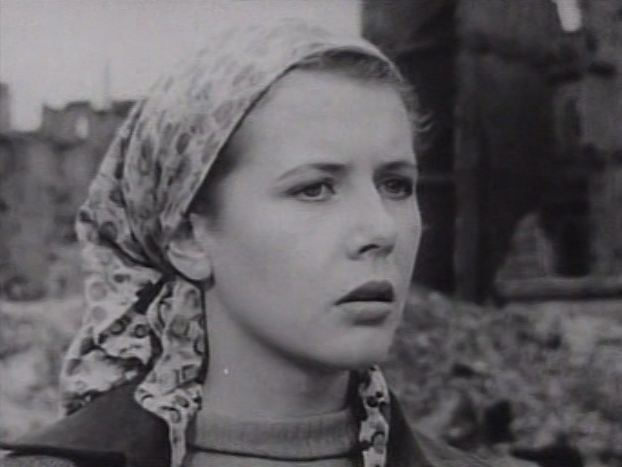
Happy National Classic Movie Day!  I celebrate the continuing relevance of classic films.  Here, Spencer Tracy in Judgment at Nuremberg (1961).  I celebrate when movies took a stand.


*******************************


My new non-fiction book, CHILDREN'S WARTIME ADVENTURE NOVELS - The Silent Generation's Vicarious Experience of World War II -- is now available in eBook here at Barnes & Noble, Apple, Kobo, and a wide variety of other online shops.

Or here from my Shopify store if you want to buy direct from me and avoid the big companies.

And it is here in eBook, paperback print, and hardcover, from Amazon.

It is also here in paperback from Ingram.

And here in hardcover from Ingram.

From Cherry Ames, to Meet the Malones, from Dave Dawson to Kitty Carter - Canteen Girl, the Silent Generation spent their childhood immersed in geopolitical events through the prism of their middle grade and young adult books.  From the home front to the battlefield, these books are a window on their world, and influenced their hard-working, conformity-loving generation. 

Buy this or any of my books online here at Bookshop.org.


Thursday, December 8, 2011

Uneasy Victors PT 4 - "Judgment at Nuremberg" - 1961


Judgment at Nuremberg (1961) is a perfect union of script, stage, and screen. In few other films is dialogue so completely depended upon to move the action, tell the back story, and dramatize the events. That this is accomplished with such graceful simplicity in this movie is its most astonishing and crowning achievement.

This is our last entry in our series on “Uneasy Victors” in which we examine Hollywood films tackling American involvement, and American mood, in Occupied Germany after World War II. Our intro to this series is here. We discuss A Foreign Affair (1948) here, and The Big Lift (1950) here.  Yesterday, we marked the 70th anniversary of the bombing of Pearl Harbor, which brought our entry into World War II, and our eventual role as uneasy victors.

The startling beginning to this film serves as a metaphor for the movie and our series: the German martial tune “Wenn wir marshieren” is sung by a male chorus, of whom we might imagine to be soldiers. Then the footage showing the concrete swastika on the Nuremberg stadium being exploded to nothing.

But the regime we had defeated, and the people who lived in that world, did not vanish into nothing. They were before us now, real, alive, and carrying more baggage from the recent terrible past than most of them wanted to admit.  And we find ourselves at a sudden full stop.  The warrior's drive it took to win the war must be muted to a stateman's diplomacy.

As in the two other movies we discussed, rubble plays a big part in our discovery of Occupied Germany. Spencer Tracy’s first line in the movie, as he is being driven through Nuremberg says, “I didn’t know it was so bad.”

Spencer Tracy is a semi-retired American judge from Maine, who is assigned to head the tribunal in the Judges Trial phase of the Nuremberg Trials which served to try and punish Nazi officials. All the big names and the higher-ups have had their day in court, and this new trial before us focuses on lesser figures. They are smaller fish.

The Germans, the Europeans, and the Americans back home are growing weary of the trials and losing interest. There is something at stake, however, we come to understand, in just letting bygones be bygones. As prosecuting attorney Richard Widmark sarcastically retorts to rumblings that he should just drop the case, “What was the war all about?”

There is also a danger in proceeding with this trial. One of the accused men is a famous German judge who worked diligently for democracy in the Weimar Republic before Hitler took power. Played by Burt Lancaster with enigmatic dignity, he has a long career of distinguished and honorable work, and is a hero to his people. It will not be easy to try and convict him.

In the middle of the trial, we hear that the Russians, our allies in World War II, have blockaded Berlin in an attempt to get the allies to relinquish the capitol to their control. The Berlin Airlift is about to begin -- which takes us back to The Big Lift. We are undecided as to the wisdom of continuing to punish the Germans -- we may need them in a new war against the Soviet Union.

This movie, then, is about compromise. When do to it. When not to. What are the consequences? There are always consequences.

The ensemble cast is well chosen and effective in every minute detail, right down to Tracy’s household butler and housekeeper, played by Ben Wright and Virginia Christine. They are a husband and wife, humble, slightly nervous about pleasing “Your Honor,” because without this job they would starve. They represent the average German citizen who has lost much in the war, who are not responsible for Nazi atrocities -- but who are not entirely convinced that the atrocities are as bad as everyone says they are.

A young William Shatner plays Tracy’s aide during the trial, who swears in the witnesses. One is struck by his ease and his strong screen presence, even in playing scenes with the magnificent veteran Tracy.

Judy Garland and Montgomery Clift play victims called to give testimony. Both give the performances of their careers.

Marlene Dietrich plays a role completely opposite to the sneering cabaret singer of A Foreign Affair. Here she is an aristocrat, proud, dignified, but bitter that she and her kind should be held on the same level as Nazis.

Most especially powerful is the Oscar-winning performance of Maximillian Schell as the defense attorney. He is young, intelligent, impassioned, and desperately tries to save his hero -- Burt Lancaster, from disgrace and dishonor and a prison sentence, in any way he can.

But most evident through this film, though we do not see them, are the director, Stanley Kramer, and the writer, Abby Mann. Mann’s script was originally produced on TV in the acclaimed series Playhouse 90, which we discussed in this previous post. Playhouse 90 also gave us “Requiem for a Heavyweight” and “The Miracle Worker,” and never was television so good.

I mentioned at the beginning of this piece that this film is a union of script and stage, and when I say stage in this case I mean stagecraft. The Playhouse 90 version (Maximillian Schell and Werner Klemperer reprise their roles here), because of the restrictions of early television was very much like a stage play in the sense that the action was static, one set with simple camera placement.

Though there are some scenes outside the courtroom, the Director Kramer wisely chose to keep this television-style tightness to his movie. It shows up with profound effect even in the smallest scenes. There is a scene where Richard Widmark visits the apartment of Judy Garland and her husband to plead for her to testify. She is reluctant. There are many old ghosts haunting her. As Widmark and Miss Garland -- he in his officer’s uniform and she looking like a bedraggled hausfrau in her bathrobe and unkempt hair -- stand in heated discussion -- in the foreground we have her husband facing us, his back to them. We see his tortured expression. The trio is an artists’ composition for the camera.

What were restrictions on television became style in this movie, and used to extremely dramatic effect. Though most of the action takes place in the courtroom in an exchange of dialogue between the witness and the attorney, the camera is always, always moving. We slide in a slow, graceful dance around the courtroom, as the camera probes the many uniformed personnel. The translators, the guards, the gallery of observers, the stony-faced defendants, and nervous testifiers in the witness stand.

We travel 360 degrees all around the flinching expression of a confused, distressed Montgomery Clift -- who seems like a completely different man to how he appeared in The Big Lift 11 years before -- before his disfiguring car accident and years of drug and alcohol abuse. Truly, he was a different man.

We travel all around the chiseled features of Burt Lancaster, moved at last to speak though through much of the trial sits in silent protest. The stage play sets him in his witness box, delivering his lines with his precise speech, but the movie camera compliments the stagecraft and lets us get in really close to see the flashing of his haunted eyes.

It would be a good lesson for young filmmakers who these days seem to have almost uniformly adopted the quick edited, jerky camera habit to see what mature and elegant cinematography looks like.

The most magnificent CGI or special effect is not more dramatic than a slow, intimate close-up on human tears.

We see each person with a headset, all intently listening and pausing before they respond, because we do not understand each other.

There are four defendants in this trial, all German judges who are accused of crimes against humanity. Two particular cases are presented before us: one in which Montgomery Clift was forcibly sterilized in retaliation because his father was a member of the Communist Party and his family did not support Hitler, and his brothers beat up a bunch of Brownshirts harassing them.

The other case is about Judy Garland’s friendship with an elderly Jewish man, a friend of her family. When she was a girl on her own after her parents died, he continued to visit her and bring her gifts and comfort, and advice. She was sentenced to prison for breaking the law that said a German (Christian) girl could have no intimate relations with a Jewish man. Her defense was that her relations with him were not intimate, and that he was only like a kind uncle to her. The law in Germany at the time stipulated that any contact was forbidden. She was imprisoned, and the Jewish man was executed.

The judge at her trial was Burt Lancaster.

Maximillian Schell’s defense of the accused judges ranges from brutally tearing apart the witnesses’ claims, to an even more insidious tactic -- the time-worn defense of merely following orders. But both these tactics are brilliant and thrust to the heart of the American conscience -- our own uncomfortable conscience at being occupiers.

In the first instance, he demonstrates that Mr. Clift was sterilized not for political reasons, but for medical reasons. He was tested and judged to be mentally incompetent, and for this reason was required to be sterilized for the betterment of the state. Herr Schell points out a very similar stance in American law, in a judgment written by renown United States Supreme Court Justice Oliver Wendell Holmes in an era when eugenics was popular.

The camera pauses to let us see this stick in the throats of Spencer Tracy and Richard Widmark.

In the case of Judy Garland, Schell breaks her down and twists her words to make her and her relationship with her elderly benefactor appear dirty. At this point, we watch Schell raging, barking in profile, while behind him in the shot, an outraged Burt Lancaster can take no more. He jumps to his feet and with all his authority, silences the young protégé with rebuke.

We have already been clued into Lancaster’s moral righteousness. Schell has outlined his exemplary judiciary career. But we get a personal, dramatic taste from Marlene Dietrich.

Spencer Tracy discovers that the mansion in which the U.S. Army has billeted him during this trial was confiscated from Dietrich, the wife of a German general who was previously tried and executed. Having usurped her home, Mr. Tracy feels most intimately the role of the Uneasy Victor.

“There’s one thing about Americans,” Widmark bitterly remarks, “We’re not cut out to be occupiers. We’re new at it, and we’re not very good at it.”

Tracy and Marlene meet socially, and he is intrigued with her soignée class and intelligence. She is an aristocrat, the daughter and the wife of career military men. She invites him to a concert, proud to show another side, a cultured, genteel side of German life. Over the strains of Beethoven, Spencer Tracy looks around at the audience, wondering what is in the hearts and minds of these conquered people so bravely looking beyond their recent past to a future swept clean…by what?

Tracy is a kind of Mark Twain/Abraham Lincoln character in this movie, small town American, homespun horse sense, self deprecating, and a willingness to keep an open mind. When he meets Marlene in a charming tavern -- again, for the third time in this series we are taken out to the cabaret -- she tries harder to impress upon him the respectability of the German people, despite what their own political monsters have done to them.

To this end, she tells a story about Burt Lancaster, who in a social gathering, discovering a smarmy Hitler flirting with his wife, bravely and with disgust bestows upon The Little Corporal a rebuke no less severe than he has given to Maximillian Schell in the courtroom, and no less public.

Marlene then catapults the conversation to the ultimate question at hand and the thing that Tracy really wants to know: Do you really think we knew about the concentration camps and the murder of millions? We didn’t know.

In court, Richard Widmark has finally shown the footage of the concentration camps and what Allied soldiers, like himself, found there when they marched in and liberated them. Widmark, in his crisp, carefully enunciated speech (they had voices then) narrates the movie.


“How DARE they show us those films!” Werner Klemperer, one of the defendants shrieks.


In the tavern, we hear the soft tenor singing, “Du, du liegst mir in Herzen....”


The judges had to make their rulings based upon the laws they were given, which was based on the political influence at the time.


American judges are also influenced by politics, we see, as Tracy’s fellow judge, Ray Teal insists they must be lenient on the Germans because the Soviets are worse. He calls prosecutor Widmark “a radical” and a “protégé of FDR.” Conservatives hated President Franklin Delano Roosevelt, vilified him, and their political progeny continue to do the same. Ray Teal wants to know where Tracy stands.

“I’m a rock-ribbed Republican who thought Franklin Roosevelt was a great man.”

“Oh. One of those.”

Marlene sings a verse of “Lili Marleen” as Tracy walks her home, past the ruins, to her apartment. It is not as dilapidated as her flat in A Foreign Affair, but we can see the shabbiness in the boarded-up windows, where the elegant coffee set seems to cast a refulgent glow, a reminder of the genteel past in a post-War room. Her husband’s distinguished portrait is displayed in pride of place.

“We did not know!” She insists.

Tracy, struggling with his uncertainty replies, “As far as I can make out, no one in this country knew.”

She tells him, “We have to forget if we are to go on living.”

It has been reported that Marlene hated doing this scene, to play the spokeswoman for a regime she personally hated, to the point where it made her physically ill.

“As a German, I feel ashamed that such things could have taken place in my country,” Maximillian Schell, barely containing his anger responds, “But I do think it was wrong, indecent, and terribly unfair of the prosecutor to show such things….”

He pleads with Lancaster to keep silent and not take the stand, “We have to look to the future. We can’t turn back now. Do you want the Americans to stay here forever?” Besides, he says, the Americans do not have the right to judge them, and brings up Hiroshima and Nagasaki.

“Is that their superior morality?”

In court, Schell expertly shifts the blame for these trials from Lancaster to the world at large, who let Hitler have his way for so long.

Burt takes the stand and explains in passionate shame how a man, and a country, could use love of country as an excuse to deny rights to the individual. He is the picture of dignified self-loathing, near tears. He describes himself as a man “worse than all of them because he knew what they were and went along with them…made his life excrement because he worked with them.”

Wanting to explain personally to Tracy about the millions who were persecuted, Lancaster tells him, “I never knew it would come to that.”

Tracy replies, “It came to that the first time you sentenced a man to death you knew to be innocent.”

The German judges are all found guilty, and as Tracy departs the prison after his final visit with Lancaster, we hear the strains of “Wenn wir marschieren” once more, and the silent caption telling us that now, in 1961 at the time this film was made, not one single person imprisoned during the Nuremberg Trials was still serving his sentence. They had all been freed.

Another political compromise?

It’s a cynical ending to an earnest film with a passionate message. The movie had its world premiere in Berlin on December 14, 1961 -- West Berlin now, as four months before, the German Democratic Republic built the Berlin Wall. Doubtless, the audience considered that and may have been distracted by current events from this magnificent movie. Did current events render the film obsolete and irrelevant?

We’ll close this series by giving Marlene Dietrich the last word. In 1960, before this film was made, she took her cabaret act to Berlin for the first time, where she was greeted with a pained mixture of welcome, and furor by those who still resented her for “betraying” her homeland. After this movie came out, she took her act to Israel, which welcomed her as a celebrity who was well known to be anti-Nazi.

However, Marlene was advised not to sing any songs in German, as that language was taboo there at the time. Marlene broke the taboo and sang in German, and was cheered, especially for the song shown below (though this footage is from a later European concert). It is “Sag mir, wo die Blumen sind.” You will recognize it as Pete Seeger’s, “Where Have all the Flowers Gone?”

We may smile at her limited vocal range, and at her studied showmanship, but there is something wonderfully transcendent in this German rendition of an American anti-war song. Especially when it is sung by this German actress.  This American actress.


Monday, December 5, 2011

Uneasy Victors - Pt 3 - "The Big Lift" -1950


“The Big Lift” (1950) straddles the period of our role as occupiers in Berlin, and as “combatants” in a new kind of war, a Cold War. Geopolitical past and future fused together in the awkward present of 1948 Berlin.

This is our third entry in the series on Uneasy Victors. Have a look at the intro here, and at last week’s post on “A Foreign Affair” (1948) here.

The movie has a documentary feel to it, yet there are elements of humor, adventure, and intrigue. Though the backdrop is highly political, the conflicts faced by the characters are not really political in nature. They are personal.

Montgomery Clift, in his fourth film, (he’d just finished “The Heiress” which we discussed here) is the opened-hearted, open-minded youth, an enlisted man in the Air Force who works as part of the ground crew. We don’t know about his past or if he has plans for the future; he’s very much a here and now kind of guy, living for the moment. His thin, handsome face is a strange cross between rugged and fragile, and we could take that as a metaphor for much in this troubled actor’s life.

Paul Douglas, also in his fourth feature film, but who always seemed to move and sound like a veteran, plays another man in Clift’s outfit, a radar operator. He is older, and wiser in the sense he is more cynical. He has been in the service many years, and we can see he will spend his career here. Both are stationed at Hickham Field in Hawaii.

These opening moments of the film are evocative of World War II and the place where disaster struck, the bombing of this base and Pearl Harbor, that brought the US into the war. We see a newsreel at the very start that tells us the Russians are blockading Berlin, which was divided among the victorious Allies into the French, British, American, and Russian sectors, from getting supplies overland. All roads, railroads, and canals are blocked, leaving the British, French, and American sectors of the city isolated. The Russians want to force those nations out.

Then the camera pans back and we see we are in a small auditorium where American servicemen are watching the movies. Suddenly a loudspeaker announcement calls a particular unit to report for duty, and Clift and Douglas rise from their seats with a groan.

The map is a little off - Chicopee is not in central Mass.; it's on the Connecticut River in the west.

It’s a fast way to set the story. In a few moments, their unit will be on a cargo plane bound for the mainland. The map takes us across the Pacific, and then across the continent to Chicopee Falls, Massachusetts and Westover Air Force Base. We see a glimpse of the base, the huge runway, the hangars, and a sign in the foreground telling us where we are.


Where we are is the largest air force base on the east coast, which in the new Cold War, became an important point of embarkation, supply line, (and eventual line of first defense in the nuclear age), and the jump-off point to the boys’ final destination -- Berlin. They are going to help ferry food and fuel to the stranded Berliners in a remarkable mission called Operation Vittles, and would be known as the Berlin Air Lift.

Stop by my New England Travels blog tomorrow for a post on a unique side operation of this mission, “Operation Little Vittles” in which Chicopee, Massachusetts packs tons of candy, ties them to handkerchiefs to be used for parachutes, and turns them over to Westover Field so that the men flying these missions can drop candy to the kids in the ruins of Berlin.

The documentary style of the movie is evident in how patient director George Seaton is, letting us experience the mission as it unfolds. The men’s ignorance on what the mission is to be. The long flights. The arrival at Rein-Main field in Germany, and then the final, nerve-wracking hop into Templehof and Berlin. The large transport planes, because of the restriction on fly space the Russians have put on them, have to navigate a very narrow strip, and because the landing field is set in very close proximity to the five-story brick buildings of the neighborhood, the planes must literally skirt the rooftops. In one shot we see a plane land from a side view, and as it dips below the line of roofs, the tail of the plane looks like a shark’s dorsal fin slicing the ocean waves.

“Just like landing in the Rose Bowl.”

The planes land with their cargo, unload, and then take off again every few minutes. It is an exhausting, round-the-clock mission that will last for months. It was our first response to a belligerent Soviet Union testing its influence. It kept the Berliners alive. It was one of the proudest achievements of the United States Air Force.

Just as we saw the American congressmen marvel at the ruins in Berlin as their plane arrives in “A Foreign Affair”, so are Paul Douglas and Montgomery Clift amazed at the devastation.

“Boy, this place sure caught it, didn’t it?” one of the men exclaims.

“Not enough. This is where they should have used the A-bomb,” Paul Douglas says.

This movie takes up where “A Foreign Affair” left off. We are a little farther along in our jobs as occupiers, and there is still the conflict between offering mercy and wanting revenge, between punishing the enemy and building friendships. Paul Douglas acts like the Ugly American, being as rude as he can to the German laborers employed at the landing field. He is dismissive and bullying to the Berliners he meets in town.

“Don’t start feeling sorry for them. They hate our guts. If the situation was reversed, they’d kick your teeth in twice a day.”

Paul Douglas is more than just the voice of vengeance and disgust with the vanquished enemy. He has a deeply personal reason for hating the Germans.

He was once abused as a POW in a German prison camp. While in Berlin, he will discover the prison guard who beat him. In a brutal scene, both men catch up with their destiny.

The movie has a nice mix of comedy that is kind of like blowing off steam at intervals between these dramatic moments. Some of the humor is macabre, like when the men have “fingers crossed” as part of their landing checklist. When Douglas, whose “schatzi”, played by Bruni Löbel (who had a long career in German film and television), wants him to define “democracy” because she is curious, he becomes an irate, frustrated, inarticulate teacher. He has no idea how to explain it, and tells her repeatedly to just shut up.

The best he can come up with is, “It’s a kind of feeling, a way of looking at things.” He explains that America is run by the people, and a light bulb goes on and she thinks it must be like the Soviet Union, which is also said to be run by “the people”. Douglas nearly has a stroke.

Another funny moment is when the men first land and find themselves dragged into a welcoming ceremony. The flight crew is paraded down a long aisle of Berlin guardsmen, under an arch of rifles, to the sound of a band. Montgomery Clift, voice shaking, nervously remarks,

“I feel just as if you and I were getting married, Lieutenant.”

At the welcoming ceremony, an old man, a young boy, and pretty woman who represent grateful citizens of Berlin, present speeches and gifts to the servicemen. They are dignified, proper, speak carefully-intoned English and display the requisite amount of humility for the newsreel cameras. The picture of the defeated enemy as possible friends.

Clift hooks up with the pretty woman, played very naturally by Cornell Borchers (who made only a handful of films in the 1950s, most of them German), and his Berlin romance begins. Her husband was killed in the war by the Russians. Her father stood up against the Nazis. Both tragedies make her a sympathetic heroine and worthy object for Monty’s affections.

He gets a pass and sees her in Berlin. When he gets paint on his uniform and must walk the streets in ragged clothes she has borrowed for him, Clift’s whirlwind escapade among the ruins in Berlin is where Jean Arthur’s ended. In parts it is just as wild and funny, and in parts more insightful and morose. This is a Berlin Americans don’t get to see on the newsreels cameras, the jostling for food, the enforced labor at shoveling rubble, the checkpoints and identity papers, the cold days and colder nights.

Because Clift is without his uniform and his identity card, he is a man without a country, and in danger from all sides, from straying into the Russian Sector, and from his own American MPs. At one point, they duck into a tavern, not too unlike the cabaret we went to in “A Foreign Affair”, where in an effort to escape the MPs, Monty hops on stage and stumbles through “The Chattanooga Choo-Choo” with a German quartet. When they start a verse in German, his panic, and his solution, are very funny.

Clift’s romance with his Berlin girlfriend is progressing. She is very pretty, and quite brave in facing the hardships of the post-war world. She accepts German defeat even though she bears no responsibility for the Nazi regime. When Clift, still without his uniform which is locked up in a tailor’s shop, spends the night, they embrace in a darkened apartment in front of a window. Behind them are the lights of the runway, and a huge transport plane flies right towards them.

The script and direction seem to take turns between using brief but stunning images like this to tell the story through metaphor, and alternatively trying to back it up with a wordy primer on German-American relations. It feels like propaganda at times, but it is probably useful for the American audiences watching the film at the time. For us today, it is a window on an era.

Both men and both girlfriends get together for a gemutlich little party with the neighbors, one of whom once traveled the US as an actor.  Today, he is a spy for the Russians, who pay him to count the American planes.  He gives them false numbers because they won't believe anything he reports anyway.

Gerde asks him, “What did you like best about America?”

He replies, “The way the Americans didn’t like it.”

Paul Douglas smiles. He directs Gerde with a glance to pay attention. He understands what the actor is trying to say.

“I mean, what they used to say about the government!”

They all laugh, and Gerde tries to understand a puzzling country where criticizing the government is okay.

Gerde works in one of the food service wagons on base. On another day, still brooding over this thing called democracy, she asks Paul Douglas about injustice in America. She points out that she has been reading a book, and by the description of the story, we know she is making a reference to “Gentleman’s Agreement”, which was also made into a movie by the same company, 20th Century Fox, a couple years earlier.

Gerde says that since the Americans were against Hitler for his actions against the Jews, how could it be that “in America Jews are kept out of certain hotels and schools?”

Douglas admits, “It shouldn’t be. It stinks.” And then he asks her where the book came from, and she says the PX. Ah, he says, finding a saving point. Would the Russians put out a book criticizing Russia in their stores? Being open about our prejudice is at least a point of honor, he wants to impress upon her. She is dubious.

Douglas is dubious about Clift’s romance with the Berlin beauty, and investigates her. Her husband was not killed by the Russians. Her father was not anti-Nazi. She seems tarnished now. She is less a heroine and more of Berlin enigma. Clift confronts her and she admits lying.

“When you have to live by the generosity of others, you have to make yourself pitiful and brave.” There is a nice shot of a wall behind her in the distance collapsing and crumbling to rubble, more rubble she will have to shovel.

This film is conscientious about showing us all sides. The United States, with rampant prejudice, is not as free a place as we claim. German gratitude may be false and self-serving. The only thing we can be sure about is the Russians are bad guys, when they are discussed at all. The foolish clowns from “A Foreign Affair” are absent here. The film’s main flaw is that we lose them and the question of who they are now. They have not even been replaced with a stereotype yet; they are shown only as rumor and headlines. In the early 1950s, we will come to choke on our paranoia and let it poison us.

Montgomery Clift struggles with his girlfriend’s duplicity, but decides after all, she was only a girl during the war. She cannot be held responsible for her family's involvement.  She is only trying to survive.  He wants to marry her.  Part of his desire, we may suspect, is the wish to save her.

He goes through the chain of command paperwork to get permission. One of the most interesting things about “The Big Lift” is that in various scenes we see a lot of military personnel. A lot of them. In this entire movie, only Paul Douglas and Montgomery Clift are actors playing Air Force men. Everybody else in uniform is an actual serviceman. This gives the movie that realistic documentary style. You also have to admire the acting ability of some of them. The commanding officer, Major Hetzel, who pushes through Monty’s marriage paperwork is quite funny in his scene after shouting over the phone and losing his voice.

While marriage plans are progressing, Gerde finally gets the lowdown on democracy, but not from Paul Douglas. With his bullying ways, he is a poor teacher. She got herself a government-issued pamphlet and has memorized the Constitution and Bill of Rights. Filled with enough righteous indignation to blow the roof off a New England town meeting, she hollers at Douglas and demands he stop bullying her. She calls him a stormtrooper.

Douglas is impressed, and like all bullies, backs off when she stands up to him. “Don’t let anybody push you around, not even me. That’s democracy!”

Another World War II-era metaphor is complete when she chucks a can of SPAM at him.

I won’t reveal how the relationship develops between Clift and Fraulein Borchers. It’s an 11th hour surprise, and lessons are learned by everyone.

Though the tours of duty are ending and men are being rotated home, Paul Douglas decides to stay in Berlin. He is kinder to the German laborers on the base, and even helps them out by speaking fluent German to them, which he was forced to learn in the POW camp.

“I suppose if we’re going to sell these stoops on a new way of living, you got to be a pretty good salesman.”

Then they hear over the radio that the Russian blockade of Berlin is over. The good guys have won. It is a World War II kind of patriotic moment, but the really impressive ending of the movie is the “curtain call” style end credits where we see the real-life military men who had speaking parts in this movie lined up as if for roll call.

Incidentally, the journalist who interviews Montgomery Clift and Paul Douglas when they first arrive in Berlin is Richard O’Malley, an actual journalist for the Associated Press.

Come back Thursday when we finish our series on “Uneasy Victors” with “Judgment at Nuremberg”, which takes us back full circle.  The first point of order for the occupier is to establish order and rule of law.  The second is to hold the bad guys accountable.  But it is a quickly changing world.  The political map of Europe is being altered day by day.  How do we settle accounts, so to speak, when nobody wants to live in the past anymore?  Montgomery Clift and Marlene Dietrich both return for impressive encore performances in very different roles.

Thursday, January 8, 2009

Small Screen to Big Screen


In the film “Requiem for a Heavyweight” (1962), after the punch-drunk, down and out fighter Mountain Rivera, played by Anthony Quinn, is rejected for a job as a movie usher, his pal Army, played by Mickey Rooney, retorts to the movie manager, “I like TV better anyway!”

From radio this week, we move to television. Three episodes of the truly heavyweight champ of 1950s television drama, “Playhouse 90”, were later adapted into award-winning films. “Requiem for a Heavyweight,” and “The Miracle Worker,” and “Judgment at Nuremberg” have wildly different subject matter, but running between them is a common thread of telling a story through character and dialogue. Even in “Requiem for a Heavyweight”, a story of the boxing world, there is very little action.

Live television in those days, though not all “Playhouse 90” shows were live, did not allow for a lot physical space. The sets might not have been minimalist, but the action was. It was a theater of the mind, not exactly in the same way radio was, but in that it was up to the audience to decipher the relationships of the characters to each other and the flow of the story through subtle movements and powerful dialogue. Consequences were weighed in the balance, not just by the characters in the story, but the audience at home. Sometimes in today’s movies, with a heavier reliance on action, the consequences are less clear, and obstacles are easily removed with another shooting or explosion, or car crash. On a small, almost claustrophobic television studio set, problems had to be faced because they could not be run away from so easily.

“Playhouse 90” had that title because it was a 90-minute show that featured a new script with new characters each week. One may observe that the scripts were so strong that not only did they appeal to Hollywood as material, but when they were eventually transferred to the big screen, there were few changes in the appearances of the shows.

“Judgment at Nuremberg” (1961) probably changed the most, and that is due to film’s ability to open up views of a post-war Germany and allow us to travel to more locations than just a courtroom. Maximillian Schell appeared in both the TV and film versions, but most of the rest of cast were new. Werner Klemperer, who became known in the 1960s for playing Colonel Klink in the TV sitcom “Hogan’s Heroes” played Emil Hahn in the 1956 TV version, replaced by Burt Lancaster for the film.

“The Miracle Worker” (1962) I think changed the least of all three stories in its transference to film. Its 1957 TV version featured Teresa Wright as Annie Sullivan. She was nominated for an Emmy for this role, and all these three “Playhouse 90” productions won a slew of Emmy awards, and several Oscars among them for the film versions.

There is an interesting difference story twist when it comes to “Requiem for a Heavyweight”. The 1956 live TV show which featured Jack Palance as Mountain, Keenan Wynn as the conniving manager Maish, and Keenan’s father, Ed Wynn, as the soft-hearted cut man Army, gave us a more hopeful ending for the fighter. His boxing career brought to an end with one too many punches, the gentle giant gets a job teaching athletics at a children’s summer camp. Maish picks up another young boxer to exploit.

In the film, Maish, played by Jackie Gleason, does the only gallant thing he ever does by rejecting becoming the new young boxer’s manager and refusing to ruin another person’s life by getting him half killed. The ending is more tragic for Mountain, who agrees to become a clownish professional wrestler to pay off Maish’s debts to gangsters.

It is a more pessimistic ending, and the understated performance of Mickey Rooney deserves special notice, especially as his cries watching the once proud boxer humiliate himself. The shot above the ring, as we look down below on the forced antics of Mountain as a wrestler, is something that could not have been done on TV at the time, but it is an effective shot, making him look like a performing circus animal in a cage. It is one of those times when a film technique enhances the story in a way TV could not.

In all these stories, the transference to film is done with sensitivity to the intimacy created by their original presentations on TV. There seems to be no “bigger is better” attitude in the film versions, and this is rare and fortunate.

In the case of “The Miracle Worker”, what might have kept the film so close to the original TV presentation is the fact that the writer, William Gibson, and director Arthur Penn, were teamed in both the TV and film versions, as well as on the unusual in-between project of the successful Broadway play in 1959. Broadway brought actresses Anne Bancroft and Patty Duke on board, both of whom went along when the story was carried one further step to feature film.

There were other dramas in the 1950s from programs other than “Playhouse 90” which eventually were made into films, such as the Academy Award winning “Marty” (1955). For the first time movies had a new source other than adaptations from books and original screenplays for scripts. TV, which in the 1950s was seen as a competitor to films, supplied Hollywood with a few of its finest films of the early 1960s.


Monday, July 28, 2008

Witness to Murder (1954)

“Witness to Murder” (1954) presents Barbara Stanwyck in the role of an intelligent woman no one believes.

Unlike the adventure in “Rear Window”, also made in the same year, where James Stewart slowly comes to the suspicion of a murder committed and must puzzle out the proof, “Witness to Murder” begins in all film noir garish glory, with a clap of thunder, a dark and stormy night, and the sight of a woman being strangled just as soon as we get the main titles out of the way. There is no doubt about the murder being committed or that George Sanders is the murderer. The story is about how Stanwyck cannot convince the police about what she saw.

Her role is a bit of a departure from the typical 1950s hysterical woman roles (though she does have a brief fling at raising her voice at the cops which puts her in a hospital psychiatric ward for observation). Her character is a single professional woman, an artist and interior decorator. She is sensible, intelligent, has a fetching wardrobe of flattering full skirts and tailored jackets, which like her character are not ostentatious in any way but both chic and reserved. She is a quiet person, contained, who though she dines alone at drugstore counters, seems content in her quiet life. She listens to classical music when she putters alone at home. We are told a man she loved died in the war, but she gives no indication that she is looking for a replacement.

We see her at work, comfortable at her drawing table. She has a drawing table in her apartment as well, and her expressionistic paintings hang on the wall, passionate and somewhat dark. The doctor who later interrogates her will infer that they reflect psychosis. People watching this film in 1954 must have been deterred by it from ever seeking help from either the police or from mental health professionals, so callously is she treated.

Her world turns upside down when she sees the murder. World weary Gary Merrill is the responding police lieutenant who investigates, and finding nothing, writes Miss Stanwyck off as a woman who had a bad dream. Her indignation spurs her to do a little of her own investigating, and with each new call to Merrill to report more information, she is told in pleasant, but always condescending tones that she is obsessed over nothing. He spends much of movie telling her to just take it easy.

George Sanders plays the villain with such suave and clever and contrived innocence that perhaps if we had not seen him commit the crime at the beginning of the movie, we would not believe her either. As an ingenious former Nazi who was “de-nazified in court” and emigrated to the US after the war, we might look for some explanation as to why his speech sounds more Oxford than Leipzig. Nevertheless, he is so quick and crafty baiting Miss Stanwyck, reveling that no one believes her, and paints her as a looney before the police.

It is interesting that Merrill’s character, in relating Sanders’ Nazi history to Stanwyck, does it in such a ho-hum manner. This is, I think, not a reflection on Merrill’s abilities as an actor as much as it reflects society of the early 1950s. We see this even in the brilliant “Judgment at Nuremberg” (1961) where the post-war years shifted from the righteous calls for revenge of the war years to the let’s just move on with our lives attitudes that let so many Nazis escape. It was impossible to punish them all, anyway. Even by 1954, the war was old news.

When Merrill bluntly comments on Stanwyck’s fiancé never making it back from his last bomber mission and she seems to slightly flinch in distress, he remarks laconically, “Sorry. I didn’t know it still hurt.” Apparently, she was supposed have gotten over that a long time ago.

When Sanders at the end of the film reveals his vitriolic, hate-filled ubermenschen philosophy in a soapbox rant, it is almost comic. How frightening his rage would have appeared in a 1940s film. Now only ten years later it seems archaic and quaint. We have a short attention span. We have left the lessons of war far behind us. Don’t believe a Nazi is dangerous because he writes books which map out evil intentions. Don’t believe a woman crying murder. Neither is plausible.

The role is a good one for Barbara Stanwyck, but it is unfortunate that more was not made of her character’s sensibilities and her artistic talents. In one scene we see her absentmindedly sketching the murder at her drawing board as if to come to terms with the horrible act. In another scene she remarks to Merrill about Sanders’ face, “The smile and the eyes don’t go together. They look at you, but they don’t see you.” It’s something an artist would notice. Instead of playing up her character’s approach to the crime as an observant artist, the script merely emphasizes that all her suspicions are based only on women’s intuition, which of course the police scoff at, and Sanders abuses.

We might expect an eventual romance between Merrill and Stanwyck, because they begin to see each other socially, but there doesn’t appear to be much chemistry between them. More than his disbelief in her accusations, which is pardonable without concrete proof, is the almost overbearing condescension of his attitude towards her emotional and mental state. Finally, this is culminated in her being sent to a psychiatric ward for observation, where the film takes a bizarre turn, suddenly becoming “Ladies They Talk About” (1933). (One of her fellow inmates, played by Adeline De Walt Reynolds, will be discussed on Thursday.)

Another odd twist is the chase scene at the end, prompted by a severe policewoman who calls for onlookers to stop Stanwyck from running away because she is insane. She knows that Stanwyck is insane because George Sanders told her so. Everybody believes George Sanders.

Miss Stanwyck attempts to escape up a construction site with Sanders hot on her heels, along with a street crowd. Eventually Merrill shows up to help lift her off a ledge. Since Stanwyck enjoyed performing her own stunts, perhaps for her this fun bit made up for the weaknesses of the story.

Very much a film of its day, it accurately sloughs off the last of the World War II sense of urgency and commitment to seek justice. It makes reference to television (and perhaps radio) when Merrill’s partner playfully hums the well-known opening notes to the “Dragnet” theme. The African-American actress Juanita Moore, who would win an Academy Award nomination for her role in “Imitation of Life” (1959), appearing here as one of the psychiatric ward patients, is referred in the credits only as “Negress.”

Sometimes it actually is better to just move on and away from such as this. But first you have to look back.

Related Products