IMPRISON TRAITOR, PEDOPHILE, AND CONVICTED FELON TRUMP.
Showing posts with label Betty Grable. Show all posts

Thursday, August 20, 2020

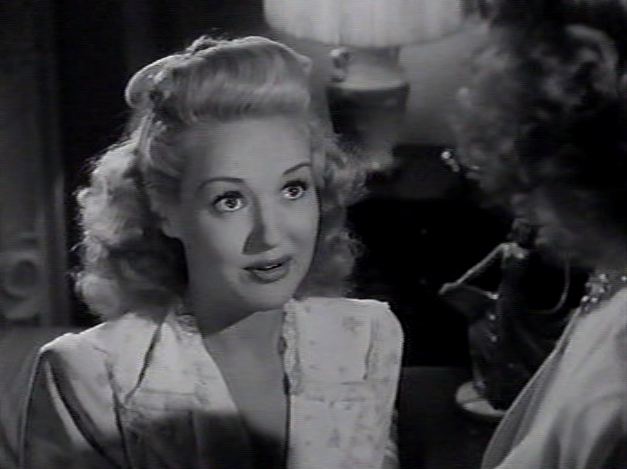
The Shocking Miss Pilgrim - 1947


The Shocking Miss Pilgrim
(1947) is an affectionate spoof of a suffragette (or suffragist, as they actually called themselves) and her mission to become independent and self-supporting as a first step to gaining the right to vote, which, as we know, was a long way off.  We celebrate the 100th anniversary of the 19th Amendment this week, which gave women the right to vote in all federal and state elections.  It was not “universal.”  The poll tax and civil rights abuses kept women (and men) of color, and Native Americans, from voting in certain parts of the country until the late 1950s and finally, until the Voting Rights Act of 1965, which prohibited discrimination in registering to vote and being able to vote.

The real story of the fight for women to achieve full voting rights in this country, which took several generations, is a frustrating and often harrowing, even horrific, series of events. Recently, PBS tackled the subject in an excellent two-part documentary, “The Vote,” as part of its American Experience series.  Have a look at the clips on the website, and don’t miss the chance of watching it the next time you see it scheduled on your local PBS station. It is a well-told examination of the truly dramatic and inspirational fight that women endured to gain this most basic right of citizenship.

The Shocking Miss Pilgrim, obviously, does not tell the story of women’s suffrage in all its fullness, or grim realities.  To give it its due, it does show strong, intelligent women bucking the powers that be to gain respect (which, without civil rights, no respect would be required), and it shows the men to be grudging, but ultimately won over by the ladies’ perseverance.  And charm. That, it seems, would always be a necessary element. Hollywood was certainly frank about that.

Classic films were not dismissive of the 19th Amendment, but on the few occasions Hollywood tackled the subject, it was always in this quaint, stereopticon view of The Good Old Days and my, wasn’t Grandma spunky?  We covered The Strawberry Blonde (1941) here, which showed Olivia de Havilland’s suffragette as a foil and a mere subplot to James Cagney’s aspiring dentist dealing with legal issues who didn’t get the girl of his dreams. Again, the story is quaint and affectionate, down to the singalong ending.  The suffragette theme is mere window dressing.

When it comes to this cozy view of the fight to gain suffrage, I think my favorite example is from Mary Poppins (1964), where Glynis Johns sings with ladylike gusto, “Well done, Sister Suffragettes!”  My favorite line, delivered with gentle sincerity: “Though we adore men individually, we agree that as a group – they’re rather stooopid.”

Her jubilant, sunny, marching rant in the foyer of her home is turned into a party when the servants, Reta Shaw and Hermione Baddeley join in, dragging into the chorus the reluctant Elsa Lanchester (the children’s nanny who is about to quit, thereby creating a job opening for the new nanny, Mary Poppins). 

The background to Glynis Johns’ suffragette activities is sketched out for us by her husband, played by David Tomlinson, who sings with self-satisfaction, “King Edward’s on the throne; it’s the age of men!”  He is lordly, and therefore is somewhat clownish, but his wife is equally clownish, hiding her activities from him, stuffing her sash in a closet before he comes home. “You know how the cause infuriates Mr. Banks.”  At the end of the movie, she will give up her sash to make a tail for her son’s kite.

Interestingly, the magical, yet no-nonsense Mary Poppins is the ultimate feminist in the movie – independent, self-assured, not taking orders.  But she is humanized for us by being vain in a typically feminine manner.

It is 1910 in Mary Poppins, but The Shocking Miss Pilgrim takes us back to 1874.  Female independence from men is tied to, for me, a beloved object—the typewriter.  Betty Grable stars as Miss Cynthia Pilgrim, a new graduate of a business school in New York which has admitted women for the first time.  She and the other female students are admonished at the beginning of their course of study: “Until now, the business world has been a man’s world. If you fail, it will remain so!”


That’s quite a burden on their shoulders, but they are courageous pioneers, and Betty becomes the class champion at typing.  The students are referred to prospective employers (in an immediate job placement program that might be enviable for any college student today) and Betty draws a shipping company in Boston run by Dick Haymes.

Mr. Haymes runs his family firm, which is actually owned by his suffragette aunt, played by Anne Revere.  Haymes, however, thinks that women do not belong in the workplace and is surprised when Miss Grable shows up for work, as he thought he would be sent a male typewriter (or typist, when the person doing the work was finally viewed as separate from the machine).

Another person in the all-male office who disdains women in the workplace is Gene Lockhart, who plays the office manager.  The guys at first mock her, but her moxie, and her good-natured ability to take kidding endears her to them.  They put on their suit coats in a gentlemanly effort to not show her disrespect by working in the same room with her in their shirtsleeves.  Ah, me, but such niceties are lost to us today.

All are fascinated by her clatter on the typewriter, which was introduced in this same year of 1874 to commercial offices, though it would be a long time before they became common in workplaces or even had a standard keyboard.  Though Betty was the class champ in typing, we can see she does not know how to touch-type.  She does the old hunt-and-peck with two fingers. Actually, the touch-typing system was not invented until 1888, so this is not an error.

You will notice also that her typewriter appears to be operated with a foot treadle; this is because the first typewriters put out this year of 1874 were mounted on sewing machine stands and the foot treadle operated the carriage return.  They typed only in capital letters. So all your business correspondence would be screaming.

Betty takes a room at one of the few lodging houses in Boston that accepts women office workers, who are shunned as undesirables, women of probably questionable virtue.  Like actresses.

Elizabeth Patterson is her kindly landlady who takes her in and who belligerently accepts all outcasts from Boston society, including artists and writers.  Gad!  Arthur Shields and Allyn Joslyn are two of her vagabond lodgers, and together they make up a happy family.


Anne Revere recruits Betty into the local suffrage movement and Betty makes a hit making speeches. She drags the reluctant Dick Haymes along, and we have our obligatory, if clunky, romance budding between them. Dick introduces Betty to his mother, a high society lady played by Elisabeth Risdon, who is also a closet suffragette and who will, at the end of the film, buy her own typewriter.  I love the line when Betty, who is surprised to discover the great lady is a kindred spirit, is answered by Miss Risdon, “You expected to find a witch burner.”  This, of course, a nod to a period in Massachusetts history when intolerance, as it will, brought ghastly tragedy.  (It’s a common euphemism, of course.  Nobody was burned in Salem for witchcraft; nineteen were hung, one was pressed to death, and others died in jail.  Burning at the stake in Europe, of course, was another matter.)

As long as we’re being sticklers on accuracy on my home state, I’d like to congratulate those responsible for this film for the correct pronunciation of “Peabody.”  Hereabouts, it is not pea-body.  It’s PEAbudee. One of the men in the office, Mr. Peabody, who presents her flowers, corrects Betty on her pronunciation. 


Like Glynis Johns, Betty Grable dons her “Votes for Women” sash and heads out for another rally.  True love does not run smooth, especially when the ardent young man thinks suffragettes are frustrated old maids. But Betty is sensible, not flighty or shrewish.  She thinks women should gain equality by entering many careers, rather than just protesting. When he tries to replace her with male secretaries, he finds them lacking in…uh, charm.  Finally reverting back to female secretaries, he finds them plain, unattractive, and none suit him. He goes to the Boston Academy of Typewriting for a new graduate.  Our old friend Mary Field is the receptionist who refers him to the manager—Betty Grable.  Ah, Dick Haymes sees the light.  It is implied, rather than stated, that he has come around to the idea that women are just as capable in business as are men. Will they marry?  Will she give up her job if she does marry him?

How old will she be when she finally gets to vote in 1920?

Many social issues were covered across a broad spectrum in films from the 1920s through the 1950s, yet women’s suffrage was not really addressed except in parody.

There is a line in the “Sister Suffragette” song from Mary Poppins that Glynis Johns sings: “Our daughters’ daughters will adore us, and they’ll sing in grateful chorus, ‘Well done, sister suffragette!’”

Hollywood has never really said, “Well done,” or given them their due, and perhaps even today, neither have we.  Watch the PBS documentary.  Then go vote, each and every election you can. It took a lot of sacrifice and fighting to get that right.  If circumstances arising from the pandemic makes it more difficult for you to vote, or the current traitorous administration of criminals tries to stop you, then move heaven and earth to do it.

Jacqueline T. Lynch is the author of Ann Blyth: Actress. Singer. Star. and Memories in Our Time - Hollywood Mirrors and Mimics the Twentieth Century. Her newspaper column on classic films, Silver Screen, Golden Memories is syndicated nationally.


Thursday, February 21, 2019

The Secret Lives of Hollywood Stars in Children's Novels


Deanna Durbin had a secret life, at least as evidenced by her two adventures told in children's novels: Deanna Durbin and the Adventure of Blue Valley, and Deanna Durbin and the Feather of Flame.  These began a popular, if sometimes rather odd, series of girls' books by Whitman Publishing Company of Racine, Wisconsin.  We learned about the adventures of other stars as well in exploits never told in fan magazines.

These two books were published in 1941 and spearheaded the collection that would be known as the Whitman Authorized Editions, though whether any star actually authorized these stories is quite doubtful.  They do stand as creative examples of not only the studios' ownership of its stars, but its wide-reaching commercial exploitation of the stars as its products.


One of the more interesting of the series was Ginger Rogers and the Riddle of the Scarlet Cloak, which was actually written by her mother, Lela E. Rogers, so Ginger must have at least known about the novel even if she didn't authorize it.  The story has Ginger dealing with a rough relationship with her mother, meeting her father for the first time, and in her job as a night switchboard operator for a hotel, ferrets out enemy spies in the aftermath of Pearl Harbor.  A full day's work.

Most, but not all, of the books in the series were written by Katheryn Heisenfelt.

We see by the titles that many stars had a lot going on in their lives. There is:

Bonita Granville and the Mystery of Star Island
Jane Withers and the Hidden Room


Ann Rutherford and the Key to Nightmare Hall
Betty Grable and the House with Iron Shutters


Jane Withers and the Phantom Violin (Jane Withers was very busy.)
Betty Hutton and the Romance of Palmetto Island

Ann Sheridan and the Sign of the Sphinx (Look at her casting that wry eye at the whole idea.)
Jane Withers and the Swamp Wizard (Jane's back again in a weird swamp story.)

Judy Garland and the Hoodoo Costume
Shirley Temple and the Spirit of Dragonwood
Shirley Temple and the Screaming Specter (because why should Jane Withers have all the excitement?
Gene Tierney and the Invisible Wedding Gift (I find this title the most intriguing.)
Dorothy Lamour and the Haunted Lighthouse

And just so you don't think the ladies have all the fun, we have:


John Payne and the Menace at Hawk's Nest


Gregory Peck and the Red Box Enigma
Van Johnson, the Luckiest Guy in the World.

If any of you have read any of these books, I'd like to hear your book report. 

************* 

In this previous post from 2010, I discussed some children's novels that were centered around World War II and published in that era.  I'll be writing a book on this subject, something that's been on the back burner for, obviously, a very long time.  My to-do list is so long it sometimes strangles me, and I have to shoot it.  But I'd like hear your input as well on books like the Cherry Ames series, the Dave Dawson series, the Ann Bartlett series, etc., all the pre-teen novels about the war.  I'll post more on this down the road.
***


Thursday, October 11, 2012

I Wake Up Screaming - 1941


“I Wake Up Screaming” (1941) is fun noir. I think my favorite line happens in the nightclub when Allyn Joslyn, with a wry smirk, asks snooty, soon-to-be murder victim Carole Landis, “My I have the next mazurka?”

It’s the oddball moments in this movie that make it a quirky delight. Since even a cursory plot description is a minefield of spoilers, I’m not going to discuss the plot, just mention a few oddball elements I like.

First, the title, which has nothing to do with anything, except it’s deliciously lurid.

The gag when Betty Grable, hoping to send a cop on the wrong trail, points to a door through which Victor Mature may have escaped, only to have a Murphy bed fall on the confused flatfoot.

Victor Mature, whom we saw last week in "Captain Caution" (1941),  is being chased by an even more clever police detective played by Laird Cregar. Sadly, Cregar’s life was cut short only three years after this film was made. His work in this movie is the most riveting of all the actors, a complex character with more to his back story than just your routine dogged detective. Early on he pins the murder on Victor Mature, and spends the rest of the film tracking him, playing a cat and mouse game, when Mature slips through his fingers. I love the scene where they ride together in the car, and Mr. Cregar, as he speaks, playfully fashions a noose with string in his busy fingers.

But along the way we are introduced to a menagerie of the usual, or unusual suspects to make us question who really committed the murder. Alan Mowbray and Mr. Joslyn are along as society gossips and as sellers of information.  Joslyn has a loaded gun in his beside table.  We've mentioned before how anyone in an old movie can pull open a drawer to find a loaded gun.

The effortlessly weird Elisha Cook, Jr., with his big round eyes and childlike gaze creeps us out and makes us suspicious.  But Mature is the prime suspect, a fast-talking promoter who was selling Miss Landis as a Bright New Talent.

Betty Grable is her grieving sister, in a non-singing role this time (though I guess she did film a number that was cut from the movie).

Grable and Mature form an uneasy alliance at first, both looking for the murderer, but soon they get to be more than that, probably dating from the moment she sees him in his 1940s form-fitting bathing suit. Oh, my, yes. A vision of manly grace and considerable attributes.

Going on a date to an indoor swimming pool in the middle of the night, in the middle of a noir murder mystery. Hmm. I looked hard for Esther Williams, but she must have been in the ladies’ room.

Whenever Mature and Miss Grable are together, we heard the sometimes soft and lilting, sometimes jazzy rendition of “Over the Rainbow”. It has a strangely eerie effect in this movie, just another delightful oddball element.

And the loving, smitten way she saws off his handcuffs with a hacksaw on their first date.

And when he sticks a Tootsie Roll in the detective’s back, pretending it’s a gun.

The way Carole Landis gets to perform a song, but only as an image on a screen the cops show to Mowbray to make him crack.

And who sent all those flowers to Landis while she was alive, and keeps sending them to her grave after her murder? Florist Charles Lane -- that’s right, that sexy heartthrob Charles Lane, gives hints but will not mention the name aloud.

I recognized the theme over the opening credits to be Alfred Newman’s “Street Scene,” but how many of you, like me, immediately thought of the theme song to the old time radio show “My Friend Irma”?

Notice that the guy cheering at the prize fight, sitting in front of Victor Mature and Betty Grable (ah, the days of bringing your date to a boxing match) is an African-American gentleman? He’s blocking Mature’s view. He’s dressed in a suit and nothing about him is stereotyped or makes him in any way different from the audience of cheering white actors around him. Only because of that, and because this is move from an era where such innocuous, color-blind characterizations were rare, does that make him stand out like a beacon.

A brief, really nice beacon.

But perhaps just another unusual throwaway moment in an oddball noir.

By the way, at least two characters that I can think of get awakened in the middle of the night by strangers in their rooms.  It's pretty freaky.  But nobody wakes up screaming.

Monday, June 15, 2009

Drive-In Restaurants and Singing Carhops


Above we have Fred MacMurray pausing in the middle of his work day to have a beer at a drive-in restaurant in “Double Indemnity” (1944). Oh, the glamorous life of an insurance salesman.

The earliest depiction of a drive-in restaurant I can think of is “Moon Over Miami” from 1941 (covered here on this post from May 2008). Betty Grable and Carole Landis are singing carhops at Texas Tommy's in a rousing opening number dressed in cowgirl outfits. All their customers appear to be men driving convertibles, which is convenient because it lets us see the cowgirl outfits without obstruction. Think maybe that was what the director was thinking? Or just a coinkydink?

Just the thing you want to see come at you when you want a burger, apparently. Below we have a few more singing carhops in this 1950s short with scantily clad waitresses and leering male customers.


By the time “American Graffiti” (1973) came along, the drive-in restaurant carhop seemed to have become a symbol of the 1950s in movies and TV, yet we really don’t see them in too many movies of the era. Here’s a link to the opening scene of “American Graffiti which takes place at a drive-in restaurant in 1962. I don’t really know how common waitresses on roller skates were. That must have been difficult. Lots of customers accidentally covered in mustard and milkshakes, I imagine.

Evidently, at some point the clientele of drive-in restaurants seems to have switched from world-weary insurance salesmen plotting murders, and leering businessmen, to aimless teens pigging out on French fries and shakes in between drag races.

Below in this cartoon from 1956, “Rocket Squad”, which is a parody of “Dragnet”, Daffy Duck and Porky Pig tail a crime suspect in this futuristic space world to “Elsa’s Blast-Inn”. The push-button menu lists oleo as one of the sandwich condiments. Anybody remember squishing the capsule of yellow food coloring to turn the margarine from unappetizing white to faux-butter?


As long as we’re in the realm of cartoons, but shifting to TV for a minute, you might recall Fred and Barney bought a drive-in restaurant on a 1960 episode of “The Flintstones.” Also with singing carhops. “Here we come on the run with a burger on a bun….”

Some carhops skate, others dance and sing.

The A&W chain still featured drive-in style restaurants when I was young, but I think they’ve dropped them now. I don’t recall any of the waitresses either skating or singing. Just plunking the metal tray on the car door. Which was good enough when all I really wanted was my “Baby Burger” and my little mug of root beer.

What drive-ins do you remember? What other movies can you recall that featured scenes with drive-in restaurants?

Thursday, May 29, 2008

Moon Over Miami (1941)

“Moon Over Miami” (1941) arrived on the scene in the last few months before Pearl Harbor changed America forever, and while World War II had for nearly two years been destroying the lives of millions overseas. Everything’s okay in Betty Grable’s world.

Betty and Carole Landis play waitress sisters in the film that opens with a sprightly song and a couple of roadside café carhops in cowgirl suits. Can’t get any more promising than that. If Shakespeare had thought of opening a play like that, he would have done it. It just probably never occurred to him.

Charlotte Greenwood, reliably funny and dear (see this previous entry for an interview with Miss Greenwood’s biographer) is their aunt who slings hash in the kitchen. The three of them dream of marrying rich men, and take off to Miami to hunt for some.

Don Ameche and Robert Cummings, boyhood rivals, are the rich fellows. Since the girls do not want to appear as golddiggers and because they have very little money between them, Betty gets to pretend to be the wealthy heiress, while sis Carole plays her secretary, complete with unflattering glasses because she is not supposed to outshine Betty, and Charlotte gets to be the maid. Lanky Miss Greenwood, with the most eloquent posture in Hollywood, can make her point or just get a laugh by standing or leaning, or taking a deep breath.

Both the dapper young white dinner jacketed rich fellows chase after Betty with her deep red lipstick and her blonde hair pulled off her face in the impossible upsweep. With giant stars on her dress and a giant bow in her hair, she is a walking exclamation point.

Cummings is the goofier, more hapless millionaire’s son, and Ameche is the more suave and savvy. We know who’s going to end up with Betty when we hear Mr. Cummings sing. He lumbers on bravely, but it’s a good thing he’s rich because he’ll never make any money singing. Ameche’s smooth, gentle tenor is always a surprising contrast to his rather gravely speaking voice. He could be the last man sporting a pencil thin mustache at this period. (See the blog "Allure" for photos of some famous mustached actors of Hollywood's Golden Age).

After some trickery and water sports shot on location in Ocala and Cypress Gardens in Florida to give the film a hint of travelogue, each girl walks away with her rich fellow, though Miss Greenwood is improbably paired with hotel barman Jack Haley. Miss Grable comes off as a bit of a petulant heel, and a spoiled brat, but it’s her movie.

Frank and Harry Condos are the pair of specialty dancers who flank Miss Grable in a couple of numbers, and take the lead themselves in the “Seminole” number where a huge troupe of dancers dressed in patterns emulating the traditional clothing of Seminole Indians takes off in a colorful and not terribly PC tribute to something sort of Florida-ish.

It’s a frothy vacation with glimpses of Florida in an era when location shooting was not the norm, a glimpse of Betty Grable in a white bathing suit, which is a precursor to her famous image as a war pinup, and a fantasy of what it might be like to leave your lousy job and travel to an exotic place where everybody is having fun. The vacation only lasts 90 minutes, but you can’t beat the price.

Thursday, March 20, 2008

Alice Faye in Wet Cement


On March 20, 1935, 73 years ago today, Alice Faye put her hands and high heels in fresh cement in front of Grauman’s Chinese Theater. “George White’s 1935 Scandals” would open in another week, only her fifth film.

It would be another few years before her staring roles of the 1940s in glorious Technicolor, before Betty Grable, at this time still doing bit parts, would become her replacement and the new darling of 20th Century-Fox, before Alice, tired of studio machinations, quit the business, chucked her dressing room key out of her car window at the studio gate and never looked back.

For now, it was a rising star and fresh cement.

Monday, November 5, 2007

The Gay Divorcee (1934)

Fred Astaire reprises his Broadway role in “The Gay Divorcée” (1934) as a rascally hoofer, who in this film wanders among night clubbers in Paris and London with his pal Edward Everett Horton, falls in love with an uninterested Ginger Rogers and spends most of the film trying to get her interested.

Ginger has her own predicament, stuck in a loveless marriage and turning to lawyer Horton to arrange a divorce. Mr. Horton arranges for her to be caught with a hired professional corespondent in order that her husband might be enraged into divorcing her.

Edward Everett Horton, who always seems somewhat like an upper class Gomer Pyle, has some fun scenes as a bumbling second banana, and even gets to sing and caper a bit with a young Betty Grable in the “Let’s Knock Knees” number. Alice Brady is the scatterbrained man-chasing aunt of Ginger who gets some good lines, and Erik Rhodes, who, like Fred Astaire, reprises his Broadway role as Rudolfo Tonetti, a gloriously absurd professional homewrecker and operatic tenor.

It is difficult to listen to the wonderfully precise intonations of Mr. Horton without being reminded of his narration of the “Fractured Fairy Tales” on “Rocky and Bullwinkle.”

Though some smart aleck remarks by just about everybody keep the comic ball rolling, the film is a bit slow moving, particular at the beginning, and we see right off in the “Looking for a Needle in a Haystack” number an early example of Mr. Astaire’s agility and inventiveness in dancing all over furniture. The film is a time capsule of 1934, with platinum blondes with short, bouncy curls, bathing suits with belts, pleated trousers, architecture held together with chrome and black lacquer, and enough Art Deco accoutrements to choke a horse.

They end up at a seaside resort where the meridian lines painted on the shiny floor of an outdoor courtyard/dance floor are intended to give the set some depth. Here Ginger and the pseudo-suave Tonetti are to engage in a pretend tryst. No fear for Ginger, as Tonetti proudly exclaims his motto, “Your wife is safe with Tonetti. He prefers spaghetti.”

But Fred intervenes and there is a case of mistaken identity when Ginger thinks he is the hired corespondent. Ginger changes into a negligee with more doodads on it than a drum majorette’s costume, and Tonetti eventually arrives with his concertina and, all business, slips into a smoking jacket, the standard uniform of roués.

The big production number here is “The Continental,” which won the Academy Award for Best Music and Best Original Song. It is a very long staged number, where after Fred and Ginger get their turn, an army of dancers flows onto the set like locusts in an assortment of black and white evening attire. They form geometric patterns and eventually become increasingly acrobatic, like a Superbowl halftime show.

Eric Blore, in his typical oily, comic, but clever servant’s role, comes inadvertently to the rescue and Fred and Ginger leave us with another waltz over the furniture in her suite. It was their second of ten films together, and by now the pattern was as set as their remarkably precise and impeccably structured dancing.

Here is a bit of Fred and Ginger dancing “The Continental.”

Related Products