IMPRISON TRAITOR, PEDOPHILE, AND CONVICTED FELON TRUMP.
Showing posts with label Sydney Greenstreet. Show all posts

Thursday, January 31, 2013

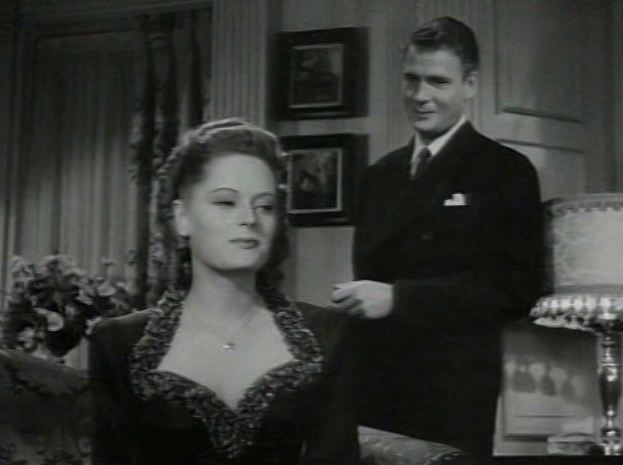
The Woman in White - 1948


“The Woman in White” (1948) is an example of how Hollywood can “borrow” a classic novel, change things around, slap together “locations” on a soundstage and back lot, even alter the ending, and still, sometimes, get it right.  This movie is a winner because of its engaging cast, and a director who employs film noir techniques on a Victorian mystery.
 
How the movie succeeds is probably because this is one of the few times where that old bemused studio system arrogance that altered the plots of classic novels as often as it changed the names of its contract players actually came up with a plot that works for this movie.  This is not to say that the movie is the ultimate version of this story, written by Wilkie Collins in 1859—it does not strictly adhere to the plot—but I will say that no filmed version of this story I have seen, including two BBC miniseries (and nobody dramatizes their literature like the British), are better.  All take liberties with plot and characterization.  This movie, I think more closely follows the spirit, certainly energy, of the book.
Long post.  I hope you brought an overnight bag.
 
The film, directed by Peter Godfrey, employs an economy of script and cinematography to capture the essence of the story.   If there was one thing Old Hollywood did well, it was atmosphere. 
The novel was a smash in its day.  It was at the forefront of the rise of the sensation novel, and one of the first to use a character, or in this case, two characters, to follow logical detection to solve the mystery.  Or mysteries.  There are several.  According to Matthew Sweet, who wrote the introduction to the Penguin Classic version published in 2009,
“The progress of the plot became a dinner-table topic and bets were struck on the outcome of this or that situation.  Collins received letters from single men demanding to know the identity of the original for his heroine Marian Halcombe, and if she would accept their hand in marriage…The future Prime Minister William Gladstone cancelled a theatre engagement in order to continue reading it...Prince Albert was a great admirer, and sent a copy to the royal family’s most trusted adviser, Baron Stockmar.” (p. xv)
 
The book is very long and the subplots are intricately entwined.  A modern reader might be surprised to discover that a book written in 1859 could have such a “modern” feel in pacing, but it really is a quick read if only because you can’t put it down.  A charming approach the author uses to create intimacy with the reader is to break up the book into separate first-person narratives with many different characters each taking a turn at bat and giving their perspective on what is happening. 
We know that Marian Halcombe is intelligent, loyal, and forthright, speaks her mind, because of her impressions as she relates them.  We know others regard her with admiration because they say so.  We know Walter Hartright is the hero because he tells us he suspects the ladies are in danger and he wants to help them.  We don’t entirely know who the villains are at first, but slowly we begin to realize from the testimony of others that some people are not to be trusted.
The movie similarly sets us up right away on the characters of Marian, played by Alexis Smith; and Walter, played by Gig Young.  We know right off the bat they are to be trusted, because both director and novelist know we have to come to the table trusting somebody.  We experience the mystery through them.  I like Gig Young in the role.  He’s stalwart and transparent, and we need to see him as the Rock of Gibraltar.
In the book, Marian is described as tall and graceful, but with an unattractive face.  Some critics may fault the film or at least smile at it because Alexis Smith was not unattractive.  However, the previously mentioned BBC offerings featured actresses in the role who were also attractive, so it seems a moot point among directors to regard that bit of information on Marian as unimportant.  And so it is.
 
Miss Smith is warm and natural in her role, speaks her accent with a greater ease than the other Americans, enjoyed good reviews, but this was one of the last films she made for Warner Brothers, having finally worked her way to star billing.
Walter Hartright is called to the mansion of Frederick Fairlie to teach his nieces to draw.   In the book, the young women are half-sisters, who share a mother.  Their parents are all deceased and Laura, the younger, is Fairlie’s ward.  Laura, through her father, is the heiress of a great fortune.  Marian, who is a few years older, has only a small income.  They are inseparable and devoted to each other.  Marian tells Walter at the beginning that neither she nor Laura can do without the other, so he must please both of them.  In the end, he does.
In the movie, Marian and Laura are cousins.  I’m not sure what necessitated this particular change in script, but the novel deals with Laura’s father having an illegitimate child, and maybe this was too close a relationship to make the censors happy.  Beats me.  That child is Anne, who in this movie becomes yet another cousin.  She is a near lookalike to Laura.  So, in this movie both Anne and Laura are played by Eleanor Parker.
I won’t go play-by-play from here on in, but what the movie does change from the novel is a skillful paring down of a very long story to under two hours of film.  The movie should be taken separately from the novel as its own creation, and will be best appreciated as such.
 
For instance, and here is a big fat spoiler—in the movie, Walter falls in love with Laura, but later circumstances change and he falls in love with Marian.  In the novel, Walter falls in love with Laura and marries her.  In this case, I prefer the movie version.  Laura is a weaker character and by the end of the novel, quite emotionally and physically dependent on Marian and Walter to take care of her.  She draws our sympathy, but does not seem like she should be an object of passion.  Marian, however, has been at Walter’s side through thick and thin, helping him and facing danger.  He tells us how much he admires her, and other characters in the story do, too.  One villain in particular is infatuated with her. It seems more logical that Walter would be, too.  The author’s only reason for Walter’s romantic disinterest in Marian seems to be that she’s ugly.
 
Eleanor Parker, one of Hollywood's most gifted actresses, is quite good in the dual roles of Laura and Anne.  Laura is charming, lighthearted, and unaffected.  Anne, who has just escaped from an asylum, is tense, with a wandering mind and an overly emotional response to others.  There may be a bit of scenery chewing here, but Anne’s at the edge and sometimes all an actress can do is go to the edge with her.

 
John Abbott plays Frederick Fairlie, plays him so well you wonder why he didn’t star in films instead of just play bit parts or uncredited walk-ons.  Frederick is a self-absorbed fop, dramatically fussing about his nerves and comically displaying a disinterest in everything but himself.  Mr. Abbott is spot-on and terrific in this role.  He’s hysterical.  It’s like this guy knew he was given the role of his life.  He takes the baton and runs with it.
Poor Curt Bois, who I think gets one line in the film, is his bullied servant.  With a slackened stance and hangdog look, he seems to be channeling Buster Keaton in a couple scenes, and makes the most of his part.


John Emery is Sir Percival, who is engaged to marry Laura.  He’s charming one minute, and a villain the next.  He’s out for her money.
The best for last.  Sydney Greenstreet.  It’s as if Wilkie Collins had Sydney Greenstreet in mind when he wrote the complicated character Count Fosco.  A brilliant man of self indulgence, who plays human beings like chess pieces, and is so wicked that writes his own rules.  And usually gets away with it.
We know early on Mr. Greenstreet must be wicked, because the director gives us a hint at the very beginning of the movie.  Gig Young is walking in the twilight mist of the English countryside of the back lot.  He meets Anne, learns a bit of her story, learns she is running away, and then she bolts as a carriage approaches. A man asks if Young has seen an escapee from the asylum.  Inside the carriage where Gig Young can’t see him, is Sydney Greenstreet with a scowl on his face.  He looks mean.
 
We next see Greenstreet when he pops through the French windows from the terrace as Mr. Young is welcomed to the mansion by Alexis Smith.  She is delighted to see Mr. Greenstreet, and treats him like a fond and funny uncle.  It's as if he is a different person.  So, we see from the start his character is duplicitous. 
We are quickly fed the plot in bite-size chunks—about asylums (there will be more than one escape before the movie is through), about inheritance, and getting robbed of one’s inheritance, and how to foil the bad guys. 
 
Alexis, by virtue of her being the older girl and because John Abbott can’t be bothered, takes responsibility for the younger Laura.  When she senses Gig Young falling for Laura, she warns him that Laura’s already engaged and he has to knock it off.  We see, though he does not, that Alexis is falling in love with him.  A few nice very light touches by the director indicate her desire.  In one scene, he questions Mr. Greenstreet's motives, and she tells him not to overstep his bounds. 
 
The camera is on her as she turns her back to him and proceeds to leave the room, but she thinks the better of it, softens, and turns to address him again.


The camera shows us he has already turned his back to her and is walking out to the terrace to be with Laura.  Camera cuts back to Alexis, who looks like a despondent wallflower at a country dance.  We can imagine she has been in this situation before.
In another scene he plans to leave the estate because Laura is going to marry John Emery.  He kisses Alexis’ hand and she leans over him slightly as his head is bowed.  She lingers as if she will touch him or say something, but doesn’t.  These are great clues that will make their union logical at the end, except we get no clues from Gig Young.  The director doesn’t set up any scenes with his reactions to her.  His later declaration of love for her seems a surprise, to us as well as her.


The director gives us some other shots though, that are splendid, uniting the 1940s with the 1850s in a neat way.  Lots of ground-to-ceiling film noir shots that show menacing figures, a few shadows on the wall. 

There’s a spiffy scene shot from the ceiling to the floor through the crystal jungle of a chandelier.  It is morning, and a few characters leave the room through a door, closing it behind them. 


Then, instantly it is night, the chandelier is lit, the door opens, and another character walks through.  It is a seamless showing of the passage of time.
On another occasion, Gig Young and Eleanor Parker are spied on through a telescope, and the camera takes a view of them through the telescope that looks like an iris shot from a silent movie.  Then it opens up, and we are no longer watching them from a distance; we are right behind them.  We could touch them.
I also really like the score of this movie.  Max Steiner is credited, but some of the English country ballad flourishes sound authentic to me, and I wonder if he adapted some traditional music?
 
Laura, who has now married Sir Percival, may be in great danger.  We suspect this when Alexis, who has spent a few months with relatives in the country while Laura and Sir Percival are in Europe on their honeymoon, returns to silly John Abbott’s mansion to wait for them.  Hey, none of the servants are familiar!  They’re all new!  Including marvelous Anita Sharp-Bolster, who we discussed here in this previous post.  That woman, with her stupendous profile, could play scary/funny like nobody. 
Alexis is given a different room on the other side of the mansion!  Away from Laura!
 
Alexis confronts John Abbott about this.  He attempts a tantrum, but his blood sugar level is too low.
Alexis discovers that Sydney Greenstreet is living here now with his wife, played by Agnes Moorehead.  She is an enigma, and takes the character from the novel to a different, more intense, level.  We may puzzle at Greenstreet’s hold over her, that allows him to taunt and manipulate her, but still waters run deep.  There’s a lot more going on here.  We will soon see she’s not just a wax figure under her husband’s thumb.  Miss Moorehead does so much with a small role, it's like she conducting a master class in acting.
 
When the honeymooners return, Laura is a changed person—haughty, gaudily bejeweled and attempting to smoke at the dinner table.  (GAD!)  She has not replied to Alexis’ letters to her during their separation.
 

Back in her room that night, Alexis writes her fears in her diary that Laura is lost to her.  This is about the only scene, except for some beginning narration by Gig Young, that tries to imitate the novel in first-person perspective, but that’s hard to keep up in a movie.
Later Laura sneaks into Alexis’ room, tells her  she has to act out a part because she’s in danger.  Alexis gets to do some girl power stunts when she climbs out on a ledge in a storm to eavesdrop (quite literally under the eaves) on the plans of the bad guys.
 
She returns to her room and we see her figure in a shadow on the wall as she is changing from a rain-soaked nightgown to a dry one.  Then the curtains part, and it’s Sydney Greenstreet!  He thinks she knows too much.  He’s also attracted to her.
There’s a nifty exchange between them when she asks, “Was it necessary to hide there and shame me as well?”
He responds with that gravely-voiced huff, “I was only too happy to discover at last something as flawless in form as it is in spirit.”  It took me several viewings of this movie to realize that meant he’d been watching her undress.  Yes, I am that obtuse.
There’s nothing quite so charming as Victorian lechery.
 
And, funny enough, just before this a scene where we hear John Emery muttering his frustration and he appears, if I’ve heard right, to use the word “bugger”.  Obviously, to us in the US this is just a funny sounding oath, but in British English it’s a vulgarity.  It may have lost quite a bit of its punch through the decades and no longer so offensive, but at the time story is set, it was quite vulgar and author Wilkie Collins never used it.  I guess those minding the store didn’t know that.
Actor and screenwriter 1, Production Code 0.


Because Anne and Laura are played by the same actress, we do have one Patty Duke Show scene where they’re together, but it’s not overdone.  I don’t think we ever mistake one for the other because they behave differently, and Anne’s makeup, with her dark circles under her hollow eyes indicates she is sickly.  But others mistake them, and I won’t tell you what happens because of it.  So there.
Mr. Greenstreet gloats over Alexis when she refuses his offer to be his mistress, predicting she will return of her own accord.  She does, when she thinks Laura’s in too big a jam and Walter unable to help.  She offers herself to the big guy if he lets Laura go.
Alexis Smith appeared with Sydney Greenstreet in “Conflict”(1945) discussed here, and she enjoyed working with him.  On “The Woman in White”, her husband in real life, Craig Stevens, was quoted in The Women of Warner Brothers by David Bubbeo (McFarland and Co., Inc.: Jefferson, NC, 2002) “Alexis was mesmerized by Sydney Greenstreet…He memorized the entire script.  He knew everyone else’s role.  She just thought he was fascinating to be around.”
In the novel, Marian describes Fosco as a man, “who devours pastry as I have never yet seen it devoured by any human beings but girls at boarding-schools…”  In a nutshell we have Fosco’s love of food, and Marian’s witty sense of humor.
 
In another passage, she tries to get Laura to leave her cruel husband, “Are you to break your heart to set his mind at ease?  No man under heaven deserves these sacrifices from us women.  Men!  They are the enemies of our innocence and our peace—they drag us away from our parents’ love and our sisters’ friendship—they take us body and soul to themselves and fasten our helpless lives to theirs as they chain up a dog to his kennel.  And what does the best of them give us in return?  Let me go, Laura—I’m mad when I think of it!”
Doesn’t sound very Victorian, does it?  The book also has an astounding subplot of murder by a 19th century style Italian Mafia. 
Watch the movie and enjoy it for all it is, which is plenty.  But treat yourself to the book as well.  Hollywood exploited popular literature and classic literature, but also introduced  a fair number of its audience to these books for the first time.  A lovely co-dependence.  Like Marian and Laura.


Monday, June 20, 2011

Conflict -1945


Conflict (1945) starts with title and credits that ooze like residue from the background of a dark and stormy night, and melt in a sinister haze while we squint through the curtain of rain. Could be a monster movie with an opening like that, but film noir adopted such techniques from their monster movie cousins, and presented a new kind of monster for us: the darker side of ourselves.

Robert Siodmak, who directed such films as the magnificently creepy The Spiral Staircase (1945), which we discussed here, co-wrote this script which blends the customary fatalism of film noir with a new emphasis on psychiatric analysis to help solve the mystery.

The psychiatric element to the story begins innocently enough. Sydney Greenstreet is a jovial, avuncular bachelor professor of psychology (love that man’s jolly guffaws), a practicing psychologist, and an avid grower of prize roses, who hosts a small intimate dinner party to honor the fifth wedding anniversary of his two friends, played by Humphrey Bogart and Rose Hobart. The film opens with what we suppose is Mr. Greenstreet’s beefy hand patiently writing out an invitation in elegant handwriting, one of the lost social graces.

Because this is a mystery, I’m going to try not to heave any gigantic spoilers at you, but step as delicately as I can around this movie by focusing on the performances. The performances give us a lot of back story we may assume about the characters, which gives the movie more depth than appears on the surface. In fact, the plot of the film is spilled out for us at the very beginning, and the real mystery is not so much who done it, or even who done what, but how is the guilty party going to meet with just desserts?

This is one of Bogart’s most interesting roles, not so much for the character as written, but for what he does with it. We meet him and his wife getting dressed to attend Mr. Greenstreet’s house party. They seem to bicker a bit, but there is nothing really to suggest an unhappy marriage. His moaning about wanting to stay home tonight and her complaining that he leaves his clothes all over the place make them seem comfortable with each other, a solid marriage if not a very exciting one.

Then a bombshell. Rose Hobart, with a single, severe streak of gray in her pompadour, speaks with the coolness of a sophisticate when she suddenly remonstrates him for his “ridiculous infatuation with Evelyn.”

Evelyn is her younger sister, played by Alexis Smith.

Mr. Bogart is surprised, but remains calm, even when she chides him that, “The way you look at her and hang on her every word is positively nauseating.” His wife insinuates, due to her sister’s extreme youth and inexperience, that Bogart is entering a kind of second childhood. His wife does not seem threatened or hurt, as much as she seems embarrassed for him. Her accusation is belittling.

Seeing himself through her eyes, perhaps he also feels that such an infatuation should be beneath him. He replies when she asks him what he’s going to do about it:

“I’m not going to do anything about it…I haven’t said anything to her and I don’t intend to.”

I like that shot of him answering her with a confident, if somewhat world-weary acceptance, in his voice. He is not apologetic or defensive. His code is self-restraint, which is what makes his later loss of self-restraint so interesting.

“When I married you, your sister was just a kid. Now she’s grown up and I happen to find myself in love with her. It’s just one of those things that can’t be helped.”

Yet, he has no intention of leaving his wife, even acknowledges that she would never let him go. Miss Hobart also contends that were he to confess his love to Alexis Smith, she’d never marry him out of loyalty to her sister, and he knows that, too. Bogart has this all figured out, he’s done a lot of brooding on it, and seems determined to face his comfortable rut of marriage and his unspoken crush on his young sister-in-law, and keep them separate.

But his stoic veneer cracks a little when Rose Hobart, who can’t seem to leave well enough alone, taunts him that Alexis would laugh at him were she to find out. This stings him. Bogart looks hurt.

But he’s determined to soldier on through this new unpleasant turn in his marriage. His love for his sister-in-law was a precious thing as long as nobody knew about it. Now it’s spoiled for good.

Alexis Smith pops her head into their bedroom and reminds them to hurry. She is fresh-faced, beautiful, and open. What back story she brings to her role is largely in these qualities, and in a lack of sophistication that makes her utterly unaware of both her beauty and her affect on Humphrey Bogart.

She lives with them. Their mother lives in another part of the country. We are told nothing about a father or other siblings. We may assume she was a teenager when her sister and Bogart married, and now she is in her early 20s. Her guileless good-natured attempts to be both pleasant and useful might make her seem a dishwater character on paper, but what Alexis brings to the role is a gentle vulnerability. She seems in awe of both of them and holds them as an example of the perfect married couple.

There is a subtle difference between her relationship with her sister and her relationship to Bogart. She seems deferential to the older, more confident, more worldly sister, who has taken her into her home. In some respects, her sister will always be the knowing grownup and she will always be the mousy youngster. With Bogart there is a more comfortable friendship, as if she has not quite grown out of the teen who finds herself with the unaccustomed pleasure of an indulgent older brother. There is not a little hero worship for him.

“I only hope that someday I’ll find a husband as good as you,” she says, and drops an affectionate kiss on his cheek after a round of congratulations at the party, which Bogart accepts with a charming look of being comforted. He nearly blushes. Yeah, Bogie, no less.

Family doctor Grant Mitchell is also at the party, and so is Sydney Greenstreet’s young colleague, played by Charles Drake. Mr. Greenstreet does his best at matchmaking through the course of the movie, trying to get the lovelorn Drake and the reticent Alexis Smith together.

The party conversation turns to the nature of love and the psychology of it. Alexis wants to know what Mr. Greenstreet does as a psychologist, and he explains that he battles the nature of psychosis.

“Sometimes a thought can be like a malignant disease that starts to eat away the willpower.”

Bogie is visibly uncomfortable with this, and we know he is afraid his precious, private infatuation might be construed by the misunderstanding outside world, certainly by his wife, as a mental disease.

“Love and its frustration is the worst offender,” Greenstreet pontificates, but Alexis Smith counters with an eager recitation of all the famous lovers in history and literature. Here we see for an instant, another flash of Bogart’s versatility. Look at his expression as he watches her tentative attempt to illustrate the enviable flush of romance that she has never experienced. His adoring expression is the picture of a schoolboy crush. Yeah, Bogie, no less. Maybe the most sensitive tough guy that ever lived.

But when forced to bring her fantasies about romance down to earth Alexis affirms to her sister, “When I marry, I want it to be something solid, like you and Dick.”

They drive home in the omnipresent film noir rainstorm, Bogie and the missus in front, the kid sister in the back -- because of the camera angle, literally as well as figuratively between them. Miss Hobart suggests Alexis go home to Mother because Mother misses her. Obedient Alexis regretfully agrees, and Bogart sneaks an anguished look at her in the rearview mirror.

Which causes the car crash.

The car plows right at us in a sickening flash, and may cause you to use your favorite exclamation of alarm.

A brief, film noir dream (or nightmare) sequence of the faces of the conflicting personalities in his life, from his wife, to Alexis, to Greenstreet, all jumbled in a wet whirlpool, and we see that Bogart is just regaining consciousness. Doc Grant Mitchell assures him he has only a broken leg, and that the ladies are fine. Bogart has asked after Alexis first.

Confined to a wheelchair back home, though hobbling on a cane when nobody is looking, Bogart is the picture of helpless frustration. Alexis has been sent away. He and his wife resume their comfortable rut of a passionless marriage.

Then his wife goes missing.

It’s no secret what happened to her, but I’m going to sidestep that and just go on to another couple of interesting aspects of the movie. Though she is missing and the police haven’t got any clues as to what happened to her, personal items of hers that she wore or had with her when Bogart last saw her begin to show up here and there. Traces of her follow Bogie around. We may wonder if this is a ghost story, or an elaborate hoax and who are involved?

Through the cat and mouse trickery played on Bogart, he begins to unravel. We see the man once an example of confidence and strength become testy, nervous, quick to anger, and nearly unglued by weird happenings, as well as by psychological symbols that almost seem as hallucinations (some of which are something Alfred Hitchcock might have used in Spellbound or Vertigo discussed here). 

Speaking of becoming unglued, we discussed Mr. Bogart's other forays into the wonderful world of Losing It in this previous post on Crazy Bogie.

His only comfort is the return of Alexis Smith, who arrives to commiserate about the disappearance of her sister, to bring to and find comfort from, her only other really close relationship: her bereft brother-in-law.

Interesting how the Production Code must not have been invoked by these two sharing a home together unchaperoned, but Bogart’s self-control returns enough to keep him from entering her bedroom across the hall from his.

Lots more rain, the iconic sight of Bogie in his trench coat (did I mention it rains a lot?), and carefully stocked cigarettes in slim cases for smokers on the go.

One small point, but somehow as sweet as his unspoken crush on Alexis Smith, is the unselfconscious and natural picture of her being taller than him. Alexis Smith was 5’9”, and in at least one movie I can think of, Here Comes the Groom (1951), discussed here, her height was used for comic effect and she played a wallflower partly because of it.

Bogart was 5’8”, and in some of his films, notably Casablanca (1943), he wore lifts to compensate for his appearance with the taller Ingrid Bergman (like Alexis Smith, 5’9”) and Paul Henreid. In Conflict, Bogart and Miss Smith stand an inch, and worlds apart.

Another iconic sight, but from another movie is the Maltese Falcon. The statue. It appears high on a cabinet in the police detective’s office, just over Bogart’s shoulder as he paces anxiously and demands progress in the investigation. I don’t know whose joke it was to put it there, but it’s easy to miss if you’re not looking for it. Sydney Greenstreet was, of course, in The Maltese Falcon (1941) with Bogart.


Speaking of the police detective, played by Patrick O’Moore: close your eyes and listen to him. Doesn’t he sound just like Claude Rains?

And one more: catch all the “B” stickers on all cars? This movie was released in June 1945, so wartime regulations on gas rationing were still in force. However, this does not explain why they are free to take trips to their favorite mountain lodge. A “B” sticker would get you about eight gallons a week (the lodge was something like 100 miles away), and pleasure travel was illegal during the war anyway.   We discussed gas rationing and the movies in this previous post.

But, by the time this movie was in theaters, V-E day had come and gone, and though we were still struggling with the war in the Pacific, the light was at the end of the tunnel and war-weary audiences might not have jumped to their feet hollering, “Hey! What gives? How come Bogie can drive around whenever he wants and I can’t?”

Except Rose Hobart’s car, which, oddly enough, has no sticker. Arrest that woman.

One funny moment: When Bogart, in a daze over a new creepy event, wanders away from a cab he had instructed to wait for him. The cab driver, annoyed, yells, “Hey! Sweetheart! Remember me?”

Now Alexis and Bogart, with sis out of the way, can explore their relationship. Bogart tests her feelings by confessing that his wife “imagined that I’d fallen in love with you.” Her reaction of sisterly concern and discomfort is less than he might have wanted, but Mr. Greenstreet arrives before things develop.

Off they go to the mountain lodge to ease the stress of the tragedy of the missing older sister, fish, and dance in rustic surroundings. Greenstreet’s along, and still tries to shove Charles Drake at Alexis as a prospective suitor.

Bogie, his self-control now stretched to the limit, gets jealous and openly confesses his love for her in a harassing manner, almost as if daring her to laugh at him. She does not deny or confirm her feelings, only pulls uncomfortably away and reminds him, “It can never be.”

After enough badgering, she finally tells him she doesn’t feel that way about him, but diplomatically continues to insist her sister would always be between them. Why he lets her go suddenly is never completely fleshed out, but we may assume his self control has returned in the face of his acceptance that it really cannot ever be.

It’s a stylish film, and even if one or two plot holes keep it from being perfect, Conflict is an absorbing movie.

For more on Conflict have a look here at our Laura’s recent post on “Laura’s Miscellaneous Musings”.

*********

Jacqueline T. Lynch is the author of Ann Blyth: Actress. Singer. Star. and Memories in Our Time - Hollywood Mirrors and Mimics the Twentieth Century. Her newspaper column on classic films, Silver Screen, Golden Memories is syndicated nationally.

Monday, December 10, 2007

Christmas in Connecticut (1945)

“Christmas in Connecticut” (1945) gives us a nostalgic wartime Christmas, but in curiously modern wrappings. Its charm is its coy look at exploitation, of the holiday, of the war effort, and of human nature. Never was cynicism presented so cheerfully.

Also, the movie is all about food. Food is discussed, eaten, and analyzed constantly, and this is a film which must be viewed with plenty of snacks on hand or you’ll go crazy.

Another feature is that this is one of the few films of the era that introduces two African-American actors in walk-on roles which are not stereotypes. One is a female delivery person, taking over a traditional man’s job as was typical in the war years, and one is a cook in Felix’s restaurant named Sam, who responds to Felix’s question about what does the word “catastrophe” mean, with a concise dictionary definition. Both characters are seen for only moments, but they are clearly in positions of responsibility and are intelligent. It should be noted if only because it is so rare in this period.

Barbara Stanwyck plays a magazine columnist who writes about food. She is the Martha Stewart of her day, a woman with a knack for planning the perfect party, preparing the perfect menu, and running a perfect home. The problem is she can’t do any of this. The recipes she writes about are actually the work of her friend restaurant owner Felix, played by S. Z. Sakall. Her home is a cramped city apartment, where we see her watching someone’s laundry flap outside the window on the line while she bangs away at her typewriter, scarfing a plate of sardines.

A sailor, played by Dennis Morgan, survives the sinking of his ship and is offered a hero’s homecoming by magazine owner Sydney Greenstreet, who insists Miss Stanwyck invite the sailor to her famous Connecticut farm for Christmas. A boost for circulation is his motive.

There is no farm. She lied. Fortunately, the delightfully dull and self-important architect played wonderfully by Reginald Gardiner, whose marriage proposals Miss Stanwyck keeps refusing, owns a Connecticut farm and he agrees to help out. The rest of the film is all screwball mistaken identities, with Stanwyck and Gardiner pretending to be married, Sakall pretending to be a visiting uncle, but who is really on hand to do the cooking, and the babies left by local women who work in the war plant to fill in for their child. Una O'Connor is delightful as the housekeeper.

All have something to gain. Stanwyck wants to keep her job, not wanting to let her boss know she lied to him and her magazine persona is a sham. Reginald Gardiner wants to really marry Stanwyck, and wants his own column with the magazine. Mr. Greenstreet wants his magazine, “Smart Housekeeping” to beat its competitors to the newsstand with a heartwarming Christmas story. It’s interesting that Gardiner’s farmhouse becomes like another character in the story, its picturesque colonial homey setting morphs into everyone’s ideal home. Greenstreet’s opulent mansion is a cold prison where he will be alone on the holidays, so he invites himself to spend Christmas with them. The sailor has never had a home of his own, so this is his ideal. It allows Stanwyck to experience a contented and orderly home life she can only invent in her writing.

Stanwyck tells Sakall that she would like to learn to cook someday, and he warns her off it, telling her that she will discover real cooking is not how she writes it. To keep her fantasy alive, she can’t risk making it real.

Her boss Greenstreet tells her, “You’re a fine American wife and mother,” and we know this is not true. She knows it too, and one of the funniest aspects of the movie is Stanwyck’s discomfort not only at accepting undeserving praise for what is really a self-serving adventure, but her hilarious panic at taking care of the baby. The first baby, a placid dark-haired girl she at first thought was a boy until the diaper was removed for bath time, is a real trooper. This baby is handed off, bathed, manhandled and takes it like a pro.

When the sailor asks if the baby talks yet, Stanwyck, baffled, looks into the baby’s face and uncertainly guesses, “No.” Then shrugs. Caring for the baby has reduced her to pathetic helplessness, and she appears nearly ill with anxiety. It is one of the many deft comic touches to this film of non-stop hurdles each character must face down.

Thrown into each other’s company, Miss Stanwyck and Mr. Morgan’s growing attraction to each other is irresistible in its forbidden context because she is supposed to be married, but because the audience knows she is not really married and not at all in love with the fussy Mr. Gardiner, it makes their flirtation okay. There is poignancy in their relationship too, because we see that they are both a bit lost and painfully unhappy with their private lives. This homey Christmas, as fake as tinsel, has given each a glimpse into the kind of life they would like but seems unattainable.

The deeper Stanwyck gets into the ruse, the more she enjoys her naughty flirtation with the sailor, the more unhappy she becomes. Finally she confesses her disgust and anger at the perfect magazine persona she has created, “She’s so smart, knows all the answers. Gets herself into a mess and hasn’t the moral courage to get herself out of it.”

When she and the sailor slip away from the town hall dance and war bond sale to be alone together and end up spending the night in jail, the pace of the movie quickens even more and the fireworks at the end emboldens her, and the rest of the Christmas guests, now transformed into a kind of grudging family, to get what they want.

When the sailor’s former nurse and fiancée shows up unexpectedly and asks if he lives here, Felix mumbles with resignation, “Everybody lives here.”

The movie successfully gets away with winking at self-serving human nature while celebrating the possibility of the best of human nature, including our resilience to adversity. It is funny that Sydney Greenstreet keeps referring to his employees as his possessions and calls the baby (or babies) The Smart Housekeeping Baby. Here we have an actual magazine ad for Mennen baby lotion using the images of Stanwyck, Morgan, and that sweet, good-natured baby from “Christmas in Connecticut” to sell a product. Art imitating life? Or just the American way?

Thursday, November 29, 2007

New England Sleigh Ride

At the end of “White Christmas” (1954), the first few flakes of long-awaited and hoped for snow finally fall. No sooner have Bing Crosby and Danny Kaye spied the snowflakes floating down like a benediction on this Vermont soundstage, er, landscape, that a sleigh cruises by. Bing and Danny cheerily wave and shout to the driver, but neither wonders how a sleigh can move on what must have been only an eighth of an inch of snow. Yet, we hear no scraping of the metal runners on the road, no clawing of clumps of dirt in the drive. This is because it is snowing, and when it snows in New England, New Englanders ride in sleighs. Ayuh.

In “Holiday Inn” (1942), Bing’s other New England country hotel outing, Marjorie Reynolds arrives at Holiday Inn in a sleigh. This is because it is winter, and Holiday Inn is in Connecticut. This sleigh happens to be a taxi. In New England, taxis in the winter are sleighs. How do I know? The movies tell me so.

In “Christmas in Connecticut” (1945), Barbara Stanwyck arrives at her fiancé’s Connecticut home by sleigh, again a taxi. Again, there is only about an eighth of an inch of snow on the ground. In a little while Dennis Morgan arrives by sleigh, and a little while after that, Sydney Greenstreet arrives, also by sleigh. Later on when Miss Stanwyck and Mr. Morgan, who have taken a liking to each other, sneak away from a party at the local town hall to be alone, they naturally go for a sleigh ride. This is New England. In winter, we ride in sleighs, got it? There is one conveniently parked by all the automobiles. They ignore the cars and steal the sleigh. They get arrested for sleigh-knapping, which is a serious offense in these parts.

Being a New Englander myself, I can vouch for the veracity of this sentimental Hollywood version of New England. If I had a nickel for every sleigh I see driving around in the winter on city streets, I’d be a millionaire. Not just city traffic, mind, but the interstate highways are veritably clogged with them. Driving those horses like gosh all hemlock, not signaling when they change lanes. Sweet Betsy from Pike, it’s maddening.

You think summertime traffic coming off Cape Cod at the end of a weekend is rough? Try coasting over the Bourne Bridge in a sleigh in the wintertime, only to find yourself behind a line of sleighs ahead of you as far as the eye can see. You think Route 1 from Connecticut to Maine is bumper to bumper in the summer? Try it in December, my friend. You’ll be huddling under your buffalo robe in your sleigh, moodily sipping from your flask and becoming more foul-mouthed by the minute as you wait in traffic. But the movies never show that ugly part, do they? No, they go for pure fantasy.

That’s all for this week. Have a nice weekend. See you Monday. I’m off to wax my runners.

Related Products