IMPRISON TRAITOR, PEDOPHILE, AND CONVICTED FELON TRUMP.
Showing posts with label William Holden. Show all posts

Thursday, October 22, 2020

The Turning Point - 1952


The Turning Point (1952) depicts a government committee’s investigation of organized crime. In film noir style, it becomes a kind of anti-crusade, a bleak tale of shattered illusions, of mobsters who get away with pretty nearly everything just by seeing how far they can go, of cops on the take, and a romantic triangle that blows up into bits.


This is our entry into the Politics on Film Blogathon hosted by the Classic Movie Blog Association.
  Have a look here at more participating blogs.


Edmond O’Brien plays the head of the investigating committee, a college-educated, idealistic, and unimpeachable hero out to crush the gangsters and their tenacious reach into law enforcement and politics.  Though he states he has no political ambitions himself, nailing the crime syndicate would be his ticket to fame and almost any future political office he wants.


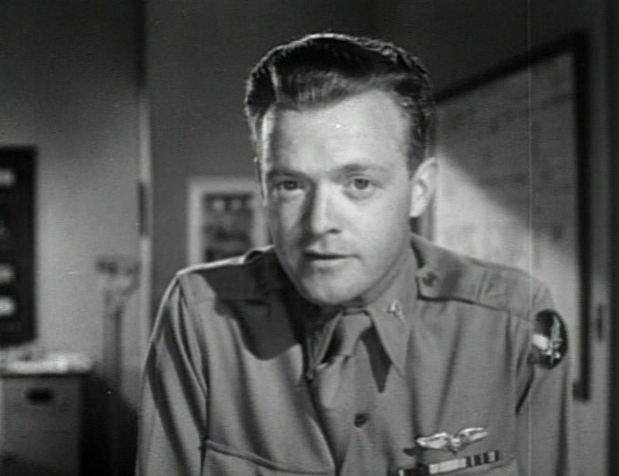
William Holden is his boyhood pal, now a cynical and savvy reporter who will follow the doings of the do-gooders and spare them as little mercy in his crusty observations as he does the mobsters.  The two of them are 1950s men in the gray flannel suits, better educated than their fathers, and considered to be more successful, certainly with more polish. But rather than easier, their lives seem even more complicated.


Alexis Smith also has considerable polish.  She is also college-educated, and comes along with Edmond O’Brien as his gal Friday.  She holds a kind of secretary’s position, we gather, but she is seen more often pouring coffee than taking notes, and hosting cocktail parties for the committee.  Holden sizes her up with a sexist if not exactly misogynistic attitude, noting at once that this apparently high-class society dame might be slumming.  He senses phoniness.  She challenges his self-superiority and his cynicism with her own well-pointed remarks and a withering glance or two, getting him only to admit that as a reporter, he only points out the problems of life and never the solutions.


Tom Tully plays Edmond O’Brien’s father, a tough cop.  Tom Tully is one of those wonderful character actors equally adept as playing lovable as playing hard-edged and sarcastic.  Mr. O’Brien invites his dad to help in their investigation, counts on it, but Tully begs off, wanting no part of politics or some high-tone committee holding meetings in a swank hotel ballroom.  He says he’s just a cop and wants nothing more than that until they pension him off.  O’Brien insists that he wants an honest cop like Dad on his side.
 

But Tully is a cop on the take.


William Holden, who always seems to be giving everybody the side-eye, suspects this almost immediately and spends a good deal time tailing Mr. Tully, who is working directly at the pleasure of the head mobster, played by Ed Begley, who is so effective in these kinds of blustering, snide roles.  Tully got involved with the mob years earlier when he wanted more money to send his boy Edmond to college.  So we have the irony of Edmond’s superior education and supposedly superior morals bought with dirty money.


Tailing Tully brings us some wonderful location shots of the more run-down neighborhoods of Los Angeles (though the movie is evidently supposed to be set in some fictional Midwest town). There is a great sequence on the Angel’s Flight funicular, which we covered in this previous post.


Don Porter is also one of Ed Begley’s boys, as is Danny Dayton.  Even Whit Bissell, whom we see briefly when Tully goes to ask for some official records to be photo-stated, is also on the take when he rats to the mobsters that Tully has copied some info on them he shouldn’t have.

The result is Ed Begley putting out a hit on Tom Tully, and also having the mobster who shoots Tully to be killed in turn.  Nobody left to implicate him.  Anybody’s expendable, according to Begley.


William Holden, along with his cynicism for do-gooders as to how much good they do, now carries the burden of keeping the knowledge from Edmond O’Brien that his father is a crook.  Holden confronted Tully and gave him a chance to go straight by getting the info on Begley, for which Tully was murdered, and for which Holden now feels responsible.  If that wasn’t enough to carry on his plate, Alexis Smith shows up at his apartment to confront his arrogant detachment, and when he takes her on another tailing of bad guys, pretty soon she’s pouring his coffee as his gal Friday. Alexis is smart, and fearless, and honest with herself and others, and he likes that.  It’s a role Alexis plays so well, her intelligence and her elegance is part of her sexiness.  Pretty soon he has another burden; he’s betraying his best buddy.

Edmond O’Brien, who declares, “I’d rather nail one crooked cop than a hundred hooligans,” will eventually be crushed to find out his dad is one.  In the meantime, his dad has been murdered.


Edmond also catches Alexis with her head on William’s shoulder, but he asks no questions.  Some things can keep, or maybe he doesn’t really want to know.

One standout feature of the movie is the televised committee hearings conducted by Edmond O’Brien as he deposes the lesser figures in the crime syndicate in order to get at the top.  This is based on the Senator Estes Kefauver hearings on organized crime from 1950 and 1951 as a special committee of the United States Senate.  This was for forerunner of all the televised investigations that would become part of our social zeitgeist through the decades: the Army-McCarthy Hearings, Watergate, right up through the Impeachment of Donald Trump. 


Such TV hearings make us familiar with the individuals of our legislature, make household names of senators from states other than our own, and become part of pop culture.  We may expect that the trajectory of his political career will only rise for Edmond O’Brien after this. (Two other films released this same year of 1952 also featured Kefauver-like committee hearings: The Captive City and Hoodlum Empire, so we can imagine the impact that first-ever live TV hearing made on America.)


Carolyn Jones stands out in her debut film performance as a comic gangster’s “moll” being questioned by the exasperated Edmond O’Brien.


One of the witnesses blurts out the information that a company owned by Ed Begley will yield documents pointing to his guilt, and while O’Brien and his men prepare to follow this lead, Begley arranges an intricate setup of a gas explosion and fire that will destroy the building, and the apartments above it. When one of his men questions him going that far, murdering a bunch of residents in the building just to cover his tracks, Begley sneers, “You wouldn’t think we’d do it?  That’s what makes it good.  I don’t think a jury would believe it either.”  Pushing evil to the extreme to dare people to believe their own eyes is another tactic used infamously today.

Walking among the bodies of innocent victims after reaching the blast too late, Edmond O’Brien is disgusted, defeated, and he wants to give up, but Holden urges him to continue.  He tells him about his father’s being a crooked cop and makes the frank, and in spite of himself, idealistic viewpoint, “Even allowing for the apathy of the people and their lack of integrity and their occasional lack of intelligence, and that’s the fact that they all want desperately to believe in a certain majesty of the law.  And for people like you and me, the greatest crime in law is the lack of faith in the law, and that’s when we join hands with the hoodlums.  If they can convince us of the uselessness of knocking out crime, the difficulty, the fact that personal sacrifices may be too great, then we might as well hand over the city and the state and the nation, too…”

Then O’Brien and Holden shift gears to separately track down the girlfriend of the mobster who shot his father, because she has more info that would nail Ed Begley and she wants to talk.  Adele Longmire is great in her brief scenes. It’s a suspenseful search, but we find ourselves in the bowels of boxing arena (which is actually the Olympic Stadium in L.A.) where Holden is hunted by an assassin, played by Neville Brand.


Alexis catches up to him, but he pushes her away just the gun trained on him is fired.  Edmond O’Brien shows up too late again, and though we are certain by now that there is enough evidence on Ed Begley to bring the racketeers to justice, we don’t see that happen in front of us, and we are left with an ambiguous ending also for what future Edmond and Alexis are going to face.  The individual stories of the trio are brushed aside, made almost irrelevant in the wake of the enormity of political intrigue.

The Turning Point can be seen, at least for now, on YouTube if you want to have a look.

Have a look at the other great blogs participating in the Classic Movie Blog Association’s Politics on Film Blogathon.

************

Jacqueline T. Lynch is the author of Ann Blyth: Actress. Singer. Star. and Memories in Our Time - Hollywood Mirrors and Mimics the Twentieth Century. Her newspaper column on classic films, Silver Screen, Golden Memories is syndicated nationally.  Her next book, a collection of posts from this blog - Hollywood Fights Fascism - is available for pre-order here on Amazon.


Thursday, April 17, 2014

Ann Blyth - Profession of Faith


On February 20, 1955, Ann Blyth was given the Star of David Award at a charity ball in Los Angeles for her work in support of the Jewish Home for the Aged.  This was only one occasion of many when she had been noted for the charitable work she'd been involved in since she came to Hollywood, including both religious and civic organizations.  On another occasion, she was awarded an honorary Doctor of Humane Letters degree from St. Joseph’s College in Emmitsburg, Maryland, for her years of participation in these activities. 
Charity and civic work played a large part of her private life, but since this series is focused on her career, we’ll cover in this post those professional gigs that combined her acting career with her personal commitment to her faith.
She found herself part of a small colony of Roman Catholic actors in Hollywood, some of whom belonged to the Catholic Actors Guild, founded 1914.  Its first president was Jerry Cohan, George M.’s father.  Other members included Claudette Colbert, Pat O’Brien, Irene Dunne, Wallace Ford, Rosalind Russell, Ruth Hussey, Raymond Massey, Helen Hayes, and Jane Wyatt.
From time to time, some of these folks, Ann especially, appeared in a long-running radio program called Family Theater, which presented literary classics like A Tale of Two Cities, mixed with family dramas and gentle comedy.  The host, usually a guest actor, would remind the audience that praying together as a family would help lead to world peace.  Founded by Fr. Patrick Peyton, who established the Holy Cross Family Ministries, the program featured such other Hollywood luminaries as James Stewart, Bob Hope, and Barbara Stanwyck.  Fr. Peyton, you might recall, coined the phrase: "The family that prays together, stays together."
Ann’s first appearance on the show was in August 1947, and she appeared several times in the show’s run, which ended in 1957.  The Triumphant Hour was a kind of kin to this show, and she appeared on this radio program, and The Joyful Hour in December 1949, playing Mary to Macdonald Carey’s Joseph in The Nativity.  Bing Crosby and Dennis Day were part of a large cast.
In the late 1950s and 1960s, television broadcast The Christophers, where Ann appeared as a guest in a kind of talk show or panel discussion on such topics as: “Gear Yourself to a Fast Changing World” (1963), “Careers That Count” (1958), “You Can Change the World” (1951), “Give Children Good Reading Habits” (1960), and “Teen Agers: Today and Tomorrow” (1965).  “You Can Change the World” is no longer up at YouTube, but it featured a large cast including Irene Dunne, Loretta Young, Ann Blyth, Jack Benny, all in discussion with Fr. James Keller.  Though Jack Benny was along for comedy relief, it was William Holden’s concerned face being among the earnestly staged discussion that just sort of made me smile.
Here is a clip from a Family Theater short in celebration of Easter, with Ann Blyth singing “Come Holy Ghost.”  The clip demonstrates her rich, surprisingly powerful soprano voice, and I particularly like how relaxed she appears while singing, the leisurely pace of the song and her vocal technique itself creating drama.  It's a fine display of both her artistry, and her contentment in singing and in her faith.
A Happy Easter to those who celebrate it.


For those of you in the mood for a little Easter OTR (Old Time Radio), have a listen to Ann in "The Arbutus Bonnet," a dramatic episode of Hallmark Playhouse, hosted by author James Hilton, in a script adapted by Jean Holloway (one of my favorite radio and TV writers).  It was broadcast April 6, 1950.  Scroll down to "50-04-06" and download or listen.
Come back next Thursday when we discuss the delightful comedy Sally and Saint Anne, a coming-of-age story where small-town girl Ann Blyth suffers vast growing pains amid a daffy family in a circus of a home.  She has the help of her best buddy, Saint Anne.

*************************

Pittsburgh Press, May 8, 1964; also article by Carl Apone, July 28, 1968, p. 13.

*************************

THANK YOU....to the following folks whose aid in gathering material for this series has been invaluable:  EBH; Kevin Deany of Kevin's Movie Corner; Gerry Szymski of Westmont Movie Classics, Westmont, Illinois; and Ivan G. Shreve, Jr. of Thrilling Days of Yesteryear.

**************************
UPDATE:  This series on Ann Blyth is now a book - ANN BLYTH: ACTRESS. SINGER. STAR. -

*********************
The audio book for Ann Blyth: Actress. Singer. Star. is now for sale on Audible.com, and on Amazon and iTunes.

Also in paperback and eBook from Amazon, CreateSpace, and my Etsy shop: LynchTwinsPublishing.


 "Lynch’s book is organized and well-written – and has plenty of amusing observations – but when it comes to describing Blyth’s movies, Lynch’s writing sparkles." - Ruth Kerr, Silver Screenings

"Jacqueline T. Lynch creates a poignant and thoroughly-researched mosaic of memories of a fine, upstanding human being who also happens to be a legendary entertainer." - Deborah Thomas, Java's Journey

"One of the great strengths of Ann Blyth: Actress. Singer. Star. is that Lynch not only gives an excellent overview of Blyth's career -- she offers detailed analyses of each of Blyth's roles -- but she puts them in the context of the larger issues of the day."- Amanda Garrett, Old Hollywood Films

"Jacqueline's book will hopefully cause many more people to take a look at this multitalented woman whose career encompassed just about every possible aspect of 20th Century entertainment." - Laura Grieve, Laura's Miscellaneous Musings''

"Jacqueline T. Lynch’s Ann Blyth: Actress. Singer. Star. is an extremely well researched undertaking that is a must for all Blyth fans." - Annette Bochenek, Hometowns to Hollywood


Ann Blyth: Actress. Singer. Star. 
by Jacqueline T. Lynch

The first book on the career of actress Ann Blyth. Multitalented and remarkably versatile, Blyth began on radio as a child, appeared on Broadway at the age of twelve in Lillian Hellman's Watch on the Rhine, and enjoyed a long and diverse career in films, theatre, television, and concerts. A sensitive dramatic actress, the youngest at the time to be nominated for her role in Mildred Pierce (1945), she also displayed a gift for comedy, and was especially endeared to fans for her expressive and exquisite lyric soprano, which was showcased in many film and stage musicals. Still a popular guest at film festivals, lovely Ms. Blyth remains a treasure of the Hollywood's golden age.


The eBook and paperback are available from Amazon and CreateSpace, which is the printer.  You can also order it from my Etsy shop. 

If you wish a signed copy, then email me at JacquelineTLynch@gmail.com and I'll get back to you with the details.

Thursday, July 18, 2013

Angel's Flight Railway in the Movies


One scene in our look at "The Unfaithful" (1947) last week here--really delighted me and I thought I'd save that for this week.  It's this view of a funicular railway in downtown Los Angeles.   We see Marta Mitrovich, who plays the widow of Ann Sheridan's attacker, traveling home to her working-class neighborhood on this railway car, when she reads the news of her husband's death in the newspaper.


I don't suppose there's any reason to have this scene on this funicular, it has nothing to do with the plot, but it makes for a nice foray into Los Angeles sights, and "The Unfaithful" is full of them.  I remembered seeing this same funicular in "The Turning Point" (1952) -- a movie we'll have to discuss sometime or other.
 
 
In that movie, we see William Holden and Alexis Smith riding the steep railway as they ferret out a mystery. 
 
The funicular is called Angel's Flight Railway, and was built in the Bunker Hill area of downtown L.A. in 1901.  I understand it has been filmed in a handful of movies,
 
  Another shot from "The Turning Point"
 
The original Angel's Flight was dismantled in 1969 when the area underwent an extensive urban renewal project, and a lot of the, now rundown, but historically significant buildings in the neighborhood were demolished.
 
 
Here in "The Turning Point" the camera pans out the window and we can see an example of what the neighborhood looked like before it was demolished.
 
The funicular is only about two blocks long.  It was built at a time when the Bunker Hill area was fashionable.  It continued to be used as daily transportation by working-class people when the neighborhood demographics changed, and finally, torn down when the promise of the future came, as it did to so many cities, in the form of really ugly 1970s steel-and-concrete urban renewal projects.
 
 
Funny, though, that our wish to be modern fights our wish to be nostalgic.  Giving in, perhaps, to this secondary urge, as well as the desire to turn any attribute into a tourist attraction, the Angel's Flight was re-created a little bit south of where the original stood. 
 
You can read more about the controversial history of the new Angel's Flight Railway here, with some photos.
 
Another shot from "The Unfaithful"

Thursday, February 28, 2013

Hollywood Commandos - 1997


“Hollywood Commandos” (1997) is a made-for-television documentary that classic film buffs, as well as students of World War II history, should see.  It tells the story of one Army Air Corps unit that profoundly altered the training of troops, how the war was to be fought, and documented the entire military experience of World War II from recruitment, to technology, to combat action, to the grisly discovery of Hitler’s concentration camps and the apocalyptic scenes after Hiroshima and Nagasaki.  Its home base of operations—Hollywood.
 
This Army Air Corp unit was called the First Motion Picture Unit, or FMPU.  Though the motion picture industry made many contributions to the war effort—in battle and home front pictures to boost morale, in welcoming servicemen at the Hollywood Canteen, and in the promotion of bond selling—FMPU was the motion picture industry’s greatest and most valuable participation.  We know that many film actors put their careers on hold to join the military during those years, but the FMPU was as if the industry itself put on a uniform.
We discussed “Resisting Enemy Interrogation” (1944) here last week as part of the Fabulous Films of the 1940s blogathon.  That film was produced by FMPU. 
FMPU had its start when the Warner Bros. studio, a step ahead of the other studios to openly denounce the fascist powers of Europe and acknowledge the coming storm, produced a series of shorts about the different armed services.  Army Air Corps General “Hap” Arnold contacted studio head Jack Warner and asked for a recruitment film.  As we mentioned in last week’s post, when the US entered the war we were far behind our enemies in combat strength and had a lot of catching up to do.
 
Jack Warner was made a Lieutenant Colonel (the unit would later be commanded by famed movie stunt pilot Col. Paul Mantz), and he, along with writer/producer (later Colonel) Owen Crump, launched production on “Winning Your Wings”.  James Stewart, who was already in the Army Air Corps as a pilot, was pulled off duty to star and narrate this film.  It was made in 18 days and rushed out to theaters and college campuses. 
It is reported that over 150,000 enlistees into the Army Air Corps can be traced directly to seeing this movie.
So the race began to catch up to the enemy, both in recruitment and in training, and FMPU was established in June 1942.  The unit soon moved to the old Hal Roach studio.  Where Laurel and Hardy bungled their way through odd jobs, and the Our Gang kids messily marched through childhood, the new 18th Air Force Base Unit churned out training films, recruitment and morale films, and trained combat photographers. 
 
Many Hollywood technicians were called into this unit: writers, directors, cameramen, carpenters, makeup men.  Most of the actors were starting their careers and were for the most part, unknown.  This was useful in depicting the trainees as average guys with whom their Army Air Corps audience could identify.  Stars tended to take away attention from the lesson.  Captain Ronald Reagan was the personnel officer for this unit, and appeared in a few films, including “Recognition of the Japanese Zero Fighter”.  In this, he plays a trainee who mistakenly fires at an American plane piloted by Craig Stevens, who is understandably grumpy about it.  This film was made because several friendly fire incidents needed to be addressed early in the war.
For the most part, Captain Reagan’s participation in these films was as a narrator.  Craig Stevens also appears as a pilot trainee in “How to Fly the B-26 Airplane” (1944).  Don Porter is his instructor.  It’s not as good a story as “Resisting Enemy Interrogation”, but if you can stick out watching it, you will most certainly know how to fly a B-26 airplane.
“Hollywood Commandos” is a terrific documentary that gives a glimpse into the making of these films.  Loaded with archival footage, there are also several interviews, with Owen Crump, with writers, directors, technicians, actors including Ronald Reagan, DeForest Kelly (whom we may most remember as Dr. "Bones" McCoy on the "Star Trek" TV series), and also Craig Stevens in what must have been his last appearance on film before his death a few years after this documentary was made.  Many anecdotes are told, some quite funny. 


Stevens comically relates his dread of appearing in “Three Cadets” which dramatized the dangers of venereal disease and the protocol for treatment.  Lt. (later Capt.) William Orr, the father of the writer/director/producer of this documentary, had a famous role “Three Cadets”, and he tells a funny story about it. 


Other actors in this unit who later became more well-known include Arthur Kennedy, Van Heflin, George Reeves, and George Montgomery. 


Some of the actors in this unit who were already started or well along in their careers include Alan Ladd, William Holden, Ronald Reagan, of course, and Clark Gable was attached to the unit briefly and flew on combat missions to film documentary footage.
“Hollywood Commandos” has a fascinating segment on a top-secret project to create a huge scale model of Japan, all detail done by hand, and film a virtual “fly over” to educate flight crews who would be sent on missions over Japan.
There are dramatic segments on the “Learn and Live” and “Ditch and Live” films that instruct flights crews on how to survive a crash.  These lessons were the forerunners of the US military’s later survival schools.
 
Some of the training was done through animation, and much voiceover work was volunteered by the great Mel Blanc.
“Hollywood Commandos” points out in a chilling sequence that, as it was said at the time, the first shots of the war came not from a cannon or gun, but from a camera—and we see German director Leni Riefenstahl’s jaw-dropping Hitler spectacle of the Nuremberg rallies, “Triumph of the Will” (1935).  Film was now a weapon of war, and who mastered the art of filmmaking in terms of gathering and disseminating information would win the war.
FMPU, and other film units of the various branches of the military, played a huge role in our victory. 

It is poignant that Gregory Orr, the son of a member of this unit, created this documentary as a tribute to this mostly forgotten aspect of Hollywood history.  Likewise, it is poignant that Ron Reagan, the son of another member, Ronald Reagan, narrates.

I was able to see this film by special arrangement with Mr. Orr, but the rights to this documentary are owned by AMC, and unfortunately, they have not released it either on VHS or DVD.  It should be available to younger generations to see and learn about the immense value the film industry had to the generation that fought World War II.
Maybe you can help.  I would ask readers of this blog to contact the AMC network here: amccustomerservice@amcnetworks.com and request that they either broadcast “Hollywood Commandos” again, or make it available for sale as a DVD.
 
I leave you with one more film, and I urge you to watch it.  It’s not long, only about nine minutes, but here Ronald Reagan narrates “Wings for This Man” (1945).  It is about the Tuskegee Airmen, first unit of African-American pilots and flight crews in the Army Air Corps.  We may sometimes dismiss wartime films under the umbrella label of “propaganda”, but that label does a disservice to this film and any film that enlightens us on what we are, and more importantly, what we should be.
For more information on the First Motion Picture Unit, have a look here, and here.

Monday, September 24, 2012

Victor Jory - On Stage and Screen


In the summer of 1952 Victor Jory toured the eastern summer theatre circuit with Alexis Smith in Noel Coward’s “Private Lives”. The sophisticate role was a natural for Miss Smith, who was typecast as such by Hollywood since her film career began some 12 years previously. But it was an even more natural fit for Victor Jory, who had a much longer film career, and a much, much longer stage career. Hollywood had already typecast Jory as a scruffy villain. On stage, he was urbane, witty, and devilishly charming. His second home on stage is proof that not all Hollywood character actors are what they seem.

This is my entry into the “What A Character” blogathon, sponsored by Outspoken and Freckled, Paula's Cinema Club, and Once Upon a Screen. Running from September 22nd through the 24th, favorite character actors take center stage.

From the Boston Daily Globe August 12, 1952: “The Boston Summer Theatre may be air-cooled but it sizzled last night with the heat engendered by Victor Jory kissing decorative Alexis Smith in that famous second act of “Private Lives”…I never saw…quite as much vigor and passion as Miss Smith and Mr. Jory, who seemed to enjoy every second of the sophisticated romp…The dialogue is light, witty and thoroughly naughty; the acting should be on the same order. And Miss Smith and Mr. Jory live up to audience expectations. It was a wonderful evening and the audience was capacity.”

Alexis Smith had minimal stage experience when she was in college, but Victor Jory had played stock theatre everywhere from his early apprenticeship at the Pasadena Playhouse to stages across the continent and as far as Australia. He played Shakespeare, Ibsen, Moliere, and Shaw. He wrote plays, and directed.

A year later, Miss Smith and Mr. Jory took another summer tour, this time with “Bell, Book and Candle.” From the Boston Daily Globe, June 28, 1953, Alexis credits Victor Jory, who directed, for teaching her stagecraft: “I can’t believe that anyone in the whole world could have taught me as much as Victor has about my job. Working with him is better than any training school of the theatre you ever heard of. Mr. Jory has a vast amount of experience and he is willing to share it. Some actors are reticent when it comes to giving newcomers tricks of the trade. Victor is generous and kind. He has taught me all I know about legitimate theatre.”

When she first met Jory, she had a different impression. This was on the set of her film “South of St. Louis” (1949), which we discussed here. Jory played a nasty villain. She thought him a “rather horrible person” who was, “dirty, bewhiskered and wearing baggy pants.”

This had become Jory’s fate by the 1940s. Syndicated Hollywood columnist Bob Thomas visited the set of “South of St. Louis”, as picked up by the St. Petersburg, Florida Evening Independent June 14, 1948:

“Victor Jory, the mug they love to slug, was being pummeled by Joel McCrea when I visited the “South of St. Louis” set. The poor guy was being bounced all over the barroom…”

In his acting career, Jory noted in that article he had broken his collarbone twice, five ribs, a thumb and a toe, received numerous cuts and bruises. In private life, he was much better able to handle Joel McCrea or anybody else. A champion amateur boxer, (and a champion wrestler as well as boxer while in the U.S. Coast Guard) he held his own both in the ring, and out of it when provoked.

It had been, first, a hardscrabble childhood. He was born in Alaska and spent his babyhood in the Yukon where his parents had attempted, unsuccessfully, to try their luck during the Gold Rush. They separated at his birth (though Jory’s birthday is always listed as November 1902, there is some information supplied by his daughter, Jean Jory Anderson on a website dedicated to Jory family genealogy that her father was actually born the following April 1903, with some speculation as to his natural father). His mother was a newspaperwoman, and she and her son scraped by financially for many years.

They came back to the US and he spent his childhood in Oregon and California, and then to Vancouver, where he juggled both acting and boxing.

In an article by Nancy Anderson in the Oxnard, California Press-Courier from March 13, 1977, Jory recalled, “I did both, because my mother and I were very poor and we needed all the money I could earn.”

The boxing matches started at 7:30 in the evening, and the theater curtain rose at 8:30. It was a tight squeeze.

“I could get $7.50 a week fighting in Vancouver. Then I could run over to the theater and do my walk-on and get another $1.50 a night.”

It was with another stock company in Denver that he met his future wife, actress Jean Inness. They eloped and were married 50 years until her death in 1978. They appeared together on stage on many occasions.

His first crack at Hollywood came in 1930. In the early years he had a few opportunities to play the romantic lead, such as in “Party Wire” (1935) with Jean Arthur. Here is a smooth-faced, handsome Victor Jory saving the day when his lady friend is threatened by vicious gossip.

He played Lamont Cranston in “The Shadow” serial, but hero roles were for the most part denied him. We are fortunate to have “A Midsummer Night’s Dream” (1935), which we discussed here, as an example of Jory’s Shakespearean talents. He is the masterful Oberon, King of the Fairies in one of Hollywood’s unusual forays into an artistic film rather than a purely commercial one. His voice is perfect for Shakespeare, with precise intonation and resonant pitch such as actors develop only with stage experience.

Probably he is best remembered as Jonas Wilkerson, the smarmy overseer in “Gone With the Wind” (1939), a brief role that carried him into film villainy for at least a couple of decades.

A film he did later in his career, “The Miracle Worker” (1962) moves him from villain to just bombastic curmudgeon in the role of Captain Keller, the father of Helen Keller. He is marvelous in the role, and though a foil for the new teacher, Annie Sullivan, played by Anne Bancroft, we become sympathetic with this blustering, aging ex-Confederate officer largely through Jory’s heartfelt performance.

We see his difficult relationship with his grown son by a former marriage. His tenderness with his new young wife, played by Inga Swenson. In this screen cap, we see her horror and his intensity as they suddenly discover their infant daughter Helen can neither see, nor hear them. He shouts, shrieks into her face and claps his hands to make noise, but the baby does not respond.

Later in the movie, we see his weariness, his suspicion of Annie Sullivan’s methods, his disdain for her strong personality. Finally, we see his awe, his heartbreaking sense of wonder when the child Helen, played by Patty Duke, learns to communicate. He was not nominated for a Best Supporting Actor Academy Award, but he should have been.

Reminiscing on his career with Gary Luhr of the Bowling Green, Kentucky Daily News, May 4, 1971, Jory recalled some 140 films under his belt, 480 stage shows at that time, 500 TV shows, and 200 radio programs. He also wrote a travel column. His passions were fishing, and collecting recipes. Jory was a gourmet cook. One wonders if Alexis Smith, who later became a gourmet cook and voracious collector of recipes herself, was as inspired by Victor Jory in cooking as she was in theatre.

At the time of that article, Jory and his wife were living in Louisville, Kentucky, where they performed in several shows at the Louisville Actors Theatre. Their son, Jon, was the producing director of that prestigious regional theater for over three decades. There are three performance spaces at the Louisville Actors Theatre. The smallest, opened in April 1973, is named the Victor Jory Theatre.

Though Alexis Smith’s first unpleasant memory of Victor Jory was as a filthy saddle tramp in “South of St. Louis”, they both did actually appear in “Lady with Red Hair” (1940) some nine years earlier. He had a small role in this Miriam Hopkins and Claude Rains feature, and Alexis had an uncredited walk-on as Girl at Wedding. It is possible they never met. Coincidentally, her future husband, Craig Stevens, also had an uncredited walk-on. Not so coincidentally, Bess Flowers showed up, too. What were you expecting?

After “South of St. Louis”, Alexis and Victor Jory worked on one more film together, “Cave of Outlaws” (1951). He’s still a villain here, but considerably cleaned up, a man of wealth and power.  He vies with Macdonald Carey for the love of the typically cool and aloof Alexis.  He gets beaten up again.

It was on the set of “Cave of Outlaws” where she and Victor got to know each other better. They talked of theatre, of his experience in it, and her desire to pursue it. They formed the plan of working together. In the following year, they found themselves in an unexpected hit in “Private Lives”.

The next year, they met with further success in “Bell, Book and Candle”. Their performances were sold out, largely on the strength of their previous hit.  From the Lewiston (Maine) Evening Journal, July 3, 1953. Smith and Jory “broke all attendance records at the same theater last year with their presentation of ‘Private Lives’.” They had opened their tour of “Bell, Book and Candle” in Ogunquit, Maine at the famed Ogunquit Playhouse “to the pleasure of all that saw them there.”

Hollywood was entering a precarious period in the early 1950s. Between the studios cutting back on productions, the court-mandated breaking up of movie theater properties, the competition from television, and the Communist witch hunts going on in the industry, actors were being booted out from the system or else voluntarily fleeing for work on the stage or television. It was, not so coincidentally, one of the most celebrated periods of summer theatre, a time when great names and great plays were brought together, and the stage flourished.

Hollywood columnist Bob Thomas noted the loss of acting jobs in the film industry, syndicated in the Waycross (Georgia) Journal-Herald, September 18, 1953. The article’s ominous headline:

Situation Looks

Grim for Persons

Seeking Film Jobs

He interviewed actor William Holden, who at that time was Vice President of the Screen Actors Guild. Mr. Holden noted that MGM was planning to produce 18 films that year, compared to 40 or 50 films per year done in the past. Paramount was slotted to make 12 movies, and Fox was also slated to make only 12. TV became a haven for struggling actors, not just new actors, but the old character actors who could comfortably fit into several movies a year, even if they grumbled about being typecast as the maid or the heavy. At least they had work. Now, there was little to go around.

Victor Jory already had that problem licked. He was a working actor. The stage was his second home.

Holden noted, “The stage offers a lot more work, particularly in summer theatre. Alexis Smith and Victor Jory just came back from a long tour and made a lot of money.”

To moviegoers, Jory may have been the smarmy Jonas Wilkerson, or the grimy saddle tramp, but to stage audiences he was the witty and urbane sophisticate. The playboy. He was Henry VIII. He was a character actor in that he could play anybody.  Tennessee Williams' "Cat On a Hot Tin Roof".  Arthur Miller's "Death of a Salesman".  Roles of depth and substance, and fine writing that was worthy of his talent.  On stage, he was the star.

Please have a look at the other blogs participating in the What A Character blogathon.

Stop by my New England Travels blog tomorrow for a bit more on Victor Jory’s and Alexis Smith’s New England summer theatre tours.


Related Products