IMPRISON TRAITOR, PEDOPHILE, AND CONVICTED FELON TRUMP.
Showing posts with label classic film fans. Show all posts

Thursday, September 28, 2023

Cable TV kicks me to the curb

Vintage Radio & Communications Museum of Connecticut, 
Windsor, CT, photo by JT Lynch

The day has finally come when my cable television company has, in effect, announced, “Now I am become Death, the destroyer of worlds.”   

In other words, they are dropping Turner Classic Movies from my subscription, and if I want it back, I must pay another $12 per month to subscribe to another tier of "service."

My company is Spectrum, but this obviously is not an uncommon event and many of you have already experienced this disappointment, or perhaps have never even been offered TCM as part of your package.  I've enjoyed the channel for over twenty years, at least, and it has made a great difference in my life and in the writing of this blog.  I'll miss it very much.

I do intend at some point to "cut the cord," as they say and find my way to cheaper, possibly better, service.  But at present, that's not possible.  I care for my older sister at home who has a number of serious medical issues and she is used to her own favorite channels (she watches far more TV than I do), and changing to a completely different setup would be too disruptive and confusing for her.   I can live without TCM for a while; there are certainly other outlets to enjoy classic films, and like many of you, I have a number of favorites on DVD and VHS that I continue to enjoy.

But it is something of a milestone for me, that I cannot help but look upon with some wistful remembrance.

 ************

Jacqueline T. Lynch is the author of Ann Blyth: Actress. Singer. Star. and Movies in Our Time - Hollywood Mirrors and Mimics the Twentieth Century and Hollywood Fights Fascism.  Her latest book is Christmas in Classic Films. TO JOIN HER READERS' GROUP - follow this link for a free book as a thank-you for joining.

Thursday, June 23, 2022

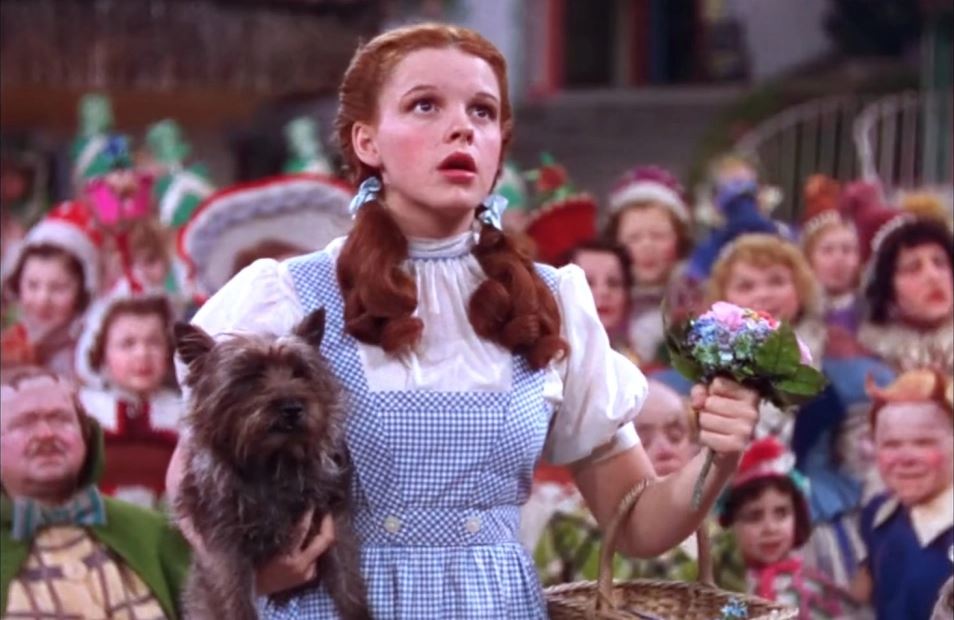
Remembering Judy Garland this month on TCM


Judy Garland, having been chosen the Star of the Month, made June especially enjoyable for watchers of Turner Classic Movies. Seeing her filmography in bursts is especially poignant for allowing us to follow the bubbly, nervous, awkward girl with the phenomenal talents, as she marches toward maturity and the wonderful roles, but personal hazards, we know she will face.  There are times we just can’t study her hard enough.  Other times, knowing the perils of child stardom and harsh world that eats up the more emotionally vulnerable, we almost wish we could look away.

But we can’t.  Because she’s Judy, and she’s remarkable.


She is no stranger on TCM’s roster, particularly as most of her career was spent at M-G-M, whose films are owned by Ted Turner and WarnerMedia, the pre-1986 anyway, which is what we old movie fans cherish most.  So we do get to see her movies from time to time.  But to really feel the impact of her energy, her skill—which is an achievement above natural talent, for this girl worked hard at her craft—it’s best to see her in a string of her films, and this whole month has been a powerhouse of her impact, even in her smallest roles, which did not stay small for long. 

She did not, however, shoot to stardom on the wings of the publicity department as other stars did—it actually seemed like studio boss Louis B. Mayer didn’t really know what a gem he had.  But when it was time for her to take the lead, she shone.

Most fans and critics alike seem to think her moment came with The Wizard of Oz (1939), that resonated with generations of children—and the adults they became—possibly for the ironic image of a girl on the cusp of womanhood who was taking a perilous journey, scared stiff, accompanied by a misfit trio who were not always terribly helpful, but who in spirit had her back, and she defeated a terrible villain, saved a society even as she unmasked the phony leader—who, unexpectedly, was not a villain but yet another victim of his own weakness.

But generations of children who were not old movie buffs would never have seen this movie and it would never have become an iconic experience of American childhood without annual broadcasts on television.  For free.  No cable fees, no subscription.  Not today.

Will future generations of children still feel the warm sisterly bond with Judy Garland in their fascination for this movie without it’s being a regular and expected experience of their childhoods?  To be sure, their parents and grandparents may treat them to home video (in whatever form it may take in the future) and Wizard of Oz-inspired toys, but will that die off when national memory (aside from the classic film buffs’, that is) finally lets it go?  For so many people, this movie is their introduction to classic films.

It was not my introduction to classic films, but it likely was my introduction to Judy.


It's been lovely to hear the outpouring of expressions of enjoyment for the movies shown on TCM this month, but particularly for having the whole month devoted to Judy Garland, to giving her a showcase.  She would have been 100 years old this year, and the tragedy of having died young at the age of only 47 is part of the sadness of considering her career, that one is perhaps unable to completely enjoy her work in A Star is Born (1954) without almost subliminally remembering the train wreck of her own self-destructive demise.  In a sense, we still mourn her.  There are few people on the national stage we still acutely mourn after 53 years.

I’ve often thought what a shame it was for her that she did not live long enough if only to see her films celebrated particularly on TCM.  I like to think she would have enjoyed that, and would have made a heck of an interview for Robert Osborne.

I’ve enjoyed reading posts and comments on Facebook and on Twitter about how deeply fans feel about Judy Garland, and it is a kind of love that has little to do with awe of a big star.  There is something deeply personal she touched in people. 

This month reminded me of two very different people whose appreciation of Judy Garland made an impression on me.  One, was my father.


My parents were teens during the Great Depression, and spent, to hear them talk of it, pretty much the entire decade at the movies.  They were very familiar with Mickey and Judy.  When they were middle-aged and had a house full of kids, Judy Garland hosted her television variety show on CBS, The Judy Garland Show for one season from 1963-64.  Since I was a toddler at the time, I didn’t catch up with this program in until much later in life.  But I have it from an older sister who recalled that whenever the show came on, the kids had to be silent, the family plunked down in front of the TV, and my father’s face just lit up with rapture. 

Now, my father was not a movie musicals kind of guy.  (My mother loved them.)  He preferred Westerns, film noir, crime dramas, political dramas, war movies.  He liked his movies on the heavy side.  He wasn’t into fluff that much.  In fact, if Jerry Lewis had ever crossed his path, my father probably would have belted him because class clown-types annoyed him.


But Judy, sweet vulnerable, funny, offbeat Judy, she could do no wrong.  When she came on the 19-inch screen, in black and white and sometimes fuzzy depending on the reception, a woman in her early 40s that seemed to be pushing back with all her might at some new kind of physical frailty—well, that didn’t matter; he just beamed.  That was her power.

The second person whose devotion to Judy Garland was much younger, and I met her several years ago when she was in high school.  She was involved in the school drama club and she wanted to pursue a career in theatre.  Judy Garland was her favorite.  That surprised me, because I’d thought that young people today who have ambitions for an entertainment career might be drawn toward modern film stars, pop stars, TV stars.  But for her, Judy was tops. She knew all the songs in Judy’s career repertoire.  She identified with her in a way she perhaps did not identify with the glossier, edgier stars of her own era.  Judy was timeless.

Thank you to TCM for giving us a huge banquet of Judy this month.  For Judy’s 100th birthday, it was a wonderful gift to us.

Have a look here at these previous posts of some of Judy Garland’s films: 

Summer Stock (1950) 

For Me and My Gal  (1942)

Life Begins for Andy Hardy (1941)

Judgment at Nuremberg (1961)

    ********************

Jacqueline T. Lynch is the author of Ann Blyth: Actress. Singer. Star. and Memories in Our Time - Hollywood Mirrors and Mimics the Twentieth Century. Her newspaper column on classic films, Silver Screen, Golden Memories is syndicated nationally.  Her new book, a collection of posts from this blog - Hollywood Fights Fascism - is available here on Amazon.

Thursday, February 25, 2021

Classic Film Props and Memorabilia


If you could have any prop from any classic film, what would it be?

I just saw a post like this on Facebook and I thought I'd swipe the idea for us, but I'd like to expand that to ask what you may already own.   Many of you are collectors of classic film memorabilia anyway and I'd love to know what you have in your collections.

So, what do you have, and what do you want?

Personally, I think I'd get a big kick out of an off-screen item: one of those canvas director's chairs with the name of...oh, say, Humphrey Bogart on it, or Barbara Stanwyck, or Ann Blyth...or Joseph Cotten...or....

Thursday, July 16, 2020

Castle films at home


As this ad from 1941 reminds us, long before there was the VHS cassette, serious film fans had those 16-mm reels of "6 great cartoons to select from"..."each a great thrill on your own screen!"  

So get out your projector, put up that screen, and make the popcorn.  "Let's movie," as they say on TCM.

Thursday, May 23, 2019

No more keepers - recording from digital TV


Digital high-resolution television allows us to see every tiny flaw in the human face, and large-screen TVs let us see them really, really big.  It's a kind of metaphor for the highly technological world we live in: the flaws and cracks in society are exposed, but with greater speed and convenience.  And cost.

Personally, I was okay with a 13-inch black-and-white TV to watch old movies on back in the day.  I considered myself lucky to have a second TV in the house when somebody else wanted to watch football.  When VCRs came out -- any old movie fan of a certain age will tell you that was nirvana.  I could collect my favorite movies and keep them "forever."  No more waiting for Christmas to watch White Christmas.  Then DVD, and the AMC and TCM channels and it seemed like the world was your oyster.

Now we have entered a Twilight Zone world where one cannot record off digital TV without a DVR. It is another sign of our growing service economy, where we do not own; we rent. A DVR is very convenient to use, but it is just another monthly bill to surmount.  We cannot own our favorites "forever" anymore, and we have a limited number we can keep at one time, and recording anything off TV has become a decision of what do I want to jettison to catch this program for watching later?

For those of you who have become curators of your own classic film libraries, what is your reaction to discovering a rarity on the lineup of TCM and not being able to record it if you don't have DVR, or if your DVR is getting a little full?  Wait for the entire "Joe McDoakes" series of shorts to come out on Blu-ray?  (Okay, bad example.  Nobody kills themselves scrambling to record Joe McDoakes.)

I wonder if there is more purchasing of titles on DVD and Blu-ray, or renting, or other services like Netflix?  In using Internet services, are you concerned that your movie choices will ultimately be tracked and not just for advertising purposes?  ("Watch this lady, Agent Smith -- she's seen White Christmas six times this month.  Must be a radical.  Keep an eye her.")

Do you feel as classic film fans this has reduced your autonomy, obviously your anonymity, if not your options?

What do you think about this, and what do you do?

Thursday, April 26, 2018

TCM Classic Film Festival - Read All About It


Today begins the TCM Classic Film Festival hosted at several Hollywood venues by Turner Classic Movies.  Though I've never been to the TCMCFF, I've always enjoyed a ringside seat through the wonderful descriptions of my fellow classic film bloggers.  Their adventures and their enthusiasm are a lot of fun to follow.  If you aren't able to take in the festival, then by all means, enjoy the recap posts of the four days of old movie lovers' heaven through classic film blogs such as these:

Laura's Miscellaneous Musings

Essays from the Couch

Out of the Past

Once Upon a Screen

Outspoken and Freckled

Classic Move Hub

...to name a few.  But for on-the-spot action, follow their trail on Twitter - #TCMFF.

Thank you to these bloggers and others who share their experiences on social media about the TCM Film Festival for those of us who don't get to go, and for sharing their love of classic films all year long.

Thursday, October 5, 2017

A few thoughts on Ken Burns documentaries

The Vietnam War documentary by Ken Burns and Lynn Novick  that was shown on PBS the previous two weeks is a triumph of historical reportage, the kind we've come to expect from the meticulous and thoughtful Ken Burns and his production team.  Some columnists made note that this presentation would not likely achieve the kind of immediate and powerful reception by the American public as did his marvelous The Civil War, produced in 1990.  The reasons stated for this is not only the obvious division that still remains over the Vietnam Conflict, but mainly because we have become a society that no longer seems to rally over a single television event.  We are scattered to our own interests, and with a wide array of cable TV options and Internet offerings -- which did not exist in 1990 -- we are not compelled to bridge the gap and sit around the TV like a national campfire and listen to old ghost stories.

This is, coincidently, the same reason there are fewer classic film fans and will be in the future: without common exposure in pop culture, i.e., more TV channels showing them, they cease to be part of our common experience and memory.

The Vietnam War is an often difficult program to watch, at least for those who remember those years, but it is also remarkably cathartic and brings an unexpected sense of closure.  It also leaves a taste of foreboding, as many of the issues of the government wanting in candor, and sometimes unashamedly corrupt, continues eerily today.  What I found most interesting was the use of a single narrator, the actor Peter Coyote, in the series.  In a way, it reminded me of another one of my favorite documentary series, World War I, which was produced by CBS in the 1964-65 season, and narrated by the wonderful Robert Ryan.  Both series have their moments of starkness and bleakness, and yet gentleness in powerful moments, and these two actors lend so much in their delivery of the narration.

Conversely, what made The Civil War unexpectedly delightful was the use of many actors and actresses voicing the comments of historical figures.  Burns used this tactic as well in his excellent The War (2007) documentary series on World War II.  We discussed this series in this previous post, about how interesting and effective was his refraining from using classic film footage, or popular music of the day to embroider the story of World War II.  It was a good choice for that series, for reasons stated in that previous post.  However, The Civil War heavily relied on music from that period to flavor the piece, and Burns returns to this in The Vietnam War with a deliberate and effective use of music from that era.

As far as exploring our common experience and memory as classic film fans and as students of this most important media explosion of the twentieth century, I'd love for Ken Burns and his team to make a documentary series about the Hollywood studio system.  To be sure, there are fewer left to interview for their personal experiences, but there must be a great deal of interviews and anecdotes already recorded, and archives rich with information on the cultural phenomenon of the studio era.  Presented in a long and leisurely many-episode series, with current actors and actresses to do voiceovers where it applied -- that would be something.

I understand Mr. Burns is tackling the subject of country music next.  Now if he could only mosey on over to Gower Gulch.

Thursday, December 8, 2016

End of an Era - Classic Film Fan Series - Final Episode


There are many issues under discussion today among classic film fans: the discovery of lost films, the expense of restoration, and most especially: what constitutes a classic film?

This last issue is, oddly, the most contentious.  It is often divided among age groups (though not always) that a classic is a movie made during the period of the studio system, i.e., from the early days of the twentieth century through the 1960s.  I have maintained that a classic film is one made before 1965.  I am not in favor of turning the word “classic” to mean something good, or beloved, or timeless (some of the best classic films are “dated” and this makes them valuable for study) but rather as it pertains to film, should only be a label to categorize a movie by its era.  Is a Three Stooges short better than The Godfathermovies?  Of course not. 
If someone enjoys Rocky (1976) better than they enjoy Golden Boy (1939), does that make Rocky the classic film instead of Golden Boy?  No.  Rocky is an Oscar-winning film from the 1970s.  It carries its own prestige.  But it is not a classic film.


I’m sure many classic film fans will read the above sentence and their heads are even now exploding in anger.  Sorry, but the point isn’t that your opinion is as good as mine, or that mine is as good as yours.  The point is to get beyond opinion and draft some sort of objective criteria so we may catalogue, describe, and share our information on classic films with future generations without muddying the waters about what we mean.  History has, for the most part, clear demarcation on eras:  the Jazz Age, The Restoration.  Art has clear demarcation on eras based on prominent style:  Impressionism, Dada, Modern Art.  Do we call an impressionistic painting Modern Art because it was painted in the 1960s?  No.  It’s an impressionistic painting produced in the 1960s.

This is the twelfth and final post in our year-long monthly series on the current state of the classic film fan.  We began this series musing on the unlikely campaign of Donald Trump. Our last post in November brought us to the stark and devastating realization that fascism is alive and well in America.  That’s quite a journey, one I had not expected to take.  Our movies, old and new, whether they address social issues or present fantasy, are a clear barometer of our pop culture, which makes them so important for study.

The label “classic” should be the least of our problems in our mission to promote these films, but if we can’t agree on even that, we won’t agree on which films to be worth saving.  We won’t be able to save them all.   

But to be honest, I must confess that my own definition of “classic” as films made before 1965 is only partly an objective assessment; in part, it is also a reflection of my age.  I was born in the early 1960s, and so when growing up in the 1960s and 1970s, the movies made in these decades were not classic; they were new.  In my middle-aged woman’s eye, they will always be in that vague category of “new”.  (With the same prejudice a younger fan will consider a 1970s movie as “old” because it was made before they were born.  The criteria is personal, and not objective.


When The Sound of Music (1965) was first shown on television in 1976, it was a monumental prime time event—but not because it was a “classic”, but because it was a modern blockbuster.  That will seem ludicrous to younger fans, I know.  When I was growing up in the Baby Boomer’s joyous embrace of “Nostalgia”, the old movies we resurrected were just old (and some not very old at that).  Nobody called them classic films.  Classic was a label that came much later, like Film Noir.  Nobody called it Film Noir when I was growing up.  We were not a cadre of geeks—pop culture was still in the backwash of the Golden Age of film, which was still the gold standard of entertainment.

These movies were shown on every channel (even if there were only four channels) at any hour of the day.  The stars and character actors and bit players of those old movies were, for the most part, not retired and they were still working on television.  They were still part of popular culture.

The deaths of Judy Garland and Bing Crosby rocked mainstream society—not just old movie buffs.  Conversely, we had not yet entered the age of deep mourning for the loss of anyone connected with classic films as we are today, when it seems that each year we cling to the fewer and fewer left, and it is we, not they, that do not go gentle into that good night.  Today our classic film fandom is one part celebration of discovery, and one part mourning the “in memoriam” reel.

Baby Boomers were spenders and collectors, and most of the books, posters, kitsch, VHS and DVD classic film releases were meant for their consumption.  Younger generations will take over, and their exploration of classic films, their expression of their fandom will take different forms.

But there will be less of them. 

We’ve discussed in previous posts in this series that Turner Classic Movies is, with few exceptions, the main source of classic film viewing in this country.  Current discourse on whether TCM is diluting its brand by showing modern films to the detriment of classic film programming (while recommending wine from the TCM Wine Club) will be a moot point if younger generations do not even subscribe to cable television, as seems to be the case.

Many younger people get most of their entertainment online, and most of what is offered them through streaming and download services are modern films.  Their choice of viewing becomes narrower as they veer towards only current movies and TV shows.  They will be exposed to little that does not already interest them.  TCM’s venture into streaming cannot yet replace the range of its network offerings.

The Warner Archives release of films to the home market is very welcome, and we may continue to wonder if Universal will ever get on board, but even these may have a limited future commercial exposure.  Future generations will not have developed an interest in them enough to make it financially worthwhile to producers of DVDs and Blu-ray, or streaming, in a world where future generations have not been exposed to classic films on a scale grand to begin with -- enough to once again make these movies a force in pop culture and consumerism.

It has been noted that the collectibles market is currently depressed because the Boomers, who were tremendous consumers and are now at a point of downsizing in their lives, are not finding buyers for their “stuff.”  Younger generations are not interested.

We classic films buffs naturally attempt to share our love of these movies with younger friends and members of our families.  That will have a huge influence in their lives, and is a great gift to them.  But this is not the same as being exposed to classic films not as a special event or peculiar hobby, but as mainstream entertainment—something not just their parents are talking about, but their friends as well.

I had suggested in an earlier post in this series to teach classic films in school.  Another way to broaden the exposure of these movies to younger viewers might lie with the Internet, where they turn anyway for their entertainment.  We’ve seen how TCM and others are streaming and making available films for download, but these are still paid services.  There may still be another and more effective way to get new classic film fans.

YouTube, Internet Archive, and other free Internet channels.

Paramount has already set up a channel currently showing 91 of its classic films for free viewing.  The beauty of YouTube is not only is it free, but the operation is such that the viewer is immediately exposed to a number of other similar choices.  We’ve all spent hours on YouTube, not intending to, just because we were looking for something particular and got sucked in to watching several other videos.  The search engine is also effective.  YouTube has the power to expose us to old movies and old TV shows we had not known existed.  It is a smorgasbord of video pop culture history.

The video quality on YouTube obviously does not lend the best viewing experience—it’s not like sitting in a restored Art Deco theater watching a shimmering nitrate film—but it’s something free and easy to obtain, to spread the experience of enjoyment and knowledge of old movies, and is a channel that younger generations already know about and use frequently.  Classic film buffs—and the corporations which have a library they’d like to monetize—would be well advised to create new fans by building up in them a taste for their product.

The Wizard of Oz (1939) would be forgotten today had it not been shown yearly on broadcast television for a couple of generations.  Its popularity spawned VHS and DVD releases, toys, games, books, clothing—a variety of merchandise that came in the wake of its popularity, which came in the wake of its familiarity.

It’s a Wonderful Life (1946) would be forgotten today had it not been shown yearly on broadcast TV, and became so popular that not only is it firmly established in pop culture, but the copyright, which had lapsed, was scooped up again, making it once again a valuable product.

We see the same scenario with A ChristmasStory (1983), which is not a classic film, but has become a beloved Christmas tradition, and again, firmly part of pop culture, with annual showings on the cable network TBS, which runs a 24-hour marathon every Christmas.  Because of this we can shout out lines from the movie.  Houses on the street where it was filmed have been turned into tourist attractions.  You can buy the iconic lamp, for heaven’s sake.

The popularity came with familiarity: an audience was not found, or mined, or marketed to—it was created from scratch.

The Boomers grew up watching movies on free broadcast television, became classic film fans in an era of a nostalgia craze fueling it.  However, the movies they watched were fading prints cut up for commercials.  The art houses showing them on the big screen were few and far between.  The only media by which favorite films could be owned and shown at home whenever they wanted was with 16mm film, a screen, and a projector.  Despite these challenges, an army of old movie buffs kept alive their interest enough for the media conglomerates to have a built-in consumer base when the technology developed to produce films on VHS and DVD for a new, huge home market.

To say that classic film fans have it easy today by comparison is not entirely true.  Yes, they have a better quality video experience, a large assortment of movies available for the home market, but their challenge is twofold:  having the money to purchase product that is continually being improved, restored and re-released (how many copies of our favorite films can we own?); and second, just being exposed to these films on a scale that enables them to digest them as part of their American heritage.

This last notion is, I think, something on which we need to focus more attention.  I am concerned not only on the astounding idea that a nation so passionately devoted to defeating fascism should recently embrace it—fascists used to be the bad guys, on that we could at one time all agree—but if a younger viewer cannot absorb a movie in the context of its era, then all the message, the art, the power, or even the technical beauty of a classic film will not penetrate their sensibilities.  They will consider classic films to be remote, incomprehensible, and merely weird relics of a primitive age.

In practical terms, there is a real disconnect for younger viewers in what they see in classic films—for instance, the racism, the sexism (as if these things have ceased to exist in their modern world), among so much else that they are unable to accept in a film when they looking for images that affirm their own experience.  It becomes not just a matter of taste—“my classic is not your classic”—but actually being intellectually or emotionally unable to critique the art form.  Finding little they can relate to in it, it becomes as lost to them as if they had never discovered it.

Take, for example, this review of a new release this year for the first time on DVD of A Woman’s Vengeance (1948), a movie we covered in this previous post.  The young reviewer is, as with many Internet writing gigs, reviewing the product, which is the new DVD.  She is not really writing an essay on the movie, though she attempts to discuss the plot as part of her product review.  She sounds as if she were reviewing a new gadget or cleaning product.  She displays an ignorance of the film, the era, the actors and classic films in general as an art form.  As a result, her tone is flippant, dismissive, lapsing into vulgarity in the modern attempt at communication that tries hard to be clever, and her judgment on the product is based on whether she feels is it a worthwhile purchase.  This is the most shallow and sophomoric “film criticism” that can be produced (not counting IMDb reviews, which are frequently baffling in their obtuse triteness and often rife with errors), yet it is now the prevailing style on Internet product sites.  Future classic film fans, however many they may be, will be getting the bulk of their information from such product surveys (assuming classic film blogs are not still floating around on the Internet and the algorithms are kind to us to generate at least some traffic).

There are a lot of movies still hidden in studio vaults, university archives, and a basement or two.  Will future generations seek them out, donate to have them restored?  Will they see any worth in even pursing this?  If Lon Chaney’s London After Midnight (1927) is ever found, will future generations care?

Are we, the current classic film fans—from Boomers to Millennials—the last audience? 

There is, as those who have attended the TCM Classic Film Festival and other such events know a joyous and exciting social aspect among gatherings of classic film fans.  My hope is that many more of these festivals will pop up around the country, or just in the form of small regional clubs, so that it may be easier for fans to connect in person with others who love old movies.  This breaks barriers between generations and demonstrates the genuine camaraderie and inclusiveness that exists among classic film fans—even if we can’t agree on what a classic is.  How much the corporations cater to our interests, based on their ability to profit from it, will largely depend on our numbers and our demonstrated passion.  It will also depend on their ingenuity to create a market for their product.

One hundred years from now, someone just discovering Buster Keaton, Myrna Loy, or Humphrey Bogart will be captivated.  We know that.

But how many like-minded fans will there be left to share the joy?

This ends our year-long series on the state of the classic film fan.  I wish I could end it on a more hopeful note, but hope is a fleeting thing these days.  This will be my last post this year.  I have a new book to get out, and so I need some time.  I’ll see you back here on Thursday, January 19th for a new year of blogging.  I hope to accentuate the positive next year and find some hopeful and inspirational moments in classic film to discuss.  We’re going to need them.

Until then, may I wish all of you who celebrate a Merry Christmas, a Happy Chanukah, and very happy and hopeful New Year.  Thank you for the pleasure of your company.

 ***********************

Previous posts in this series are below:


Part 1 of the year-long series on the current state of the classic film buff is here: A Classic Film Manifesto. 

Part 2 is here: Cliff Aliperti’s new book on Helen Twelvetrees.

Part 3 is here: An interview with Kay Noske of Movie Star Makeover.

Part 4 is here: Evolution of the Classic Film Fan.

Part 5 is here: Gathering of the Clan at Classic Film Festivals.

Part 6 is here: John Greco’s new book of film criticism: Lessons in the Dark.

Part 7 is here: Tiffany Vazquez, new TCM host.


*********************

The audio book for Ann Blyth: Actress. Singer. Star. is now for sale on Audible.com, and on Amazon and iTunes.


Also in paperback and eBook from Amazon.

Related Products