IMPRISON TRAITOR, PEDOPHILE, AND CONVICTED FELON TRUMP.
Showing posts with label Jane Withers. Show all posts

Sunday, August 8, 2021

Requiescat in Pace - Jane Withers


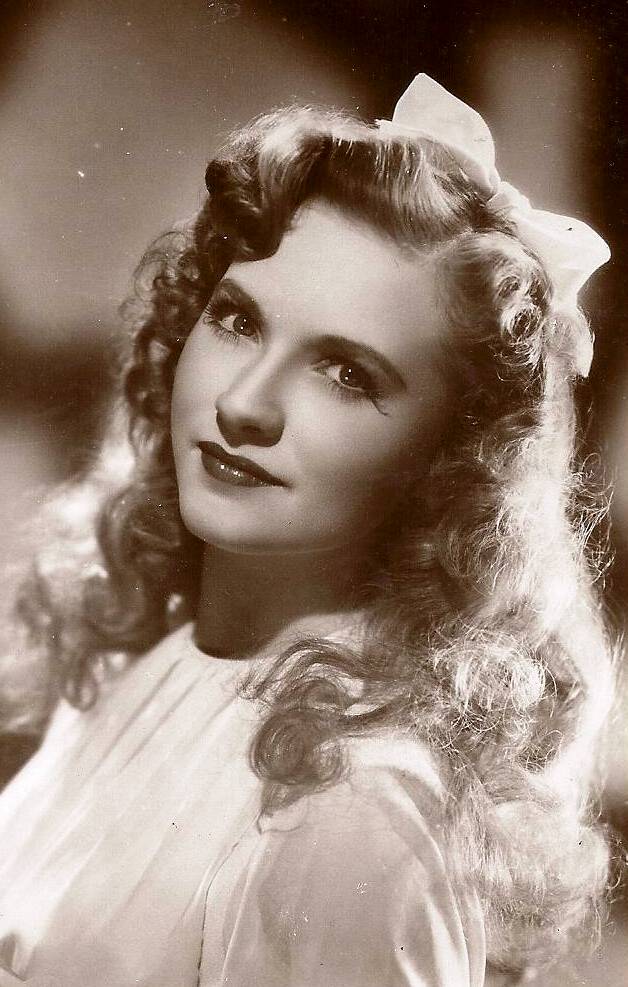
Jane Withers, who passed away at 95 years old on August 7th, was one of Hollywood's greats, who deserves more recognition.  She began as a child of prodigious talent, and grew to be a lovely and generous lady.  She performed on radio, film, stage, and her commercials as "Josephine the Plumber" for Comet cleanser turned out to be one of the longest-running characters on television.  

Her gift for mimicry was splendid, such that during the post-production of Disney's animated feature The Hunchback of Notre Dame (1996) when Mary Wickes passed away, Jane stepped in and finished the role of Laverne the gargoyle, mimicking Mary Wickes' voice and reprising the role in the sequel, The Hunchback of Notre Dame II (2002).

We covered Jane Withers' work here in Paddy O'Day (1935) and Bright Eyes (1934).  She and actress Ann Blyth were devoted friends.  Jane appeared on an episode of This is Your Life in 1959 that paid tribute to Ann, and Ann appeared on an A&E episode of Biography that paid tribute to Jane Withers in 2003. 

From my essay on Paddy O'Day, we leave this image of Jane Withers' gift for friendship, her kindliness, and her loyalty to a newcomer on that movie, Rita Hayworth:

"Rita, 16 years old, was nervous on the set, more terrified than the immigrant she was playing. Jane, nine years old, but already a veteran and the star of the movie, felt protective of her.  Before the cameras rolled, Jane held Rita’s hand and said a prayer to comfort her. 

Decades later, in 1987, when Rita Hayworth died, Jane was asked to deliver the eulogy at her funeral.  She repeated on that occasion the prayer she said while holding Rita’s hand on the set of Paddy O’Day:
 
“Lord, this is Rita and she’s afraid… Please be with her because she’s special.”

Jane Withers is pretty special too."

May she be remembered for her many, many special gifts.

Thursday, February 21, 2019

The Secret Lives of Hollywood Stars in Children's Novels


Deanna Durbin had a secret life, at least as evidenced by her two adventures told in children's novels: Deanna Durbin and the Adventure of Blue Valley, and Deanna Durbin and the Feather of Flame.  These began a popular, if sometimes rather odd, series of girls' books by Whitman Publishing Company of Racine, Wisconsin.  We learned about the adventures of other stars as well in exploits never told in fan magazines.

These two books were published in 1941 and spearheaded the collection that would be known as the Whitman Authorized Editions, though whether any star actually authorized these stories is quite doubtful.  They do stand as creative examples of not only the studios' ownership of its stars, but its wide-reaching commercial exploitation of the stars as its products.


One of the more interesting of the series was Ginger Rogers and the Riddle of the Scarlet Cloak, which was actually written by her mother, Lela E. Rogers, so Ginger must have at least known about the novel even if she didn't authorize it.  The story has Ginger dealing with a rough relationship with her mother, meeting her father for the first time, and in her job as a night switchboard operator for a hotel, ferrets out enemy spies in the aftermath of Pearl Harbor.  A full day's work.

Most, but not all, of the books in the series were written by Katheryn Heisenfelt.

We see by the titles that many stars had a lot going on in their lives. There is:

Bonita Granville and the Mystery of Star Island
Jane Withers and the Hidden Room


Ann Rutherford and the Key to Nightmare Hall
Betty Grable and the House with Iron Shutters


Jane Withers and the Phantom Violin (Jane Withers was very busy.)
Betty Hutton and the Romance of Palmetto Island

Ann Sheridan and the Sign of the Sphinx (Look at her casting that wry eye at the whole idea.)
Jane Withers and the Swamp Wizard (Jane's back again in a weird swamp story.)

Judy Garland and the Hoodoo Costume
Shirley Temple and the Spirit of Dragonwood
Shirley Temple and the Screaming Specter (because why should Jane Withers have all the excitement?
Gene Tierney and the Invisible Wedding Gift (I find this title the most intriguing.)
Dorothy Lamour and the Haunted Lighthouse

And just so you don't think the ladies have all the fun, we have:


John Payne and the Menace at Hawk's Nest


Gregory Peck and the Red Box Enigma
Van Johnson, the Luckiest Guy in the World.

If any of you have read any of these books, I'd like to hear your book report. 

************* 

In this previous post from 2010, I discussed some children's novels that were centered around World War II and published in that era.  I'll be writing a book on this subject, something that's been on the back burner for, obviously, a very long time.  My to-do list is so long it sometimes strangles me, and I have to shoot it.  But I'd like hear your input as well on books like the Cherry Ames series, the Dave Dawson series, the Ann Bartlett series, etc., all the pre-teen novels about the war.  I'll post more on this down the road.
***


Thursday, October 26, 2017

Phantom of the Opera - 1943


Phantom of the Opera (1943) is a musical, a Technicolor feast for the eyes. There is a horror story in here, too, but it is cloaked in understanding and the eerie hindsight that dreams dashed can be a pervasive kind of horror.

Between the Phantom’s woes, portrayed with much more sensitivity than Lon Chaney’s infamous ghoul in the silent 1925 version, and the young soprano Susanna Foster’s real-life sorrows – there is enough pathos to make this movie a poignant ode to dreams that died.

The movie, more musical than monster, seems an homage to the world of operatic music than to the original nineteenth century penny-dreadful novel, though it was perhaps a smart move not to attempt to re-create the original classic silent story "note-for-note," as it were. We are given something extra, treated to the powerful baritone of Nelson Eddy and the beauty of Marta. Other “operatic” performances are not taken from operas, but are adapted works from Chopin and Tchaikovsky.


The Paris Opera of the late nineteenth century is the familiar setting for the tale, but there are differences in this movie – Nelson Eddy stars as the opera company’s baritone and Edgar Barrier plays Raoul, the local police inspector. Both men are romantic rivals for the hand of Susanna Foster, who plays Christine DuBois, a talented member of the opera chorus. The gents try to woo her, and Susanna enjoys their attention. Another man loves her and works to further her career – Claude Rains.


Mr. Rains is the Phantom of the piece – and there is no mystery about his identity. When we first meet him, he is not hiding in the shadows. He is in the orchestra pit playing the violin, a mild-mannered, middle-aged musician employee of the opera house. His encounters with Susanna are shy and awkward, and she gives him no thought other than he is a polite but odd old man. The Phantom is not a ghoul here, but a sad soul, and he breaks our hearts from the beginning. We discussed the original Phantom and the 2004 movie based on Andrew Lloyd Webber’s long-running stage musical in this previous post. We observed that the presentation of the Phantom had changed because of our evolution, not his:

      Perhaps a good deal of this transformation of the Phantom in our popular culture has simply to do with ugliness. Gerard Butler’s Phantom is a man with what looks like a few old burn scars on part of one side of his face. Nothing we can’t live with, even though he vainly keeps it covered. Lon Chaney’s face is a rotting, putrid skull. It gives us nightmares. The original book was written in the days when ugly was synonymous with evil, at least as far as storytelling was concerned. Chaney’s film was made, similarly, when the representation of evil was done mainly through an image of ugliness. We still have film monsters who are ugly to be sure, but they are evil and ugly, not evil because they are ugly. There was not a whole lot of sensitivity towards people with mental or physical handicaps in those days, when desperate parents were still leaving deformed children with carnivals. There wouldn’t be any empathy left over either for folks who were less than beautiful. In the code of old Hollywood, the heroes and heroines were beautiful, and the sidekicks and villains were not.

Today we have a bit different take on evil, on beauty, and on empathizing with those who appear different, and that perhaps is one of the reasons why the Phantom has changed. He needs to be repackaged in order to be sold. It would be difficult to film the same 1925 story and present it to a 21st century audience, with the same simplistic judgments. The Phantom’s evil as represented today is more psychological, and more a problem of society because he has been treated so shamefully. Instead of nightmares, he gives us second thoughts.


Universal was known for monster movies as being its specialty, but it also produced a large number, even more than MGM, of what could be termed teen musicals. It is from their stable of talent they drew Susanna Foster and began to groom her as one of their biggest stars. As such, Susanna had a featured role in Bowery to Broadway (1944), which we discussed here, with another youngster who was to replace Susanna as Universal’s leading songstress – Ann Blyth.

The 1943 Phantom is a kind of missing link between the two incarnations of silent ghoul and Lloyd Webber’s lavish musical.


The camera pans from Claude Rains playing violin with the orchestra in the pit, and pulls back to encompass a grand opera house interior, with every seat occupied by the well-to-do in their gowns, tuxedos, and jewels, in every box and loge. We finally pull back to the very end of the farthest rafters, the cheap seats, to reveal the enormous opulent glass chandelier. This, of course, has a prominent place in the story and the shot is breathtaking for its dual use as eye candy and premonition of things to come. It is more so a premonition because by 1943, though the original Phantom, while it may not have been as familiar to that generation, nevertheless had reached legend such that people knew the story they were about to see, or they thought they did.

There are flickering candles in every desk candelabra and overhead ceiling chandelier in every office, in every parlor and boudoir, casting shadows, and reflecting a warm glow. The film moves at a leisurely pace and we sink ourselves into its environment, from cold, gray streets, to actors adjusting costumes behind the flats backstage, to the grand but artificial sets on stage.

Claude rains plays Erique. He is a longtime employee of the opera house orchestra, but is fired because his playing has become slack, to which he attributes his hands and fingers becoming stiff. He may be one of the first people in classic films to be fired for a repetitive motion injury. But poor Erique has no workers’ compensation to fall back on. He is, worse still to any employer, getting old.

He is crushed by being dismissed, and wanders in a daze back to his one-room garret. We see he is living a poverty-stricken life, though his employer and others assume he must have a lot of money in savings from his 20-year career. However, we next see that he has spent his savings on a very expensive endeavor that is both a kindness and a fantasy. He has been anonymously paying for singing lessons for Susanna Foster, who does not know her benefactor. She has been studying with the Maestro – that’s our old friend Leo Carrillo, for three years.

Claude Rains also writes music, and he has an ace in the hole, a manuscript of a concerto he has been writing for years. He intends to have it published, thereby solving his money problem. However, the publishing house stalls him, treats him badly, and when he perceives that they are going to steal his work, in an angry rage he confronts the publisher, who is in conference with his lady friend. They are amusing themselves with his hobby of etching photos on steel plates with acid.  Nothing says love in the afternoon like etching photos on steel plates with acid. Rains attacks the publisher and strangles him to death, and the lady friend grabs the acid and tosses it in Rains’ face.

Whimpering in pain, Rains staggers out of the office and through a maze of rain-washed streets. He is hunted by the police. He takes refuge, of course, in the city sewers that lead to the bowels of the opera house – and we have our Phantom.

He steals his trademark mask and cape from the opera house costume department. It is a rather stylish sea-green mask with eerily arched brows painted on it. He steals supplies from the opera house and lives there and continues to support Susanna Foster’s career, mainly by trying to oust the pompous Diva with threats of violence. Something in his gentle, befuddled personality has slipped askew – he is more cunning, more sinister, and will do anything to get what he wants – and now he wants Susanna, no longer content to love her from afar.


Claude Rains has become strangely athletic and acrobatic in his rope climbing and rafter leaping, and that rakish forelock that drapes over his mask adds a cavalier touch.

Look for Hume Cronyn as one of the police inspector’s men who chase the Phantom through the opera house and try to lay traps for him.


Susanna Foster, at the center of the piece, is a delicate figure, but despite being the focus of the film—even more than the Phantom in this version—she seems not to have a strong screen presence here, though perhaps the role of Christine is too passive to appreciate Foster's abilities as an actress. She was known for having the ability to reach the note B above high C in her vocal range; and the film presents her beautifully, exhibiting this tremendous gift.  Perhaps this information was difficult for audiences who were not opera fans to appreciate, despite the Universal publicity department’s attempt to market it.  Phantom of the Opera was her most important film, her fifth film. She began in Hollywood in 1939 at the age of 12 years old in The Victor Herbert Story, and her path went from MGM, which never used her, to Paramount; to Universal, where they had a robust youth unit whose most famous star at the time was Deanna Durbin.


Reportedly, Susanna was brought on to keep Durbin “in her place,” giving the studio the ability to threaten to replace Durbin with another soprano if she did not conform to their demands of her. Durbin turned down the Phantom script and Susanna inherited the role. She only did a handful of films in her career. In 1945, Universal granted her wish to study opera and tour overseas, which she did, but then she decided to quit the movies.

She confessed to never being very ambitious and felt overwhelmed by the Hollywood machine, but she must really have been made of stronger stuff, for Susanna coped with more than her share of burdens. She grew up with alcoholic, abusive parents, but supported them and two younger sisters while she was still a child herself. When she returned from Europe and her movie contract was over, she reportedly gathered her resources, including selling her fur coat, to rescue and raise her two younger sisters and make a home for them. She eventually married baritone Wilbur Evans, but that union was unhappy. They did some stage work together, but when they divorced, though he was an absent father, he apparently demanded as part of the divorce decree that she not take their two sons more than 100 miles away from New York, thereby ending her attempts to have a comeback in film. She took work in New York City as a receptionist and did what she could with office jobs to support her two sons, with no help from her controlling ex-husband. Years later, she returned to the West Coast, and for a time, was homeless and living in her car.

According to author Bernard F. Dick in City of Dreams: The Making and Remaking of Universal Pictures (The University Press of Kentucky, 1997, p. 125), he notes that in 1989, Jane Withers and Margaret O’Brien learned that Susanna Foster was living in her car and “they came to her aid.”

Most poignantly, The Phantom of the Opera had begun an amazing new incarnation through Andrew Lloyd Webber’s blockbuster stage musical. At that time that Jane Withers and Margaret O’Brien were financially helping Susanna, Lloyd Webber’s Phantom was playing in Los Angeles. According to Mr. Dick, the two ladies “made it possible for her to see it.”

She had been the first singing Christine in a time when the Phantom began to appear less ghoulish to us and more troubled, more sad. For the first time, we saw his side of the story.

Susanna had a story, too. In her final years, her son (one had predeceased her) moved her back to the East Coast and was able to place her in nursing home care. She died in 2009 at the age of 84 at the Lillian Booth Actors Home in Englewood, New Jersey.

No horror story for the blog for this Halloween. At least, not the kind you were expecting.

Thursday, October 22, 2015

Bright Eyes - 1934 - The Good Ship Lollipop


One may be charmed, certainly bemused, at the idea of two important fledgling industries – American Airlines and the Douglas Aircraft Company (future McDonnell-Douglas) – pinning their hopes on a six-year-old girl to lend them credibility. Shirley Temple and her “good ship lollipop” did the job and launched passenger air travel on a Depression-era United States.

Well, she didn’t do it all by herself, but Fox’s golden-haired moppet was the hope of American Airlines—in an era where most people did not have the price of a plane ticket – and to Douglas Aircraft and its brand-new DC-2, an all-metal plane to answer the reluctance of travelers too leery of flying in one of the, then, wooden airships. The DC-2 was introduced May 1934. This movie premiered in December of that year. The aircraft industry, and Depression-era America, had nowhere to go but up.


This is our entry in the: Planes, Trains and Automobiles Blogathon, hosted by the Classic Movie Blog Association. Have a look here for more excellent posts.

Bright Eyes is probably one of Shirley’s best – memorable most especially for Jane Withers’ devastatingly funny portrayal of a privileged little girl with the personality of an assault weapon. Indeed, she wants a machine gun as a present, as well as a wheelchair – perhaps to compete with her wheelchair-bound grand uncle- enemy, Charles Sellon. When Shirley rescues an old rag doll from Jane, Jane tells Shirley, “You can’t have her, know why? ‘Cause I’m gonna kill her.” And she proceeds to rip off the arms and legs and head of the unfortunate invalid doll.


As a child, I must say that Jane’s character intimidated me. I was more fascinated by Shirley hitchhiking a ride to the airfield to hang out with her flyer buddies. Today, that scene of hitchhiking gives me the creeps, and Jane Withers is my favorite part of the movie.  Another fascination for me as a child was a glimpse at what a Southern California Christmas must be like – with no snow and people walking about with no boots on, in what looked like to be an early fall day in New England—except for those marvelous palm trees.

It is Christmas in the hangar/pilots’ clubhouse where the boys plan a special treat for young Shirley. Her late father was a fellow pilot, and her mother now works as a maid in the nouveau riche Smythe residence, whose only daughter, Joy – the name is a delightful irony – is played with vaudevillian panache by Jane Withers.


Shirley’s mother, played briefly by Lois Wilson, gets killed by a car, so Shirley is an orphan and much of the film is a custody battle between rich Uncle Ned (Sellon) and James Dunn, the swell regular-guy pilot who is Shirley’s best pal.  Dunn takes Shirley up for her first plane ride after he learns of the death of her mother, so that he may break the news to Shirley.  She wants to know what heaven is like, and when they are up with the clouds a magnificent carpet below them, he tells her, "It's all around us now."  Though Shirley admirably turns on the tears on cue, understanding she has lost her mother, it is Mr. Dunn's thoughtful, awkward, agonized way of sharing the bad news, and sharing his idea of heaven with her that is most moving.


So contentious is the custody battle that Dunn takes on a risky mission – flying to New York in a blizzard to deliver a letter – for which he will be paid $1,000.

Shirley stows away on board, and they fly through the terrible weather. They don’t make it to New York (which at that time would not have been a nonstop trip anyway, and would have taken at least 15 hours, likely more) but must bail out and parachute to the ground. The wind drags their shoot, nearly pulling them over a cliff.

It’s exciting stuff, but little Shirley is unruffled. It was her moxie, after all, that saved Fox Studios and got us through the Depression.  Bailing out of a plane during a blizzard?  Big deal.  Child’s play.

But it is the Good Ship Lollipop, which was the DC-2, that is the heart and soul of the movie—and is the song Shirley sings on the plane taxiing around the field in a Christmas party. No danger, just a few verses (backed up by what appeared to be extras from the University of Southern California football team) where the trip is about a visit to Candyland and there are never any worries. Happy landings on a chocolate bar.

The DC-2 was a 14-seater twin-prop engine all-metal plane, with a 66-inch wide cabin, and brand-new. Shirley is dancing down the aisle. Of course flying is safe, silly.  See?

Especially when we are only taxiing around the field on a sunny Southern California Christmas afternoon.

Now fly on over to the CMBA site to navigate the rest of the blogs in this swell blogathon.

And come back next week for our entry in the Universal Pictures Blogathon hosted by the Metzinger sisters over at Silver Scenes. My pick for the party -- Abbot and Costello Meet Frankenstein (1948).

*********************************

"Lynch’s book is organized and well-written – and has plenty of amusing observations – but when it comes to describing Blyth’s movies, Lynch’s writing sparkles." - Ruth Kerr, Silver Screenings

"Jacqueline T. Lynch creates a poignant and thoroughly-researched mosaic of memories of a fine, upstanding human being who also happens to be a legendary entertainer." - Deborah Thomas, Java's Journey

"One of the great strengths of Ann Blyth: Actress. Singer. Star. is that Lynch not only gives an excellent overview of Blyth's career -- she offers detailed analyses of each of Blyth's roles -- but she puts them in the context of the larger issues of the day."- Amanda Garrett, Old Hollywood Films

"Jacqueline's book will hopefully cause many more people to take a look at this multitalented woman whose career encompassed just about every possible aspect of 20th Century entertainment." - Laura Grieve, Laura's Miscellaneous Musings

"Jacqueline T. Lynch’s Ann Blyth: Actress. Singer. Star. is an extremely well researched undertaking that is a must for all Blyth fans." - Annette Bochenek, Hometowns to Hollywood


Ann Blyth: Actress. Singer. Star. 
by Jacqueline T. Lynch

The first book on the career of actress Ann Blyth. Multitalented and remarkably versatile, Blyth began on radio as a child, appeared on Broadway at the age of twelve in Lillian Hellman's Watch on the Rhine, and enjoyed a long and diverse career in films, theatre, television, and concerts. A sensitive dramatic actress, the youngest at the time to be nominated for her role in Mildred Pierce (1945), she also displayed a gift for comedy, and was especially endeared to fans for her expressive and exquisite lyric soprano, which was showcased in many film and stage musicals. Still a popular guest at film festivals, lovely Ms. Blyth remains a treasure of the Hollywood's golden age.


The eBook and paperback are available from Amazon and CreateSpace, which is the printer.  You can also order it from my Etsy shop. It is also available at the Broadside Bookshop, 247 Main Street, Northampton, Massachusetts.

If you wish a signed copy, then email me at JacquelineTLynch@gmail.com and I'll get back to you with the details.


**************************
My new syndicated column on classic film is up at http://go60.us/advice-and-more/item/2047-everybody-comes-to-rick-s, or check with your local paper.

Sunday, March 15, 2015

Paddy O'Day - 1935


Paddy O’Day (1935) is about an illegal immigrant we don’t have the heart to send back. 

Maybe it’s because she sings and has a puppy.  Maybe because mainstream America was a generation or two closer to the immigrant experience, where Ellis Island represented both the dreams, and the deepest fears of the immigrant, and so our understanding and compassion was deeper.  We remembered, or our momma and papa remembered, that hope rode one shoulder, a sense of doom the other.  We may muse with chagrin  and raised eyebrows that such a lighthearted and fanciful movie flies in the face of one of the most contentious political issues of current times.


Jane, a little Irish girl who is slated to be sent back to Ireland, gives us only a few moments of the doom of being sent back; she quickly takes matters into her own hands by sneaking into the U.S. illegally by hiding in a milk can. 

Hiding in things to enter illegally has been done many times since, rarely so successfully, and often tragically.

Once having arrived, she is hidden by new friends, who are complicit in the crime.  That’s been done, too.  Who’s talking about the Mexican border?  I’m talking about all the illegal Irish in Boston right now (something like 10,000 of them).

Yeah.  Happy St. Patrick’s Day.


Jane Withers was a multi-talented youngster, who was nine years old when this movie was made, and already a veteran of a dozen films.  We may most recall her as the brat tormenting Shirley Temple in Bright Eyes (1934), but she had no less an important career over at 20th Century Fox as another feisty Depression kid.  There was not as much of a fairy tale element to Jane’s movies in comparison to Shirley’s films, and though her fame generated its own line of merchandising, as did Shirley’s, Jane never reached quite the heights of stardom that the moppet with the golden curls did.

Shirley’s talent was prodigious, and she was a hard act to follow.  But Jane Withers, I believe, was even more talented.  She had a better singing voice, was just as fine a dancer, could mimic and do accents where Shirley did not, but most especially, despite bursts of mugging, had a larger acting range and a quality of being “in the moment.” 

Shirley, possibly from her early training barely out of diapers was taught to react and respond much in the same way one might train a dog, and had an acting style as she grew older that was somewhat mechanical.  Perhaps because Shirley was so adorable and lauded to be a “natural” that no drama classes, or experience performing either on radio or stage was thought necessary to train her out of the habits she acquired as a child.  All she knew was the technical style of acting before the camera.  Shirley left acting to raise her family, and had a successful career in diplomatic service, perhaps partly because when she was too old to pretend she was the little orphan girl, her work became too studied and stiff.  It didn’t look like her heart was in it.

Jane Withers was nothing but heart.

We meet the little Irish lass, Paddy O’Day in steerage on a ship to the U.S.  She sings “With a Twinkle in Your Eye,” complete with accent and with reprises, you’ll be singing it before the movie’s over.  The wretched refuse of many teeming shores are dressed in native costume and singing native songs, among them Rita Cansino, who plays a Russian girl traveling with her mother and father, of course called Momushka and Popushka.  We see from the beginning this is more parody than anything.

Rita performs a spirited Russian dance.  She would make a handful more movies in the next couple years before she became Rita Hayworth.  The red hair and sex symbol came later under Columbia.  She and her parents, Momushka and Popushka take little Paddy under their wing, for the Irish girl is traveling alone.  Her mother, working as a servant in a wealthy household on Long Island, will meet her at Ellis Island.

For those of us who have family members who came through Ellis Island, the place is hallowed.  It’s fun to see it depicted, though as such, a scene on a movie soundstage, it's a little surreal if your grandma came through there terrified.

Tragically, little Jane’s mother is not there to meet her, because she has recently died, and with no one to claim her, Jane will be sent back to the old country.  

But she escapes the watchful eye of the immigration officer, played by Francis Ford, and we have a few neat shots of the real Ellis Island, and of the 3rd Avenue El and the Empire State Building rising behind it, looking to the little girl like science fiction monsters.


Through the improbable actions of an unknowing police officer who puts her in the car of a total stranger (such scenes these days make us squirm), Paddy arrives at her mother’s workplace—not knowing she has died.  Jane Darwell, kindly cook of the house, gets the dirty job to break the bad news.  She and the other servants convince the dour butler, Russell Simpson, to let the girl stay until they can figure out what to do.

A pair of fussy old ladies lives in this mansion, with their studious, mild-mannered and somewhat vague nephew, played by Pinky Tomlin.  Tomlin had appeared in a few minor films, but his main gig was as a bandleader and composer.  He’s the chap who came up with “The Object of My Affection.”  (Raise your hand if the first thing you think of is Alfalfa on the Our Gang comedies.”)

Here, Tomlin, a likeable fellow, strums a guitar and sings another of his original tunes, “Changing My Ambitions,” a very pleasant song he croons to Rita because he is falling in love with her.  

Rita and her family, now including a boisterous uncle who runs a café in New York, played with aplomb by George Givot, have discovered the mansion where Jane is in hiding and want to help keep her in the country.  It is agreed she will stay with her Russian pals and work at Uncle’s café as a performer. 

George Givot, a bullying impresario, mangles English with delightfully silly malapropos, but somebody has to speak with a Russian accent because even little Jane’s Russian accent is better than Rita’s.  However, Rita can dance, and that is her act in the club.  Jane, dressed up like a little Russian doll with painted cheeks sings, “I Like a Balalaika.”

Trouble is not over yet, though, because the aunties have discovered Jane and want to send her back to Ireland.  They, and the immigration officer Francis Ford are hot on the trail, but Pinky Tomlin and Rita decide to marry and adopt Jane, which will keep her here for good.  A WASP dad, a Russian immigrant mom, and loudmouth Uncle George.  What little Irish lass could ask for anything more?

Jane doesn’t become assimilated in America in the little more than an hour it takes to watch this movie, but she does what all immigrants did when they first arrived, and still do—try to put down roots in a strange new world, more magical, more wonderful, and more terrifying than Alice’s trip through the looking glass.

Jane Withers has a good rapport with all her adult cast mates in this movie, but she forged a special bond of friendship with the shy young woman who would come to be known as Rita Hayworth.  Rita, 16 years old, was nervous on the set, more terrified than the immigrant she was playing. Jane, nine years old, but already a veteran and the star of the movie, felt protective of her.  Before the cameras rolled, Jane held Rita’s hand and said a prayer to comfort her. 

Decades later, in 1987, when Rita Hayworth died, Jane was asked to deliver the eulogy at her funeral.  She repeated on that occasion the prayer she said while holding Rita’s hand on the set of Paddy O’Day:
 
“Lord, this is Rita and she’s afraid… Please be with her because she’s special.”

Jane Withers is pretty special too.


This post is part of the Luck of the Irish Blog O’Thon sponsored by the Metzinger Sisters at Silver Scenes.  Please go have a look at the other great entries.

And Happy St. Patrick’s Day.


Thursday, September 4, 2014

Ann Blyth - Teen Years in Hollywood

Ann Blyth was a teenager from 1941 to 1948.  To spend most of one’s teen years during World War II was the defining experience of her generation.

To one blossoming in one’s career while at the same time coming of age, this era must have been an added adventure and source of excitement, and anxiety.  She did not know the tragedy of war firsthand, but she knew tragedy. 

Long post ahead.  Get cozy.

The war was pervasive.  Even in the enviably safe United States, the war reached everybody on some level.  For a young person, it must have seemed as if the war had always been, just as growing up in the Depression had been all they knew.  No one navigated the perils of these events alone; all society were touched in some way, some more than others, but the experience was universal.  To a child, with no long past to make comparisons, it must have all seemed...normal.  Perhaps this added to the resiliency of that generation.

Ann Blyth was certainly resilient.  She was a baby when the Great Depression began and a mere child of six when she got her first job on radio during its worst years.  She had just turned 11 when World War II began in 1939, and two years later, in 1941, she was chosen as part of the original cast of Watch on the Rhine on Broadway, which we discussed here in our intro post to this series.

According to a girls’ magazine article of a few years later, Calling All Girls, in a piece probably not a little built-up by the Universal publicity department:

She was lavishly praised in all the reviews.  A huge party was given in her honor at the Astor Theater, where the orchestra played her favorite selections.  Her room was heaped with flowers.  Congratulations arrived in a steady stream of telegrams.  This moment of triumph was the culmination of a long apprenticeship in radio acting and solid practice on her own.  Luck had little to do with it, though—just to be on the safe side—Ann had gone on the stage that opening night with a rabbit’s foot and a four-leaf clover in her pocket and a horseshoe in her dressing room!

Times Square.  The Astor Hotel is middle right.  1938, NYC Archives

It sounds like a movie. 

She might not have understood much of the political intrigue, at 12 years old, of playwright Lillian Hellman’s story of one American family visited by fascism and the cost of fighting it in their own living room, but the play must have become somehow more real for her, certainly for the grownups, on December 7, 1941 when fighting fascism was no longer an ideal or a theory for Americans; it became necessity.  It was the news of the day. 


That day, Ann was 13 years old, her teen years begun at the then height of her achievements as a child actress, while the world spiraled to its worst years of horror.  It was not the best of timing, perhaps, but the strange crisscrossed trajectory would lead her to fame as a movie star before she turned 20 years old in seven years’ time.

The Broadway run of Watch on the Rhine concluded in February 1942, and then she joined the national touring company only two days after the closing – it was on to Philadelphia.  In March, they played the Bushnell in Hartford, Connecticut, as part of the New England tour.  Later it was out to the Midwest and the Cass Theatre in Detroit in April, and the Davidson Theater in Milwaukee by May, and the Grand Opera House in Chicago that month.  She traveled with the company, and with her mother, by train to big city theaters where the play enjoyed enormous success, including a command performance for President Franklin D. Roosevelt and a visit to the White House. 

She was earning a living and supporting her mother and building a career, like a grownup, but she was still child and childhood was still an even bigger reality.  There were two boys in the cast as well, who played her brothers.  She recalled in an interview for the Easton, Pennsylvania Express-Times in 2000:

“You’d think it would be fun, not having to go to school, but it didn’t work that way.  We had to do our homework every day, and it was mailed back to our teachers.”

She turned 14 the summer of 1942.  When they played the Biltmore Theater in Los Angeles, she was noticed by Universal director Henry Koster and producer Joe Pasternak.  They invited her for a screen test, and later signed her to a seven-year film contract, to take effect when the play’s run concluded.  By 1943, she and her mother said goodbye to home and family in the New York area and settled in an apartment at the Highland Towers near Hollywood Boulevard in Los Angeles.  LA was a company town, booming in the 1940s, equally committed to the war effort and its own bottom line in fantasy-making and dream-spinning, and would be her whole world.  It was both a career and an education.

Ann responded in a radio interview in 1992 about whether she felt a seven-year contract was a  kind of bondage:

“I didn’t feel that way about it.  I know I’ve heard and read a lot of stories about people who felt that, indeed, it was a sort of bondage.  It was a wonderful place for me to be, maybe because of the temperament, but as I look back on it now, it was the best way for me to be at a studio.”

She recalled for syndicated columnist Vernon Scott in 1976:

“Universal was a second home to me,” she said, “I went to school there and made my movie debut with Donald O’Connor in Chip off the Old Block.

It was a beautiful place then, full of lawns, trees, and cottages.  I thought of it as a sort of college campus.”

We discussed her first two films, Chip off the Old Block, and The Merry Monahans in this previous post.  These movies, along with two others we’ll discuss down the road, were all released in 1944, pushed through quickly so the studio could use Donald O’Connor as much as possible before he was drafted into the army—another reality of the day for teens.

Ann played a patriotic teen in Chip off the Old Block who wants to throw away a show biz career in order to devote herself to war work.  Ann, in real life under the auspices of the studio, was able to do both, volunteering at the famed Stage Door Canteen in Hollywood, and performing in shows for servicemen at Camp Pendleton, California, where in July 1944 she was proclaimed Sweetheart of the Regiment of a Marine Corps unit just back from horrific fighting on Tarawa. She received award certificates for her volunteer activities from the Hollywood Canteen, the War Activities Committee, and the U.S. Army.  

She affirmed for the above-mentioned radio interview that working at a Hollywood studio did not mean an end to schooling:

“Even though you find yourself in Hollywood, you still have to go to school.  Oh, they’re very strict about that.  I know when I was very young, other young people would say, ‘Oh, that must be so easy.’  But, really not so easy.  Here you find yourself doing a very dramatic scene and 15 minutes later, you’re back in your dressing room doing algebra.  And, it was far from easy, but it was a wonderful education in a way, because there were very few of us in class.  When you weren’t doing a movie, you really attended a small, little schoolhouse on the lot, and it was a lovely experience.”


We discussed in a previous post her teacher Mrs. Gladys Hoene, who noted in a 1955 article that Donald O’Connor and Ann Blyth were among her favorite pupils.

Ann would turn 16 in the summer of 1944, when her first four films, all light teen musicals for Universal, were released.  She began to experience the dubious honor of capturing the notice of fan magazines for the first time and to deal with one of the most trying, yet necessary, aspects of a performing career—publicity. 

The above-mentioned article in Calling All Girls published July-August 1944 was one of the first of these forays into building up her stardom.

One quality of Ann’s which always astonishes the veteran picture people who work with her on the set is her unusual coolness in front of the camera.  Crises in production which send experienced players and staff personnel into tantrums leave her completely unruffled.  Charles Lamont, director of The Merry Monahans…says she is the most poised and composed young actress he has ever encountered…she has yet to forget or bungle a single line of dialogue in her cinema career.  She has never spoiled a scene by nervousness.

These early interviews, in deference to her still being a young teen, were light pieces on her favorite school subjects, the names of pets, her favorite actresses and actors (Merle Oberon, and Paul Lukas, who played her father in Watch on the Rhine.)  Later, when she began to date, the scrutiny would be more personal and presumptuous.  Of that period, Ann would comment:

“This is a phase of your life—even if you’re in pictures—that’s quite private and special.  Not that you’re unwilling to share a certain amount, but only so much.”

For now, despite the evidence of many unhappy childhoods experienced by studio contract players, for Ann Blyth, it was a marvelous adventure and a happy period.  She responded to The Hollywood Reporter interviewer Scott Feinberg in 2013:

“It was like finding gold all over again in California.  For me, it was a wonderful studio because it wasn’t a big studio…and you felt, the people that I met in publicity, others, certainly the gaffers, the grips, became friends.  It was like the same people were on all of the movies I did, and I felt cared about and cared for.”

For the Bay Area Reporter in 2006 she remarked,

“I felt very protected.  But it wasn’t good for everyone.”

She would need this support from her studio and her colleagues when two shocking events seriously threatened her.  As we discussed in the intro post, one was the spine fracture she suffered while tobogganing in April 1945.  What might have been a fatal accident soon became instead anybody’s guess as to whether she would walk again.

It was certainly speculated by many that her career was over.


A few days later, President Roosevelt died.  Having been in office four terms, he was the only president young people ever knew through the course of their lives.  Ann had met him at a dinner at the White House.  Time seemed to move too slowly in the Great Depression.  Now it was moving too fast.


Except for Ann Blyth.  Ann spent several months in a body cast, on which, when the first danger was over, she collected the autographs of friends.  She was bedridden for much of the rest of the year, celebrated her 17th birthday in this manner. 


It was the summer the war ended.  What was a tumultuous series of events for billions of people was perhaps more quietly noted in her hospital room when Germany surrendered, and later in her bedroom in the apartment she shared with her mother when Japan surrendered. 


Like most women of her generation, she would marry a veteran.  She would not meet him for another several years.  In the meantime, Dr. James McNulty was a medical officer in the U.S. Navy from 1941 through 1949.  He served as a battalion aid surgeon with the 26th Marine Regiment, 5th Marine Division on Iwo Jima.  He also served in Sasebo, Japan, and Peleliu, Palau, and with the Pioneer Regiment, 6th Marine Division in Tsingtao, China.

Ann managed to attend the premiere of Mildred Pierce, (which we discussed here) her breakout movie and what would be one of the most important films of her career.  According to an article in Modern Screen:

…she had to see that triumph lumpily in her cast with the biggest dress she owned—a corduroy jumper—squeezed over it.

When the body cast was removed, she was put into a removable back brace that extended from her neck to her lower back and wore that for several more months until the spring of 1946.

Oscar night: Joan Crawford at home, Ann, and director Michael Curtiz.

During this period, as noted in the intro post, she attended the Academy Awards in March 1946 wearing a gown the studio made specifically to cover her back brace.  She was a Best Supporting Actress nominee. The honor, and her own determination to recover, saved her career.

She also reached another personal triumph, the one most teens look forward to: her high school diploma.  Her teacher from Universal, Mrs. Hoene, came to her apartment three times a week to tutor her. Though studio minors were taught at the schoolhouse on the lot, they submitted to testing by the local Los Angeles school system, and took part in the formal graduation ceremony at University High School.  Ann graduated high school in a wheelchair.

Ann wrote in an article for Modern Screen in 1949:

…it was more difficult to study at home with only the aid of my teacher, Mrs. Hoene, and my mother, than it might have been in a classroom full of happy schoolmates, but the trials and tribulations of that year did help me mature.  I was lucky enough to be able to join my classmates at their graduation exercises.  Because I had been confined to my apartment for so long, that event meant far more to me...

Mrs. Hoene remained a good friend, and appeared as a guest on the This is Your Life episode that celebrated Ann Blyth in 1959, as we noted in this previous post.

The high school diploma, framed, would decorate a wall at home, along with autographed photos of movie stars.  Unlike most teens with similar bedroom decor, she knew these movie stars personally. She had worked with them.

The worst event came hard on the heels of her recovery from her back injury.  Ann’s mother died, as we discussed in the intro post, just before Ann’s 18th birthday. 

One does not recover from a loss such as this in a matter of weeks or months, particularly when she was so close to her mother, but she had a source of strength in the religious faith in which she had been brought up, and support from an aunt and uncle who moved out to California to share her life and make a home together.  Toward the end of the following year, 1947, Ann and her aunt and uncle moved to a new home in nearby Toluca Lake, the first house she had ever lived in.  She was nineteen, and her teen years would come to an end in a world very different—indeed, unrecognizable—from the one in which they began.


Another driving force getting her through the tough times was her career, to which she returned at Universal, and on loan-out to other studios in the next few very busy years.  She also enjoyed friendships with other young actors and actresses who made up a community of their own.

Joan Leslie and Jane Withers became important and life-long friends.  Jane Withers recalled in author Daniel Bubbeo’s The Women of Warner Brothers:

“There was a regular group of us, Ann (Blyth), Diana Lynn and Joan, who would get together and go to the movies…since I had a convertible, I would drive everyone.  We’d get some fast food and take it with us to the theater.  We’d usually call the manager ahead of time to let him know we were coming.  The balconies would be closed off for other people, and when we would get there, they’d open it up for us and we could eat by ourselves.  It was just a lot of fun.”

Years later, Jane Withers and Joan Leslie would be two of her bridesmaids.  Others were Marjorie Zimmer, Peggy Kelley, Betty Lynn, and Ann's stand-in, Alice Krasiva.  Her cousin, Betty Lynch, was her maid of honor.

Roddy McDowall’s home was a regular hangout for movie teens.  Jane Powell, another long-time friend, noted in her memoir, The Girl Next Door and How She Grew:

Every Sunday, Roddy’s house was a gathering place for all us Hollywood kids.  His mother, Wynn, liked and wanted her children – Roddy and Virginia – close to her, so she would invite all their friends, her friends, every Sunday – it was a big open house.  Everyone, it seemed, was there – Ricardo Montalban, Elizabeth Taylor, Darryl Hickman, Ann Blyth.  People came and went all afternoon; we’d swim, play badminton, dance to records, have dinner, go home about nine or ten o’clock.

Roddy McDowall and Ann became lifelong friends, and dated for a while during the period of time when fan magazines were chasing her every move.  For one, Screenland, Roddy, likely with the help of the publicity department, wrote an article about Ann and how he had come to know her as a guest at one of his Sunday parties.

She was at the house most of the day and I thought was one of the sweetest and nicest people I’d ever met.  I’d say that gentility was the right term to use to describe her.

He goes on to describe, or to attempt to describe, her personality for a readership, but more for the press that had since her coming of age regarded Ann as an enigma.

When you take her to a party, as I have on several occasions, she really can throw you.  To begin with, and not many know this about her, she is one of the funniest people I’ve ever met.  She’s a tremendous story-teller and when she gets started on one of dialect stories you laugh so hard you almost fall on your face.  I’ve never ceased to be amazed at how quickly she changes when she’s being the comedienne.

Ann really loves parties—especially if charades is the game of the evening.

She also liked roller coasters.

When they met up for a date in New York City, she took him, with a New Yorker’s savvy and sense of humor, to the Automat for dinner.  

McDowall also notes, as others have:

She simply does not like to talk about herself.

That is perhaps her most unusual characteristic—her reserve.  She’s a great introvert.  It’s as though there was a wall around her.  Maybe you’d call it self-sufficiency, but I really don’t know.  It does seem, however, that she lives a good deal within herself.

Roddy McDowall, among his many accomplishments, was also an excellent photographer who published several volumes of his photographs.  In Double Exposure: Take Four, he includes a portrait photo he took of Ann Blyth.  It’s in black and white, taken in the early 1990s when Ann was in her early sixties and remarkably lovely, and the pose and facial expression—serene, enigmatic, with a touch of humor in her soft eyes—is strikingly similar to the cast head shot of her when she started in Watch on the Rhine in 1941, which you see in our intro post.  The photo is accompanied by a quote from Jane Withers, in part, “She radiates beauty from within in everything she ever does.” 

Despite her reputation for being reserved and enigmatic, in the contemplative setting in the pages of this book, she is clearly supported by the understanding of two loving friends who had known her since they were all teens together in a special place at a special time.

She made 12 films in her teen years, including her most important dramatic roles: Mildred Pierce, Swell Guy (discussed here), A Woman’s Vengeance (discussed here), and Another Part of the Forest (discussed here).  One-third of all the movies Ann Blyth made in her career were made when she was still a teenager.

Mark Hellinger, who produced Swell Guy, said of Ann, “Outside, she’s as untouched as a convent girl—and inside, she’s as wise as a woman of 50.”

On his blog Last One on the Bus, blogger Tom Gilfroy writes about growing up in the 1940s in the Sunland neighborhood of Los Angeles, where one day at Lancaster Lake a couple of scenes were shot for Mildred Pierce.  He was a boy when Ann noticed him and his friends watching.

I remember thinking how friendly she was when she made it a point to come over to tell us what a nice little town we lived in and how great it must be for kids to grow up in Sunland…In reality, taking the time to say “hello” to scruffy, barefoot, local kids was perfectly consistent with Ms. Blythe’s [sic] wholesome and friendly reputation.

In 2009, Ann and an assortment of former Hollywood teens got together at the annual Thalians Ball in Los Angeles. The Thalians, an organization of actors, have worked since the 1950s to raise money in support of children with mental health problems.  On this particular gala, the theme was a salute to the troops, in a little retro World War II USO setting.  Ann sang at the gala as one of several former USO performers.  A different honoree is chosen each year at these events and that year, the man of the hour was Mickey Rooney.  She had met Mickey Rooney early in her career, playing opposite him when she was 19 years old in Killer McCoy (1947).

Come back next Friday when we talk about Killer McCoy as part of the getTV Mickey Rooney Blogathon hosted by Once Upon a Screen, Outspoken& Freckled and Paula’s Cinema Club taking place throughout the month of September.


********************************
The Bay Area Reporter, “The Real Veda Pierce: a Serene Ann Blyth,” by Tavo Amador, July 20, 2006.

Bubbeo, Daniel.  The Women of Warner Brothers (Jefferson, N.C.: McFarland and Company, 2002), p. 146.

Calling All Girls, July-August 1944, “Blyth Actress” by Jean Brownlee, pp.7-8.

The Hollywood Reporter video interview by Scott Feinberg, April 2013.  https://www.youtube.com/watch?v=ajwQiKORcHg


Los Angeles Times, May 18, 2007, James Vincent McNulty obituary.

McDowall, Roddy.  Double Exposure, Take Four. (NY: William Morrow and Company, 1993).

The Milwaukee Journal January 27, 1976, syndicated article by Vernon Scott, green sheet p. 1.

Modern Screen, December 1949, article by Kirtley Baskette; October 1950,  “The Faith My Mother Taught Me” by Ann Blyth, p. 71; October 1955, article by Ida Zeitlin.

Powell, Jane.  The Girl Next Door and How She Grew (NY: William Morrow and Company, 1988) p.92.

Screenland, March 1951, “What I Know About Ann Blyth” by Roddy McDowall; February 1953, p. 66.

Victoria (Texas) Advocate, June 25, 1953, "Ann Blyth Weds Saturday; Cardinal to Perform Rites," p. 8.

WOR radio interview with Casper Citron, NYC, November 14, 1992. 


****************************
As  most of you probably know by now, this year's TCM Classic Cruise will set sail (proverbially) in October, and one of the celebrity guests is Ann Blyth.

TCM has just published the itinerary for the cruise.  Ann will be doing a couple hour-long conversation sessions, and will also be on hand for a screening of Mildred Pierce.

Have a look here for the rest of the schedule and events with the other celebrity guests. Unfortunately, the cruise is booked, so if' you're late, you can try for the waiting list.

I, sadly, am unable to attend this cruise, but if any reader is going,  I invite you (beg you) to share your experiences and/or photos relating to Miss Blyth on this blog as part of our year-long series on her career.  I'd really appreciate your perspective on the event, to be our eyes and ears.  Thanks.

****************************
 THANK YOU....to the following folks whose aid in gathering material for this series has been invaluable:  EBH; Kevin Deany of Kevin's Movie Corner; Gerry Szymski of Westmont Movie Classics, Westmont, Illinois; and Ivan G. Shreve, Jr. of Thrilling Days of Yesteryear.  And thanks to all those who signed on as backers to my recent Kickstarter campaign.  The effort failed to raise the funding needed, but I'll always remember your kind support.

***************************
TRIVIA QUESTION:  I've recently been contacted by someone who wants to know if the piano player in Dillinger (1945-see post here) is the boogie-woogie artist Albert Ammons. Please leave comment or drop me a line if you know.
****************************
UPDATE:  This series on Ann Blyth is now a book - ANN BLYTH: ACTRESS. SINGER. STAR. -
*********************
The audio book for Ann Blyth: Actress. Singer. Star. is now for sale on Audible.com, and on Amazon and iTunes.

Also in paperback and eBook from Amazon, CreateSpace, and my Etsy shop: LynchTwinsPublishing.


 "Lynch’s book is organized and well-written – and has plenty of amusing observations – but when it comes to describing Blyth’s movies, Lynch’s writing sparkles." - Ruth Kerr, Silver Screenings

"Jacqueline T. Lynch creates a poignant and thoroughly-researched mosaic of memories of a fine, upstanding human being who also happens to be a legendary entertainer." - Deborah Thomas, Java's Journey

"One of the great strengths of Ann Blyth: Actress. Singer. Star. is that Lynch not only gives an excellent overview of Blyth's career -- she offers detailed analyses of each of Blyth's roles -- but she puts them in the context of the larger issues of the day."- Amanda Garrett, Old Hollywood Films

"Jacqueline's book will hopefully cause many more people to take a look at this multitalented woman whose career encompassed just about every possible aspect of 20th Century entertainment." - Laura Grieve, Laura's Miscellaneous Musings''

"Jacqueline T. Lynch’s Ann Blyth: Actress. Singer. Star. is an extremely well researched undertaking that is a must for all Blyth fans." - Annette Bochenek, Hometowns to Hollywood


Ann Blyth: Actress. Singer. Star. 
by Jacqueline T. Lynch

The first book on the career of actress Ann Blyth. Multitalented and remarkably versatile, Blyth began on radio as a child, appeared on Broadway at the age of twelve in Lillian Hellman's Watch on the Rhine, and enjoyed a long and diverse career in films, theatre, television, and concerts. A sensitive dramatic actress, the youngest at the time to be nominated for her role in Mildred Pierce (1945), she also displayed a gift for comedy, and was especially endeared to fans for her expressive and exquisite lyric soprano, which was showcased in many film and stage musicals. Still a popular guest at film festivals, lovely Ms. Blyth remains a treasure of the Hollywood's golden age.

***************************

A new collection of essays, some old, some new, from this blog titled Movies in Our Time: Hollywood Mimics and Mirrors the 20th Century is now out in eBook, and in paperback here.

Related Products