
Crack-up (1946)
takes us to the art world, not usually the sphere of film noir, but this
brooding little mystery is unabashed in its take on salons of high culture and
waterfront thugs. Especially appealing
is abating this quirkiness by casting veteran priest-coach-boring nice guy Pat
O’Brien as the hero. Pat was 47 when
this picture was made, seems a bit long in the tooth for some of the stunts he
(or rather his stunt double) is required to do, but his brand of sly, knowing maturity
is particularly suitable for this protagonist who must solve the mystery with
his brains and his expansive knowledge of art.
I also like that the plot hinges on a phone call he gets
regarding his ailing mother, and how he rushes to see her in the hospital. Real men worry about Mom.

Since this is a mystery, I’ll try to side step the spoilers,
but there are some interesting scenes that push the plot along for their
atmosphere. First, we have the pulsating
theme music over the opening credits and sounds like the rhythmic pounding of
train wheels. A train figures prominently in the mystery. Look at the lettering on the title. Just that tells you we’re in for real
noir. Them’s real noir fonts.

We begin with Pat O’Brien in a crazed fit, smashing his fist
through the glass doors of a New York City museum, tangling with a cop—in a
hall of marble statues where a broken figure of a nude male topples to the
floor and smashes—there’s a little artistic symbolism for you. Pat passes out, psychotic or drunk, we don’t know.
Pat works at the museum. The museum administrators, in a late meeting,
are shocked and try to hush the matter up when detective Wallace Ford wants to
haul him in.

Good old Wallace Ford.
He deserves a post of his own someday, for many reasons.
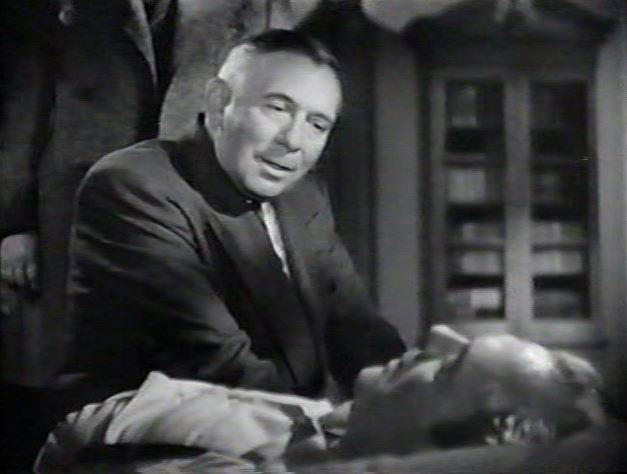
Ray Collins is a doctor on the board of the museum, the
voice reason in this mess.
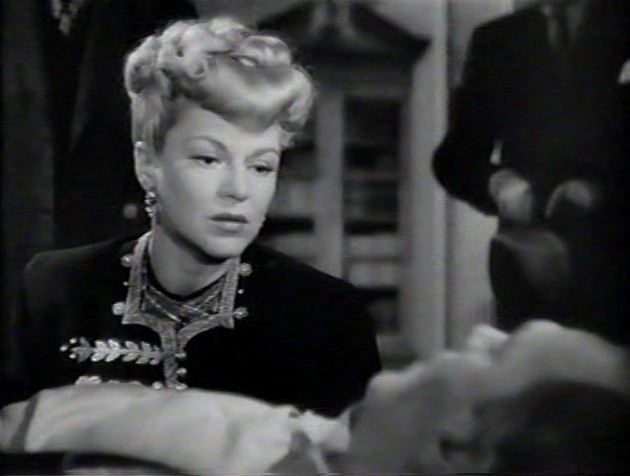
Claire Trevor is a society dame and magazine writer who
appears in a different outfit and a different hairdo every time we see her. She sparkles, but she’s a regular dame. We gather she and Pat were an item once, and
he’s still interested enough in her to be jealous and sarcastic of any man who
takes her to dinner, like Herbert Marshall.

Our old favorite Mr. Marshall is typically elegant and
eloquent here as an international man of mystery. We don’t really find out who he is or what
his game is until nearly the end of the movie.
Mr. O’Brien does not disguise his distrust and disdain for him.

Pat is a docent at the museum and gives lectures on
art. (How many cool film noir guys do
that?) We are told that the museum
curators regard Mr. O’Brien as revolutionary—in their eyes not a good thing—and
that if it weren’t for his service record, they might have sacked him long ago.
This being film noir, nine times out of ten, the protagonist
is a war vet trying to adjust to this weird new world he’s come home to but
doesn’t recognize. Especially
interesting is that later we get some background on O’Brien’s war record—he
worked for the Allied Reparations Committee investigating the Nazi theft of
precious works of art.
We trace Pat O’Brien’s psychotic disturbance to a train
wreck he claims he was just in, though there are no reports coming to Wallace
Ford that a train wreck has occurred.
Now we go to the requisite flashback as Ray Collins asks Pat
to tell them what he remembers happened to him today.

We pick up from Pat’s docent job and his lecture, and the
call about his mother. When Pat rushes
to the train station to start his frantic journey to see his mother in the
hospital, we follow him pretty much step-by-step—the ticket line, the empty commuter
car filling with nighttime stragglers getting off work late, a sarcastic
butcher boy selling fruit, magazines and cigarettes. There’s a guy half-dragging his buddy who
appears to have had a little too much to drink.

The train car is already a place of tension because of Pat’s
anxiety about his mother and trying to reach her as soon as possible. He glances with impatience at the people
around him, not studying them with interest, but as if they are adding to his
annoyance and tension. We hear the
omnipresent sound of the train wheels, which seem to grow louder. Pat seems to grow acutely aware of all the
sounds and images around him, and so we, too, focus on these sensations.

He looks out the moisture-tinged train window, and sees in
the distance, around a kind a bend in the track, a beam of light. To his horror and ours, it appears to be
another train on the same track. Look at
Pat’s frozen expression as he’s mesmerized by the sight, a sense of unavoidable
doom. Suddenly, the train whips around
the bend and heads right toward us. The
flash of light splashes across his train window, and we hear screams.


Then the flashback ends and we are back in the present. He is physically and mentally exhausted.
He is told by Wallace Ford that his mother is fine. She was never in the hospital. There was no train wreck. They all think Pat is cracking up, and his
clothing reeks of alcohol.

Poor Pat, baffled and shaken, and doubting his own sanity,
is released by Ford for the time being, but the museum fires him. You can’t have a loony giving lectures on
Salvador Dali in the gallery. Pat fears
he really is cracking up, like other ex-GIs he’s known. He confesses, “It’s the one fear everybody
had.
Claire Trevor and her apparent new beau, Herbert Marshall,
take Pat back to his apartment. It’s all
messed up, as if somebody has overturned everything looking for something. We also see Pat is being tailed.
Pat, scared, but wanting to get to the bottom of this, even
if it means he proves he’s a nut, tries to retrace his steps according to what
scraps he can remember.
He goes to the train station, rides the same train, tries to
track down the same butcher boy or others who might remember seeing him. Nobody saw him, nobody remembers him. We are filled with the same sense of tension
as before, afraid another “wreck” will happen.
Just at the pivotal moment, that train that looks as if it’s on the same
tracks comes barreling at us again, and Pat is panicked. Then-whoosh!
It passes by. It was a double
track. The conductor calls out the name
of the next stop.

Aha. Pat realizes
this was the moment something must have happened to him. He gets off at that stop, and the station
master in this tiny, empty depot remembers him from the night before, as a
drunk guy being dragged off the train and into a car.
Now he knows he’s not crazy, but he’s in somebody’s
way. Mr. O’Brien is mad and on the hunt.

A murder occurs meanwhile, and he’s implicated, and Wallace
Ford is after him, so Pat takes it on the lam. We are taken to a penny arcade where he meets
up with Claire Trevor trying to help him hide.
It’s a neat setting, showing what typical urban penny arcades were like
in the day, a place for grownups and not kids—see the “No Minors” sign—because
there’s nickelodeon peep shows and stuff.

Pat slugs people. He
x-rays masterpieces. He appeals to the
mousy secretary of his museum boss to help him investigate a forgery connection
to the museum. Even Mary Ware, played by
Mary Ware, is not what she seems.

We go to a cocktail party, end up at a rusty freighter at
the wharf, where Pat saves a valuable canvas from a fire. Ultimately, we have a showdown between Pat
and the mastermind of the mysterious gang, and we discover the reason for his
psychotic episode at the beginning of the film.
It might seem like a slightly goofball ending after all that noir
atmosphere, but it’s a fun movie, especially for being offbeat. Keep an eye out for Ellen Corby as a maid.
But, especially keep your eye on the graying middle-aged
action hero with the knowledge of art history, a devotion to his mom, and a
growing paunch at his belly. Pat O’Brien
was lucky to get the part with so many younger pretty boys in Hollywood, but
none of them would probably be as interesting.
He earned it, because he gives it not so much an “edge” as a burnished
shine.

Besides, film noir protagonists are supposed to be
world-weary and haunted—and who is more tired and cynical, and has as deep a
back story as a middle-aged man?
As we discussed in last week’s Adventure in Manhattan, also about art theft, the surprise mystery
or what we do not expect from a film doesn’t have to be a shocking plot
device. It can just be a little quirk
that sticks out and fools us—and intrigues us.
***
Here's a preview of the cover of Dismount and Murder - number three in my cozy mystery series. The book will likely come out in November, and I'll post more about that in weeks to come. The artwork here is by the amazing Casey Koester, the Noir Girl.


