IMPRISON TRAITOR, PEDOPHILE, AND CONVICTED FELON TRUMP.
Showing posts with label Audrey Totter. Show all posts

Thursday, December 20, 2012

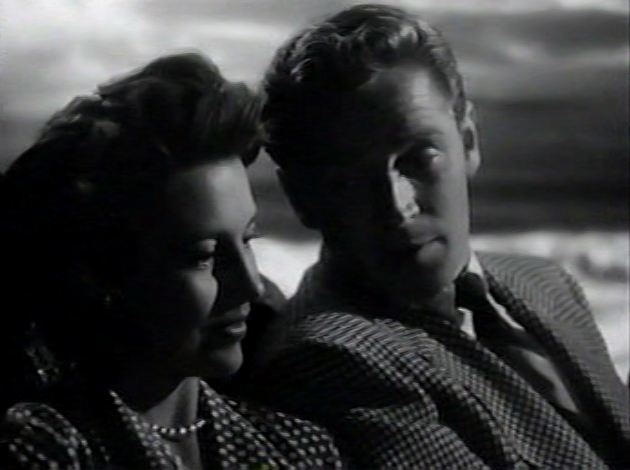
Lady in the Lake - 1947


“Lady in the Lake” (1947) uses playful images of Christmas in that clever brand of sarcasm used by only the best private eyes.  And Robert Montgomery.
This is our second installment of A Very Gumshoe Christmas, and we take up where “Alias Boston Blackie” on Monday left off…from B-movie to classic noir.  The loner detective grows up, and grows cynical.  Christmas throws us off the trail from the start, but never Philip Marlowe.
There will be no plot spoilers, just a few impressions of an unusual and daring film. 
“Lady in the Lake” is famous foremost for its unique first-person camera view, and for discussions back and forth by fans for decades on how effective it is or isn’t.  Obviously, the camera has some limitations—for one, it does not accurately imitate the peripheral vision of the human eye.  Some scenes may seem slow or unintentionally comical to the modern viewer as the actors play directly to the camera.  But this wild experimentation is exactly what deserves our respect in an industry where “copycat” is the usual art form and risks are rare. 


Robert Montgomery, who we last saw here in “Night Must Fall”(1937) makes his official directorial debut with this movie, and also stars.  However, as he is playing the lead, detective Philip Marlowe, we see all the action from his viewpoint, but only see him a few times in the course of the film when he happens to look in a mirror. 


On another occasion, his shadow on a wall as he is talking with Audrey Totter is his stand-in.
This may make the film frustrating for Robert Montgomery fans who want to see him (the film was not a box office hit in part for this reason), but true fans of Mr. Montgomery should appreciate his ingenuity in crafting this film.


Audrey Totter, who we last saw here in “Tension” (1949), plays a complex role of a magazine editor who hires Montgomery to find the missing wife of her publisher boss, played by Leon Ames.  Miss Totter should have gotten some kind of prize for playing probably 99 percent of her work in this movie directly to the camera.  That is a workout, and she is a lot of fun to watch; at turns scowling, flirting, pleading, and seducing.  (Today is Miss Totter's 94th or 95th birthday - not sure of the year of birth.  According to IMDb website she is residing at the Motion Picture and Television Hospital in California.  A very happy birthday to a terrific and fondly remembered actress.)


Lloyd Nolan is excellent as a tough cop.  He’s great in whatever he does, and I actually would have loved to have seen him take the lead and play Marlowe in this movie.  His down-and-dirty growl of a voice.
 
Tom Tully is the world-weary police chief.  Jayne Meadows is a standout as a mercurial, almost manic, woman who knows a lot more than she lets on. 
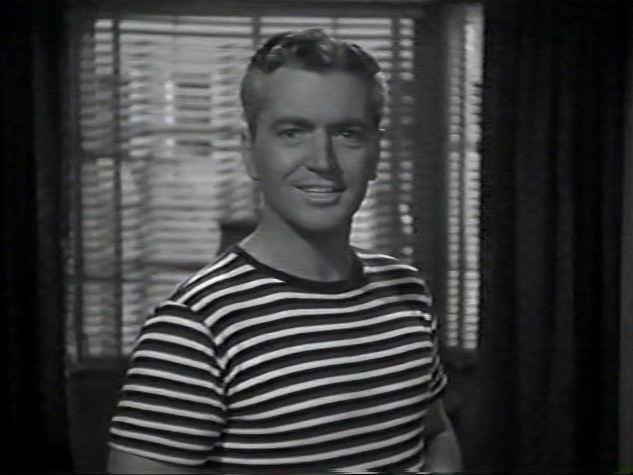
Dick Simmons is a smooth and deceptively friendly gigolo.  You can tell he's a gigolo by the striped jersey.
There are some lines tossed around that would make for a great movie no matter how it was filmed.  Audrey Totter, whose magazines are of the sensationalist pulp variety, complains to an underling that a new magazine cover design needs more gore. "Not enough gore."
Montgomery, recovering from being slugged by the Southern “gentleman” Dick Simmons remarks, “At least he had the decency to hit me above the Mason-Dixon line.”
And Lloyd Nolan’s remark, “How does it feel dying in the middle of someone else’s dirty love affair?”  I love that line.
Despite the restriction of actors playing directly to the camera, there are flashes of remarkable electricity to their performances, moments akin to a stage actor’s reactions.  Some of their responses and facial actions look almost improvisational. 
Because we are the camera’s eye, we see everything Montgomery sees.  Some of this gimmick is playful and funny, as when Montgomery’s leering glance follows Totter’s curvaceous secretary around the room, and with a sharp, somewhat jealous interjection by Totter, our attention is swiftly brought back to the mollified Miss Totter behind her desk.
Sometimes the gimmick is quite eerie, as when we discover bullet holes in a glass shower door, we approach and open the door, and our gaze rests upon bullet-gouged porcelain tiles in the shower stall, falling down upon the naked corpse crumpled on the floor.


Or when Montgomery, injured after a car wreck, crawls (and so do we), hand over hand, across a road to a phone booth that seems a mile away.
 
We are stared at.  We are flirted with.  We are punched in the face. We kiss Audrey Totter.  She serves us a highball. We notice a hundred different clues, and sometimes, as when Montgomery lifts a phone receiver to his mouth and talks, we look at nothing, like at the corner of a table, just as we would absently look at nothing while we are concentrating on a voice in our ear.
All this would be enough to make a fun and very different movie, but set during Christmastime, the director uses images of Christmas in a very cavalier and smart aleck way. 
 
 
We begin with the opening credits, which are title cards designed to look like Christmas cards.  Images of Wise Men, and holly, Santa, poinsettia, all the iconic graphics and over them, a medley of Christmas carols in uplifting choral arrangements that may make us think we are about to watch a heartwarming tale of love and repentance.  In a way, maybe, but it’s a crooked road to repentance.
 
 
As the credits finish and the Christmas carols end, the last title card reveals a handgun.  We were had.  Trust nobody.
We start three days before Christmas.  Robert Montgomery takes on a missing person job, that soon turns into a murder investigation.  All along the journey, though he is a man without family and evidently has no Christmas plans, the yuletide follows close on his heels, a shadow of irony.
We knock on doors and are faced with Christmas wreaths.  He remarks to the gigolo Simmons, “I like your tan.  It’s very Christmassy.”
We intrude upon an office Christmas party, where a reserved and gentlemanly Leon Ames hands out gifts to his employees. 


In a scene with Audrey Totter, Montgomery confronts her with conflicting evidence.  He demands she own up to secrets, and when he has found a gun that was used to murder, he hands it to her gift-wrapped as a gruesome present.  She plays the scene framed close to a desktop Christmas tree.  Christmas stays in the tense scene like a mocking clown.


Leon Ames takes him aside and want to hire him, too.  He nervously picks at the tinsel on the branch of a Christmas tree that juts out from the side of the frame.  Christmas is pushy, demands attention and will not be left out.
 
When we are arrested and interrogated by Tom Tully, Mr. Tully is interrupted by a phone call from home.  It is his little daughter, who wants Daddy to come home and help her put up her stocking.  With quick, wary glances to us, he indulgently listens to his daughter’s prattle, even helping her through her recitation of “T’was the Night Before Christmas.”  It is offbeat, funny, and very surreal.
I like the scene where, trying to escape Lloyd Nolan hovering in the police station hall, we duck into the press room and find a “journalist” lying on the table, speaking “pillow talk” into the phone to his lady friend, a Racing Form by his head. 
After a beating, a car wreck, and a belly full of people lying to him, Montgomery is saved by Audrey Totter, who responds to his emergency call and brings him, unconscious, to her apartment.   She gives him a Christmas present: a robe she had bought for another man.  Like earlier false clues that went nowhere, even the gift to him is not a gift to him.  Marlowe’s world is made up of lies.
 
On Christmas Day, they listen to “A Christmas Carol” on the radio, which was an annual event back in the day, though it doesn’t sound like Lionel Barrymore, and we blow streams of cigarette smoke as we regard Audrey Totter lying contentedly on the living room couch, her eyes drinking us in, across from where we are sitting. 

When the program ends, she snaps off the radio and resumes, as if picking up in mid-sentence, the tale of her hardscrabble life.  Only Scrooge could have interrupted her.  She asks Montgomery what he did last Christmas Eve.  He spent it in a bar.  She spent it in a nightclub.  This Christmas is an improvement, or should be if they weren't so depressed.  Christmas offers redemption, but you have to trust it.  These two lonely people have some serious trust issues.
I was a bit surprised at the can of pork and beans on the kitchen counter.  I would have thought Audrey Totter was decidedly not a pork and beans person.
Montgomery has one task left, and, spying his quarry window-shopping at a Christmas-decorated window, we have a final, very dramatic scene leading to the conclusion of the case.  The movie, like detective Philip Marlowe, is flawed, but has guts.  Teasing us with Christmas images in an otherwise grim movie is an irresistibly smartass thing to do.


Thursday, February 2, 2012

Tension - 1949


Tension (1949) stretches the limit of tolerance in the rocky marriage of a mousy pharmacist, and becomes the plaything of a savvy detective solving a murder.

Actually, it’s the rubber band that’s the plaything of Barry Sullivan as the detective. He uses one as a visual aid in the first few moments of the film, breaking the fourth wall, speaking to us directly. He tells us that by manipulating tension, he breaks down criminals.

“Everybody’s got a breaking point.” At several points in the film, he takes out another trusty rubber band and stretches it in his fingers to remind us.

Plausibility is stretched, too, at times, but it’s a fun movie as a post-War period piece, and for the careful, deliberate way we see a one man walk to the precipice of doom, and then make a choice. This is Richard Basehart, a really fine actor especially adept at fragile, sensitive men struggling with inner turmoil. The first half of the movie belongs to him. We don’t even see Barry Sullivan again until the second half. The first half sets up the crime, or what we think is going to be the crime, and the second half follows Mr. Sullivan’s actions to solve it.

Mr. Basehart is Warren Quimby, a mousy name for a mousy guy. He works the night shift at the all-night drugstore in a post-war southern California where suburban sprawl is pulling highways after it like a loose thread unraveling. Where Malibu beach houses are inevitably the scenes of trysts, and murder.


Basehart is married to Audrey Totter, whose bread and butter in those days was B-noir bad dames. She sulks, she pouts, and holds out for what she wants, which is always more. She goes to the movies at night while her husband works, and gets picked up by guys with flashy cars, and by one guy in particular. He is Lloyd Gough, a liquor salesman in a pinstripe suit and a perpetual cigar clamped in a plastic tip between his teeth. She calls him a big man, and he thinks he is.

Mr. Basehart worries about his wife being alone -- or rather, not being alone -- while he is working. Calls the movie theater to see when the show ended, checking up on her. Fears that when he goes upstairs to their little apartment she won’t be there some night. We might think him a fool and deride his obsession with a woman so unworthy of him. But, that is because we are the audience and we are omniscient. When she enters a room, we hear the blaring, bluesy saxophone music that is her signature. In old movies, a sax equals sex, and a saxophone follows her everywhere.


She flirts with her husband’s employee, played by Tom D’Andrea, a stalwart palooka who mans the lunch counter at the drug store. Though he always respectfully refers to Basehart as Mr. Quimby, we might conclude he is his only friend. Mr. D’Andrea has no use for the boss’s wife. He sees her for what she is, a woman who does not finish her hamburger, and pushes it aside for pie with whipped cream on it instead.

Nice girls finish their supper before they have dessert.

But Basehart dotes on her. His puppy dog devotion is tested constantly, and only once does he seem to bristle under her rudeness. This comes when he surprises her with a ride to a housing development where he has put a down payment on a tract home. The treeless, orderly suburban subdivision is dotted with identical modern ranch homes. His handsome, boyish face beams as if he is offering her Shangri La. She won’t even get out of the car. When he counts off the selling points, including a dishwasher, she leans on the car horn over his talking, like a petulant teenager who refuses to listen to what she does not want to hear.

For a moment he turns and glares back at her, and we wonder if he finally sees how contemptible she is.

But, obsessions make us helpless.  He shuts up and gets dutifully back in the car. He has lost our respect. He never had hers.

One night all that’s left on their bed in the apartment above the drugstore is her doll with the frozen expression on her porcelain face, much like Audrey Totter’s perpetual scowl is chiseled on her pretty pale, porcelain countenance.

When she returns, it is only to pack. She and her dolly go to live in the liquor salesman’s beach house.

But Richard Basehart can’t let go. He goes to the beach, stomping in his loafers on the sand to ask her to return. He is such an annoying pest -- even we have to admit it -- that Liquor Salesman Lloyd punches him from here to next Tuesday. When Basehart retreats, his glasses broken, the “big man” calls him a four-eyed punk.

By the way, if you don’t want spoilers, you should have gotten off at that last exit.

Mr. Basehart goes to the eye doctor and gets a new pair of spectacles. They cost $5.

Five dollars. In a word, cripes.

Then Basehart begins to work on a germ of an idea of killing Liquor Salesman Lloyd for humiliating him in front of his wife.

It’s a plan worked out carefully, with us in on his thought processes. He decides to create a fake identity, and have that fake person do the killing, and then fade away into nothing. He goes back to the eye doc for a set of contact lenses, because he has seen a poster there that announces contact lenses will make him a new man.

He chooses a fake name, a fake profession as traveling salesman, and rents a furnished apartment in another part of town. He will live there only on weekends to lay down an alibi. It’s a logical process, and it’s interesting that his crime of passion can be so purposeful and practical. It says a lot about his character, a little man who plods along, works hard, and plans his future with precision. His passion now isn’t really for her; that’s dimming fast. His passion is for taking his methodical personality and using it for one big showy deed.

But his plan begins to unravel, like the miles of California highway, but the unforeseen complications turn out to be a good thing. He doesn’t see it at first, but eventually he will.

Foremost among the unforeseen complications is his new neighbor, played by Cyd Charisse in a non-dancing role. She is quite literally the girl next door, wholesome, winsome, elegant in her very fresh-faced appearance, and falling fast for the quiet little guy in contact lenses. He wishes for, more than succumbs to, the idea of a life with her. He holds himself a little aloof because he has a nasty job to do, and he thinks maybe he still loves his wife. He is afraid of getting too close to the lovely Cyd, and does not want to involve her in what he is beginning to see is a real mess.

But Basehart is a man who finishes what he starts, so he finally picks the day to go kill Liquor Salesman Lloyd.

A very dramatic scene, and nicely played out, is when he slips into the darkened beach house at night and finds Lloyd Gough asleep in a chair. He is alone. Perfect. About to impale him with an implement from the outdoor barbecue (which Lloyd had threatened him with earlier -- Basehart is keen on the fine details of revenge) -- Basehart suddenly notices Audrey Totter’s dolly on the table.

Audrey isn’t here.

Audrey isn’t here.

The scales fall from his eyes, and Richard Basehart sees she has taken a night off from Liquor Salesman Lloyd to pursue, or be pursued by, another “big man.”

Lloyd wakes, stunned to see Basehart about to jab him with a very large pointy thing. Basehart gets his revenge, but in a way he never expected. Like the old saying, the best revenge is living well.

“I must have been crazy. She’s not worth it. If it hadn’t have been you, it’d be some other guy.”

He gloats over Lloyd, who we see is clearly humiliated that she’s bored with him already.

“She’s all yours,” Basehart says with a sneer, and we can sense the weight off his shoulders and the rejoicing in his soul now that he is emotionally and psychologically free of that rude woman who doesn’t finish her hamburgers. Now he is free to love Cyd and start his life over.

Until the moment he’s shaving the next day, and Audrey Totter shows up in his bathroom mirror. We can hear the sax.

She is loving, contrite, and wants him to take her back.

Liquor Salesman Lloyd has been found murdered. Mr. Basehart’s nightmare is only beginning.

Barry Sullivan, and his rubber band collection, finally returns -- we had forgotten about him -- and he brings his partner, William Conrad, to solve the crime. Always fun to see William Conrad.

The rest of the movie is his show. We saw the crime plotted in the first half of the movie, and Sullivan dismantles the scenario in the second half. It’s a very interesting telling of a story, if a little hard to swallow here and there, including Sullivan’s phoney romancing of Audrey Totter to trick her and keep her off balance.

Some things I like:

First of all, the drugstore. I know the exteriors were shot in and around Culver City and Malibu, but I don’t know where. Film locations are Robby Cress’ specialty. If you haven’t seen his blog, check out Dear Old Hollywood here.

I don’t know about the interior of this drugstore set. My gut feeling is it’s a real store, because it is so wonderfully packed to the gills with everything a drugstore sold at that time, with the lunch counter and the somewhat worn-looking diamond pattern of floor tile. It almost seems too detailed for a set on a soundstage. But I don’t know.

I like how when Basehart is searching for a fake name for his new identity, he picks the surname Sothern, because he sees Ann Sothern on the cover of "Screen Digest” magazine.

A young boy of Asian ancestry, and a pretty young African-American woman are among the patrons having their prescriptions filled by Basehart. They are minor roles, but these two individuals should be noted for their not being stereotypes. Also, William Conrad’s name is Edgar Gonzales; we see a police detective with a Spanish surname, also not stereotyped. These three characters are presented naturally, as being all-American, and that is perhaps what is most effective.

Note when his friendly and ever-talkative counter man sidles up to Basehart with the newspaper, commenting on the news, “They’re still at it, trying to figure out who owns Germany, who owns the atom bombs…” See our series on Uneasy Victors about America’s involvement in post-War Germany as seen through the movies -- A Foreign Affair, The Big Lift, and Judgment at Nuremberg.

Most especially, I love the scene where Barry Sullivan takes Cyd Charisse to Basehart’s drugstore. She still thinks he is her Paul Sothern - neighbor, and prospective husband. She does not yet know he is Warren Quimby, murder suspect. When her sweetie seemed to disappear into thin air, she notified Missing Persons and gave them a photo. Through that action, the police were able to identify Warren Quimby as Paul Sothern, the man they were looking for in the murder of Liquor Salesman Lloyd.

Basehart’s not arrested yet, but he knows he’s being watched. It’s a wonderfully tense scene when Barry Sullivan, who just loves messing with people and causing TENSION, “introduces” Cyd to Basehart under the pretense of stopping in for coffee at the lunch counter. Both are shocked to see each other, Cyd is even more shocked to see him wearing his $5 glasses as Warren Quimby, Pharmacist and Murder Suspect.

But neither acknowledges they know each other. They pretend to be strangers while Sullivan plays them like a fiddle, also pretending not to know they are connected. Miss Charisse and Mr. Basehart want to protect each other, and struggle with their emotions. Sullivan needles them both a bit, especially Cyd, when he rapturously talks about Basehart’s gorgeous wife.

We wait for Cyd Charisse to lose it, hurt or outraged to learn that her boyfriend is already married -- which is even more insulting than being a murderer, too.

But, she’s too much a lady. She swallows her distress, and play acts disinterest.

At one point Cyd, deeply offended by Sullivan’s manipulation, tells him off without ever admitting she knows Basehart. Then in a rising voice as she’s about to stomp out of the place, she turns to Basehart,

“And you do make wonderful coffee!” What she means is I’ll never betray you no matter what, but that’s what comes out of her mouth. Exquisite.

Another fun scene is when Barry Sullivan pulls a similar trick on Audrey Totter. He brings her to Basehart’s furnished apartment and tells her Basehart’s been romancing the neighbor lady. Audrey is no Cyd, and she blows her top in an instant, furious at the thought that the husband she had been two-timing was two-timing her.

“Why that four-eyed little pill pusher!” She is deliciously jealous. She tells Sullivan all about how Basehart murdered Liquor Salesman Lloyd.

Now Sullivan has everyone where he wants them, and pulls one final stunt to unmask the murderer, because so far all he has is hearsay and his gut instincts.

Audrey Totter’s final exit is accompanied by the sultry notes of a sax.

A saxophone never plays like that when I enter or exit a room. I wish it would sometimes.

I have only two questions about this movie. One, the reason for the murder is never really explained, or else I missed it.

And how does Audrey Totter manage to keep such a slim, tiny figure with all those burgers and wedges of pie with whipped cream on them? There’s a shot of her in those high-waisted trousers of the day that is quite stunning.

Maybe it’s because she doesn’t finish her burger.

*********

Related Products