IMPRISON TRAITOR, PEDOPHILE, AND CONVICTED FELON TRUMP.
Showing posts with label Carole Landis. Show all posts

Thursday, October 11, 2012

I Wake Up Screaming - 1941


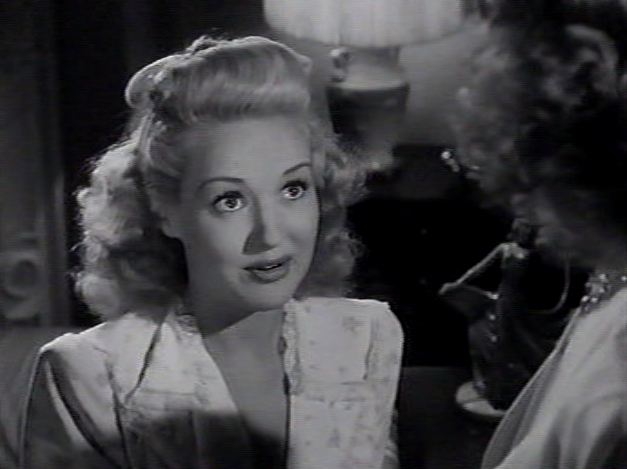
“I Wake Up Screaming” (1941) is fun noir. I think my favorite line happens in the nightclub when Allyn Joslyn, with a wry smirk, asks snooty, soon-to-be murder victim Carole Landis, “My I have the next mazurka?”

It’s the oddball moments in this movie that make it a quirky delight. Since even a cursory plot description is a minefield of spoilers, I’m not going to discuss the plot, just mention a few oddball elements I like.

First, the title, which has nothing to do with anything, except it’s deliciously lurid.

The gag when Betty Grable, hoping to send a cop on the wrong trail, points to a door through which Victor Mature may have escaped, only to have a Murphy bed fall on the confused flatfoot.

Victor Mature, whom we saw last week in "Captain Caution" (1941),  is being chased by an even more clever police detective played by Laird Cregar. Sadly, Cregar’s life was cut short only three years after this film was made. His work in this movie is the most riveting of all the actors, a complex character with more to his back story than just your routine dogged detective. Early on he pins the murder on Victor Mature, and spends the rest of the film tracking him, playing a cat and mouse game, when Mature slips through his fingers. I love the scene where they ride together in the car, and Mr. Cregar, as he speaks, playfully fashions a noose with string in his busy fingers.

But along the way we are introduced to a menagerie of the usual, or unusual suspects to make us question who really committed the murder. Alan Mowbray and Mr. Joslyn are along as society gossips and as sellers of information.  Joslyn has a loaded gun in his beside table.  We've mentioned before how anyone in an old movie can pull open a drawer to find a loaded gun.

The effortlessly weird Elisha Cook, Jr., with his big round eyes and childlike gaze creeps us out and makes us suspicious.  But Mature is the prime suspect, a fast-talking promoter who was selling Miss Landis as a Bright New Talent.

Betty Grable is her grieving sister, in a non-singing role this time (though I guess she did film a number that was cut from the movie).

Grable and Mature form an uneasy alliance at first, both looking for the murderer, but soon they get to be more than that, probably dating from the moment she sees him in his 1940s form-fitting bathing suit. Oh, my, yes. A vision of manly grace and considerable attributes.

Going on a date to an indoor swimming pool in the middle of the night, in the middle of a noir murder mystery. Hmm. I looked hard for Esther Williams, but she must have been in the ladies’ room.

Whenever Mature and Miss Grable are together, we heard the sometimes soft and lilting, sometimes jazzy rendition of “Over the Rainbow”. It has a strangely eerie effect in this movie, just another delightful oddball element.

And the loving, smitten way she saws off his handcuffs with a hacksaw on their first date.

And when he sticks a Tootsie Roll in the detective’s back, pretending it’s a gun.

The way Carole Landis gets to perform a song, but only as an image on a screen the cops show to Mowbray to make him crack.

And who sent all those flowers to Landis while she was alive, and keeps sending them to her grave after her murder? Florist Charles Lane -- that’s right, that sexy heartthrob Charles Lane, gives hints but will not mention the name aloud.

I recognized the theme over the opening credits to be Alfred Newman’s “Street Scene,” but how many of you, like me, immediately thought of the theme song to the old time radio show “My Friend Irma”?

Notice that the guy cheering at the prize fight, sitting in front of Victor Mature and Betty Grable (ah, the days of bringing your date to a boxing match) is an African-American gentleman? He’s blocking Mature’s view. He’s dressed in a suit and nothing about him is stereotyped or makes him in any way different from the audience of cheering white actors around him. Only because of that, and because this is move from an era where such innocuous, color-blind characterizations were rare, does that make him stand out like a beacon.

A brief, really nice beacon.

But perhaps just another unusual throwaway moment in an oddball noir.

By the way, at least two characters that I can think of get awakened in the middle of the night by strangers in their rooms.  It's pretty freaky.  But nobody wakes up screaming.

Monday, June 15, 2009

Drive-In Restaurants and Singing Carhops


Above we have Fred MacMurray pausing in the middle of his work day to have a beer at a drive-in restaurant in “Double Indemnity” (1944). Oh, the glamorous life of an insurance salesman.

The earliest depiction of a drive-in restaurant I can think of is “Moon Over Miami” from 1941 (covered here on this post from May 2008). Betty Grable and Carole Landis are singing carhops at Texas Tommy's in a rousing opening number dressed in cowgirl outfits. All their customers appear to be men driving convertibles, which is convenient because it lets us see the cowgirl outfits without obstruction. Think maybe that was what the director was thinking? Or just a coinkydink?

Just the thing you want to see come at you when you want a burger, apparently. Below we have a few more singing carhops in this 1950s short with scantily clad waitresses and leering male customers.


By the time “American Graffiti” (1973) came along, the drive-in restaurant carhop seemed to have become a symbol of the 1950s in movies and TV, yet we really don’t see them in too many movies of the era. Here’s a link to the opening scene of “American Graffiti which takes place at a drive-in restaurant in 1962. I don’t really know how common waitresses on roller skates were. That must have been difficult. Lots of customers accidentally covered in mustard and milkshakes, I imagine.

Evidently, at some point the clientele of drive-in restaurants seems to have switched from world-weary insurance salesmen plotting murders, and leering businessmen, to aimless teens pigging out on French fries and shakes in between drag races.

Below in this cartoon from 1956, “Rocket Squad”, which is a parody of “Dragnet”, Daffy Duck and Porky Pig tail a crime suspect in this futuristic space world to “Elsa’s Blast-Inn”. The push-button menu lists oleo as one of the sandwich condiments. Anybody remember squishing the capsule of yellow food coloring to turn the margarine from unappetizing white to faux-butter?


As long as we’re in the realm of cartoons, but shifting to TV for a minute, you might recall Fred and Barney bought a drive-in restaurant on a 1960 episode of “The Flintstones.” Also with singing carhops. “Here we come on the run with a burger on a bun….”

Some carhops skate, others dance and sing.

The A&W chain still featured drive-in style restaurants when I was young, but I think they’ve dropped them now. I don’t recall any of the waitresses either skating or singing. Just plunking the metal tray on the car door. Which was good enough when all I really wanted was my “Baby Burger” and my little mug of root beer.

What drive-ins do you remember? What other movies can you recall that featured scenes with drive-in restaurants?

Thursday, May 29, 2008

Moon Over Miami (1941)

“Moon Over Miami” (1941) arrived on the scene in the last few months before Pearl Harbor changed America forever, and while World War II had for nearly two years been destroying the lives of millions overseas. Everything’s okay in Betty Grable’s world.

Betty and Carole Landis play waitress sisters in the film that opens with a sprightly song and a couple of roadside cafĂ© carhops in cowgirl suits. Can’t get any more promising than that. If Shakespeare had thought of opening a play like that, he would have done it. It just probably never occurred to him.

Charlotte Greenwood, reliably funny and dear (see this previous entry for an interview with Miss Greenwood’s biographer) is their aunt who slings hash in the kitchen. The three of them dream of marrying rich men, and take off to Miami to hunt for some.

Don Ameche and Robert Cummings, boyhood rivals, are the rich fellows. Since the girls do not want to appear as golddiggers and because they have very little money between them, Betty gets to pretend to be the wealthy heiress, while sis Carole plays her secretary, complete with unflattering glasses because she is not supposed to outshine Betty, and Charlotte gets to be the maid. Lanky Miss Greenwood, with the most eloquent posture in Hollywood, can make her point or just get a laugh by standing or leaning, or taking a deep breath.

Both the dapper young white dinner jacketed rich fellows chase after Betty with her deep red lipstick and her blonde hair pulled off her face in the impossible upsweep. With giant stars on her dress and a giant bow in her hair, she is a walking exclamation point.

Cummings is the goofier, more hapless millionaire’s son, and Ameche is the more suave and savvy. We know who’s going to end up with Betty when we hear Mr. Cummings sing. He lumbers on bravely, but it’s a good thing he’s rich because he’ll never make any money singing. Ameche’s smooth, gentle tenor is always a surprising contrast to his rather gravely speaking voice. He could be the last man sporting a pencil thin mustache at this period. (See the blog "Allure" for photos of some famous mustached actors of Hollywood's Golden Age).

After some trickery and water sports shot on location in Ocala and Cypress Gardens in Florida to give the film a hint of travelogue, each girl walks away with her rich fellow, though Miss Greenwood is improbably paired with hotel barman Jack Haley. Miss Grable comes off as a bit of a petulant heel, and a spoiled brat, but it’s her movie.

Frank and Harry Condos are the pair of specialty dancers who flank Miss Grable in a couple of numbers, and take the lead themselves in the “Seminole” number where a huge troupe of dancers dressed in patterns emulating the traditional clothing of Seminole Indians takes off in a colorful and not terribly PC tribute to something sort of Florida-ish.

It’s a frothy vacation with glimpses of Florida in an era when location shooting was not the norm, a glimpse of Betty Grable in a white bathing suit, which is a precursor to her famous image as a war pinup, and a fantasy of what it might be like to leave your lousy job and travel to an exotic place where everybody is having fun. The vacation only lasts 90 minutes, but you can’t beat the price.

Related Products