There
are many issues under discussion today among classic film fans: the discovery
of lost films, the expense of restoration, and most especially: what
constitutes a classic film?
This
last issue is, oddly, the most contentious.
It is often divided among age groups (though not always) that a classic
is a movie made during the period of the studio system, i.e., from the early
days of the twentieth century through the 1960s. I have maintained that a classic film is one
made before 1965. I am not in favor of
turning the word “classic” to mean something good, or beloved, or timeless
(some of the best classic films are “dated” and this makes them valuable for
study) but rather as it pertains to film, should only be a label to categorize
a movie by its era. Is a Three Stooges
short better than The Godfathermovies? Of course not.
If someone enjoys Rocky (1976) better than they enjoy Golden Boy (1939), does that make Rocky the classic film instead of Golden Boy? No. Rocky
is an Oscar-winning film from the 1970s.
It carries its own prestige. But
it is not a classic film.

I’m
sure many classic film fans will read the above sentence and their heads are even
now exploding in anger. Sorry, but the
point isn’t that your opinion is as good as mine, or that mine is as good as
yours. The point is to get beyond
opinion and draft some sort of objective criteria so we may catalogue,
describe, and share our information on classic films with future generations
without muddying the waters about what we mean.
History has, for the most part, clear demarcation on eras: the Jazz Age, The Restoration. Art has clear demarcation on eras based on
prominent style: Impressionism, Dada,
Modern Art. Do we call an
impressionistic painting Modern Art because it was painted in the 1960s? No.
It’s an impressionistic painting produced in the 1960s.
This
is the twelfth and final post in our year-long monthly series on the current
state of the classic film fan. We began
this series musing on the unlikely campaign of Donald Trump. Our last post in November brought us to the
stark and devastating realization that fascism is alive and well in
America. That’s quite a journey, one I
had not expected to take. Our movies,
old and new, whether they address social issues or present fantasy, are a clear
barometer of our pop culture, which makes them so important for study.

The
label “classic” should be the least of our problems in our mission to promote
these films, but if we can’t agree on even that, we won’t agree on which films
to be worth saving. We won’t be able to
save them all.
But
to be honest, I must confess that my own definition of “classic” as films made
before 1965 is only partly an objective assessment; in part, it is also a
reflection of my age. I was born in the
early 1960s, and so when growing up in the 1960s and 1970s, the movies made in
these decades were not classic; they were new.
In my middle-aged woman’s eye, they will always be in that vague
category of “new”. (With the same
prejudice a younger fan will consider a 1970s movie as “old” because it was
made before they were born. The criteria
is personal, and not objective.
When
The Sound of Music (1965) was first
shown on television in 1976, it was a monumental prime time event—but not
because it was a “classic”, but because it was a modern blockbuster. That will seem ludicrous to younger fans, I
know. When I was growing up in the Baby
Boomer’s joyous embrace of “Nostalgia”, the old movies we resurrected were just
old (and some not very old at that). Nobody
called them classic films. Classic
was a label that came much later, like Film Noir. Nobody called it Film Noir when I was growing
up. We were not a cadre of geeks—pop culture was still in the backwash of the Golden Age of
film, which was still the gold standard of entertainment.
These
movies were shown on every channel (even if there were only four channels) at
any hour of the day. The stars and
character actors and bit players of those old movies were, for the most part, not
retired and they were still working on television. They were still part of popular culture.
The
deaths of Judy Garland and Bing Crosby rocked mainstream society—not just old
movie buffs. Conversely, we had not yet
entered the age of deep mourning for the loss of anyone connected with classic
films as we are today, when it seems that each year we cling to the fewer and
fewer left, and it is we, not they, that do not go gentle into that good
night. Today our classic film fandom is
one part celebration of discovery, and one part mourning the “in memoriam” reel.
Baby
Boomers were spenders and collectors, and most of the books, posters, kitsch,
VHS and DVD classic film releases were meant for their consumption. Younger generations will take over, and their
exploration of classic films, their expression of their fandom will take
different forms.
But
there will be less of them.
We’ve
discussed in previous posts in this series that Turner Classic Movies is, with
few exceptions, the main source of classic film viewing in this country. Current discourse on whether TCM is diluting
its brand by showing modern films to the detriment of classic film programming (while
recommending wine from the TCM Wine Club) will be a moot point if younger
generations do not even subscribe to cable television, as seems to be the case.
Many
younger people get most of their entertainment online, and most of what is
offered them through streaming and download services are modern films. Their choice of viewing becomes narrower as
they veer towards only current movies and TV shows. They will be exposed to little that does not
already interest them. TCM’s venture
into streaming cannot yet replace the range of its network offerings.
The
Warner Archives release of films to the home market is very welcome, and we may
continue to wonder if Universal will ever get on board, but even these may have
a limited future commercial exposure.
Future generations will not have developed an interest in them enough to
make it financially worthwhile to producers of DVDs and Blu-ray, or streaming,
in a world where future generations have not been exposed to classic films on a
scale grand to begin with -- enough to once again make these movies a force in
pop culture and consumerism.
It
has been noted that the collectibles market is currently depressed because the
Boomers, who were tremendous consumers and are now at a point of downsizing in
their lives, are not finding buyers for their “stuff.” Younger generations are not interested.
We
classic films buffs naturally attempt to share our love of these movies with
younger friends and members of our families.
That will have a huge influence in their lives, and is a great gift to
them. But this is not the same as being
exposed to classic films not as a special event or peculiar hobby, but as
mainstream entertainment—something not just their parents are talking about,
but their friends as well.
I
had suggested in an earlier post in this series to teach classic films in
school. Another way to broaden the
exposure of these movies to younger viewers might lie with the Internet, where
they turn anyway for their entertainment.
We’ve seen how TCM and others are streaming and making available films
for download, but these are still paid services. There may still be another and more effective
way to get new classic film fans.
YouTube,
Internet Archive, and other free Internet channels.
Paramount
has already set up a channel currently showing 91 of its classic films for free
viewing. The beauty of YouTube is not
only is it free, but the operation is such that the viewer is immediately
exposed to a number of other similar choices.
We’ve all spent hours on YouTube, not intending to, just because we were
looking for something particular and got sucked in to watching several other
videos. The search engine is also
effective. YouTube has the power to
expose us to old movies and old TV shows we had not known existed. It is a smorgasbord of video pop culture
history.
The
video quality on YouTube obviously does not lend the best viewing
experience—it’s not like sitting in a restored Art Deco theater watching a
shimmering nitrate film—but it’s something free and easy to obtain, to spread
the experience of enjoyment and knowledge of old movies, and is a channel that
younger generations already know about and use frequently. Classic film buffs—and the corporations which
have a library they’d like to monetize—would be well advised to create new fans by building up in them a
taste for their product.
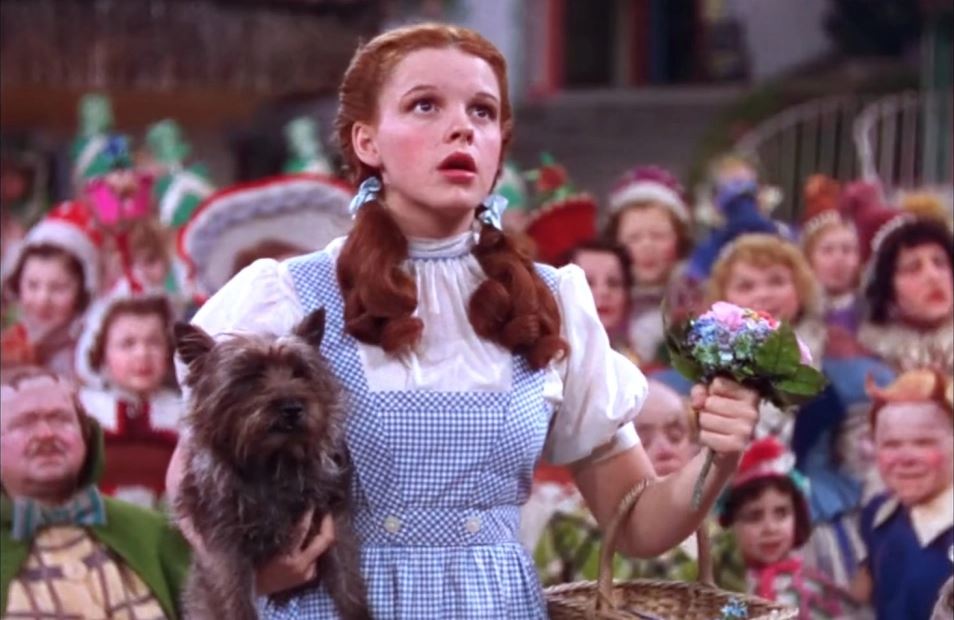
The Wizard of Oz (1939) would be
forgotten today had it not been shown yearly on broadcast television for a
couple of generations. Its popularity
spawned VHS and DVD releases, toys, games, books, clothing—a variety of
merchandise that came in the wake of its popularity, which came in the wake of
its familiarity.
It’s a Wonderful Life (1946) would be
forgotten today had it not been shown yearly on broadcast TV, and became so
popular that not only is it firmly established in pop culture, but the
copyright, which had lapsed, was scooped up again, making it once again a
valuable product.
We
see the same scenario with A ChristmasStory (1983), which is not a classic film, but has become a beloved
Christmas tradition, and again, firmly part of pop culture, with annual
showings on the cable network TBS, which runs a 24-hour marathon every
Christmas. Because of this we can shout
out lines from the movie. Houses on the
street where it was filmed have been turned into tourist attractions. You can buy the iconic lamp, for heaven’s
sake.
The
popularity came with familiarity: an audience was not found, or mined, or
marketed to—it was created from scratch.
The
Boomers grew up watching movies on free broadcast television, became classic
film fans in an era of a nostalgia craze fueling it. However, the movies they watched were fading
prints cut up for commercials. The art
houses showing them on the big screen were few and far between. The only media by which favorite films could
be owned and shown at home whenever they wanted was with 16mm film, a screen,
and a projector. Despite these
challenges, an army of old movie buffs kept alive their interest enough for the
media conglomerates to have a built-in consumer base when the technology
developed to produce films on VHS and DVD for a new, huge home market.
To
say that classic film fans have it easy today by comparison is not entirely
true. Yes, they have a better quality
video experience, a large assortment of movies available for the home market,
but their challenge is twofold: having
the money to purchase product that is continually being improved, restored and
re-released (how many copies of our favorite films can we own?); and second,
just being exposed to these films on a scale that enables them to digest them
as part of their American heritage.

This
last notion is, I think, something on which we need to focus more
attention. I am concerned not only on
the astounding idea that a nation so passionately devoted to defeating fascism
should recently embrace it—fascists used to be the bad guys, on that we could at
one time all agree—but if a younger viewer cannot absorb a movie in the context
of its era, then all the message, the art, the power, or even the technical beauty
of a classic film will not penetrate their sensibilities. They will consider classic films to be remote,
incomprehensible, and merely weird relics of a primitive age.
In
practical terms, there is a real disconnect for younger viewers in what they
see in classic films—for instance, the racism, the sexism (as if these things
have ceased to exist in their modern world), among so much else that they are
unable to accept in a film when they looking for images that affirm their own
experience. It becomes not just a matter
of taste—“my classic is not your classic”—but actually being intellectually or
emotionally unable to critique the art form.
Finding little they can relate to in it, it becomes as lost to them as
if they had never discovered it.
Take, for
example, this review of a new release this year for the first time on DVD of A Woman’s Vengeance (1948), a movie
we covered in this previous post.
The young reviewer is, as with many Internet writing gigs, reviewing the
product, which is the new DVD. She is not really writing an essay on the
movie, though she attempts to discuss the plot as part of her product review. She sounds as if she were reviewing a new
gadget or cleaning product. She displays
an ignorance of the film, the era, the actors and classic films in general as
an art form. As a result, her tone is
flippant, dismissive, lapsing into vulgarity in the modern attempt at
communication that tries hard to be clever, and her judgment on the product is
based on whether she feels is it a worthwhile purchase. This is the most shallow and sophomoric “film
criticism” that can be produced (not counting IMDb reviews, which are
frequently baffling in their obtuse triteness and often rife with errors), yet
it is now the prevailing style on Internet product sites. Future classic film fans, however many they
may be, will be getting the bulk of their information from such product surveys
(assuming classic film blogs are not still floating around on the Internet and
the algorithms are kind to us to generate at least some traffic).

There
are a lot of movies still hidden in studio vaults, university archives, and a
basement or two. Will future generations
seek them out, donate to have them restored?
Will they see any worth in even pursing this? If Lon Chaney’s London After Midnight (1927) is ever found, will future generations
care?
Are
we, the current classic film fans—from Boomers to Millennials—the last
audience?
There
is, as those who have attended the TCM Classic Film Festival and other such events
know a joyous and exciting social aspect among gatherings of classic film
fans. My hope is that many more of these
festivals will pop up around the country, or just in the form of small regional
clubs, so that it may be easier for fans to connect in person with others who
love old movies. This breaks barriers
between generations and demonstrates the genuine camaraderie and inclusiveness
that exists among classic film fans—even if we can’t agree on what a classic
is. How much the corporations cater to
our interests, based on their ability to profit from it, will largely depend on
our numbers and our demonstrated passion.
It will also depend on their ingenuity to create a market for their
product.
One
hundred years from now, someone just discovering Buster Keaton, Myrna Loy, or
Humphrey Bogart will be captivated. We
know that.
But
how many like-minded fans will there be left to share the joy?
This
ends our year-long series on the state of the classic film fan. I wish I could end it on a more hopeful note,
but hope is a fleeting thing these days.
This will be my last post this year.
I have a new book to get out, and so I need some time. I’ll see you back here on Thursday, January
19th for a new year of blogging.
I hope to accentuate the positive next year and find some hopeful and
inspirational moments in classic film to discuss. We’re going to need them.
Until
then, may I wish all of you who celebrate a Merry Christmas, a Happy Chanukah,
and very happy and hopeful New Year.
Thank you for the pleasure of your company.
***********************
Previous
posts in this series are below:
Part 6 is here: John Greco’s new book of film criticism: Lessons in the Dark.
Part 7 is here: Tiffany Vazquez, new TCM host.
*********************