IMPRISON TRAITOR, PEDOPHILE, AND CONVICTED FELON TRUMP.
Showing posts with label Lawrence Tierney. Show all posts

Thursday, June 1, 2017

Youth Runs Wild (1944) and Youth in Crisis (1943)


Youth Runs Wild (1944) and Youth in Crisis (1943) show us American teens led into juvenile delinquency during World War II.  For children on the home front, the war means neglect – and danger.

This is the third post in our series on how Hollywood depicted the experiences of children during World War II.  Have a look at The Piped Piper (1942) here, and On the Sunny Side (1942) and You, John Jones! (1943) here.

Youth Runs Wild, directed by Mark Robson, features Glen Vernon and Tessa Brind as star-crossed pair of teens successfully navigating their awkward years and the nation at war. They are left behind and left out.

We are shown even in the film’s first moments the message that, in the wartime emergency, we are not taking proper care of our children.  Jean Brooks walks down a city street with her three-year-old son, while a truck plows over a sign cautioning drivers about children at play.  As she proceeds through a working-class neighborhood, she stops at one rundown workers’ row house. Her parents live here with her fifteen-year-old brother.  Miss Brooks is returning home to live with them while her soldier husband is away.

Art Smith and Mary Servoss are her folks, who both work the night shift at the local war plant and sleep during the day. Their son, played by Glen (or Glenn) Vernon, is in trouble at school, skipping class to work in a local garage to earn money for a present for his girl.

Tessa Brind, literally the girl next door, is the oldest of three daughters of a couple who also work at the war plant. Her parents are even more neglectful, they go out to bars after work, or bring friends home to play cards (one friend openly leers at their teenage daughter) leaving the housework and the care of their younger daughters to Tessa. (Using her birth name of Smylla Brind, she was Ann Blyth’s understudy in the Broadway drama Watch on the Rhine in 1941, and went on to play the role of Babette in a touring company.  A writer and an artist as well, Brind would later take the name of Vanessa Brown in her acting career.)

Glen and Tessa have a sweet, rather innocent relationship, a stark contrast to their rough surroundings and rougher companions. Interestingly, they carry the story, unlike more established stars playing supporting roles including Kent Smith, who plays the soldier husband of Jean Brooks, discharged from the military hospital; Lawrence Tierney, a shady guy (he’s Lawrence Tierney, what else?); and Bonita Granville, who is a smart-talking tough moll for Tierney.  She provides the only gloss for this B-movie.

The neglected teens – seemingly thrown under the bus by their parents – will have unlikely support from Kent Smith, Tierney, and Granville, adults on the periphery of their lives and with no responsibility toward them, but who actually help them turn their lives around. Tierney, at first leading Tessa Brind astray, helps Glen get away from the cops when he and his buddies (including Dickie Moore) are committing a crime.  He regularly sends kids to the war plant at night to steal tires off the cars in the parking lot to sell on the black market in his garage.  Tires of course were rationed during the war.  This time, he doesn’t want Glen involved because he’s such a nice kid from a nice family.  (The car the boys are robbing has a toddler in the back seat crying.  This is probably the most heart-wrenching scene of the movie, but it actually happened that parents busy in war plants locked their children in their cars, having no other place to put them and no babysitters. There are no comments made about the baby in the car, we just see it and so the effect and our shock is far more profound.)

Bonita Granville takes Tessa under her wing when her folks kick her out of the house and she gets her a job in a dive. Ultimately, it is up to Kent Smith to put things right, taking Tessa to his in-laws house to live where she will be safe and protected; taking the boys under his wing and being responsible for them when they are paroled for stealing the tires; and helping his wife run a daycare in the small backyard of the company row house.

Things we may wonder about but which are never discussed in this movie: fifteen-year-old Frankie smoking openly in front of the grown-ups and no one seems to mind (cigarettes were rationed too.  Where did he get them?) And the fact that Kent Smith never gets to have a reunion scene with his wife and baby.  It’s all about the teens.

Not every kid can count on a Kent Smith in his life and so the message of Youth in Crisis (1943), an Academy Award-nominated March of Time short subject is quite important in wartime.  More terse and blunt, this interesting documentary carries the same message about the tension and anxiety of children during war and the teens going astray.  We begin with a line of young men stripped to their shorts undergoing examination at the Army induction center.  Most of them look no older than teens themselves.  We are told that many men are being rejected because of mental and emotional problems and the documentary explores what could be long-lasting effects on our society from these young people who are so troubled during the war years.

Teens without supervision are shown flaunting authority, getting in trouble, smoking marijuana, and the girls are portrayed as being the easy prey of servicemen on leave.  There is a mixture of frankness and delicacy in the delivery of the message of sexually transmitted disease and the alarming statistics of the sharp rise in crime since 1941 in burglary, rape, and prostitution.  Crime rates had actually dropped during the Depression.

Latchkey kids are seeing coming home to a house of dirty dishes and no mom.  Women are seen at war plants.  As a remedy, we are shown teen clubs and with a positive message and image of an articulate African-American youth speaking his mind in front of a group of white peers, and a roster of boys letting out their pent-up energy in the gym with the names showing variety of ethnicities.  There’s a lot packed into this short documentary: toddlers needing daycare, rising prices, rationing, race riots, and teens growing up too fast.

What happened to this generation of wartime excitement and angst?  They began smoking early, drinking early, and suffered growing pains like perhaps no other generation before.  Not old enough to fight in the military, they still felt the fallout of the world at war.  They were told they had to do their bit for the war effort, but there was apparently no assigned role, or not enough for them to do.

The documentary, though showing parents at the war factories, particularly women, does not indicate that women workers are to be blamed for the delinquency of the children.  It was still 1943 and moms were still needed the war plant.  But one wonders if, upon the end of the war, when so many women were let go from the factories, even ones who wanted to keep their jobs, their being forced out of the factories was a result of messages in such films as Youth Runs Wild, and Youth in Crisis?  Teens developing too much autonomy for good or ill was a concern during wartime, but it was a necessary evil when our hands were tied fighting a bigger evil.  The 1950s would see a return to what was considered a woman’s traditional place in the home. But the teens?

That did not stop the teenager from becoming a new force in society.  The genie was already out of the bottle and there was no putting it back.  We’ll take up that topic in a future March of Time documentary.

Come back next Thursday when we take up the plight of a child concentration camp survivor in post-war Berlin with Montgomery Clift in The Search (1948).

*********************
The audio book for Ann Blyth: Actress. Singer. Star. is now for sale on Audible.com, and on Amazon and iTunes.

Also in paperback and eBook from Amazon, CreateSpace, and my Etsy shop: LynchTwinsPublishing.


Monday, June 13, 2011

Dillinger - 1945


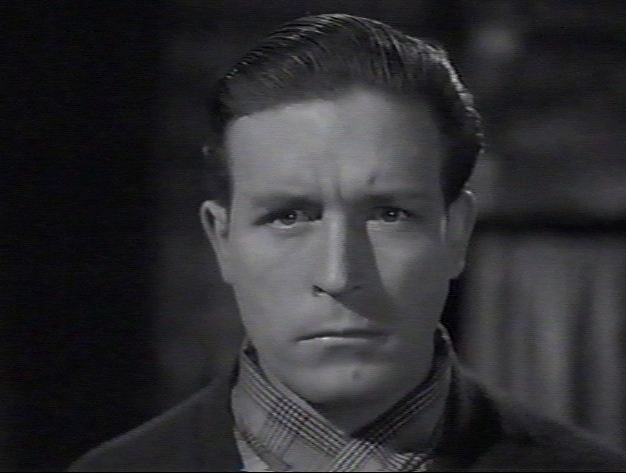
“Dillinger” (1945) is a fast-paced “B” movie that stands out as the first dramatization on the life of real-life gangster John Dillinger, and takes much of its energy from the infamy of his headline grabbing career.

What seems most interesting about this movie, apart from the rather psychopathic characterization actor Lawrence Tierney gives his character, is the not-quite-documentary, not-quite-noir look of the film. It is missing that stylish, guilty-pleasure treatment of the more famous gangster films of the 1930s, such as the very film John Dillinger saw just moments before he was gunned down by FBI agents in 1934: “Manhattan Melodrama” with Clark Gable, William Powell, and Myrna Loy. Have a look at our discussion of that movie here.

The capture and killing of John Dillinger occurred July 22, 1934, only some 11 years before “Dillinger” was made, at Chicago’s Biograph Theater. Have a look here for photos and our recent discussion on the Biograph.

This absence of the kind of gangster as charismatic screen icon that made careers for James Cagney, Humphrey Bogart, and could not tarnish Gable’s romantic image, might be an indication how much films had changed in a decade, for we were now on the cusp of the grimmer post-War world.

Though the real John Dillinger was reportedly not the psychopath Lawrence Tierney modeled him to be, the post-War film seemed to have done with bank robbers as Robin Hood figures, whose problems stemmed from troubled childhoods on the wrong side of the tracks, who needed only the love of a good woman and a helping hand from a friendly priest to set them on the path of salvation…even if that conversion began only on death row.

Mr. Tierney gives a riveting performance, if not as John Dillinger, then as a reasonable facsimile of a guy hell-bent to make his mark on his particular world.

At the film’s beginning, he is on a date in a café, and is humiliated because he hasn’t enough money. When petty crime gets him chucked into jail, he meets much smoother, professional crooks and learns from them. Boss of the gang, “Specs”, a “bank man” is played by Edmund Lowe. Eduardo Ciannelli, Marc Lawrence, and Elisha Cook, Jr. who we last saw in “Shane” here, round out the gang. These men are fictitious characters, based on Dillinger’s real associates, but no real names or situations are used. Some scenarios are manipulated for dramatic effect. For instance, later on in the film, Tierney carves a gun out of a piece of wood while in jail (how a fellow inmate got a knife to whittle is not explained), and breaks out when the guard thinks it’s real. Actually, John Dillinger did once escape from a jail when his lawyer smuggled into him a wooden gun.

Tierney is paroled before the rest of the gang, and he smuggles weapons to them so they can break out of prison. There is a power struggle between him and Edmund Lowe, who is the senior member of the group. Lowe is eventually dethroned by Tierney when the men give him their confidence as a result of Tierney’s imaginative and successful bank robbery schemes.

Tierney meets a sassy girl at the ticket booth of a movie theater (foreshadowing of his eventual end), and though he at first robs her, she refuses to pick him out of lineup for the police. We next see them having dinner together. For a guy who has not the charm of a Cagney, Powell, or Gable, we might wonder how he does it, what she sees in him. But, we never learn much about Helen, played by Anne Jeffreys. She’s just a gun moll along for the ride.

A chilling scene is when Tierney goes back to the café where his crime spree began and faces the same waiter who humiliated him. He invites the waiter to join him in a glass of beer, which the waiter happily does. Tierney reminds the waiter who he is, smashes his beer mug, and grinds the broken edge into the waiter's face while a jazz pianist in the background plays louder. We don’t actually see the violence of course, but that split second when the jagged mug is thrust into our faces as Tierney aims right for the camera, is enough for us to gasp and imagine what happens next.

Once free, and with a few bank robberies under their belts, the gang goes on the lam and hides out in the backwoods resort of Elsa Janssen and Ludwig Stössel. These two veteran character actors seem to be perennially married in the movies, as they were in “Pride of the Yankees” (1942), and “Casablanca” (1943), and others. Elisha Cook, Jr. calls them Mom and Pop.

When Eduardo Cianelli grows restless in the rural hideout and complains of the noise of the crickets, Edmund Lowe sarcastically fires back, “Why don’t you complain to John? He’ll knock them off for you.” The gang is growing nervous about Dillinger’s fits of temper and his readiness to use his gun. Soon, he shoots Edmund Lowe dead, kills another for trying escape the hideout, and when Elisha Cook, Jr. is killed in a heist, Mom and Pop show a little gumption and try to call the police on the phone. Tierney murders them both.

All alone, he hides back in the city, shut up in a one-room flat with his own wanted poster on the wall for a decoration. It’s Christmas 1933, and we hear kids in the depths of the Great Depression singing “Silent Night” around a street Santa. Somehow that quiet scene, that gives Dillinger and us a chance to catch our breath and reflect, seems more evocative of the era than anything else in this movie.

Cut to six months later, June 1934, and he has grown his familiar mustache (though Tierney looks nothing like Dillinger). Stir crazy and out of cigarettes, he says to Anne Jeffreys, “Let’s go to the movies.”

Though it’s a black and white movie, we are informed Miss Jeffreys’ dress is red. This is to foreshadow again the actual circumstances (though much twisted) of Dillinger’s demise. He was turned in by the so-called Lady in Red, but in real life this was not his girlfriend at the time; it was a brothel owner, originally an immigrant from Europe, who made a deal with the FBI to lead them to Dillinger in exchange for not deportng her.

We see Tierney, nestled in a dark movie theater, enjoying a Mickey Mouse cartoon, and it’s almost like shades of chain gang prisoner Joel McCrea in “Sullivan’s Travels”. We are not shown “Manhattan Melodrama”, likely for legal reasons, as that was an MGM film. Even the marquee of the Biograph looks nothing like it actually did.

When Dillinger leaves the movies, he is shot dead in the alley, with the same $7.20 he had in his wallet as at the beginning of the film.

“Dillinger” is a hybrid between something documentary and something noir, and never really achieving either, but it was explosive enough in its day to draw the criticism of religious groups, and to be banned for two years from being shown in Chicago by the Chicago Censorship Board.

Related Products