IMPRISON TRAITOR, PEDOPHILE, AND CONVICTED FELON TRUMP.
Showing posts with label Nelson Eddy. Show all posts

Thursday, October 26, 2017

Phantom of the Opera - 1943


Phantom of the Opera (1943) is a musical, a Technicolor feast for the eyes. There is a horror story in here, too, but it is cloaked in understanding and the eerie hindsight that dreams dashed can be a pervasive kind of horror.

Between the Phantom’s woes, portrayed with much more sensitivity than Lon Chaney’s infamous ghoul in the silent 1925 version, and the young soprano Susanna Foster’s real-life sorrows – there is enough pathos to make this movie a poignant ode to dreams that died.

The movie, more musical than monster, seems an homage to the world of operatic music than to the original nineteenth century penny-dreadful novel, though it was perhaps a smart move not to attempt to re-create the original classic silent story "note-for-note," as it were. We are given something extra, treated to the powerful baritone of Nelson Eddy and the beauty of Marta. Other “operatic” performances are not taken from operas, but are adapted works from Chopin and Tchaikovsky.


The Paris Opera of the late nineteenth century is the familiar setting for the tale, but there are differences in this movie – Nelson Eddy stars as the opera company’s baritone and Edgar Barrier plays Raoul, the local police inspector. Both men are romantic rivals for the hand of Susanna Foster, who plays Christine DuBois, a talented member of the opera chorus. The gents try to woo her, and Susanna enjoys their attention. Another man loves her and works to further her career – Claude Rains.


Mr. Rains is the Phantom of the piece – and there is no mystery about his identity. When we first meet him, he is not hiding in the shadows. He is in the orchestra pit playing the violin, a mild-mannered, middle-aged musician employee of the opera house. His encounters with Susanna are shy and awkward, and she gives him no thought other than he is a polite but odd old man. The Phantom is not a ghoul here, but a sad soul, and he breaks our hearts from the beginning. We discussed the original Phantom and the 2004 movie based on Andrew Lloyd Webber’s long-running stage musical in this previous post. We observed that the presentation of the Phantom had changed because of our evolution, not his:

      Perhaps a good deal of this transformation of the Phantom in our popular culture has simply to do with ugliness. Gerard Butler’s Phantom is a man with what looks like a few old burn scars on part of one side of his face. Nothing we can’t live with, even though he vainly keeps it covered. Lon Chaney’s face is a rotting, putrid skull. It gives us nightmares. The original book was written in the days when ugly was synonymous with evil, at least as far as storytelling was concerned. Chaney’s film was made, similarly, when the representation of evil was done mainly through an image of ugliness. We still have film monsters who are ugly to be sure, but they are evil and ugly, not evil because they are ugly. There was not a whole lot of sensitivity towards people with mental or physical handicaps in those days, when desperate parents were still leaving deformed children with carnivals. There wouldn’t be any empathy left over either for folks who were less than beautiful. In the code of old Hollywood, the heroes and heroines were beautiful, and the sidekicks and villains were not.

Today we have a bit different take on evil, on beauty, and on empathizing with those who appear different, and that perhaps is one of the reasons why the Phantom has changed. He needs to be repackaged in order to be sold. It would be difficult to film the same 1925 story and present it to a 21st century audience, with the same simplistic judgments. The Phantom’s evil as represented today is more psychological, and more a problem of society because he has been treated so shamefully. Instead of nightmares, he gives us second thoughts.


Universal was known for monster movies as being its specialty, but it also produced a large number, even more than MGM, of what could be termed teen musicals. It is from their stable of talent they drew Susanna Foster and began to groom her as one of their biggest stars. As such, Susanna had a featured role in Bowery to Broadway (1944), which we discussed here, with another youngster who was to replace Susanna as Universal’s leading songstress – Ann Blyth.

The 1943 Phantom is a kind of missing link between the two incarnations of silent ghoul and Lloyd Webber’s lavish musical.


The camera pans from Claude Rains playing violin with the orchestra in the pit, and pulls back to encompass a grand opera house interior, with every seat occupied by the well-to-do in their gowns, tuxedos, and jewels, in every box and loge. We finally pull back to the very end of the farthest rafters, the cheap seats, to reveal the enormous opulent glass chandelier. This, of course, has a prominent place in the story and the shot is breathtaking for its dual use as eye candy and premonition of things to come. It is more so a premonition because by 1943, though the original Phantom, while it may not have been as familiar to that generation, nevertheless had reached legend such that people knew the story they were about to see, or they thought they did.

There are flickering candles in every desk candelabra and overhead ceiling chandelier in every office, in every parlor and boudoir, casting shadows, and reflecting a warm glow. The film moves at a leisurely pace and we sink ourselves into its environment, from cold, gray streets, to actors adjusting costumes behind the flats backstage, to the grand but artificial sets on stage.

Claude rains plays Erique. He is a longtime employee of the opera house orchestra, but is fired because his playing has become slack, to which he attributes his hands and fingers becoming stiff. He may be one of the first people in classic films to be fired for a repetitive motion injury. But poor Erique has no workers’ compensation to fall back on. He is, worse still to any employer, getting old.

He is crushed by being dismissed, and wanders in a daze back to his one-room garret. We see he is living a poverty-stricken life, though his employer and others assume he must have a lot of money in savings from his 20-year career. However, we next see that he has spent his savings on a very expensive endeavor that is both a kindness and a fantasy. He has been anonymously paying for singing lessons for Susanna Foster, who does not know her benefactor. She has been studying with the Maestro – that’s our old friend Leo Carrillo, for three years.

Claude Rains also writes music, and he has an ace in the hole, a manuscript of a concerto he has been writing for years. He intends to have it published, thereby solving his money problem. However, the publishing house stalls him, treats him badly, and when he perceives that they are going to steal his work, in an angry rage he confronts the publisher, who is in conference with his lady friend. They are amusing themselves with his hobby of etching photos on steel plates with acid.  Nothing says love in the afternoon like etching photos on steel plates with acid. Rains attacks the publisher and strangles him to death, and the lady friend grabs the acid and tosses it in Rains’ face.

Whimpering in pain, Rains staggers out of the office and through a maze of rain-washed streets. He is hunted by the police. He takes refuge, of course, in the city sewers that lead to the bowels of the opera house – and we have our Phantom.

He steals his trademark mask and cape from the opera house costume department. It is a rather stylish sea-green mask with eerily arched brows painted on it. He steals supplies from the opera house and lives there and continues to support Susanna Foster’s career, mainly by trying to oust the pompous Diva with threats of violence. Something in his gentle, befuddled personality has slipped askew – he is more cunning, more sinister, and will do anything to get what he wants – and now he wants Susanna, no longer content to love her from afar.


Claude Rains has become strangely athletic and acrobatic in his rope climbing and rafter leaping, and that rakish forelock that drapes over his mask adds a cavalier touch.

Look for Hume Cronyn as one of the police inspector’s men who chase the Phantom through the opera house and try to lay traps for him.
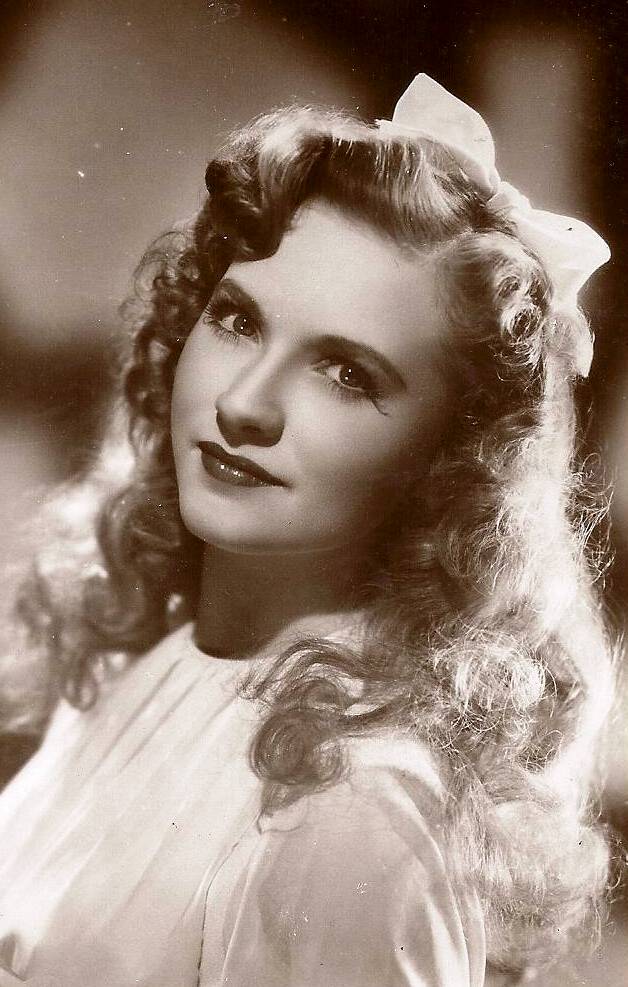

Susanna Foster, at the center of the piece, is a delicate figure, but despite being the focus of the film—even more than the Phantom in this version—she seems not to have a strong screen presence here, though perhaps the role of Christine is too passive to appreciate Foster's abilities as an actress. She was known for having the ability to reach the note B above high C in her vocal range; and the film presents her beautifully, exhibiting this tremendous gift.  Perhaps this information was difficult for audiences who were not opera fans to appreciate, despite the Universal publicity department’s attempt to market it.  Phantom of the Opera was her most important film, her fifth film. She began in Hollywood in 1939 at the age of 12 years old in The Victor Herbert Story, and her path went from MGM, which never used her, to Paramount; to Universal, where they had a robust youth unit whose most famous star at the time was Deanna Durbin.


Reportedly, Susanna was brought on to keep Durbin “in her place,” giving the studio the ability to threaten to replace Durbin with another soprano if she did not conform to their demands of her. Durbin turned down the Phantom script and Susanna inherited the role. She only did a handful of films in her career. In 1945, Universal granted her wish to study opera and tour overseas, which she did, but then she decided to quit the movies.

She confessed to never being very ambitious and felt overwhelmed by the Hollywood machine, but she must really have been made of stronger stuff, for Susanna coped with more than her share of burdens. She grew up with alcoholic, abusive parents, but supported them and two younger sisters while she was still a child herself. When she returned from Europe and her movie contract was over, she reportedly gathered her resources, including selling her fur coat, to rescue and raise her two younger sisters and make a home for them. She eventually married baritone Wilbur Evans, but that union was unhappy. They did some stage work together, but when they divorced, though he was an absent father, he apparently demanded as part of the divorce decree that she not take their two sons more than 100 miles away from New York, thereby ending her attempts to have a comeback in film. She took work in New York City as a receptionist and did what she could with office jobs to support her two sons, with no help from her controlling ex-husband. Years later, she returned to the West Coast, and for a time, was homeless and living in her car.

According to author Bernard F. Dick in City of Dreams: The Making and Remaking of Universal Pictures (The University Press of Kentucky, 1997, p. 125), he notes that in 1989, Jane Withers and Margaret O’Brien learned that Susanna Foster was living in her car and “they came to her aid.”

Most poignantly, The Phantom of the Opera had begun an amazing new incarnation through Andrew Lloyd Webber’s blockbuster stage musical. At that time that Jane Withers and Margaret O’Brien were financially helping Susanna, Lloyd Webber’s Phantom was playing in Los Angeles. According to Mr. Dick, the two ladies “made it possible for her to see it.”

She had been the first singing Christine in a time when the Phantom began to appear less ghoulish to us and more troubled, more sad. For the first time, we saw his side of the story.

Susanna had a story, too. In her final years, her son (one had predeceased her) moved her back to the East Coast and was able to place her in nursing home care. She died in 2009 at the age of 84 at the Lillian Booth Actors Home in Englewood, New Jersey.

No horror story for the blog for this Halloween. At least, not the kind you were expecting.

Thursday, January 28, 2016

Make Mine Music (1946) and Melody Time (1948)

 
Make Mine Music (1946) and Melody Time (1948) are two of the series of five “anthology” animated features produced by Walt Disney in the 1940s. Most of the animation crew of the Disney studio were away serving in the military, and a reduced staff were left juggling some orphan story ideas. These cartoon collections were like a casserole made of leftovers, but quite delightful.

I have a particular fondness for these Disney anthology features, which also include Saludos Amigos (1942), The Three Caballeros (1944),  and Fun and Fancy Free (1947), which we covered in this previous post.  Tied loosely by a general theme of music and folklore, the cartoons in each anthology are tune-filled, vibrant, and nostalgic.  There are also restful. 

That’s kind of a funny thing to say about a cartoon, but I find them soothing.  They are like half-remembered lullabies from childhood that still calm and entertain.

Make Mine Music and Melody Time are both popular music cousins to the more distinguished Fantasia (1940), which sought to evoke animated stream-of-conscious visions to classical music.  They also drift into the realm of folk tales.  Both feature popular singers of the day, which is especially enjoyable.

The roster for Make Mine Music includes a segment called “Blue Bayou” with, literally, a blue bayou featuring trees, mirrored images on the water, and a pair of white herons to a sleepy tune by the Ken Darby Chorus. 

Benny Goodman, the King of Swing, gives us “All the Cats Join In,” with striking minimalist animated style such as we would normally find at the innovative UPA studio of the era.  We follow teens going to the malt shop in a peppy jive that’s really cool.

The minimalist cartoon style is continued in “A Ballad in Blue” with Andy Russell singing “Without You.”  Moonlight on the water, moody, impressionistic, rain-washed.

Folk tales and “poetry corner,” as Bullwinkle and Rocky would say, with a rendition of the classic, “Casey at the Bat.”  It’s a more or less musical recitation by the larger-than-life Jerry Colonna.

Dinah Shore sings “Two Silhouettes” in a Fantasia-like scene, and Sterling Holloway narrates “Peter and the Wolf.”  The Goodman Quintet jams on “After You’ve Gone” in another Fantasia clone with images suggestive of Salvador Dali in the expression of sounds and the image of shifting sands.

The cute and unexpectedly poignant “Johnny Fedora and Alice Bluebonnet” follow the romantic adventures of a man’s hat and a lady’s hat, courtesy of The Andrews Sisters.  If I can have my heart broken by a couple of cartoon hats that get separated because one of them gets bought, then I suppose it doesn’t take much to destroy me.

My favorite piece of Make Mine Music is the grand finale, the “Opera Pathetique” starring the resounding voice of Nelson Eddy, who portrays Willie the Whale, “The Whale Who Wanted to Sing at the Met.”  Mr. Eddy narrates and sings the arias of the operatic hopeful whale.  I love the image of the giant whale standing on his tail in a Pagliacci costume on the stage of the Metropolitan Opera House in New York.  Most impressive is Nelson’s singing all three male voices in the Sextet segment of Lucia di Lammermoor.  There is a sad ending to this tale, but as Bugs Bunny says of grand opera, “What did you expect, a happy ending?”

The Pied Pipers, the Kings Men, popular choral groups of the day also lend a hand, with the Kings Men doing a raucous takeoff on “The Martins and the Coys” hillbilly feud.

There is a fad now about adult coloring books.  Most of the ones I’ve seen feature pages with evocative patterns of an almost psychedelic design.  Coloring them in is supposed to be relaxing for us stressed adults.  The fluid animated imaginings of these cartoons is likewise therapeutic.
 

Melody Time was released two years after Make Mine Music, and is quite similar in style. Freddy Martin and a frenetic cartoon bee take off in “Bumble Boogie” in the “Flight of the Bumble Bee.” The Andrews Sisters give us “Little Toot,” the tale of a junior tug boat who, despite his rascally ways, makes good in the clinch. 
Fred Waring and his Pennsylvanians are the background to the poem “Trees” by Joyce Kilmer, as dawn cascades over an impressionistic landscape, and diamonds of mist dot airy cobwebs.

Ethel Smith and the Dinning Sisters give us “Blame it on the Samba”.  Making a guest appearance are two of the “three caballeros” – Donald Duck and Joe Carioca in a surreal and comical conga drum nightmare.  I love Donald Duck in anything.

The grand finale to this collection is Roy Rogers and the Sons of the Pioneers telling us the tale of Pecos Bill.  “Uncle Roy” spins the yarn for two young-uns played by Bobby Driscoll and Luana Patten, who also appeared in Disney’s Song of the South (1946) and So Dear to My Heart (1948).

I think my favorite segment of Melody Time, however, is the tale of Johnny Appleseed told and sung by the wonderful Dennis Day.  He narrates, including doing different voices.  Old Time Radio aficionados will know that Mr. Day was a terrific mimic, doing a variety of voices on The Jack Benny Show and other shows, and his crystal-clear tenor voice could soar, charm, and enchant.  The cartoon character of Johnny Appleseed even looks like him.

The whimsical storytelling of these animated anthologies is perhaps less prestigious than the Disney full-length features, those projects where Disney swung for the fences, but there are small and significant gems here.  They do not require as much an emotional investment from us, but they warm the heart.  Nostalgic, certainly, and for some of us they literally recall our childhoods.  I remember them not only from television, but from the projector in a grammar school assembly that was a Christmastime treat.  They were gentle in tone, and none of them featured a wicked witch, which was a relief.  Life is stressful enough sometimes, whether you’re seven or seventy-seven. 

Take a look at several snippets of these cartoons on YouTube.  It’ll take you back.  
 
 
Also: just a note to draw your attention to the "free preview" box in the upper right corner for my book on Ann Blyth.  Click on the cover and you get to read the first few chapters.  Enjoy.
 
COMING ATTRACTIONS:  Next week is part 2 in our year-long series on the state of the classic film fan.  I'll post my interview with blogger and author Cliff Aliperti of Immortal Ephemera and a review of his new book: Helen Twelvetrees, Perfect Ingenue. 
 
 
 *****************************************
"Lynch’s book is organized and well-written – and has plenty of amusing observations – but when it comes to describing Blyth’s movies, Lynch’s writing sparkles." - Ruth Kerr, Silver Screenings

"Jacqueline T. Lynch creates a poignant and thoroughly-researched mosaic of memories of a fine, upstanding human being who also happens to be a legendary entertainer." - Deborah Thomas, Java's Journey

"One of the great strengths of Ann Blyth: Actress. Singer. Star. is that Lynch not only gives an excellent overview of Blyth's career -- she offers detailed analyses of each of Blyth's roles -- but she puts them in the context of the larger issues of the day."- Amanda Garrett, Old Hollywood Films

"Jacqueline's book will hopefully cause many more people to take a look at this multitalented woman whose career encompassed just about every possible aspect of 20th Century entertainment." - Laura Grieve, Laura's Miscellaneous Musings

"Jacqueline T. Lynch’s Ann Blyth: Actress. Singer. Star. is an extremely well researched undertaking that is a must for all Blyth fans." - Annette Bochenek, Hometowns to Hollywood


Ann Blyth: Actress. Singer. Star. 

by Jacqueline T. Lynch

The first book on the career of actress Ann Blyth. Multitalented and remarkably versatile, Blyth began on radio as a child, appeared on Broadway at the age of twelve in Lillian Hellman's Watch on the Rhine, and enjoyed a long and diverse career in films, theatre, television, and concerts. A sensitive dramatic actress, the youngest at the time to be nominated for her role in Mildred Pierce (1945), she also displayed a gift for comedy, and was especially endeared to fans for her expressive and exquisite lyric soprano, which was showcased in many film and stage musicals. Still a popular guest at film festivals, lovely Ms. Blyth remains a treasure of the Hollywood's golden age.


The eBook and paperback are available from Amazon and CreateSpace, which is the printer.  You can also order it from my Etsy shop. It is also available at the Broadside Bookshop, 247 Main Street, Northampton, Massachusetts.

If you wish a signed copy, then email me at JacquelineTLynch@gmail.com and I'll get back to you with the details.


**************************

My new syndicated column SILVER SCREEN, GOLDEN YEARS, on classic film is up at Go60  or check with your local paper.


Thursday, July 24, 2014

Rose Marie - 1954

Rose Marie (1954) is a delightful surprise.  It stands on the shoulders of its 1936 predecessor, whose stars Nelson Eddy and Jeannette MacDonald became icons in their roles, and soars beyond that famous cliché, ironically, by joyously and most unselfconsciously wrapping itself in the old-time conventions of operetta and melodrama.  New technology, however—CinemaScope and Technicolor—gave this version a twist and a punch in a most convenient and happy marriage of the old and the new.

Ann Blyth was 24 going on 25 when she played the title role in this musical, and one is impressed by her ability to appear so young, so naturally and effortlessly a teenager when in her teen years she often played characters who were older, or least more poised and sophisticated.  Very light, natural-looking makeup, and her loose woodsman’s buckskins covering her shape help to create this illusion, but two things she does herself complete the picture—her animated expressions which, with the innocence of youth, do not mask her emotions, but let us see every flickering thought passing through her mind, and also the way she moves.  With an animal-like ease and strength, she lives the outdoor life like someone completely at home in the woods, not stomping about in her buckskin with exaggerated mannishness like Doris Day in Calamity Jane, but hiking, climbing on rocks, and running with the grace of an athlete. 
The picture of her seeming physical change was overshadowed in the press of the day, which took greater notice, with greater surprise, at her singing voice.  This was her first big singing role after her one song in The Great Caruso, which we covered here. 

A review in the St. Petersburg (Florida) Times:

The surprise in RoseMarie is Ann Blyth’s singing voice, which is gloriously pitched, full, and strong.
The “new Ann Blyth” of the headline “New Ann Blyth Emerges in Classical Rose Marie,” (in pretty much every film she did she was always “new”), emphatically declares herself with her first song, the exhilarating “Free to Be Free".  Just like the character Rose Marie, who wants to live life in the wild without being forced into a “ladylike” life of restricted freedom in town, Ann Blyth is declaring her freedom in a way that says, “Look at me.  I can really sing.  This is my movie.”  Her range is quite demonstrably large in this song, even drifting down into the mezzo area, and her control is stunning, bang-on notes with no vibrato or trilling.  It’s a magnificent delivery and a great song to come charging out of the gate in this movie, as if to make the audience take notice—this is Rose Marie, the old chestnut you thought you knew, but didn’t.

The old chestnut, as it happens, was never produced the same way twice.  We think we know it as the template of all parodies involving a man in a Mountie’s uniform, from DudleyDo-Right to Monty Python’s male chorus in “The Lumberjack Song.”   It started as the second-longest running play of the 1920s, just behind The Student Prince, (we discussed that 1954 film last week here.)

As far as the popular parodies go, I confess, Dudley Do-Right was my first crush.  I know, he wasn’t very bright, but he exemplified honor, attention to duty, and all things respectably Canadian.  And he had that red coat.  Chick magnet.

He didn’t sing operetta, though.  Not like Mighty Mouse, who was a magnificent tenor.

I’m sorry, where was I going with this?

Court Square Theatre, Springfield, Mass., author's collection.

The Broadway play, an operetta that took its melodrama seriously, featured a boatload of songs, only a few of which survived in film versions.  The story was of Rose Marie, who loved Jim, a miner, who was accused of murdering an Indian named Black Eagle, whose girlfriend, Wanda, is the real killer.  Rose Marie is brokered off in marriage by her brother for money to marry city slicker Etienne Darcy.  Behind all this menagerie, is the stalwart Mountie, Sgt. Malone, who is on the trail of the murderer.  At one point, in a suspenseful moment to help Jim escape, Rose Marie signals him by singing the “Indian Love Call.”  Note: the love story is not between her and Sgt. Malone; it’s between her and Jim the Miner.  The Mountie sees that justice prevails, and Rose Marie is free to marry Jim and go off into the wilderness. 

Court Square Theatre, Springfield, Mass., author's collection.

The play wowed them at the Imperial Theatre from September 1924 through June 1926, and then brought back quickly by popular demand at the Century Theatre in a revival in 1927.  Hollywood, now poised to pounce on any Broadway hit, took over the property and promptly made the first of three movie versions of Rose-Marie in 1928.

A silent movie, obviously, it was released in February, six months before Ann Blyth was born, and starred an actress whom she would come to know years later—Joan Crawford.

Miss Crawford was something like 23 when she played Rose-Marie, with James Murray (so terrific in The Crowd, which we discussed here) as her lover Jim the Miner, and House Peters as the Mountie, Sgt. Malone.  There’s a nice still from the movie here at this website, Nitrateville.

Publicity photo, Joan Crawford with co-star House Peters.

Joan is quoted as having said, “I felt very uneasy as a French Canadian.”  An odd remark, considering she did not have to speak with an accent in this silent film, and considering her real name was Lucille Le Sueur.  The film is considered lost, but we can imagine the melodrama probably went over well as a favorite genre in the heyday of silents.

The second go-round for RoseMarie came in 1936, the famous matchup with Nelson Eddy and Jeannette MacDonald.  Because these two stars already walked into the story with their own strong talents and screen personalities, and because MGM wanted to build up the team, the original story was scrapped.  Rose Marie 1936 bears little resemblance to the operetta, though a few songs remain, including the now famous “Indian Love Call,” which cemented the duo’s iconic place in film because it was sung in this movie an amazing four times.  Just in case we weren’t paying attention.

In this film, there is no Jim the Miner.  Rose Marie is an opera singer, going by her stage name, Marie de Flor.  We see Jeannette performing scenes from Roméo et Juliette and Tosca just to show she can do it.  

Her brother, John, is in trouble, on the lam in the Canadian wilderness, from murdering a cop.  He is strikingly played by a young James Stewart, who conveys the young man’s restlessness and pitiable scamp’s charm, and his ultimate hopeless future with great sympathy. 

Jeannette leaves the glittering opera house of Montreal, heads for the big woods, and hires a guide to take her to her brother.  She does not even attempt a French accent; she leaves that to her maid, played by the wonderful Una O’Connor.

Instead of a turn-of-the-century melodrama, we get a modern 1930s romantic comedy, admirable for the magnetism of its stars and its fast-paced plot.  Nelson Eddy is the Mountie, here called Sgt. Bruce, hunting her brother, and the race is on as to who will get to him first, Jeannette or Nelson.  From the moment they meet, Nelson is after her, too, and we know they will end up a romantic couple. 

Jeannette, playing a spoiled diva, has a great comedic scene when she tries to emulate a saloon torch singer, competing with her, unsuccessfully, to earn coins thrown at her from an inattentive audience. 

Nelson sings the title song “Rose Marie” to her in a canoe, while she slowly unbends her opinion that she hates all men.  The climax occurs when she finds her brother, but so does Nelson, and takes him in. 

The film is well done, with plenty of natural scenery (not filmed in Canada), but uses its share of rear-screen projection as well—particularly noticeable when Nelson Eddy rides in front of a troop of Mounties singing in his heroic baritone, “The Mounties.”  But it’s just him.

This movie, because it cemented the Eddy-MacDonald team and because of those four separate unrepentant blasts of “Indian Love Call,” rose above the quaint operetta on which it was based and took on a life of its own.

The Rose Marie of 1954, playfully, and with equal dash, revisits the old operetta with unabashed admiration and humor.  It is more leisurely-paced, and with its magnificent scenery (including location shooting in Alberta), glorious singing, CinemaScope and Technicolor, invites us to enjoy the marvels of technology on this very old-fashioned story.
Ann Blyth is Rose Marie Lemaitre, all alone in the world after the death of her trapper father.  Miss Blyth apparently had no qualms about playing a French Canadian, as her delightful accent is spot-on.  She has no qualms, either, about being alone in the world, for when the Mountie first encounters her, she is placidly fishing from a canoe, contentedly doing for herself, and wants no outside help.

The Mountie, Sgt. Malone, is Howard Keel, resplendent in that red coat enough to make me almost desert Dudley Do-Right.  He sings "The Mounties" while riding ahead of his troop of men, not rear screen projection.  He has the job of taking her out of the wilderness, (which as he tells in song is no place for girl) and bring her into protective custody. 
She is unwilling, even frightened to go with him, like an animal panicked at the sight of a cage.  She gets away, and he tracks her down, finding her cuddled up like a bear cub in sleep, but when he disturbs her, she attacks him with a knife.  At the first opportunity, she bites him.

Someday I'm going to have to tell you my coonskin cap story.  When I feel I know you better.

We may note that she runs like an athlete, not like Jeannette MacDonald, who runs through the woods like a sissy. 

Sgt. Howard Keel catches her again.  Have a look at this image of him holding her, one-armed, from his horse, dangling her like a rag doll.  An indignant, frustrated rag doll.  Do you see any bit of the slick sociopath Veda Pierce here?  Any bit of haughty, conniving fashion plate Regina Hubbard, the graceful elegance of the Countess Marina?  The poised, demure high school graduate Gail Macaulay?
Few of Ann Blyth’s contemporaries were as versatile.  I love her little groan, equal parts despair and discomfort, when he hoists her into the saddle after she capitulates.

Howard Keel at first was not happy with the Mountie’s role in this film, finding him too weak and ineffectual…perhaps like Dudley Do-Right…but his requested changes to the script were made and he signed on, noting in his autobiography, Only Make Believe, that it was a fun shoot.

I didn’t sing with Ann Blyth, but she was a delightful cutie and sang beautifully.
They did not sing “Indian Love Call” together because in the original story, that song was for Rose Marie and Jim the Miner.  Here, he’s Jim the Trapper Who Wants to Also Pan for Gold, played by Fernando Lamas.  One of the film’s particular pleasures is giving us not one, but two baritones, who are rivals for the hand of Rose Marie, adding a bit more tension to the plot. 
Mr. Lamas, in deference to his impossible-to-disguise Argentine accent, is also supposed to be French Canadian.  Only to a Hollywood producer would this be logical.  He sounds about as French as the Mountie, but if you can overlook the Spanish accent coming out of his mouth, Fernando presents as a brooding, handsome mystery, who fascinates Rose Marie from the moment she meets him.  It will be a coming of age story as she struggles with her feelings for the two men.

You might stumble on some spoilers as we go. 

Bert Lahr is the comedy relief as the bumbling corporal.  When she is first brought into custody at the fort, Ann pleas with Bert, “You let go me, yes?”

“If I let go you, they let go me, and on a clear day I can see my pension.”  She bites him.
Ray Collins, one of my favorite stuffed shirts, here plays the inspector in charge.  By the time he visits, Ann has become docile, changed from her buckskin to a cut-down and tailored Mountie’s uniform as the post mascot.  Inspector Collins inspects the troops, berates the men for not shaving properly, and is pleased with the little Mountie who has no five o’clock shadow.  After a beat, the penny drops and he realizes it’s because she has a hormonal advantage.
“She’s a woman!” he blasts Howard Keel, who suddenly realizes that fact as well, now that it’s been pointed out to him.  He thinks of her as just a kid.  Collins wants to send her away, to his cousin, Marjorie Main, in town.  If the wilderness is no place for a woman, neither is the police constabulary.  Poor Rose Marie, just when she begins to adapt, she’s got no right to be here either.
There are several laugh-out-loud moments in the film, as everyone, not just Bert Lahr, gets to play for laughs.  One of the particular charms of Ann Blyth’s character is her quality of being quite innocently unselfconscious.  Mountie Howard tells her she is interesting to men, and she agrees, "You're right.  I am interesting."  He tells her she is beautiful, she beams at the coincidence, "I think so too."  She greets the inspector with enthusiasm, telling him about the horse Howard Keel taught her to ride.

“A fine horse, Monsieur.  Old, but still alive.  Like you, Monsieur.”  She deals with the ups and downs of life with a Gallic shrug of the shoulders. 

But she does not want to go to town and leave the post, so she runs away.  Howard catches up, and instead of handcuffing her, explains that she will enjoy growing up and being attractive to men in the song “Rose Marie.”  By the song’s end, she is intrigued and wants to give it a try, and he is astonished to realize his own attraction for her.
Interesting how this scene is filmed.  First, it is an outdoor shot.  Rose Marie is furious that the inspector, “the man with the face” wants to send her away.  Her rant is hysterical.

“…the man with the face.  Oh, Mike, I hate this man most happily.”

“Well, what do you aim to do about it?”

“Kill him.”

“Kill him?”

“Sure.  It’s easy.  I show him how I shoot the hat at fifty paces, but I do not shoot the hat, I shoot the face.  Voilà.”
She leans against the trunk of a tree.  When she pushes herself off of it, she steps into what is a studio soundstage wilderness, but it is so imperceptible you don’t notice it unless you obsess over frames like me.  Howard sings his song, Ann steps back to the tree, leans her bottom against it, and we are back outside again.
This was the first musical ever to be filmed in CinemaScope, and it’s amazing how fluid the scenes are and how the shots vary.  In later musicals, including The Student Prince, Kismet, really most of the late 1950s musicals that were filmed in CinemaScope, the shots seem almost static.  In some cases, you see the characters wrenched into a kind of kick-line to fill up the horizontal space, and often the glaring far left and far right are empty.
Rose Marie has a vibrancy to its set-ups that makes use not only of the grandeur of the scenery just made for widescreen, but is used most effectively in indoor shots as well.  Over the shoulder shots, composition that makes use of the widescreen qualities, but does not scream CinemaScope gimmick.

In town, Ann is taken under the wing of Marjorie Main, a blustering saloon keeper who’s sweet on Bert Lahr.  She’s got a motherly streak, and she teaches Ann to be a lady.  Ann recalled for Classic Images in 1995:

I think a lot of people don’t remember that Marjorie was really a marvelous dramatic actress.  She did some marvelous stage work, and, of course, a few roles like that in pictures as well…As funny as she could be, she could break your heart as well.
In these shots of Ann’s bedroom above the saloon the director makes use of the mirrors on either side and the window to open the space up for CinemaScope.  You can see Jim riding up through the open window.
In this series of shots, Jim sings of his love to her from the half-door of a trapper’s bunkhouse behind the stable.  The camera pulls back, reveals the top of a pine tree, and then embraces the second-story balcony where Rose Marie sings in response.
Before this, they have sung the famous “Indian Love Call” with a frank loveliness that seems to dare the audience, and snarky reviewers, to compare them with Nelson Eddy and Jeannette MacDonald.  Ann holds the last note for around nine or ten seconds, but that’s not her record. She could hold the end of “Baubles, Bangles and Beads” from Kismet for a full nineteen.

“I can still do it,” she told interviewer Brian Kellow for Opera News in 2002.

Here is the “Indian Love Call.”


Love with devil-may-care Jim does not run smooth, however.  He is, by his own admission, “not the marrying kind.”  This is what he tells Wanda, the Indian maid whose jealousy will drive her to attempt to murder Jim/Fernando, fail, and then kill the Indian chief when he beats her for chasing after Jim.  Jim gets stuck with the rap, and, just as in the play, Rose Marie, tearing up, sings the “Indian Love Call” in reprise to signal to him that she does not love him, to make him leave and not wait for her so Howard Keel will not catch him.
In the middle of all this is a typically garish Busby Berkeley-choreographed number that is mesmerizing for its bizarre sexuality and plot pointlessness.  Wanda, played by Joan Taylor, who appears to be the only woman in the Indian village, takes part in some sort of fertility dance with a zillion braves.  Wanda sees Ann and Fernando watching, perceives they love each other, and you can’t help but be heartbroken for Wanda.

The 1936 Rose Marie includes the play’s original “Totem Tom-Tom” number in a much more natural style and setting, looking for all like a real tribal celebration, and it is more dramatic and moving for being so.  I’m not sure why the Busby Berkeley number, except that there is no big musical dance scene in this movie, apart from the charity dance at the saloon.  Maybe producer and director Mervyn LeRoy, whose work in this movie is otherwise very effective, fell back on the Big MGM Musical template and decided this weirdness was needed.  It is colorful, certainly, and eye catching, if a little stupefying.
The Mountie does catch his man, and Fernando is going to be hung, but Howard, stunned at Ann’s confession that she loves Fernando (Howard had earlier proposed to her), decides to sift through the evidence one more time and saves the day.  When Fernando is released, Ann, in gratitude, tells Howard she will marry him and do whatever he wants.  Howard wants her to put her buckskin clothes back on, and take a ride with him out of town.  When they are out in the woods, despite his earlier position that girls do not belong in the wild, he tells her that she was meant to be free and to live in the wilderness.  He sends her off with Fernando.  It is just the noble thing you’d expect a Mountie to do.
We could also marvel that not only is he telling her she is no less feminine for wearing buckskin and living a rugged life, but there is no suggestion that she and Fernando are going to rouse a justice of the peace in the middle of the night to marry them.  They’re just going off together in the wilderness in a bittersweet ending.  We cannot help but wonder how they will fare.  Will Jim be faithful to Rose Marie?  Will the Mountie ever find another girl to love him?  This is what happens when you stop thinking about the stars, when the stars are skillful enough to allow you to do that.
The principal players generally received good reviews, though most reviewers dismissed the story as an antique.

There would be few opportunities ever again to present operetta on screen, and even popular musicals were on the wane.  Ann Blyth was newly married when Rose Marie was being filmed.  We can imagine it was a period of both personal and professional happiness.  Her wedding was, like many celebrity weddings, called The Wedding of the Year when it occurred in 1953, which we mentioned in this previous post, but except for that occasion, she managed to live so quietly that few took notice.

Hedda Hopper noted of Rose Marie in June 1954:

Ann just goes her own sweet way, making little fuss and fewer headlines.  Then, when you least expect it, she comes through with a Sunday punch and you find yourself blinking and asking, “Was that Ann Blyth?”
Come back next Thursday, when we have a chance to say, “Was that Ann Blyth?” again, and again, in three decades of musical theatre performances from the 1960s to the 1980s.  Until then, here’s the trailer for Rose Marie:


*******************************
Classic Images, February 1995, “Ann of a Thousand Smiles” by Lance Erickson Ghulam, p. 20.

Hartford Courant Magazine, June 6, 1954, article by Hedda Hopper, p. 10.

Keel, Howard, with Joyce Spizer.  Only Make Believe – My Life in Show Business (Fort Lee, NJ: Barricade Books, 2005) pp. 156-157.

Opera News, August 2002, article by Brian Kellow.

St. Petersburg (Florida) Times, March 22, 1954, “New Ann Blyth Emerges in Classical Rose Marie,” review by L.B., p. 34.
 ******************************
THANK YOU....to the following folks whose aid in gathering material for this series has been invaluable:  EBH; Kevin Deany of Kevin's Movie Corner; Gerry Szymski of Westmont Movie Classics, Westmont, Illinois; and Ivan G. Shreve, Jr. of Thrilling Days of Yesteryear.

***************************
TRIVIA QUESTION:  I've recently been contacted by someone who wants to know if the piano player in Dillinger (1945-see post here) is the boogie-woogie artist Albert Ammons. Please leave comment or drop me a line if you know.
****************************
UPDATE:  This series on Ann Blyth is now a book - ANN BLYTH: ACTRESS. SINGER. STAR. -

*********************
The audio book for Ann Blyth: Actress. Singer. Star. is now for sale on Audible.com, and on Amazon and iTunes.

Also in paperback and eBook from Amazon, CreateSpace, and my Etsy shop: LynchTwinsPublishing.


 "Lynch’s book is organized and well-written – and has plenty of amusing observations – but when it comes to describing Blyth’s movies, Lynch’s writing sparkles." - Ruth Kerr, Silver Screenings

"Jacqueline T. Lynch creates a poignant and thoroughly-researched mosaic of memories of a fine, upstanding human being who also happens to be a legendary entertainer." - Deborah Thomas, Java's Journey

"One of the great strengths of Ann Blyth: Actress. Singer. Star. is that Lynch not only gives an excellent overview of Blyth's career -- she offers detailed analyses of each of Blyth's roles -- but she puts them in the context of the larger issues of the day."- Amanda Garrett, Old Hollywood Films

"Jacqueline's book will hopefully cause many more people to take a look at this multitalented woman whose career encompassed just about every possible aspect of 20th Century entertainment." - Laura Grieve, Laura's Miscellaneous Musings''

"Jacqueline T. Lynch’s Ann Blyth: Actress. Singer. Star. is an extremely well researched undertaking that is a must for all Blyth fans." - Annette Bochenek, Hometowns to Hollywood


Ann Blyth: Actress. Singer. Star. 
by Jacqueline T. Lynch

The first book on the career of actress Ann Blyth. Multitalented and remarkably versatile, Blyth began on radio as a child, appeared on Broadway at the age of twelve in Lillian Hellman's Watch on the Rhine, and enjoyed a long and diverse career in films, theatre, television, and concerts. A sensitive dramatic actress, the youngest at the time to be nominated for her role in Mildred Pierce (1945), she also displayed a gift for comedy, and was especially endeared to fans for her expressive and exquisite lyric soprano, which was showcased in many film and stage musicals. Still a popular guest at film festivals, lovely Ms. Blyth remains a treasure of the Hollywood's golden age.


***************************

A new collection of essays, some old, some new, from this blog titled Movies in Our Time: Hollywood Mimics and Mirrors the 20th Century is now out in eBook, and in paperback here.

Related Products