
This post is part of the Classic
Movie Blog Association (CMBA) “Underseen and Underrated Blogathon.” Please
wander over and check out the other great participating blogs.

Many classic films from that era tend to show children on
the periphery of the wartime crisis and not in the middle of it. For example, Shirley Temple portrays an
American home front childhood as only a reflection of the grownups’ world and
not even enough to form a subplot in the movies of Since You Went Away (1944) and I’ll
Be Seeing You (1944). With a stable
full of glamorous grownup stars like Jennifer Jones, Ginger Rogers, Claudette
Colbert, and Joseph Cotten, the worries of Shirley Temple brooding over
collecting scrap and experimenting with too much lipstick is not enough to
carry a film, and most directors and producers of the day evidently felt there
was not much of a market to make films for
children about the war, let alone films about
children. Not that there weren’t any,
but if the horrors of war were toned down in a censored Hollywood—censored not
just by the War Department, but by the Production Code—then the horrors experienced
by children during the war were obviously not going to be dramatized in great
detail. We didn’t have much of a stomach
for that.
Paradoxically, there were quite a few series chapter books written
for kids during the war that brought the tension, the anxiety, and to a degree,
the horrors of wartime to an American middle-grade readership. Such titles include Norma Kent of the WACS, Red Randall at Pearl Harbor, Dave Dawson with the R.A.F., Nancy Dale Army Nurse, and a few of the early more famous
Cherry Ames books. As I wrote in this
previous post on this topic:
There are several
elements to these stories which are quite striking. One is the, in some cases, unsparing
description of death and cruelty, and the fatalistic manner in which the tone
of these stories seems to indicate the young reader should accept these
conditions. Nancy Dale’s troop ship is
torpedoed, and she spends several days in a lifeboat with a handful of other
nurses and crew members. One dies and
they dump the body overboard.
At one point in the story she receives word her brother is missing in action
and presumed dead. A family friend,
comforting her, tells her not to hold out much hope of his survival. “Don’t let wishful thinking keep you from
facing reality, my dear. There’re many
things worse than death in this war.” How
would a kid, who had relatives in the war, take this message?
Due to several other projects, my intention to write a book
about this subject has been on the back burner for some years, but I hope to
resurrect it possibly next year. If any
of you have any suggestions to add to the list of children’s books, I’d be very
interested to hear them.
The Pied Piper,
unlike most World War II era movies dealing directly with the war, shows us
what it is like to be a child during this hellish period in history, but does
so in a light and skillfully handled way.
We are purposefully not made uncomfortable, but we are reminded that
very young, very helpless victims are suffering beyond our reach to help them,
and that should be horror enough for any compassionate person.
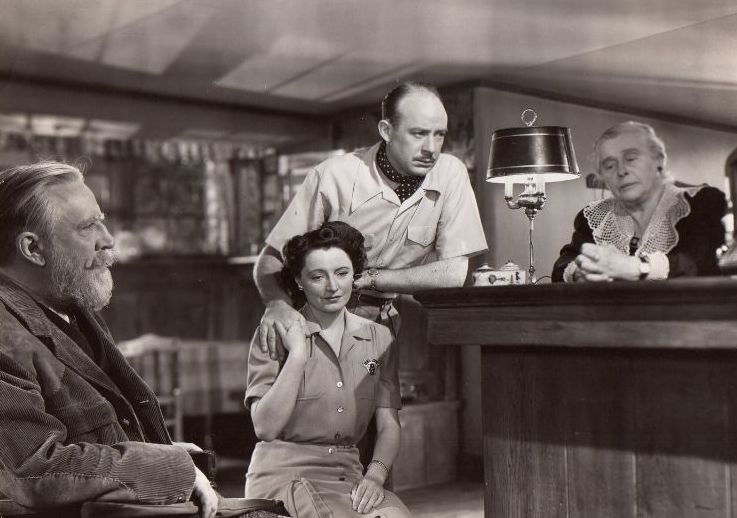
There at the rustic inn, he is harassed by young Roddy
McDowall, a bright boy who, though polite in the conventional English manner,
is not shy of adults and speaks to them on an equal footing: he and Monty
Woolley have an argument over whether Rochester is a city in the United States
or a state. Mr. Woolley insists it’s a
state and takes such umbrage at Master McDowall’s disagreeing with him that he
develops resentment near hatred for the boy.
It is very funny. Nobody can
sputter or sarcastically fly off the handle like Monty Woolley, and he does it
a lot in this movie.
Peggy Ann Garner is Roddy’s younger sister. She is better behaved.
However, it is June 1940, the war is heating up, Dunkirk has
just happened, and they hear from the BBC that France is likely to fall to the
Nazis soon, and England may be invaded.
Woolley decides his place is home in England, to knit if need be, and
packs to leave. The parents of Roddy and
Peggy Ann, played by Lester Matthews and Jill Esmond, ask Mr. Woolley to take
their children with him back to England, to live with her sister until the war
is over. Matthews is with the League of
Nations in Switzerland and must remain at his post, and his wife wants to
remain with him. They fear that
Switzerland will be invaded next. (As it
happens, it was not invaded and the kids would have been safer there, but this
injected opinion demonstrates the chaos of the war and how little we knew what
was happening, and absolutely no clue as to predict how the events would play
out. When we watch these sometimes
sentimental war films, we need to remind ourselves that the Allies were losing
for much of the war and we really did not know how it would end.)
Monty Woolley is hesitant to take the kids, but he agrees after
delicate questions about their ability to tend to their personal needs, and
they’re off on a train to the north of France.
However, the train is stopped before they reach the new and
ever-changing front lines. Woolley,
still the domineering Englishman on vacation bellows at the French railroad
official, “But I have two small children!”
The harried civil servant replies, “At your age, Monsieur,
that is undoubtedly magnificent, but if this is a contest, I have nine.”
Roddy, still irritating, however manages to be useful
because he has learned French and is able to converse with all and sundry,
especially now that they are being treated like cattle on an overcrowded bus to
Chartes. Here on the bus they pick up a
new follower: a small French girl, played by Fleurette Zima, whose aunt has
thrust a paper with instructions into Rose’s hand which direct Woolley to take
her to her father who works as a waiter in London.

The bus, crawling along a road choked with refugees
straggling away from the front, breaks down, and the passengers alight. As Woolley and the three kids cool their feet
in a nearby stream and eat sandwiches which have been packed for them, Nazi
planes swoop down and strafe the ragged column of refugees. Woolley gathers their bags to continue the
journey on foot, unable to shield the kids from the view of dead bodies in the
road. The camera shows the three heads
of the kids popping up from an embankment off the side of the road, looking
with disbelief at the corpses in front of them.
Just as our protectiveness and our embarrassment makes us
try to gloss over terrible aspects of life to kids, so Monty Woolley’s
continual funny indignation keeps the movie moving along, though the tone has
become darker, as if to ignore the war as a troublesome inconvenience. He’s trying to keep everybody’s head above
water, and soon he finds himself with another child: Pierre, another boy on the
bus whose parents were murdered in front of him. The boy is almost catatonic with the horror
of his experience, and Woolley’s shock at Pierre’s mental state, looking into
his eyes, is a demonstration to us that we really have no idea what horror is as
we tend our victory garden, and collect nickels and dimes for the Red Cross.
Pierre, played by Maurice Tauzin, apparently is speechless
and unresponsive to sounds. Roddy bonds
with Monty Woolley as his second in command, and does much to take care of
Pierre and the girls. Soon they are
joined by Willem, a Dutch boy who cannot speak either English or French, but
with a wound on his head, is apparently orphaned and homeless as well. By this time, Woolley does not question or
balk, he accepts the boy into his protection.
He searches out the house of a French family whom he and his
son met in the previous year on holiday.
They became good friends, and he will learn that Anne Baxter, the daughter
of the family, actually was the sweetheart of his son, and she mourns him as
well. In his son’s memory, Miss Baxter
lends a hand and helps to usher Woolley and his kids to the Brittany coast,
where she will enlist the help of her uncle to arrange a fishing boat to take
them across the Channel to England.

But he helps to hook them up with Marcel Dalio, the
fisherman with the boat, but soon they are caught by the Nazis and taken to the
chateau headquarters of the local commander, played in his movie debut by Otto
Preminger.

Helmut Dantine, incidentally, has a small role as
Preminger’s aide. He also appeared as
the German flyer captured by Greer Garson in Mrs. Miniver in the same year.
Both he and Marcel Dalio also turned up in Casablanca (1943).
The Nazis threaten Woolley, Anne Baxter, and the kids,
because a plot to kill Hitler, visiting in the general area, had been foiled. The hunt for conspirators brought a dragnet
of the village, and Preminger is especially skeptical of Woolley’s stated
intention of taking these five children, none of whom actually belong to him,
to England. Preminger tries to wear down
and intimidate Woolley, believing he is covering for something bigger.
At last, Preminger relents, and the prisoners, including the
French boat captain, are given food and treated civilly, and Monty Woolley is
called to the commander’s office for a private meeting. The guards are dismissed.
Okay, spoiler coming.
If you don’t want to know the end, go away. No? You
want to stay? Fine, it’s no skin off my
nose.
Otto Preminger questions Woolley once again on the
ridiculous story of taking the children to England, which, he says, is
pointless because the Germans are going to invade in a matter of weeks. Woolley states that he intends to send the
children to the United States to the care of his married daughter. Preminger counters that this is unbelievable—why
would she want to take care of strange children? Why would her husband permit that?
Woolley, irritated with this man’s utter lack of
imagination, let alone compassion, insists that it is so. They are kids, they need to be safe. Preminger says, “What about the Jewish
child?” He infers that Pierre, who has
dark hair and dark eyes, is Jewish.
Woolley says he is unaware of what religion the child is and couldn’t
care less and neither would his daughter or her husband care. He says that in the U.S., many children war
refugees have already been taken in without regard to color, race, or religion.
Monty Woolley apparently has never met Donald Trump.
Otto Preminger, never losing his steely glare, nevertheless
seems finally to be convinced of Mr. Woolley’s sincerity. He lowers his voice and becomes
confidential. He will make a deal with
Woolley. He will allow Woolley to leave
with the children and go to England, but Woolley must do him a favor. Woolley stiffens. He will not be a spy for the Nazis.
Preminger does not want him to spy. He wants something else. He wants Woolley to take another child
along: His little niece. She is the child of his younger brother, now
dead, who married a woman they later discovered to be Jewish. The mother has been murdered by the
state. The child is not safe in Germany
now.
Preminger tells Woolley that he has an older brother in the
United States, who became a U.S. citizen long ago. The child should be sent to her uncle. He lives in Rochester, New York.
Rochester! A
brilliantly comic moment in a dramatic scene.
Woolley’s longstanding argument with Roddy McDowall over whether
Rochester is a city or a state comes back to haunt him. He must admit defeat.
But there is success and triumph in this nightmare of
war. The little niece joins the other
kids, and Woolley and the French captain leave for England. The kids have been traumatized, and this is
clear even though the story is focused more on the adult actors. Woolley, who had felt sidelined in the war
due to his age, has become a hero through his sense of responsibility and duty
despite the fact that he dislikes children.
Anne Baxter has paid the highest tribute to her deceased love by saving
his father. Otto Preminger, representing
evil in his Nazi uniform, can still make an exception to the rules of war and
his foul regime, in his affection for his niece. He cannot believe that Woolley and Baxter
have risked their lives for these ragged children, and that strangers in the
United States will care for them, even the Jewish girl, but he must believe, because it
is his only hope.
As the fishing boat pulls away from the stone wharf, Anne
Baxter and Otto Preminger wave goodbye to them.
It is an unlikely scene, but we must believe, because the millions of
souls who will not have a happy ending are beyond our comprehension. Like Pierre, we will become frozen in horror
if we think of it.
I suspect this movie, directed by Irving Pichel and adapted
by Nunnally Johnson from Nevil Shute’s book, since I hear of it little
mentioned, may well be underseen and underrated. For other great blog posts, please check out
the Classic
Movie Blog Association (CMBA) “Underseen and Underrated Blogathon.”
Come back next Thursday for a look at On the Sunny Side (1942) and You,
John Jones (1943).
*********************
The audio book for Ann Blyth: Actress. Singer. Star. is now for sale on Audible.com, and on Amazon and iTunes.
The audio book for Ann Blyth: Actress. Singer. Star. is now for sale on Audible.com, and on Amazon and iTunes.

Also in paperback and eBook from Amazon, CreateSpace, and my Etsy shop: LynchTwinsPublishing.


