IMPRISON TRAITOR, PEDOPHILE, AND CONVICTED FELON TRUMP.
Showing posts with label Manhattan Melodrama. Show all posts

Monday, June 13, 2011

Dillinger - 1945


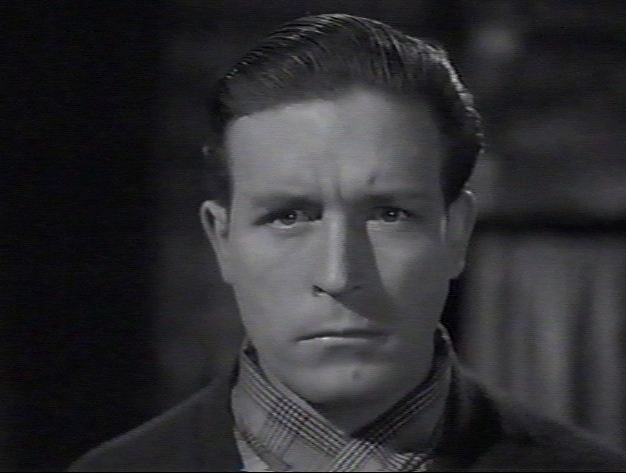
“Dillinger” (1945) is a fast-paced “B” movie that stands out as the first dramatization on the life of real-life gangster John Dillinger, and takes much of its energy from the infamy of his headline grabbing career.

What seems most interesting about this movie, apart from the rather psychopathic characterization actor Lawrence Tierney gives his character, is the not-quite-documentary, not-quite-noir look of the film. It is missing that stylish, guilty-pleasure treatment of the more famous gangster films of the 1930s, such as the very film John Dillinger saw just moments before he was gunned down by FBI agents in 1934: “Manhattan Melodrama” with Clark Gable, William Powell, and Myrna Loy. Have a look at our discussion of that movie here.

The capture and killing of John Dillinger occurred July 22, 1934, only some 11 years before “Dillinger” was made, at Chicago’s Biograph Theater. Have a look here for photos and our recent discussion on the Biograph.

This absence of the kind of gangster as charismatic screen icon that made careers for James Cagney, Humphrey Bogart, and could not tarnish Gable’s romantic image, might be an indication how much films had changed in a decade, for we were now on the cusp of the grimmer post-War world.

Though the real John Dillinger was reportedly not the psychopath Lawrence Tierney modeled him to be, the post-War film seemed to have done with bank robbers as Robin Hood figures, whose problems stemmed from troubled childhoods on the wrong side of the tracks, who needed only the love of a good woman and a helping hand from a friendly priest to set them on the path of salvation…even if that conversion began only on death row.

Mr. Tierney gives a riveting performance, if not as John Dillinger, then as a reasonable facsimile of a guy hell-bent to make his mark on his particular world.

At the film’s beginning, he is on a date in a café, and is humiliated because he hasn’t enough money. When petty crime gets him chucked into jail, he meets much smoother, professional crooks and learns from them. Boss of the gang, “Specs”, a “bank man” is played by Edmund Lowe. Eduardo Ciannelli, Marc Lawrence, and Elisha Cook, Jr. who we last saw in “Shane” here, round out the gang. These men are fictitious characters, based on Dillinger’s real associates, but no real names or situations are used. Some scenarios are manipulated for dramatic effect. For instance, later on in the film, Tierney carves a gun out of a piece of wood while in jail (how a fellow inmate got a knife to whittle is not explained), and breaks out when the guard thinks it’s real. Actually, John Dillinger did once escape from a jail when his lawyer smuggled into him a wooden gun.

Tierney is paroled before the rest of the gang, and he smuggles weapons to them so they can break out of prison. There is a power struggle between him and Edmund Lowe, who is the senior member of the group. Lowe is eventually dethroned by Tierney when the men give him their confidence as a result of Tierney’s imaginative and successful bank robbery schemes.

Tierney meets a sassy girl at the ticket booth of a movie theater (foreshadowing of his eventual end), and though he at first robs her, she refuses to pick him out of lineup for the police. We next see them having dinner together. For a guy who has not the charm of a Cagney, Powell, or Gable, we might wonder how he does it, what she sees in him. But, we never learn much about Helen, played by Anne Jeffreys. She’s just a gun moll along for the ride.

A chilling scene is when Tierney goes back to the café where his crime spree began and faces the same waiter who humiliated him. He invites the waiter to join him in a glass of beer, which the waiter happily does. Tierney reminds the waiter who he is, smashes his beer mug, and grinds the broken edge into the waiter's face while a jazz pianist in the background plays louder. We don’t actually see the violence of course, but that split second when the jagged mug is thrust into our faces as Tierney aims right for the camera, is enough for us to gasp and imagine what happens next.

Once free, and with a few bank robberies under their belts, the gang goes on the lam and hides out in the backwoods resort of Elsa Janssen and Ludwig Stössel. These two veteran character actors seem to be perennially married in the movies, as they were in “Pride of the Yankees” (1942), and “Casablanca” (1943), and others. Elisha Cook, Jr. calls them Mom and Pop.

When Eduardo Cianelli grows restless in the rural hideout and complains of the noise of the crickets, Edmund Lowe sarcastically fires back, “Why don’t you complain to John? He’ll knock them off for you.” The gang is growing nervous about Dillinger’s fits of temper and his readiness to use his gun. Soon, he shoots Edmund Lowe dead, kills another for trying escape the hideout, and when Elisha Cook, Jr. is killed in a heist, Mom and Pop show a little gumption and try to call the police on the phone. Tierney murders them both.

All alone, he hides back in the city, shut up in a one-room flat with his own wanted poster on the wall for a decoration. It’s Christmas 1933, and we hear kids in the depths of the Great Depression singing “Silent Night” around a street Santa. Somehow that quiet scene, that gives Dillinger and us a chance to catch our breath and reflect, seems more evocative of the era than anything else in this movie.

Cut to six months later, June 1934, and he has grown his familiar mustache (though Tierney looks nothing like Dillinger). Stir crazy and out of cigarettes, he says to Anne Jeffreys, “Let’s go to the movies.”

Though it’s a black and white movie, we are informed Miss Jeffreys’ dress is red. This is to foreshadow again the actual circumstances (though much twisted) of Dillinger’s demise. He was turned in by the so-called Lady in Red, but in real life this was not his girlfriend at the time; it was a brothel owner, originally an immigrant from Europe, who made a deal with the FBI to lead them to Dillinger in exchange for not deportng her.

We see Tierney, nestled in a dark movie theater, enjoying a Mickey Mouse cartoon, and it’s almost like shades of chain gang prisoner Joel McCrea in “Sullivan’s Travels”. We are not shown “Manhattan Melodrama”, likely for legal reasons, as that was an MGM film. Even the marquee of the Biograph looks nothing like it actually did.

When Dillinger leaves the movies, he is shot dead in the alley, with the same $7.20 he had in his wallet as at the beginning of the film.

“Dillinger” is a hybrid between something documentary and something noir, and never really achieving either, but it was explosive enough in its day to draw the criticism of religious groups, and to be banned for two years from being shown in Chicago by the Chicago Censorship Board.

Thursday, June 2, 2011

The Biograph Theater - Chicago

The Victory Gardens (Biograph) Theater in Chicago has a unique history and owes as much of its longevity to real-life as to reel-life circumstances.

Probably most notable of which, is this is the site where gangster John Dillinger was killed by FBI agents in 1934.

Designed in 1914, this neighborhood movie house, typical in the extravagant design of the day, is now on the Register of Historic Places. It enjoyed a decades-long history as a movie theater, even during the 1960s and 1970s when many such movie palaces were falling into disuse or the wrecking ball. There was a period of transformation into a modern movie multiplex with the interior gutted under various owners.

The Biograph became the Victory Gardens in 2006 and found new life as a live stage theater. It’s traditional-looking marquee you see in the photo above is actually the result of another movie, “Public Enemy No. 1” (2009), which used the site in location shooting and restored the marquee for that purpose.

That movie is, of course, about the infamous John Dillinger, whose bank robbing exploits in the 1920s and early 1930s made him a Depression-era celebrity of sorts. He came to the Biograph on July 22, 1934 to see a movie -- “Manhattan Melodrama” (1934) with Clark Gable, William Powell, and Myrna Loy. We discussed that movie here. Wonder what he thought of the film?


The suspicious figure in the pinstripe suit is, I believe, neither John Dillinger nor FBI agent Melvin Purvis.  Her fedora was crushed by a passing "L" train.   

Have a look at the new Victory Gardens Biograph website here.

Thursday, March 27, 2008

Manhattan Melodrama (1934)

“Manhattan Melodrama” (1934) gives us a squeaky clean District Attorney/Governor, a best pal on the other side of the law, and Myrna Loy, best gal to both of them. In these days of New York Governors a little low on integrity in a really public way, this film captures an era equally guilty of graft and self interest, yet presented through the story of one good guy who feels guilty despite his integrity, and one bad guy who seems not so bad. It also gives us some interesting history of that era.

We are taken back to the characters’ boyhoods, and a traumatic event on the steamer General Slocum. A fun thing about this film is instead of creating an entirely fictitious scenario, we have a fictional story played on a background among real events. The General Slocum burned in 1904, with over 1,000 deaths. The only New York tragedy to claim more lives was 9/11. Few today may even know about the tragedy, but at the time it was an horrific event. We are also shown newsreel shots of 1920s Times Square with a Squibb’s advertisement, trolley cards, and marquees for the Palace and Loew’s. The characters attend the Cotton Club in Harlem, and there is a brief scene showing an actual hockey game (played without helmets or protective gear) at Madison Square Garden.

But for all the realistic shots, all it takes is the inevitable few bars of “Sidewalks of New York” to set the scene of long-ago Old New York and two boys playing on the decks of the General Slocum. One boy is studious, reading even on this outing, and the other is a rogue, played by Mickey Rooney, who plays tricks and cons other kids out of their pennies.

But the boys are pals, and come to the aid of another pal, a boy named Morris, when Morris is picked on. We are shown the immigrant hyphenated Americans on their one day off from the factory, Irish, Italians, Russian Jews. A fire breaks out and there is panic. Many die, including the two pals’ parents, and their friend Morris. They are rescued by a priest whose thick Italian accent tells us he is also an immigrant. Morris’ father, mourning his son, tearfully asks the boys, “How would you like to come and live with me and be my sons?”

“But I’m not a Jew and neither is Jim.” Mickey Rooney replies.

“Catholic, Protestant, Jew. What does it matter now?”

It is a lovely lesson in brotherly love that is sometimes true even if it is not universal, and our inclination to smile or roll our eyes at such innocence is condescending. The boys become the sons of “Poppa” Rosen, but he is later killed in a riot when he challenges the anti-American speech of a Bolshevik soapbox speaker. We move from a lesson in religious tolerance to Bolshevism is bad no matter if the speaker has a right to say what he thinks.

Years pass, Mickey Rooney grows up to be Clark Gable, and William Powell plays his bookish friend, now a New York City District Attorney. Myrna Loy is Gable’s girl, a world-weary and streetwise sort of moll who yearns for a different life. Gable, called “Blackie” is a gangster. A charming, handsome gangster, but still a gangster.

When she meets Powell, she is impressed with his gentlemanliness absent in the roguish Gable. This is Powell’s and Loy’s first film pairing, and their chemistry led to “The Thin Man” series. At the Cotton Club a singer played by Shirley Ross (who, minus the darker skinned makeup was Bob Hope’s partner in the famous “Thanks for the Memories” song in “The Big Broadcast of 1938”) sings “The Bad in Every Man”, the anthem for this movie, a Rogers and Hart tune which we know more commonly as “Blue Moon.” Apparently the original lyrics weren’t catchy enough, so Lorenz Hart was asked to come up with some new words.

Miss Loy leaves Gable for Powell, becoming his wife. But there are no hard feelings, and Mr. Gable is astoundingly cheerful not only at loosing his girlfriend to his best pal, but pleased almost to the point of giddiness when Powell’s investigations into racketeering threaten Gable’s business deals. He is immensely proud of Powell’s career climb. He is happy for their marriage. Clark Gable is one of the few actors who could pull off the sincerity he is supposed to feel, and even say lines like, “Everything is hotsy-totsy.”

However, trouble looms when Powell is threatened by a bad egg in his administration, and Gable kills the bad egg to help Powell’s bid for Governor. Clark Gable has some interesting scenes with Myrna Loy after she is Powell’s wife. His attention to her is solicitous, and intimate, but not sexually predatory. He exudes genuine affection for her, much more than when she was his ever-waiting girlfriend, almost as if his esteem for her rose only after she left him. The warmth he displays for her when they sit together at the races is among the sexiest scenes he has ever played.

“Do you ever lose?” she kids him when he has won the horse race.

“Yeah, every once in a while.” He charmingly replies, referring to having lost her. He says it without self pity or rancor, and that is adorable.

But the wheels are in motion, and Gable is caught for the murder he committed in a cold-blood by shooting another bad guy in the men’s room at Madison Square Garden. Powell must prosecute him, and while Gable enjoys the courtroom drama, proud of his pal’s integrity, “Class, it’s written all over him,” Powell suffers agonies. In his summation, Powell mentions the long-ago General Slocum tragedy, and he tearfully groans, “I made a boyish effort to save Blackie Gallagher’s life. Today I demand from you his death.”

Gable is given the death sentence, Mr. Powell wins the governorship, dons a wing collar and swallowtail coat, and Loy leaves Powell for what she sees as his fanatic obsession with the law and his lack of loyalty to Gable. He visits Gable in the death house, and the love the two men feel for each other, especially when joined by the Italian priest from their boyhood days, gives us a powerful scene. Powell weakens, and offers Gable a commutation of his death sentence, which Mr. Gable refuses.

“If I can’t live the way I want, at least let me die when I want.”

If such bravado is difficult to believe, then Powell’s remorse that drives him to resign the governorship is even more difficult to believe. He resigns because, as he makes a public confession to the Assembly, his feelings for Gable made him offer the commutation, against the wishes of the public who voted him in office for his very prosecution of his friend. Such scruples, more than a gangster and murder’s admiration for a man with integrity, more than Myrna Loy turning from gun moll to First Lady of New York, more than Clark Gable saying things like “hotsy totsy” stretches our belief. Scruples in public office? Integrity? A social conscience? Yeah, right. Maybe if the former Governor of New York and the present Governor had pencil-thin mustaches, then maybe we could trust them.

Another bit of trivia, well-known by now, is that the real-life gangster John Dillinger had just emerged from Chicago’s Biograph Theater, having seen this film, when he was shot and killed by the FBI.

Wednesday, April 11, 2007

Lux Radio Theatre

The Lux Radio Theatre featured film stars from every studio. In radio play scripts adapted from popular films, these actors had an opportunity to publicize current or future projects, keep their names before the public, and stretch different muscles in the very different realm of acting on radio, before a studio audience.

These shows were produced and hosted by famed director Cecil B. DeMille. In 1940, William Powell and Myrna Loy recreated their roles in “Manhattan Melodrama” with Don Ameche in the Clark Gable role. In 1944, Teresa Wright recreated her role in “Shadow of a Doubt,” with William Powell in the Joseph Cotten role. Greer Garson and Ronald Colman had a chance to recreate their roles in “Random Harvest,” and Ronald Colman, Douglas Fairbanks, Jr. and C. Aubrey Smith recreated their roles in “The Prisoner of Zenda.”

Lux wasn’t the only game in town, however. “The Screen Director’s Playhouse,” “Academy Award Theatre,” and “Screen Guild Players” were others which used the same formula of adapting film scripts to radio, in most cases trying to use the original stars. Some programs were more successful than others. One wonders about the logic of the “Screen Guild Players” attempt to adapt “The Best Years of Our Lives,” a very long movie, into a half-hour radio script. At least “Lux” shows were an hour.

Though original players Frederic March, Myrna Loy, and Teresa Wright were in the radio version, most of the other characters and scenes had to be cut out to fit the story in a half-hour format. It was less an adaptation of “Best Years” than the Cliff Notes. One rather comic aspect is that in the film, March, just home from the service, nervously offers his wife, played by Myrna Loy, a cigarette. She responds, “Have you forgotten, Al? I don’t smoke.” This illustrates their long absence from each other.

However, the “Screen Guild Players” version was sponsored by Camel Cigarettes, so refusing a cigarette was out. Instead, he offers her coffee and she says, “Don’t you remember, Al? I don’t drink coffee.” You can imagine the actors’ and the audience’ eyes rolling over that one.

Most of the radio scripts were fairly faithful, and the shows a lot of fun to hear. Today the Lux Radio Playhouse on Vine Street where the Lux shows were produced is now the Ricardo Montalbán Theatre. Like all theaters, it must be filled with an interesting collage of theater ghosts. Standing before microphones, perhaps, dropping each page of dialogue on the floor.

Related Products