IMPRISON TRAITOR, PEDOPHILE, AND CONVICTED FELON TRUMP.
Showing posts with label Robert Wise. Show all posts

Thursday, December 24, 2020

The Curse of the Cat People (1944)


The Curse of the Cat People
(1944) is both a child’s fantasy and a tale of the supernatural, where the worlds of children and adults are separate and cause misunderstanding, even trauma, when they collide.  The adult most affectionate and sympathetic with little Ann Carter is a ghost.  Ann must navigate frustration, terror, even near tragedy before she finds acceptance, peace, and contentment with her parents.


The sequel to Cat People (1942), producer Val Lewton’s landmark low-budget horror film, The Curse of the Cat People brings back Kent Smith and Jane Randolph, lovers who are now married; and Simone Simon, as the ghost of the character she played in Cat People, who had been the first wife of Kent Smith. I won’t go into the plot of Cat People as it has only a cursory relationship to The Curse of the Cat People.  The story does pick up where the first movie left off (six years later, when Kent Smith and Jane Randolph now have a little daughter), but, refreshingly, it constitutes a new chapter in the adventures of the characters (plus a new star), and not just a repetition of events in the previous movie as happens so often in sequels. 

The directorial debut of Robert Wise, who took over from Gunther von Fritsch, the movie is a delicate psychological puzzle from the viewpoint of a sensitive and lonely six-year-old girl played by the captivatingly natural Ann Carter.  We see at once that her imagination, which has her trying to make friends with a butterfly, makes her an outsider when it comes to the company of other children, who think she’s weird.  Her parents, particularly her father, is disturbed by this. He wants her to make friends with other kids, not to live in a dream world, and just be normal like everyone else.  His late first wife was affected by what he felt were mad and self-destructive delusions, resulting in her tragic death.  He is afraid that a similar calamity will fall on his family again if his daughter doesn’t snap out it.  We may forgive his impatience, even anger, towards the little girl because we see he’s clearly frightened.  It’s not easy to control a six-year-old under the best of circumstances, and Kent Smith’s need to control his daughter’s behavior is probably more indicative of his own psychological illness than her daydreaming is hers.


Kent Smith is appealing in the role, able to display a dictatorial attitude in a way that suggests he really loves his daughter but he’s been traumatized by his past – another actor might just seem bossy and mean where Smith comes off as really more skittish.  Mr. Smith had a lot of stage experience, was handsome, but perhaps a certain aloofness on screen and lack of that – for want of a better term, glamor of some male stars like Clark Gable or Tyrone Power, kept him from being a major star.  Joseph Cotten had some similar qualities, but had better luck at being chosen for a few romantic leads that increased his stature.  I think there was among 1940s male stars a kind of wistful melancholy that seems strikingly different from the brash charmers of the 1930s – Alan Ladd, Van Heflin, Kent Smith, Joseph Cotten, Gregory Peck, Robert Walker.  Maybe you can think of others.  The war made us more introspective and less certain about our world, and our young men – even the ones who did not go to war – reflected our skittishness.  Perhaps the ones who did not go to war were even more uncertain about themselves.  So Kent Smith’s character in this movie is not an enemy to the little girl, but a reflection of the baffling and sometimes scary world she lives in.

The world children live in is really the world we adults make for them.  We say that a child is “living in her own little world,” but that’s not really true; she’s just coping with the one we gave her.  Part of Ann Carter’s trauma is she’s not able to follow the rules the grownups give her because the grownups keep changing the rules.  Her father told her a playful story of a cavity in a nearby tree being a magic mailbox to another world. She took him at his word, and put her birthday party invitations into the tree to be delivered to her schoolmates.  When the mail was, obviously, not delivered, no one showed up to the party.  Friends were mad not to be invited.  Daddy’s furious because she did a dumb thing and because she’s alienated the other children even more, and he wants a normal kid, dang it.


A strange old lady down the street gives her a ring.  Ann’s parents’ houseman, played by Sir Lancelot, who appeared in Brute Force (1947) which we discussed here, tells her it is a wishing ring.  (We are treated to a brief calypso tune in his chirpy tenor over the sound of him vacuuming.)  She wishes for a friend.  Ann Carter breaks your heart with the simple expression of deep yearning and profound loneliness.


The friend appears, a beautiful lady draped in a light-colored cape, more like an angel and less like a ghost.  They play in the backyard, and the lady, who is Irena, is gentle and motherly, and little Ann is ecstatic.  That the woman happens to be the vision of her father’s first crazy wife is a little awkward.  Dad wants her to stop talking about her imaginary friend, and when she shows him a photo she has found of his first wife and says that’s her, that’s the imaginary friend – it gives Kent the willies and his takes it out on Ann.  He brings her out in the backyard and tells her she must say she does not see Irena.  The kid may believe in fantasies, but she’s not a liar.  She stalwartly announces she does see her.  Dad spanks her.

Fortunately, we are not shown the physical punishment, because that would be too much for us to bear.  Children often fear what will not harm them: the dark, or monsters that don’t exist.  But spankings and beatings are real.  Here is where the real world encroaches on Ann’s already traumatized make-believe one.

Even her kindergarten teacher, played by Eve March, who seems so sympathetic to Ann and reacts to her daydreaming with intelligence and tact, seems cavalier about the spanking and gives it no importance.  There is no grownup Ann can rely on to come to her aid. 

Except the old lady who gave her the ring.

Who’s nuts herself.


Julia Dean masterfully plays old Mrs. Farren, who had been a grand stage actress in her youth.  Though infirm, she still carries the panache of a life in front of the footlights, and entertains Ann in her spooky old mansion with tales of The Headless Horseman of Sleepy Hollow.  They live in the village of Tarrytown, New York, where Washington Irving set his tale of Ichabod Crane.  At the film’s climax, Ann runs away, crossing the bridge where Ichabod met his fate, and she experiences the full force of eerie imagination run wild.


The move is rife with ghosts.  It is moody and atmospheric. It is filled with terrors of the imagination.  And yet…Halloween intersects with Christmas.  We have presents under the tree.  Ann buys a decorative pin, wraps it up and gives it to Irena for a present.  She pins it to her cape, delighted, and in return, presents Ann with a fantastic crystal illusion in her backyard, courtesy of the lighting guy.


When the caroling neighbors come in to sit at the piano and lumber through “Shepherd Shake off Your Drowsy Sleep,” Irena sings over them the enchanting, “Il Est NĂ©, Le Divin Enfant.”


Is this a Christmas story or a ghost story?  There is no reason it should not be both.  The most majestic secular Christmas story ever written was a ghost story: A Christmas Carol by Charles Dickens.  In the very first lines he writes, “Marley was dead: to begin with…There is no doubt that Marley was dead. This must be distinctly understood, or nothing wonderful can come of the story I am going to relate.”

Christmas is full of mysteries.  There is the greatest mystery of the Child being born in Bethlehem.  And there are the hundreds of mysteries that we manufacture to celebrate the season: folk tales, old ornaments that seem magical, and we are revisited by the ghosts of loved ones who have passed with every task we take whether it's decorating or baking or whatever we do that reminds us of our own Christmases past.

Perhaps the grandest mystery, or we might even call it a conspiracy, is the perpetuation of Santa Claus.  We adults set up an elaborate behavioral control system whereby the child must be good or Santa will not bring presents.  He knows when we are sleeping, he knows when we’re awake.  That’s pretty creepy.  He climbs down chimneys and still manages to get into our home even if we don’t have one.  We tell the kids to leave cookies and milk, carrots for the reindeer.  A friend of mine as a child was told to leave a bottle of beer for Santa.  Santa is as picky as he is mysterious.


We bring our kids to sit on his lap for a photo, and the child bears it as best he can, terrified of this big, fat, stranger who is, let’s face, just another kind of clown, and clowns are scary.  We tell the kids they must be good or face the wrath of Santa and the ignominy of not getting a gift.  How ironic, and cruel, in a world where not getting a lot of presents is considered shameful, for both the child and the parent.  We set up two impossible goals: one, that the child will be good as gold when we can’t even be good all the time ourselves; and two, that if we can't actually afford to give many presents then we are shamed, too.

Since Clement Moore’s “A Visit from St. Nicholas,” we’ve been conjuring and nurturing the fairy tale.  NORAD follows Santa on radar every year.  The Post Office has a box for letters to the North Pole.  Even the good Dr. Fauci announced that he visited Santa, checked him out, gave him his vaccination, and he’s good to go.  No fear of COVID for the jolly old soul.

We are disappointed when our young children no longer believe; however, if Junior got to be, say, 15 years old and still believed, we’d tell him to grow up and knock it off.  Of all the mysteries of Christmas a child must endure, there is none so baffling as the inconsistency of grownups.

Of all the explanations of Santa that ever were, I think the best is still Francis Church’s reply to eight-year-old Virginia O’Hanlon in his editorial in the New York Sun, September 21, 1897. She wanted to know if there was really a Santa Claus, because her friends were getting to be the doubtful age and she wanted an authoritative answer.  I can’t tell you how pleased I am she turned to the Fourth Estate. 

Mr. Church’s famous “Yes, Virginia, there is a Santa Claus…” described the existence of Santa in the form of the intangibles of the season and of life…love, kindness, generosity, curiosity…and mystery. It is probably the most famous editorial ever written, and numerous American newspapers reprint it every year on Christmas Day.  Here is a link to Virginia’s letter to the editor and the editor’s reply.

(By the way, Sleepy Hollow, is a village that officially adopted the name in 1996 because…why not?  You have to do something to legitimize the place for the tourists who come there.  The high school’s mascot The Headless Horseman.  The story was written just a few years before Clement Clarke Moore wrote "T'was the night before Chrismtas..."  It isn’t just Santa we go to great lengths to make real.)


But Kent Smith is not so deft at understanding as the editor Mr. Church of the succor of imagination because to him it has always brought pain, and the pressure he exhorts on his little girl drives her to run away out into a snowstorm.  She finds her way to Mrs. Farren’s house, where the old lady is in the throes of a wild psychological trauma herself.  Though she lives with her grown daughter, played by Elizabeth Russell, she is under the delusion that Miss Russell is a stranger, that her real daughter died when a child about Ann’s age, which explains her attachment to little Ann.


She shuts out her real daughter, who is her caretaker, is rude and hateful to her, and Elizabeth Russell grows jealous of Ann.  In another scary twist, the old lady dies with the exertion of climbing a staircase, and Elizabeth nearly strangles Ann in a fit of morbid resentment.  Elizabeth’s trauma from earliest childhood, living with a mother who denied her, must have been extreme.  Another sequel could probably have been launched with her story. 

Ann, with the sudden shock of sensing real and present danger – which is the first sign we are growing up, to be able to distinguish such a thing – fears Elizabeth and calls for help, calls for her friend, the ghost.

Fantasy returns when Irena appears, superimposed over the threatening figure of Elizabeth, covering her angry scowl and lined face with her angelic expression.  Ann is relieved and runs to who she thinks is Irena for a hug.  She embraces Elizabeth, and for a tense moment, the bony hands that were going to choke her relax, and Elizabeth experiences the unaccustomed gesture of affection.  Almost overwhelming to her, she walks away from the child, just as the police and Kent Smith show up, having tracked the girl in the snow.


When Dad, carrying her in his arms all the way home, asks her again if she sees Irena in the backyard, and Ann, still not a liar, says yes, she sees her, this time Dad says he sees her, too.

He doesn’t.  He’s lying.  He’s learned that pretending is okay, and if it really is the ghost of Irena, she gave them all a really nice Christmas gift. 

The script is by DeWitt Bodeen, who also gave us Cat People, The Enchanted Cottage (1945) which we discussed here, and I Remember Mama (1948) before going on to do a lot of television work.  Crafting such a gossamer story that plays just a little over an hour is amazing, and probably one of the movie’s strengths. 

Ann Carter, who commands the movie in nearly every scene, went on to do only a handful of films, among them The Two Mrs. Carrolls (1947) and I Married a Witch (1942) discussed here, before her career was cut short when she contracted polio.  She later went to college to become a teacher, married and had a family. 

We are in the midst of resurrecting Christmases past under a very different set of circumstances this year.  I hope you may find some comfort and pleasure in the solitude and physical aloneness you must seek and maintain for your own good and the good of everyone else.


To pass the time, allow me to offer a free eBook.  My novel Meet Me in Nuthatch is a comic, poignant tale of a small town that needs a jump start, and the Christmas tree farmer up the road has a nutty idea about reenacting the town as it was in 1904 that just might help.  Follow this universal link to obtain the eBook on your choice of online shops: Apple, Barnes & Noble, Scrbd, 24 Symbols, Playster, or Vivlio.  The eBook will be free until January 6, 2021.

Merry Christmas!

*****************

Jacqueline T. Lynch is the author of AnnBlyth: Actress. Singer. Star. and Memories in Our Time - Hollywood Mirrors and Mimics the Twentieth Century. Her newspaper column on classic films, Silver Screen, Golden Memories is syndicated nationally.  Her new book, a collection of posts from this blog - Hollywood Fights Fascism - is available here on Amazon.

Thursday, May 11, 2017

New Robert Wise Book - - and 2 Blogathons!

Today a couple of announcements of coming attractions, and a note to draw your kind attention to a new book on the films of Robert Wise. 

The book is Robert Wise: The Motion Pictures by Joe Jordan, with foreword by Gavin MacLeod and introduction by Douglas E. Wise, nephew of the famed director.  I supplied a blurb for the author posted currently on Amazon:

“Meticulous research by Joe Jordan makes this a thorough study of director Robert Wise, which classic film fans will appreciate.  Jordan examines the body of Wise’s work in a film-by-film journey, his information woven neatly with interviews of participants providing the voices.  They are the soundtrack, and Jordan’s careful presentation of the material is the long tracking shot that lures us into a sudden, sharp, and breathtaking close-up, echoing the director’s own careful craftsmanship.”

If you're a fan of Robert Wise's work, have a look at this thorough survey of his movies.  It's available in eBook and paperback from Amazon.

**************


Also on the docket are two blog events for next week: First, National Classic Movie Day on Tuesday, May 16th .  A blogathon with many classic movie bloggers participating will be a treat for old movie fans.  Read more from Rick at Classic Film and TV CafĂ© for a list of blogs.  The topic is to pick our five favorite movie stars and why we like them.

*******************

Another blogathon to celebrate next week is the Classic Movie Blog Association (CMBA) Spring Blogathon, the topic for which is "Unseen and Underrated".  My pick for that post will be The Pied Piper (1942,) which will also lead off a series I'll be starting on the lives, and fate, of children during World War II as depicted in films of the era.

See you next week!

Monday, September 6, 2010

Executive Suite - 1954

We mark Labor Day in the U.S. today with a look at Executive Suite (1954). It’s not just a retro look, but an echo from America’s mighty industrial past that drifts with some uncomfortable resonance today.

Robert Wise is the director, and we start from the first moments of the film with bold credits flying toward the audience while an ominous sounding bell tolls…for whom? For everybody, it seems. Maybe even us.

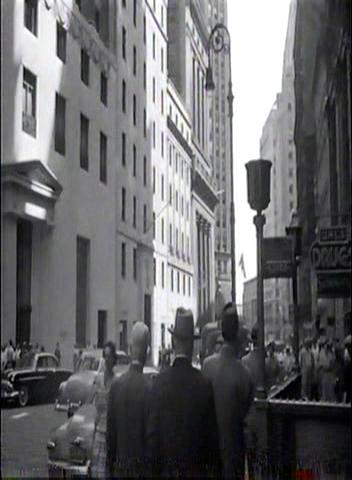
The bell sits in the tower above the executive suite of the title, in a downtown stone monument of a building that serves as the corporate office of a furniture company. We are not yet in the days of suburban industrial parks. We are downtown where the action is.

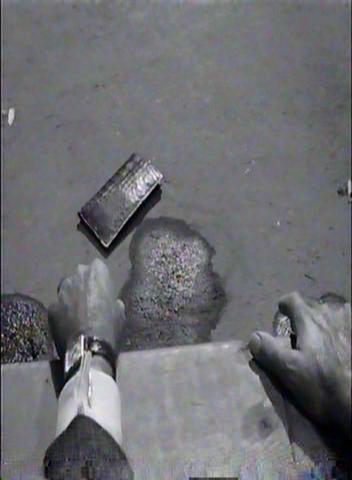
The action starts right off with the unseen CEO leaving his New York branch building at the end of the workday on a Friday. His perspective is the camera’s perspective. We see who sees him, who makes eye contact and who does not, as he leaves the world over which he is king.

Then he hails a cab out on the sidewalk and crumples to the ground, dying instantly of a heart attack. We see, through the camera and his eyes, the swirling buildings, and the clear sky above

Looking down upon him from an upper floor is our old friend Louis Calhern, (whom we last saw as the rogue here in The Man With the Cloak) an executive in the firm, who, sensing an opportunity, sells a chunk of company stock he cannot cover. It doesn’t matter, because he knows that when the news gets out of the Big Boss’s death, the stock will plummet.

Once it does, he can buy it back for next to nothing. In the weeks to come, the stock will rise. He will make a tidy profit.

His cheap sell-out scheme lays out before us the message of the film. We get there, by and by.

It is fun to see Mr. Calhern’s meltdown when the Big Boss, whose wallet was stolen by a passer by when the ambulance arrives, is taken to the city morgue as a John Doe, and wrecks the timing on Calhern’s game.

Such is the behind-the-scenes maneuvering of the board of officers on this company, and there will be much jockeying for position to see who gets voted to be the new Big Boss. It is survival not of the fittest, but of the least principled.

Among the likely candidates is Dean Jagger, one of the old boys who helped build the company, but who is now regarded as too old to take the helm. Likewise Walter Pidgeon, the longtime partner of the Big Boss, who resents not having been named as second in command a long time ago.

Paul Douglas is the hail-fellow-well-met head of sales, who settles deals on the golf course and a bribe of a bottle of scotch. It is the charming façade of a spineless company man. His mistress, and secretary, played by feisty Shelly Winters provides the ego boost he needs, along with other comforts. Until he lets her down, and she shows more pride and mettle than he has.

Fredric March is a standout in this film as the smarmy numbers cruncher, who worms his way into other’s private affairs to get information to use against them. It is a magnificent performance, a virtuoso of snideness, ingratiating artificiality, and backstabbing. We see his grim confidence behind his sneer. We see his resentful insecurity when his wiping his sweaty palms with his handkerchief.

There is William Holden, as the Bright Young Man, who works in product development and represents the idealism that the Big Boss and his partners once had, but have abandoned in the lure of making an even bigger profit.

Holden’s supportive wife is played by June Allyson, who maintains their junior executive suburban home with its Mid-Century modern furniture (see this previous post on Strangers When We Meet for more examples of that), and raises their all-American boy, played by young Tim Considine.

I wonder if the furniture in his ultra modern house was made by his own company, and if it’s the good stuff or the cheap knock-off stuff, and if he got a discount?

Check out Walter Pidgeon’s home and we get an eyeful of traditional furniture, a nice contrast that tells us a lot about these two men, their perspectives and their eras. Furniture is not just set dressing in this movie. Look at the medieval design of the woodwork in the executive suite. The stained glass windows behind Holden during his big speech make him seem like an evangelist.

Finally, we have Barbara Stanwyck as the heiress whose father founded the company. Until recently it seems, she was also the mistress of the Big Boss. She is depressed and vulnerable in the aftermath of the death of the powerful man who rejected her, selfishly indifferent to what affect his death will have on the company.

Rounding out the cast we have Nina Foch, who as private secretary to the Big Boss, is the major domo of the Executive Suite, making sure meetings run smoothly, privy to all the secrets and keeping her mouth shut.

It’s an engrossing film, character-driven (which we get from the start when each main character is “introduced” to us when Nina Foch knocks on their office doors to remind them of a big meeting. Thus, we see their character names on their doors and identify their faces).

They all have their own agenda. Mr. Holden pouts because his latest product development test got messed up. The Big Boss, who once promised him free reign to improve their furniture, let the ball drop and fell under the spell of business ideology such as Fredric March’s character, Mr. Shaw, where profits are to be doled out to stockholders and not reinvested in the company.

Holden complains, “Improve the profits but never the product. That’s Shaw’s philosophy,” he says of Mr. March. “To him, the whole company’s just a curve on a chart.”

Dean Jagger, a hands-on man like William Holden, who helped start the company, resents Holden’s supposed “golden boy” (so to speak) position with the Big Boss. Mr. Jagger practically invented furniture, he seems to say, “And I didn’t need the boy wonders and the slide rule experts to show me how.” (See this previous post for our discussion on slide rules. My gosh, there’s a link for everything in the post.)

Mr. Jagger is so fed up, he is planning on retiring, and let the company crumble. I love Holden’s admiring smile across the boardroom table when Jagger says he is taking a weekend trip to sail on his boat and eat Maryland crab. It’s a small touch but says volumes about mutual appreciation and comradeship that can exist in companies as well as enmity.

Fredric March tails Paul Douglas to the airport (see this previous post on the Long Beach Airport), to humiliate him by catching him in a tryst with Shelley Winters.

Walter Pidgeon’s wife complains that he has been living in the Big Boss’s shadow, and urges him to make a play for the top job.

A great scene with Mr. Pidgeon, in an attempt to do just this by returning to the office to draft public announcements on the Big Boss’s death and funeral arrangements, discovers the presumptuous Fredric March already there and handling everything himself with a condescending air.

They argue details, but March has clearly assumed control. Walter Pidgeon, ever the gentleman from the old school, is aghast that Mr. March does not intend to close the factory out of respect for the deceased.

Time is money.

Suddenly the plot shifts from what will happen to these board members, to what will happen to the company.

To save it from the nefarious clutches of Fredric March and his ilk, Holden, the reluctant hero, must convince Walter Pidgeon to anoint him heir. Holden must dicker and pontificate in the boardroom in a tense scene to shake them up and win their confidence, rather like a politician. And he must shame Barbara Stanwyck, who holds a controlling vote, into dropping her self pity for two seconds to consider the lives of others and the legacy of this furniture company that bears her family name.

Mr. Holden is worried about the product, and about the workers. When he leaves the plant at the end of the day, after the whistle has blown, an army of laborers files out the gates with him. We see he is a man of the people. He knows many of them by name. Note the American flag in the background, over his head like a halo. This symbol as well as the workers crowding at his elbow already seems to anoint him.

The workers are worried the plant will shut down now that the Big Boss is gone and things are so unsettled. Some complain about the junk furniture they manufacture, a far cry from the good old days when they were proud of their product.

“Why did he allow it?” one disgusted laborer asks Holden, and then the other pivotal question, “Where do we go from here?”

Holden has no answers. But we know where they went. We’ve already arrived.

Have a look at this link to a New York Times story from July about the Harley-Davidson motorcycle manufacturer enjoying soaring profits, more than triple from a year ago. Reaping the profits, specifically, are the shareholders. The workers reap pink slips. Around 1,500 people will be let go by the end of this year. As the article notes, many other manufacturing firms reaping profits this year did so by trimming the fat, which in business terms always seems to mean people, and do not intend to use their profits to rehire anytime soon.

It’s endemic, this cutting the fat. Check out those self-service checkout lines in grocery stores, the ATM in the bank lobby while two tellers work in a bank that has eight empty teller windows, even the new self-service checkout stands in libraries. Cuts down on the need for librarians to check out your books. All for your convenience isn’t it? Yours or theirs?

So much convenience and so few jobs.

“Convenient!” Mr. Pidgeon blasts Mr. March, “That’s always been your attitude…to make everything as convenient as possible for yourself!”

It is interesting, and somewhat astonishing, to note that what we might lament as the failure of industry in this country and corporate greed today had roots as far back as 1954, specifically the notion that the product will become inferior and the jobs will be lost if the only object is profit for the shareholders.

We were enjoying one of the most energetic and profitable business booms of all time in the early 1950s. But here in this film, we see the veneer crack a little. In industry and in the cheap line of furniture this company has been making, shaving off quality to bolster the bottom line.

The climax of the film is a boardroom showdown between factions, intentions, and ideals. Where Nina Foch, by the way, takes notes in shorthand. Is shorthand taught anymore? I suspect it has gone the way of the dial telephone and antimacassars.

William Holden gets thrust to the top of the heap when he decides to take the responsibility to point out how lousy things have been run in the company. He assumes a leadership role by doing this, thereby anointing himself.

While we listen to his words, our minds may wander a little bit from the plot to what is going on in our own lives.

Fredric March spells it out succinctly, “I believe that a company is answerable first and last to its stockholders.”

Mr. Pidgeon protests, “I get it. Manufacturing and selling don’t count anymore.”

Mr. Holden agrees with Pidgeon, “Sometimes you have to use your profits for the good of the company, not paying them all out in dividends to impress the stockholders with your management record.”

Mr. March contends, with a nod to the brooding Miss Stanwyck at his elbow, that the Big Boss ran things that way. Holden comes back with a remark that seems to speak directly to us.

“He was wrong, the way a lot of people are wrong these days, grabbing for the quick and easy, the sure thing. That’s just a lack of faith in the future.”

His soliloquy about let’s run a better company starts to sound like Mickey Rooney exhorting the gang to put on a show, and some of his remarks might sound just as naĂ¯ve to us. Holden talks about putting out a line of product that “has beauty and function and value.” Yeah, right.

He talks about workers on the line who prefer to take a pay cut to post to other jobs in the company, just to avoid working on the really cheap crap they’ve been making because it damages their pride.

He tells Barbara Stanwyck that they must put out product that she will be proud to bear her family name.

Do we still have that kind of pride? Willing to take a pay cut to avoid demeaning ourselves? As for pride in family names on companies, in a world where most of our big corporations are acronyms or just a meaningless jumble of vowels and consonants arising from many names over the course of many takeovers, do we really know what company we’re dealing with when we buy that item?

Though the movie ends on a hopeful note (except for Fredric March, whose sickened expression after losing the presidency of the company is priceless), we may not be able to help brooding on the old lady laborer, who walks out of the factory with the swarm of other workers after punching out, to ask William Holden about their future. They know the company is in trouble.

“Everything’s going to be all right, isn’t it?” She asks.

“Don’t you worry about it,” he tells her with a comforting smile.

“But you weren’t here in ’33, you don’t know how it was…”

I wonder, do we know now?

William Holden only guessed at catastrophe for the company and the nation in a booming 1954 when the net dividend for the stockholders was starting to become the benchmark for the health of the company, not the quality of its goods or services, not how many people it employed or if those employees were able to earn a sufficient living.

This is what makes this film fascinating. It can speak to us through a span of more than five decades and still be relevant, yet not relevant because of any timeless quality of human behavior…relevant because its subject is so ironically and unexpectedly topical.

Topical despite that they were in a boom, and we are…where we are, where we were headed back then with decades of deregulation in our future, and industrial flight to overseas plants to improve the net dividend for the stockholders.

By the way, happy Labor Day.


*********
Jacqueline T. Lynch is the author of Ann Blyth: Actress. Singer. Star. and Memories in Our Time - Hollywood Mirrors and Mimics the Twentieth Century. Her newspaper column on classic films, Silver Screen, Golden Memories is syndicated nationally.  Her new book, a collection of posts from this blog - Hollywood Fights Fascism - is available here on Amazon.

Related Products