IMPRISON TRAITOR, PEDOPHILE, AND CONVICTED FELON TRUMP.

Thursday, May 20, 2021

Till the End of Time - 1946


Till the End of Time
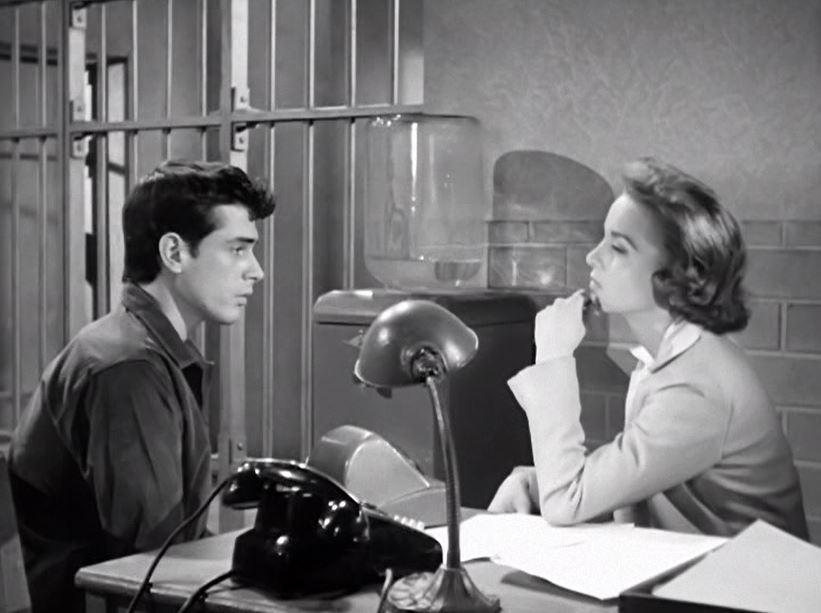
(1946) examines the difficulties of post-war adjustment for three returning Marines, their families, and a war widow for whom the post-war world – as it was for anyone who lost someone in the war -- is not so much an experience to be adjusted to, but to just endure.  Despite being a good film in its own right with good performances, it lacks the beauty, the inspiration, and the dramatic punch of The Best Years of Our Lives (1946), discussed here, which was released some five months later.  Though Till the End of Time apparently did well at the box office for being a timely film and was popular in its day (taking its title from an already popular song of the era), today it has been pretty well eclipsed by The Best Years of Our Lives as the most beloved movie about returning World War II vets.


This is our entry in the Classic Film Blog Association’s Hidden Classics Blogathon.  Please have a look at the other great blogs participating in this event.


Guy Madison stars as one of the returning Marines, a handsome fellow who has to remind himself occasionally how lucky he is to have returned without any physical or psychiatric wounds from the war, plagued only by a feeling of restlessness that takes him weeks to understand and accept as part of the process of adjustment to peacetime life.

Dorothy McGuire plays the war widow in a role quite different from most of her other work.  This was her sixth film, and the five preceding this were quality films in which she produced quality work (we covered Claudia, Claudia and David, The Spiral Staircase, and The Enchanted Cottage), so apparently, with the reputation of being a discerning and mature young stage actress, she was allowed to play the part of a woman who copes with the loss of her flier husband by attaching herself temporarily to several men, breezing through relationships with no intention of settling on any one of them.  This would have been a floozy role in the hands of anyone else, but McGuire brings depth and sympathy to a character that can be flippant, bristling, showing her pain, her intelligence, and her capacity to still empathize with others despite wanting to shut herself off from such feelings. 

She seems much more mature emotionally than Guy Madison, and just as Miss McGuire was actually some five or six years older than he in real life, we might assume her character is older, which makes their relationship even more unusual for the era and more interesting.  Though she has played ingenues, Dorothy McGuire is the world-weary woman of experience who, after steamy moments, smiles amusedly at Mr. Madison.


Robert Mitchum plays Madison’s Marine buddy, who is being released from a military hospital for a head wound suffered on Iwo Jima, for which he has a metal plate in his head. He is an easy-going cowboy who wants to buy a ranch back home in New Mexico.  He’ll go broke in Vegas before he ever gets his ranch, and a couple of fights will bring warning headaches that may threaten his life.


The third Marine is a pal of Mitchum’s whom he met in the hospital, played by Bill Williams, who has had both legs amputated.  He has returned home to a widowed mother and a younger brother, ashamed to be a burden to them.  He had been a boxer before the war, and his career is obviously over, with no interest in another one.

The movie opens with the discharge process, the awarding of service record documents, of mustering out pay, and with stern advice given by William Gargan, who will pop up through the movie as a Marine rehabilitation officer, trying to get the boys on a firm path to civilian life and to avail themselves of any advantages the military has for counseling, pensions for the wounded, etc.  Mitchum balks at applying for a pension for the brain injury that will likely debilitate him in years to come.

Guy Madison takes a cab home to his parents’ stucco house in Los Angeles.  His folks are out, so he has a quiet homecoming, entering through the back door with the customary hidden key.  He lifts the service flag from the window and drapes it over a family photo in the living room, signifying the missing family member has returned.  However, he walks through the house rather briskly, with seemingly little reflection.  He enters his boyhood room with all its juvenile trappings of pennants, street signs, a deflated football, and we might be reminded of Homer’s room in The Best Years of Our Lives.  He is amused an old jacket does not fit him.  With nothing to do here, goes to a local hangout.  Unfortunately, moments like this which could have been dramatized to greater effect were sort of breezed through.  The movie has strong dialogue, especially in scenes between Dorothy McGuire and Madison, but much of director Edward Dmytryk’s work pales by comparison.  In many scenes, we might consciously miss the strong, sensitive intuition of William Wyler, who would have made more of such simple things.


Jean Porter is the bouncy girl next door, a comic hepcat who makes eyes at Madison.  Guy’s mother, played by Ruth Nelson, would like him to date her, but she’s just a kid.  On a skating double-date, she refers respectfully to Dorothy McGuire as “Mrs. Ruscomb,” stressing her age, but which Dorothy regards only with wry amusement.  Jean Porter would later marry director Edward Dmytryk.

If Till the End of Time does not have the same power as The Best Years of Our Lives, it does, however, have a gritty quality that makes it especially interesting in comparison.  Till the End of Time goes to areas where Best Years does not go.  Where Best Years may show the floozy wife played by Virginia Mayo telling her husband, Dana Andrews, who is plagued with nightmares to “Snap out it” and get over the war, we have Guy Madison’s parents, particularly his mother, actually refusing to allow him to talk about his war experiences because what her son has gone through to save the world is upsetting and disgusting.  Other civilians, like Harry von Zell, who used to run the malt shop and now runs the local bar, welcomes Guy Madison home with, “You’re back from the thing!  You all in one piece?”


The vets in Till the End of Time, including Guy’s old boyhood pal played by Loren Tindall, acknowledge that the only people they confide their experiences to are other vets.  They make the decision to shut out the civilians.  “Sometime you’ll tell me what you did, and I’ll tell you what I did.”


A case of PTSD is shown when McGuire and Madison grab a coffee at the skating rink snack bar and they notice a soldier, played by Richard Benedict, hunkered down over the counter, shaking wildly.  They both move in to cover him and talk him through it.  He is on leave from the local VA hospital, fearful to go home to his folks when he’s eventually released.  He doesn’t want them to see him like this.  This is not just a nightmare to be comforted from as it is only a dream, as Fred's nightmare was in Best Years, but rather this is a waking, conscious moment of utter panic and physical disability.  It is ugly, and we don’t know what his family will think if he ever gets the nerve to go home to them.

Miss McGuire, the war widow, confronts Madison with her own particular gripes and burdens when he calls her a tramp for seeing other men.  Though early in the movie he says that war widows should be given a Purple Heart, he demands that she get on with life just as other have demanded that of him.  She laments that she bought into the dream of a post-war world with her husband and she was cheated out of it.  “The war is over and John isn’t coming home and I’m stuck with my dream.”

His parents nag Madison to get a job as he is floundering at home doing nothing, even Dorothy McGuire encourages him to go work.  She asks what has he done for work?

“Go to school.  Go to war.”  As for so many of his generation.


She gets him a job where she works in a factory manufacturing radios.  She works in the office.  He works in the plant where a young Blake Edwards is his foreman.  After starting a fight with the foreman, Madison explains to McGuire, who has followed him to a hamburger stand, “Okay.  I’m back from the war.  I’m lucky.  I’ve got two arms, two legs, and two eyes.  Nine out of ten fellows are going to be in the same shape.  Normal.  Then what’s bothering me?  I’m edgy. I feel out of things.  You know why?  Because I’ve been scrounged.  I’m robbed of three and a half years.  Somebody stole my time.”

It’s a movie where the hero gets to be a petulant whiner, and that is honest, because only a superhero could undergo such sacrifice for so many years and not complain.  And the Greatest Generation were human.

Even Bill Williams, wallowing in angry self-pity over his double amputation, is brought to action by his mother, who reminds him of a man who lost the use of his legs.  “He didn’t quit.  He got to be President.”


It even takes one step farther a political warning raised in Best Years.  In that movie, we see Ray Teal confront Homer and Fred about “Americanism” and how we should have been fighting on the side of the Nazis.  Fred satisfyingly socks him.  Till the End of Time hints throughout the film that veterans’ groups are contacting vets through the mail and soliciting their membership, some of the groups have far-right leanings.  Madison’s dad, played by the wonderful Tom Tully, warns him against them.  In a climactic scene at the end of the film, Robert Mitchum, Madison, and Bill Williams are in a bar and they are confronted by one such belligerent far-right vets’ group, the American War Patriots.  They don’t allow Catholics, Jews, or Blacks.  The Black soldier who has been playing pinball with Mitchum watches them and leaves in disgust.  The Nazi sympathizers aren’t just civilian malcontents; they’re actual veterans of whom we now need to be afraid.

We may remember Caleb Peterson as being the Black soldier helping to move the airplane engine in the opening scene of The Best Years of Our Lives.  

Mitchum responds, telling them about a war buddy of theirs, Maxie Klein.  “If Maxie were here, he’d probably spit right in your eye.  But Maxie’s dead on Guadalcanal.  So just for him, I’m going to spit in your eye.”  And he does.  The fight that breaks out seriously reinjures Mitchum’s skull injury, and they rush him to the hospital. 


The film does not conclude so much as it decompresses, with the operation a success, and Dorothy McGuire suddenly chummy with Guy’s mother, but we don’t know when or how that happened. 

Till the End of Time is not as polished as The Best Years of Our Lives, but it stretches further into uncomfortable areas that are worth taking a good hard look at.  And then, too, there’s a nice beach scene between Dorothy McGuire and Guy Madison which we discussed in this previous post.

Have a look at the other blogs posting in this CMBA Hidden Classics Blogathon.

 ********************

Jacqueline T. Lynch is the author of Ann Blyth: Actress. Singer. Star. and Memories in Our Time - Hollywood Mirrors and Mimics the Twentieth Century. Her newspaper column on classic films, Silver Screen, Golden Memories is syndicated nationally.  Her new book, a collection of posts from this blog - Hollywood Fights Fascism - is available here on Amazon.

Thursday, May 13, 2021

Gasoline Alley - 1951


Gasoline Alley
(1951) brings the popular comic strip to life, and like the strip seems to reflect that life goes on and time doesn’t stand still, for the story is mainly about main character Skeezix’s younger brother Corky.

The comic strip is the longest currently running strip in U.S. history, begun in 1918.  Unlike most strips, the characters in Gasoline Alley aged, and much of the storyline chronicles the life span of Skeezix Wallet.  Skeezix was an abandoned baby found by Walt Wallet on Valentine’s Day 1921.  Walt was a bachelor, but he took the baby in and raised him.  Walt and his pals liked to tinker with their autos – a new-fangled invention still in the early ‘20s, and so the alley behind their street was nicknamed Gasoline Alley.


Skeezix did not remain a baby, but readers followed along his boyhood as he aged in the 1920s and 1930s – While Walt married, had another son, and then another baby, a girl, was abandoned in his car in the mid-thirties.  Walt just seemed to attract foundlings, apparently.  Skeezix joined the Army during World War II, married in 1944 and had a couple of kids of his own.  He’s a great-grandfather today, having celebrated his 100th birthday this year.

This was another strip, like last week’s Winnie Winkle the Breadwinner, that my mother loved, because she grew up with it and she reminded me many times that Skeezix shared childhood milestones with her, as they were close in age.  She talked about him as if he was a cousin.


The comic strip was very popular in its day, spawning radio versions, a children’s middle-grade chapter book, and a couple movies: this one and its sequel Corky of Gasoline Alley, also released in 1951. Frank O. King, the cartoonist, is also a co-writer of this script.

Corky, played by Scotty Beckett, stars in both movies, as the focus had shifted from Skeezix, now perhaps viewed as more settled with a wife and kids, onto a younger fellow with more trouble in his life. 

Corky’s main problem is his discontent about growing up in Skeezix’s shadow.  He has never measured up to his older brother’s steady qualities, and now that Skeezix has his own business – a garage called Gasoline Alley, a wife and kids and his own home, Corky wants to catch up to him.  The movie begins when Corky unexpectedly arrives home from college announcing he has quit school, and brings in his new bride. 

His parents are understandably shocked, a little annoyed, and worried as heck about their boy’s habit of acting in haste.  Corky and Hope, his new wife, live with Ma and Pa until Corky can get a job and afford a place to live. 


Walt is played by Don Beddoe, and he is the only person in the cast to actually resemble the cartoon character he plays, with that shock of hair pasted high over his forehead.  A great job by the hair and makeup folks.  None of the other actors look like the characters they portray, but probably could not be expected to, after all, these were cartoon drawings. That Don Beddoe looks so much like Walt Wallet is delightful and, I suppose, a little distracting.  He draws your attention in every scene he’s in.


Skeezix is played by Jimmy Lyndon, who we last saw here in Life with Father (1947).  He doesn’t get much screen time, unfortunately.  Patti Brody plays little sister Judy, who has a few funny lines and delivers them well.  Susan Morrow makes her screen debut as Hope.

Corky’s first attempt at working for living is to become an underwear model for a catalogue, which has its funny moments, though a sexy woman model he meets pops back in the story from time to time as a prospective danger to his marriage.  This is no soap opera, however, and the movie’s director, Edward Bernds, transfers some of his experience on Three Stooges and Bowery Boys flicks in broad comedy sprinkled throughout the movie, especially in a wild car chase at the end. (Where, told to stop the car by throwing out the clutch, the terrified driver exclaims, “I haven’t got one, it’s Dyna Flush!”  I’m assuming this is a comic reference to the Dynaflow early automatic transmission in Buick cars.)

Corky next gets a job as a dishwasher for a restaurant, and with incredible luck, or hutzpah, decides to take a lease on a run-down diner.  Fry cook Pudge, played by Dick Wessel is along for the move – turns out he was in the Army with Skeezix, and Gus Schilling’s hired as a dishwasher with a prison record.  Corky gives him a job to help him go straight, though Schilling’s light-fingered skills will help later on when they need to stall signing a contract.  We last saw Gus Schilling here as the beleaguered TV deliveryman in Our Very Own (1950).

With his wife, Hope, as waitress, and a big loan from Skeezix, Corky’s in business and much of the movie follows the ups and downs of getting established. A wolf after Hope happens to be a shill for a competitor.  Corky and his crew run and out of the diner so often on emergencies, that at one point the cook, heading out the door, yells to a customer, “Turn off the lima beans in ten minutes!”


It’s possible that since two movies were made in the same year featuring the Gasoline Alley characters that it might have been intended to make a series, such as the long and successful Blondie series of movies produced from the late 1930s through 1950, also, of course, based on a famous comic strip. However, no more followed and it’s possible Scotty Becket’s own personal troubles might have played into that decision.  He’d been around Hollywood since a small child, first coming to attention in the Our Gang series.  As an adult, his self-destructive behavior destroyed his career and eventually, his life at only 38 years old.  He played his role in Gasoline Alley with great energy and likeability. 

The strip continues today, having passed through its fascination with the Tin Lizzie, with the Depression, World War II, post-war family life, Skeezix's children having served in Vietnam and in the Peace Corps, and each fad and whim in succession through the last ten decades of our history. It survived by examining the small stuff of life, and then letting it go, because life goes on and time doesn’t stand still.

Next week we join the Classic Movie Blog Association’s Hidden Classics Blogathon, with a look at Till the End of Time (1946).


********************

Jacqueline T. Lynch is the author of Ann Blyth: Actress. Singer. Star. and Memories in Our Time - Hollywood Mirrors and Mimics the Twentieth Century. Her newspaper column on classic films, Silver Screen, Golden Memories is syndicated nationally.  Her new book, a collection of posts from this blog - Hollywood Fights Fascism - is available here on Amazon.


Thursday, May 6, 2021

Working Winnie - 1926


Working Winnie
(1926) brings the 1920s sensation from the funny papers -- Winnie Winkle -- to the big screen.  It's a short movie, about 24 minutes, and was the first in a series of ten live-action adventures of our heroine.  She was that other modern sensation of the 1920s; not the flapper, but the "working girl."  It was one of the very first pop culture hits to feature a single working woman.


The strip by Martin Branner, who also co-wrote the script for this movie, was called Winnie Winkle the Breadwinner, because she was the sole support of her parents and younger brother, Perry.  The strip began in 1920 and was an immediate hit, chugging along through the decades and finally discontinued by the newspaper publishing syndicate in 1996, when it was deemed that Winnie was no longer relatable to modern women.  Hogwash.  Winnie was a favorite of mine from childhood, when she was still working, though by the 1970s the strip was more of a continuing story like a soap opera and not comic gags.

In her 76 years, one of the longest-running comic strips in U.S. publishing history, Winnie had been through a lot.  Lots of jobs, lots of leering bosses, a marriage to Bill Wright, who later got lost in the Amazon jungle while Winnie was pregnant with twins (boy and girl twins, my favorite kind), raising her children as a single mother, and finally founding her own fashion design company before they pulled the plug on our heroine.  At least they had the decency to bring Bill back out of the jungle and reunite them.  Actually, Winnie, in true independent woman fashion, went to the jungle and brought him back herself.  Through it all, she kept her single surname.

From July 1976

Winnie was a favorite of my mother's as well.  We discussed the strip's progress daily.  My mother was one of the most intellectual people I'd ever met, and a great reader of much heavier material, but she had a sentimental fondness for the comic strips of her childhood, especially the ones that accompanied her into adulthood.  She was a dedicated newspaper reader, and I suppose that the funnies were her gateway drug to the world of print news, and were for a lot of children back then.

Today, I find reading comics in newspapers a struggle because in many papers they tend to be printed much smaller than they used to be.  It's not much of a pleasure anymore.  When the strips are larger, one is able to appreciate the artwork more, as well as being able to just read the words.  You can lose yourself in a nice big 2 1/2 x 9 1/2 inch strip, or even a 2 x 6 1/2, as they were by the 1970s.  Strips had a lot more detailed background back then as well, which would probably not transfer well today on a much smaller space. Terry and the Pirates, now that was a joy to behold, its fine detail beautifully showcased in a larger format.


Working Winnie
is a simple plot full of action, as the silent flickers were.  It stars Ethelyn Gibson as Winnie.  Miss Gibson was married to Billy West, who was the producer of this film, and starred in lots of comedies himself, including not a few with Oliver Hardy.  He appeared in a huge number of movies from the teens right through the 1920s, but by the 1930s was relegated to uncredited bit parts, and he retired in 1935.


Here's Billy West as the silent World War I Medal of Honor winner in Joan Blondell's musical number "My Forgotten Man" from Gold Diggers of 1933, which we covered here.


Winnie suffers the indignity of running to catch a trolley, ripping a man's pants off when she can't get a grip on something as she tries to board.  She gets another trolley, packed like sardines.  At work, a sandwich she has left in her desk drawer has ants all over it, which get onto her hand and onto her body, and when she jumps, wiggles and shimmies, her co-workers think she is dancing and they clap along.  Her grumpy boss and her hoped-for suitor suffer the same fate.

The trolley is so packed on the way home, she has to crawl on the floor and down the steps, landing head-first in the street.

Invited to a swank dinner party that evening, her frumpy parents, mischievous little brother and his roughneck gang, all do their best to embarrass her. 

The movie is available here on the Internet Archive site.  It's quite muddy, but there are a few laugh-out-loud moments, but don't expect much of a story line.  For that, you had to read the funnies.  And then discuss them with your mother.

Yesterday, May 5th, was Cartoonist's Day.  In the spirit of the festivities, here's a nod to my favorite cartoonist, my twin brother John.  His collection of delightfully sweet and silly cartoons is available on Amazon, in print or eBook:  Arte Acher's Falling Circus.


Next week, we'll have another look at a movie based on a comic strip - Gasoline Alley (1951).

********************

Jacqueline T. Lynch is the author of Ann Blyth: Actress. Singer. Star. and Memories in Our Time - Hollywood Mirrors and Mimics the Twentieth Century. Her newspaper column on classic films, Silver Screen, Golden Memories is syndicated nationally.  Her new book, a collection of posts from this blog - Hollywood Fights Fascism - is available here on Amazon.

Thursday, April 22, 2021

Paddy Nolan-Hall, a.k.a. The Caftan Woman


Today I extend my well wishes, as well as Happy Birthday, to your friend and mine, Paddy Nolan-Hall, the Caftan Woman, whose blog is a source of delight for classic film fans.  So is Paddy, too, a source of delight, and inspiration.

I'm not sure when we first crossed paths, as we've both been blogging for over a decade, but somewhere down the line kindred spirits discovered each other, maybe cemented by certain coincidences in our lives.  She even helped me over a rough patch several years ago for which I will always be grateful. 

I had the pleasure of her input on this blog in the form of comments guaranteed to be smart, witty, and sometimes poignant, and also her visit here in this guest spot.  But to really experience her genius, and her warmth, you must visit her blog.  For starters, try this bit of Charlie Chan haiku.  No, really, that's a thing.

Paddy is a several-times winner of awards for her blog from the Classic Movie Blog Association, she's a playwright, a singer, an actress, and is probably the most knowledgeable person about classic film trivia that I've ever encountered, and her encyclopedic knowledge extends to TV as well.  When it comes to opera, don't tangle with her.

With her avid participation in blogathons and her generous comments on the blogs of participants, there are probably few classic film bloggers who don't know and love the Caftan Woman.  

Many of you probably also know that Paddy has recently undergone a kidney transplant.  Perhaps the most raw courage in the human experience is the kind required of a patient to get well.  We wish very good health for our Paddy.  May she be watching her classic films soon and telling us what she thinks.  Not necessarily in haiku form.  Iambic pentameter is okay, too.

Thursday, April 15, 2021

Interview with David C. Tucker on his book: S. SYLVAN SIMON, MOVIEMAKER


Last week we discussed author David C. Tucker’s new book:  S. Sylvan Simon, Moviemaker – Adventures with Lucy, Red Skelton and Harry Cohn in the Golden Age of Hollywood.  Have a look at that review here.  Today I’m pleased to continue the discussion with an interview with Mr. Tucker….

JTL:  In your preface you describe discovering S. Sylvan Simon's credits years ago as a fan of Lucille Ball and The Fuller Brush Girl. How did you come to explore the possibility that Simon might be a person whose career you'd like to learn more about and write about in a book?

DCT: In many of the books I’ve read about Lucille Ball, it seemed as if her prowess with physical comedy went completely unnoticed in Hollywood prior to I Love Lucy. As I said in my book, Jess Oppenheimer deserves a huge portion of credit for making My Favorite Husband a hit radio show, and giving her the showcase of a lifetime on TV. But when you look at films like Her Husband’s Affairs, Miss Grant Takes Richmond, and especially The Fuller Brush Girl, all of which Simon either produced or directed, and all of which preceded I Love Lucy, it’s abundantly clear that he recognized quite clearly what she did best. When you add to that the fact that he directed some of Red Skelton’s best films, and also collaborated with Abbott and Costello, this is someone whose mastery of comedy is undeniable. I initially started the project unsure whether I could uncover enough material to give Simon the tribute he deserved, since so much time had passed. But the material just kept coming, and it reinforced my belief that this was a story that should be told.

JTL:  I admire the thoroughness of your research regarding the many details of his filmography and also the aspects of his career that are often given short shrift by entertainment biographers: regional theatre, radio, etc. I was very interested in reading about the collections of short plays he wrote for youngsters. What were the particular challenges of research on Simon and how did you meet them?

DCT:  Thank you! I knew going in that it would be difficult to find people who had known him personally, nearly sixty years after his death. But I persisted, and was able to interview not only several former child actors who’d appeared in his movies, but also people like his 98-year-old nephew.  

            The single biggest break, of course, was when his family provided me access to the leather-bound scripts of the films he directed. They often had notes in the margins, pages showing dialogue changes, on-set photographs, and sometimes memorabilia. There was a hilarious series of notes from his friend Chuck Granucci, a prop master, making mock complaints about life on the set. I was also fortunate to be in touch with the daughters of character actor Arthur Space, and consult his extensive letters and diaries that talked about working with Simon, whom he had known since they were both affiliated with a theatrical troupe before their Hollywood days. Another lucky break was locating a man who had copies of the newsletters from a summer camp where Simon attended as a boy, and where he later worked as a faculty member.

JTL:  It is fortunate that Simon's children are still connected in different ways to the film industry and contributed to your project.  How did you approach them?

DCT:  When I began seeking information on Mr. Simon, I quickly became aware that his daughter, Susan Granger, was a published movie reviewer, and that her brother, Stephen, had written a book about his own Hollywood experiences. That made it fairly easy to contact them both, and they agreed without hesitation to contribute to my project. With both of them so supportive, willing not only to give me interviews but point me toward other people, the project became much more feasible. I particularly admired the fact that Susan, with whom I worked the most, never tried to control what I published, but as a writer herself understood that I needed to go wherever my research led.

JTL:  It must have been a great thrill to interview by phone Jane Powell, Margaret O'Brien, and Arlene Dahl. What was that experience like?

DCT:  That was very exciting, as was interviewing Terry Moore, still a newcomer when she appeared in Simon’s film Son of Lassie. Margaret O’Brien has an amazing memory for those films she made as a little girl, and really made me feel as if I had been there when Bad Bascomb was filmed. She was later kind enough to tell me that she enjoyed the book, learned a good bit about Simon’s career, and intended to keep it in her personal library.

JTL:  It was evidently a great loss to the film industry for Mr. Simon to have died suddenly so young at 41 years old.  You movingly describe Frank Sinatra's and Lucille Ball's gratitude toward him for his contribution to their careers. Could you recount that here?

DCT:  In the last few weeks of his life, Simon had James Jones, author of From Here to Eternity, as a houseguest, working on adapting the book to the movie screen. Though he didn’t live to see it to fruition, Simon envisioned Sinatra as Maggio, and threatened to quit his job at Columbia when Harry Cohn overruled him. As most people know, Ava Gardner later took up the challenge of getting Sinatra the job, but he never forgot that it had been Simon’s idea, and expressed his gratitude to Stephen Simon years later. Similarly, Lucille Ball knew she owed a debt to Simon, who was not only a personal friend but truly a mentor in terms of encouraging and developing her flair for comedy. Even years after his death, she told people so, often getting teary when the subject came up.

JTL:   Is there a particular pleasure for you in pursuing a topic not covered by other entertainment biographers, plowing new ground, so to speak, rather than covering more well-known subjects?

DCT:  Absolutely. I’ve always liked Joan Crawford, for example, but there have already been so many books about her. As a fan, I’d buy a book expecting to get fresh information, not a rehash of what’s already out there. My publisher, McFarland and Company, has been very generous about supporting my wish to write about the topics that interest me most. And I enjoy doing original research, and bringing readers information they haven’t seen before.

JTL:  Aline MacMahon is a favorite of mine and I was interested to learn in your book of her family connection to S. Sylvan Simon. Any plans to follow the thread and write a book on her?

DCT:  It’s definitely something I’ve considered. She’s another one who becomes more difficult to research as time passes, but I was able to draw on letters she wrote to her husband, Clarence Stein, a well-known architect. Naturally I concentrated on the material pertaining to Sylvan Simon and the movie they made together, Tish. But she and Mr. Stein were often apart during their marriage, pursuing their individual careers, and they wrote to each other faithfully. 

JTL:   You write that Simon's family felt that the great stress of his work contributed to his early death.  Can you speculate what his goals, and his legacy might have been had he had taken over Harry Cohn's position at Columbia?

DCT:  When Simon became Cohn’s second-in-command at Columbia, the movie industry was running scared, feeling the looming threat of television becoming the dominant entertainment medium. Columbia’s long-profitable B-movie series and comedy shorts were falling by the wayside, and no one was entirely sure how to get viewers to leave the house and buy a movie ticket. I think Simon had a keen sense for how to do that, and would have kept the studio in the black while making some of the movies he wanted to make. Though Simon was quite capable of handling war movies, murder mysteries, and pretty much anything else, he did have an enduring love for comedy, and I think you would have seen that reflected in Columbia’s output.

Final thoughts from author David C. Tucker:

            I love doing a project that combines library and archival research, genealogy, newspaper files, and personal interviews, but I also make it a point to view as much of the subject’s work as I can. So if you’ll excuse me, I’m off to watch another movie. Thanks to you, Jacqueline, and your readers for plowing through this!

            *******

S. Sylvan Simon, Moviemaker – Adventures with Lucy, Red Skelton and Harry Cohn in the Golden Age of Hollywood is available at the publisher’s website, McFarland, here.  It is also available here at Amazon, as well as a variety of other online shops.

Have a look here for links to some of David C. Tucker’s previous books on movie and television notables:

Gale Storm: A Biography and Career Record

Martha Raye: Film and Television Clown

Eve Arden: A Chronicle of All Film, Television, Radio and Stage, Performances

Shirley Booth: A Biography and Career Record

Joan Davis: America’s Queen of Film, Radio and Television Comedy

Lost Laughs of ‘50s and ‘60s Television

Pine-Thomas Productions: A History and Filmography

Have a look here at David C. Tucker’s blog.

Thursday, April 8, 2021

Review: S. Sylvan Simon, Moviemaker - David C. Tucker's new book


It’s my pleasure today to post on a new book on the director/producer S. Sylvan Simon by David C. Tucker.  S. Sylvan Simon, Moviemaker – Adventures with Lucy, Red Skelton and Harry Cohn in the Golden Age of Hollywood is a look at the achievements of an over-achiever who accomplished much in his young life and whose early death was a blow to several who were grateful for his unique contributions to their careers, including Lucille Ball.  Next week I'll follow up with an interview with author David Tucker.

A few years ago, I posted a review and interview with Mr. Tucker on his book about actress Gale Storm.  I admired his thoroughness in researching the “nuts and bolts” of her career and what some entertainment biographers might consider to be minor and unimportant details to which they invariably give short shrift.  His newest book on S. Sylvan Simon is similarly blessed with a wealth of details on Simon’s path from humble and hardworking beginnings in Pittsburgh, a stage-struck young man (whose cousin was Aline MacMahon, already making a name for herself on Broadway) who cut his teeth on camp and amateur shows, theatre in high school and college.  He eventually heeded the call to Hollywood as a talent scout and casting director, gradually taking over the reins and directing films and producing them.  By the end of his career, he was being groomed for studio head Harry Cohn’s job at Columbia.  It was an astonishing climb, and cut short by his death at 41 years old.

The first section of the book “Early Stages” recounts his biography up until the time he left for Hollywood, corrects several errors that have been published over the years.  The second section “Go West, Young Director” and third section, “Mr. Simon Takes Columbia” explore his Hollywood career utilizing valuable resources provided by Mr. Simon’s children, including notated shooting scripts. Interviews with Jane Powell, Arlene Dall, and Margaret O’Brien, among others, provide insights and entertaining memories of their experiences being directed by Simon. 

The extensive filmography section of the book is especially useful to fans and students of Hollywood’s heyday and would be, no doubt, of special interest to classic film bloggers for its completeness and fascinating detail, including anecdotes on several of the movies, and contemporary reviews by syndicated columnists of the day.

I knew very little about S. Sylvan Simon before I read this book, and I enjoyed the book very much.  David Tucker did a masterful job tying in all the threads of the life and career of this individual who, had he lived longer and taken the helm at Columbia, might have left an even greater legacy.

S. Sylvan Simon, Moviemaker – Adventures with Lucy, Red Skelton and Harry Cohn in the Golden Age of Hollywood is available at the publisher’s website, McFarland, here.  It is also available here at Amazon, as well as a variety of other online shops.

Have a look here for links to some of David C. Tucker’s previous books on movie and television notables:

Gale Storm: A Biography and Career Record

Martha Raye: Film and Television Clown

Eve Arden: A Chronicle of All Film, Television, Radio and Stage, Performances

Shirley Booth: A Biography and Career Record

Joan Davis: America’s Queen of Film, Radio and Television Comedy

Lost Laughs of ‘50s and ‘60s Television

Pine-Thomas Productions: A History and Filmography

Have a look here at David C. Tucker’s blog.


The author provided a review copy for the purpose of this review blog post.

Thursday, April 1, 2021

Happy Easter and a look back at My Dream is Yours (1949)


Happy Easter!  Here's a throwback
post on My Dream is Yours (1949) starring Doris Day, Jack Carson, Eve Arden, and Bugs Bunny in a colorful Easter dream!

Thursday, March 25, 2021

A drive-in move coming to a theater near ME!


I have just heard some wonderful news.  It seems that drive-in movies are coming to a theater near ME!

In a town just across the Connecticut River from me, called West Springfield, is a large fairgrounds where annually the Eastern States Exposition (The Big E known hereabouts) is held in September showcasing all six New England states.  So instead of a state fair, it's a six-state fair. (More heavy on crab cakes, chowder, baked potatoes, apples, and maple sugar candy than corn dogs, but you can get those, too.) Part of the grounds include extensive parking areas, of course, and somebody got the bright idea to utilize the space in the spring and summer evenings, apparently on into the fall as well (taking a hiatus for the weeks the fair is held).

It's going to be called the West Springfield Drive-In, with space for 600 cars and two screens.  They've announced that one screen will show current films, and the other will show "classics."

Ah, now here is the material point, she said, glowering at the jury.  When they say "classics" do they really mean it?  Or do they think some high school hijinks film from the 1980s is a classic?  I am hoping with all my very might that they mean movies produced before 1965.  I have my doubts.  But I'll let you know.  I'm just happy that a drive-in is coming to my neck of the woods.  

There are no other close drive-ins in my area; you may recall this previous post where I visited a Connecticut drive-in, the first time I'd been to one in almost 50 years.  This other previous post notes the many drive-ins that were once in my area and in the nation in the 1950s and 1960s.

I hope I'll be able to attend a movie at least once this coming summer.  There has been a resurgence of drive-ins, even temporary setups, spurred by COVID restrictions.  Are there any near you?  When's the last time you went to a drive-in movie?

Friday, March 19, 2021

TV's Decoy - "Fiesta at Midnight" episode, 1958


Beverly Garland starred in a weekly police procedural drama called Decoy that ran only one season from 1957-58.  It was a ground-breaking program and far ahead of its time in many respects.  It achieved something rare during what was called the Golden Age of Television, and what is sad -- it’s even more rare today: a well-written, well-acted, sharply produced weekly show with a female protagonist that presents a refreshingly unselfconscious view of her abilities, intelligence, and emotions.


This is our entry into the “7th Annual Favourite TV Show Episode Blogathon” at Terrence Cowles Canote’s A Shroud of Thoughts blog.

It’s a rather long entry.  Sorry.  Go get a snack.

She plays a policewoman, as the term was used then, named Patricia Jones, who frequently is referred to by her nickname, “Casey” Jones.  She uses both names, seemingly without preference.  She is smart without being brilliant – she sometimes gets it wrong and learns from her mistakes.  She is courageous without being a thrill-seeker; she knows fear but also knows that’s human.  She does not forsake being human in order to be a good cop – she follows procedure with the dogmatic persistence of Sgt. Joe Friday on Dragnet and sometimes sounds like him, but she is also empathetic and seems to take quiet pleasure in observing the troubled humanity she meets on her cases.

We see little of her personal life, we do not know about her family or much about her past, only that her fiancé, also a police officer, was killed in the line of duty.  She is not driven to revenge, to drink, to wallowing in angst, but she deals with the occasional stabs of pain from the memory as the price everyone pays for being alive, loving, and remembering.  She is sensitive, but also pragmatic.


We sense that the creation of Officer Jones is entirely a collaboration between director, writers, producers, and actress, and as such, she is a most polished enigma.  In an era of “Hi, honey, I’m home!” sitcoms, she does not take insecure pains to reaffirm her femininity.  On the contrary, she is unconsciously sexy, perhaps never more so when breaking into a brief Mona Lisa-smile in odd moments that remind us her mind is always working and her heart is always open.

Also unusual for the day – and for females represented on TV shows for decades after – her male colleagues do not belittle her, or makes passes, or treat her in any way other than as friendly professionals who rely on each other.  While some of her duties are quite routine, she often must go undercover, which means she is rather like an actress.  She must be a society woman one episode, and a secretary in another. 

If the show were filmed in later decades, she would spend every other episode victimized by being tied up or her vulnerability capitalized on, and the threat of rape would be implied to a degree that makes an intelligent person wonder what has happened to our society that that would be entertaining for the female to always be in danger.  Or she'd be swinging on that insane pendulum between dealing with her private demons with compensating addictions or supercharged overcompensating aggression, both to show that she is a "real" woman dealing with the pressures of her career.  This keeps the actress and the writers busy, but can ironically make for a less interesting character.  One of the most appealing aspects of Officer Jones is her stoicism.

The range of crimes Officer Jones investigates from white collar crime to arson to murder is such that not every episode is peppered with a hail of gunfire.  The show might be too slow for today, but that is one of its strengths.


From a production perspective, one of the most intriguing aspects is that the show is filmed largely on location in New York City.  We see neighborhoods, buildings from the late fifties, the street scenes, the nightlife.  The cameras were hidden, so what you’re seeing happen in the background is real.  The old Penn Station, long gone, is beautifully filmed.  There’s Coney Island, theater marquees, an array of interesting sites.  Many of the interiors are also shot on location, so when you see an office in a factory, that’s where you are.  There is no clean, fake scenery, no set flats.  We see the grime of the factory walls, the old, uneven floorboards and the overstuffed file cabinets. We see the rain-washed streets with real people pulling racks in the garment district or walking in a park.  Everything is real.


Perhaps just to punctuate that, or perhaps just to add an unusual style – Officer Jones breaks the fourth wall at the end of the episode and talks to us.  Sometimes it’s a little startling, even when you know it’s going to happen, because she does not break character.  She suddenly turns and her eyes lock onto yours and she comments about the case, as if she knows we were there every step of the way, as if we are the rookie cop she is teaching.  Sometimes it's to wrap it up, or tell us what happens next.  Sometimes it’s just a final thought.  In one episode, “Night of Fire” she discusses not the case, but ruminates on one character in that episode.  It’s the story of a suspicious factory fire, and she is placed undercover as an office worker.  Another worker in the office is a young woman with a history of being treated for mental illness.  The other workers are hostile to her, tease her, and even suspect her of being the arsonist.  However, she’s only a patsy, and Officer Jones figures out who done it.  At the end of the episode, she breaks the fourth wall and talks not about the crime, but about that young woman.

“Tomorrow she’ll be looking for a job.  I hope she finds a good one, a place where people are enlightened about things like mental illness.  If she comes to your office…give her a break.”  That brief, sad, enigmatic smile, a flicker of warmth in her lovely dark eyes, and she turns away.  She’s said her piece.  No need to beat it to death.  I wonder how many bosses and fellow employees took it to heart at work the next day.

After this rather long introduction to Beverly Garland’s character and the program, (are you still with me?) I’ll move on to the single episode I’d like to discuss for this Blogathon.  It’s “Fiesta at Midnight”, episode 32, broadcast on May 19, 1958.  The director is Michael Gordon.  We discussed his wonderful directorial work on Another Part of the Forest (1948) in this previous post.  The scene is set at Hunt’s Point Palace; again, a real venue.  There’s a dance hall up a flight of stairs, where tonight it’s a Latin combo playing for an energetic crowd of romantic young people.  We listen to the music, watch the couples dancing in the dim evening light as if it’s a documentary and they have no idea we’re observing them.  Maybe they don’t.


Hunt’s Point is in the Bronx, and the Hunt’s Point Palace around a century ago brought swing music to fans in the 1920s and ‘30s, and by the late 1940s, jazz bands gave way to Latin music as a new Puerto Rican population came to the neighborhood.  The ballroom held about 2,500 people, and top bands played here for decades.  Salsa music was coined in the 1970s, but the Palace closed in the 1980s.  The building still stands, but now it’s an office complex.

But in “Fiesta at Midnight” we’re still in 1958, the first flush of Puerto Rican immigration to New York City, only months after West Side Story hit Broadway, so Decoy was not the first pop culture exploration of the problems of Puerto Rican immigrants, but it was certainly among the vanguard. 


With moody shots up and down the staircase that leads to the music from the hall, we meet three people on the town:  Anita, played by Gloria Marlowe, and her fiancé Raoul, played by Dario Barri.  They will be married in a week.  With them is Anita’s cousin, Maria, played by Miriam Colon.  Maria wants to remain at the bottom of the stairs, not going into the dance, but just listening, dreamy-eyed, where she is.  They urge her to come, but she insists she just wants to listen and to contemplate.  She is not looking for a date for the evening: she reminds them she is going to be married tomorrow.

They leave her alone and go up to the dance.  After a moment, Raoul leaves Anita, says he has to meet a man around the corner.  She warns him against getting into trouble again, but he is a charmer and tells her he will be right back. 


Seeing she is alone, a young newly arrived immigrant from Puerto Rico approaches Anita.  He is Juan, played by Tomas Milian.  He asks her to dance, but she tells him she is engaged to be married.  Juan is a quiet, shy young man and he confesses that he cannot get anyone to dance with him, that all the girls are paired off with husbands or boyfriends.  Anita, half in sympathy and half teasing, suggests he go down to the bottom of the stairs and talk with Maria, maybe she will dance with him.


He meets Maria, but she will not dance with him either.  Again, what he dreads to hear: she will be married tomorrow.  She is a lovely young woman, and he is very taken with her and they chat a moment, at least until the midnight church bells signal that, like Cinderella, she must leave the ball.  He respects that she is off limits and he leaves the dance hall without following her.


We walk through the dark street with him, past storefronts, and about to cross a dark alley when a man runs towards us out of the blackness, topples Juan, and runs away.  Followed close on his heels are the cops, who grab Juan, thinking he's the guy they are chasing.  Poor Juan gets dragged to jail for the armed robbery of a store.


Officer Patricia Jones gets called in on the case, not undercover this time, but a routine investigation.  She visits the store owner in the hospital, a middle-aged white woman named O’Connell, played by May Michael, who was shot in the robbery.  She is conscious, and furious at the cops’ apparent slowness to understand what a menace the Puerto Ricans are.  She is asked,

“Are you sure the man who shot you was Spanish?”

“I’m sure, all right. Don’t I hear them jabbering all day long?”

Discussing the case with her chief, Officer Jones remarks, “Somebody steals an apple from a fruit cart and they’re ready to lynch anybody by the name of Jose or Pablo.”

She interrogates Juan (and even demonstrates a rudimentary knowledge of Spanish), who is scared stiff and desperate to find someone who will believe him.  She begins her drudge work of questioning leads to find out if his alibi – talking to a girl named Maria at midnight when the crime happened – is real.


She eventually finds Anita at home, a week later and now married to Raoul.  Anita is closed-mouthed and denies meeting Juan, denies even knowing Maria.  We begin to understand that she suspects Raoul, because he left her for a few minutes, to be the one who actually committed the robbery.  She is trying to protect him.  When “Casey” Jones leaves, Raoul comes back to the apartment and Anita confronts him.  “Casey” returns when it is reported by neighbors that Raoul beat her up.

Still, she attempts to protect her husband, and “Casey” gives her the sensible advice, “You’re a fool to let him get away with it, honey.  He’ll do it again sometime.  Maybe that time you won’t be able to complain.”

Then the O’Connell woman in the hospital dies.  It’s a murder rap now, for Juan unless “Casey” can prove his alibi is true.


Running down all the logical prospects and getting nowhere, she wonders if perhaps the woman called Maria – who was supposed to be married the next day after the incident – did not marry after all.  Perhaps the wedding was called off and that’s why Officer Jones can’t find any public record of it.  She goes to the neighborhood church to ask the priest if he can confirm this.  He is in the middle of a First Communion rehearsal with a group of little girls, so she has to wait for him.  She spots Anita kneeling in one of the pews, her Rosary beads in hand.  “Casey” tries again to work on her, but Anita is stubborn and won’t tell her anything.

It’s a small thing, but because we don’t know Officer Jones’ own personal religion, I find it quite touching as well as a sign of the times that she pauses before she enters the Catholic church to pull her scarf over her head.  In pre-Vatican II days, head covering for women was required, and still is the custom in some countries.


We are actually teased with religious symbols throughout the episode, but unless you’re really observant, or have seen the episode a couple times, you won’t know that director Gordon means them for clues:  the large cross Juan wears in the neck of his open shirt, the crucifix on the wall of Anita’s apartment framed behind Officer Jones’ head.  It’s all pointing to a solution that only hits “Casey” when she’s given up on Anita, and, about to leave the church, smiles at the passing procession of girls walking down the aisle to the altar to practice receiving their First Communion.


Then it hits her – but not us yet.  Next, she drags Anita, Raoul, and Juan to another place where she has located Maria.  We are in a hallway, which has a figurine of the Virgin Mary on a heavy piece of furniture – another last-minute clue.

Then the door opens and Maria enters. 

She’s a nun.


When she said she would be a bride the next day, she meant she was joining a holy order and become the “bride of Christ.”  Juan is shocked, but Anita and Raoul are only uncomfortable because now that Maria has been found, she will undoubtedly tell the truth, if she remembers talking to Juan at midnight.

She does, and recognizes him.  Raoul is off to prison. Juan’s free, if still pained by his crush on Maria.  Anita is just plain crushed, and Sr. Maria is wondering what’s going on.

Officer Jones realized that Maria could be a nun when she saw the little girls in their white dresses walking down the aisle towards the altar, looking like a row of little brides.  She figured out Maria’s use of the phrase “tomorrow I will be a bride” as if it were a riddle. 

It’s a shame Decoy lasted only one season.  Several future stars appeared on the program, such as Colleen Dewhurst, Peter Falk, Martin Balsam, and Suzanne Pleshette.  Many of the episodes are in public domain and have been released on DVD, but the three-disc set released by Film Chest MediaGroup is excellent and contains a booklet with facts about the show and a synopsis of episodes.

One interesting fact the booklet relates: Between 1949 and 1990 there were around 555 dramatic television series.  Only about 36 starred women.

I hope you can catch up with the series Decoy sometime, and please visit the rest of the blogs participating in this “7thAnnual Favourite TV Show Episode Blogathon” at Terrence Cowles Canote’s A Shroud of Thoughts blog.

----------

Jacqueline T. Lynch is the author of Ann Blyth: Actress. Singer. Star. and Memories in Our Time - Hollywood Mirrors and Mimics the Twentieth Century. Her newspaper column on classic films, Silver Screen, Golden Memories is syndicated nationally.  Her new book, a collection of posts from this blog - Hollywood Fights Fascism - is available here on Amazon.

Related Products