IMPRISON TRAITOR, PEDOPHILE, AND CONVICTED FELON TRUMP.

Thursday, February 23, 2023

First anniversary - Slava Ukraini


One year since the start of World War III (whether we acknowledge it or not).  

Invasion and atrocities.

Putin's Russia has committed mass kidnapping of children, mass torture, extensive war crimes.

Putin's Russia is currently committing genocide.

Support Ukraine in every way possible.  We should join the fight against fascism wherever it exists.

Support freedom and democracy.

Slava Ukraini!


Thursday, February 16, 2023

Helen Kane - portrait of the "Boop-a-Doop Girl"


This sepia-toned portrait of Helen Kane, the Boop-a-Doop Girl from the book Stars of the Photoplay, a book of photo portraits of the Hollywood stars (Photoplay Publishing Co., 1930), recalls the heady days of the glorious wide-eyed flappers with their spit curls and sexual suggestiveness expressed through a gauze of pretended innocence.

The year 1930 also brought the first appearance of her cartoon alter ego, Betty Boop.  We've discussed Betty's influence on pop culture in this previous post.  Miss Kane would sue cartoonist/animator Max Fleischer over his creation stealing her "boop-a-doop" line.  She did not win her case.

Helen Kane's career would lose its momentum partly due to the Great Depression and the end of the flapper era, and due to all those impersonators, cartoon or human, who made boop-a-dooping a flood on the market, and the originator was no longer so original.

************

Jacqueline T. Lynch is the author of Ann Blyth: Actress. Singer. Star. and Movies in Our Time - Hollywood Mirrors and Mimics the Twentieth Century and Hollywood Fights Fascism.  Her latest book is Christmas in Classic Films. TO JOIN HER READERS' GROUP - follow this link for a free book as a thank-you for joining.


Thursday, February 9, 2023

FREE! - Hollywood Fights Fascism


The eBook version of Hollywood Fights Fascism, my collection of essays on movies from Hollywood's heyday that addressed the evils of fascism will be FREE on Amazon starting today, February 9th through Monday, February 13th.  You're welcome to grab your free copy, and leave a review if you wish.


************

Jacqueline T. Lynch is the author of Ann Blyth: Actress. Singer. Star. and Movies in Our Time - Hollywood Mirrors and Mimics the Twentieth Century and Hollywood Fights Fascism.  Her latest book is Christmas in Classic Films. TO JOIN HER READERS' GROUP - follow this link for a free book as a thank-you for joining.

Thursday, February 2, 2023

The I Don't Care Girl - 1953


The I Don’t Care Girl
(1953) is a biography of the vaudeville star Eva Tanguay, and like a lot of movie “biographies” of the era, it falls short of actually telling the facts.  It actually falls short of being
remotely connected to the life of Eva Tanguay at all.

Mitzi Gaynor stars, and among the greatest differences between Miss Gaynor and Miss Tanguay is that Miss Gaynor was actually quite talented.  Unlike Eva Tanguay, Gaynor could sing and dance – was a particularly graceful dancer.  While the movie has its entertaining moments, it would have been more interesting to have a film about Eva that was closer to the mark in her personality, abilities, and real-life experiences, not to mention all the vaudeville greats who crossed paths with her.

In her day, Eva was a superstar, the highest-paid performer in vaudeville.  Born in Canada, she spent her early childhood in Holyoke, Massachusetts.  This is my neck of the woods, so I grew up hearing about the name and fame of Eva, even though those heady days of vaudeville occurred decades before I was born.  Her debut took place in 1886 at a local amateur night contest at eight years old, where she won a dollar. 

Decades later, a more down-and-out Eva made some of her last performances back in her hometown of Holyoke – which is described in my book Comedy and Tragedy on the Mountain: 70 Years of Summer Theatre on Mt. Tom, Holyoke, Massachusetts.  I’ll be giving a talk on this book next week in my area.


In between her start and her ending was a career that might astonish us today.  The best description I can find is here in the excellent book by Trav S. D., No Applause—Just Throw Money:

Billed as an “eccentric comedienne,” her act, at its heart, was that she was nuts.  A bad singer and a graceless dancer, with hair like a rat’s nest, the homely, overweight Tanguay would put on outrageous outfits, sing provocative, self-involved songs commissioned especially for her and fling herself around on stage in a suggestive manner.  She was looked upon as a curiosity, like the “wild man” in a circus sideshow, evincing the same sort of appeal that Janis Joplin and Tina Turner later had in the rock era…But her racier numbers were deemed acceptable because her act was not really reducible to sex.  She was just…crazy.


From my book, Comedy and Tragedy on the Mountain:

“Miss Tanguay reportedly choked a fellow chorus girl to unconsciousness when that woman criticized her performance, and knocked another fellow performer’s head into a brick wall.  Noticing that scandal brought headlines, which brought more people to the theater to see her, Tanguay started creating controversy, including marriages, to keep her name in the headlines.  If that weren’t enough, she billed herself professionally as The Girl Who Made Vaudeville Famous.  It must have worked.  She drew the top salary in the business, at $3,500 per week.”

“I Don’t Care” was her signature song, and the movie of the same name does have one scene of Mitzi Gaynor performing this number where she does seem to channel a wee bit of Eva’s maniacal energy—shrieking and kicking, and climbing up the proscenium to the box and into the audience, which was always astounded, pleased, and waiting to see what on earth would happen next.

Most of the rest of the film seems to be an attempt to grasp at straws at Eva’s career, and with a oh, let's just make it up shrug of the shoulders that Eva herself might appreciate. 

The film begins with George Jessel playing himself, a producer at 20th Century-Fox planning a movie on the life of Eva Tanguay, and sending underlings to look for performers who might have worked with her to ferret out her life story. 


David Wayne plays a vaudevillian who takes Eva on as a young partner.  We being a series of flashback scenes to the good old days, but later are told David Wayne’s memories are false, exaggerated, and Jessel is no nearer the truth to uncovering Eva’s story. 

Oscar Levant and Bob Graham play a battling vaudeville team, always arguing and stealing girlfriends from one another, but Mr. Graham wins out here as the love of Eva’s life.  They have a rocky romance:  he is already married, has a roving eye, and she is insanely jealous.  A few scenes of Mitzi Gaynor throwing stuff is meant to suggest Eva’s powerful impulse to pummel.


The movie concludes with a reunion over a World War I misunderstanding, and a bizarre reappearance of George Jessel breaking the fourth wall backstage telling the audience, “I just wanted to see how it finished.”

Along the way we have several musical numbers.  They are a mélange of ballet, jazz, bee-bop, showing Mitzi Gaynor as graceful and athletic, but there is a surreal quality to them that, except for the fact that they are stunning visuals, are really kind of pointless to an already nonsensical plot.  Oscar Levant has some interminable, if well-executed, piano solos.

Eva Tanguay died in 1947, six years before this film was made, and it was perhaps inevitable that Hollywood would pay tribute to a once well-known entertainer.  Instead of the extravaganza it was hyped to be, the movie really just goes through the motions, and very few of those motions are Eva’s.

You can see The I Don’t Care Girl currently on YouTube.

 ******

 Sources:


Trav S.D.  No Applause—Just Throw Money—The Book that Made Vaudeville Famous  (NY: Faber and Faber, Inc., 2005) p. 199

Lynch, Jacqueline T.  Comedy and Tragedy on the Mountain: 70 Years of Summer Theatre on Mt. Tom, Holyoke, Massachusetts (Chicopee, Mass.: Jacqueline T. Lynch, 2017) p.18.

************

Jacqueline T. Lynch is the author of Ann Blyth: Actress. Singer. Star. and Movies in Our Time - Hollywood Mirrors and Mimics the Twentieth Century and Hollywood Fights Fascism.  Her latest book is Christmas in Classic Films. TO JOIN HER READERS' GROUP - follow this link for a free book as a thank-you for joining.

Thursday, January 19, 2023

Rosalind Russell's tutorial on lighting the Shabbat candles


Recently, a lady contacted me to share some information about her grandmother's involvement in the film A Majority of One (1961), which we discussed here.

I receive emails from time to time from readers of this blog, but I seldom mention them out of the assumption that they prefer their comments to be private, otherwise they would leave their remarks in the blog comments section.  However, I was given permission to share this, though I will omit names.


"I read your article about Rosalind Russell’s moving portrayal of an older Jewish woman in A Majority of One and in particular her blessing of the Shabbat candles. 

"It meant a lot to me reading this because my grandmother... told us that she was the person who showed Ms. Russell how to do it."

A rabbi was consulted for the film regarding this scene, and he recommended her grandmother for the job of teaching Roz about the beautiful prayer ritual. 

"I think she went 1 or maybe 2 times to show her.  I never really asked the details, but she told us what she’d done at the time.

"I never saw the movie.  But to read of this as an especially moving part of the movie and to know of my grandmother’s role and remembering her pray over her own Shabbat candles brought back wonderful memories.  I’d like to see the movie.  Thank you."


Receiving this email was, of course, a great thrill for me, not only to hear from someone even distantly connected to the film, but to find out a little more about the behind-the-scenes technical consultants whom we sometimes don't learn much about, though probably most films then and now do rely on the expertise of consultants.  Even, in this case, if it's only for one very special scene.


************

Jacqueline T. Lynch is the author of Ann Blyth: Actress. Singer. Star. and Movies in Our Time - Hollywood Mirrors and Mimics the Twentieth Century and Hollywood Fights Fascism.  Her latest book is Christmas in Classic Films. TO JOIN HER READERS' GROUP - follow this link for a free book as a thank-you for joining.

Thursday, January 12, 2023

Public Domain Day - 2023


Time once again to update our annual look at Public Domain Day, which is January 1st, the day that another year of creative works enter into public domain.

This year the works of 1927 apply, and for films this includes:


Metropolis

The Jazz Singer

Wings

Sunrise

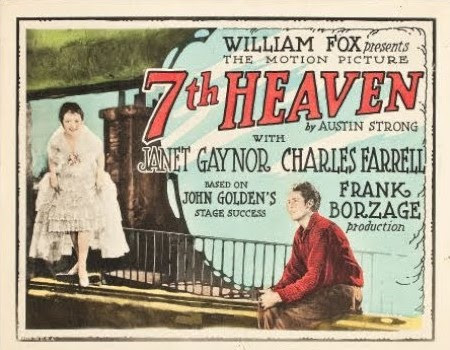
7th Heaven


As you can see, we have giants among them, Oscar nominees and winners among them, since the first Academy Awards covered entries from August 1927 to July 1928.  We also note that with the Jazz Singer, we’ve got a toehold in the coming sound era, so 1927 certainly marks a great sea change in our culture.


 Another Old Movie Blog: Public Domain Day - 2022

Another Old Movie Blog: Public Domain Day - 2021

Another Old Movie Blog: Public Domain Day - 2020

************

Jacqueline T. Lynch is the author of Ann Blyth: Actress. Singer. Star. and Movies in Our Time - Hollywood Mirrors and Mimics the Twentieth Century and Hollywood Fights Fascism.  Her latest book is Christmas in Classic Films. TO JOIN HER READERS' GROUP - follow this link for a free book as a thank-you for joining.

Sunday, January 8, 2023

Mary Field - What a Character! blogathon


Mary Field was a very good actress, with the ability to command a scene and entirely lose herself in a character, yet most of the roles she played were brief, uncredited, and leaves one wondering what her career might have been like had the Hollywood caste system not been so rigid.


This post is part of the11th Annual What a Character! blogathon, hosted by Paula of Paula’s Cinema Club and @Paula_Guthat, Kellee of Outspoken & Freckled and @Irishjayhawk66, and Aurora of Once Upon a Screen and @CitizenScreen.  Have a look here at the other great blogs on the roster.

Mary Field appeared in over 100 films, along with several television appearances in a career spanning 46 years before her retirement in 1963 at 54.  Many of her roles were spinster types: maids, shop clerks, librarians; many were comic, some were poignant, but all were unique individuals.  


The comic man-chasing spinster in The Great Gildersleeve (1942) who made Gildy’s life a wreck is unrecognizable from the quiet, concerned adoptive mother who brings her little Dutch-speaking orphan to see Santa Claus in a moving scene in Miracle on 34th Street (1947).  You would not know they were the same actress.  Unlike many character actors, I think she is less recognizable because of her ability to play nuanced roles.


She is one of the boarders in Shadows on the Stairs (1941), a larger-than-life personality who steals scenes.  She is perhaps barely noticed in many other films, but she appeared in greats such as Ball of Fire (1941), Now, Voyager (1942), and Mrs. Miniver (1942).


Mary Field was what was called a day worker, someone reliable to plug into a small role at short notice, but seemingly stuck in that particular orbit of studio system hirelings.  Many struggling actors would be, and were, grateful for a toehold in the industry, but most would find that it also meant a dead end of not reaching supporting player status on a studio’s roster, let alone stardom.

Yet Mary Field, I think, had the ability, much like Lionel Barrymore, to be a character actor-star. 


My favorite role, so far, is her turn as the shop clerk in a women’s clothing store in Mr. Peabody and the Mermaid (1948) which we covered here.  I’ll quote from that essay:

The funniest scene in the movie is when Mr. Powell heads to a women’s clothing store in town to purchase some sort of top for his mermaid.  His befuddled awkwardness sets the stage for a terrific scene, and he plays the straight man for Mary Field, whom you’ve probably seen uncredited in a zillion movie walk-on parts.  Here she gets a good role as the primly officious clerk, who delights in her soliloquy sales pitches to the uncomfortable Mr. Powell.  She sounds like a Banana Republic or J Peterman catalog description gone amuck. 

She displays a sweater, “Light as a whisper, gay as a sunbeam, wearing it will be an emotional adventure spangled with the moon glow of twilight.”  

Miss Field continues her merry prattle, “A gay spectrum of springtime hues—fuchsia, purple almond, banana, marshmallow, peach dream and licorice!”

 Mr. Powell replies, “Would you be good enough to tell me something?”

Miss Field: “Enchanted.”  (I love her over-the-top playfulness with proper speech.)

Mr. Powell: “Whatever became of blue?”

She finds he is going to be trouble, especially when he wants to know if someone can swim in her sweaters.

“May I ask is the young lady’s prejudice against swimming in a swimming suit quite deep-seated?”  (One of my all-time favorite lines.  I just love her.  In a way, her intonation and enunciation reminds me of a reformed Eliza Doolittle when she is carefully trying to explain to Freddy Eynsford-Hill that, “Them she lived with would have killed her for a hat-pin, let alone a hat.”  Her careful stroking of the difficult language as if to tame it.)

Mr. Powell just realizes he could buy his mermaid a two-piece swimsuit instead of a sweater and she could just wear the top part.  But Miss Field, Saleswoman of the Year, insists they do not sell half of a bathing suit.  She holds one up, “The diaper model.  Provocative, n'est–ce pas?”  (She’s straight-faced, slam-dunk hysterical.)


Here in Top o’ the Morning (1949), she plays a chambermaid who gets to sing a line or two with Bing Crosby.  She played against the greats, and held her own.

Miss Field’s personal life was something of an enigma.  Reportedly, she was a foundling left outside the doors of a church as a baby.  She was adopted, and went to school in Westchester, New York.  In her late 20s she went to Hollywood.  Perhaps there was some stage work in the interim, but I don’t know.  She married, had children, and evidently, was satisfied in middle age to leave her acting career.

Hat's off to the day workers, and to Mary Field, who deserved more screen time and a higher notch in the caste system (and the cast).

Check out the other great characters actors being paid tribute in this 11th Annual What a Character! blogathon here.

************

Jacqueline T. Lynch is the author of Ann Blyth: Actress. Singer. Star. and Movies in Our Time - Hollywood Mirrors and Mimics the Twentieth Century and Hollywood Fights Fascism.  Her latest book is Christmas in Classic Films. TO JOIN HER READERS' GROUP - follow this link for a free book as a thank-you for joining.

Thursday, January 5, 2023

What a Character Blogathon!


Happy New Year!  I can't think of a better way to start the new year right, as Bing would sing, than to take part in the 11th Annual What a Character! blogathon, hosted by Paula's Cinema Club, Once Upon a Screen, and Outspoken & Freckled blogs.

My choice this year is Mary Field.  Join us this coming Sunday, January 8th, for a roster of wonderful blogs celebrating our favorite wonderful classic film character actors.  Have a look at them here.

See you then!


Thursday, December 29, 2022

Happy New Year !


As we prepare to cap this holiday season and ring the old year out, may I thank you for the pleasure of your company, and wish you a very Happy New Year!

************

Jacqueline T. Lynch is the author of Ann Blyth: Actress. Singer. Star. and Movies in Our Time - Hollywood Mirrors and Mimics the Twentieth Century and Hollywood Fights Fascism.  Her latest book is Christmas in Classic Films. TO JOIN HER READERS' GROUP - follow this link for a free book as a thank-you for joining.


Thursday, December 22, 2022

Bachelor Mother (1939)


Bachelor Mother
(1939) just only happens to be a Christmas movie on the side, and with screwball Depression-era panache, it swaps humor, farcical truths, and stretched credulity for sentiment.  It parodies sentiment, and with wry Little Orphan Annie-style toughness, dares ya to disbelieve.


This post is part of the countdown to Christmas coinciding with the launch of my newest book, 
Christmas in Classic Films.

Ginger Rogers is in one of our apparently most-hallowed Christmas scenes: the department store.  She works the counter in the toy department (more competently than Rosalind Russell in Auntie Mame), but she is a member of that misfit army, the temp worker.  She has been hired only for three weeks during the Christmas season.  The movie opens in the last few minutes before the workday starts, as the employees line up to listen to their employer give them a perfunctory if well-meaning Christmas sale pep talk and wish them happy holidays.  A few minutes later, as their sales books are distributed (no cash register-printed receipts here), many of them, Ginger included, find a pink slip thanking them and tell them to get lost at the end of the business day.


On her lunch hour, Ginger visits an employment agency, and passing by a foundling home, watches an elderly woman leave a baby on the steps.  The woman dashes off, (claiming, we may assume truthfully, that it is not her baby) and when the door opens, Ginger is presumed to be the mother.  On this thread the story is told.  The foundling home contacts her employer and between the two of them, bully and shame her into keeping “her” baby.  No matter how the bewildered and irritated Ginger protests, they insist and when she gets her job back permanently with a raise to help her support her child, she decides to just go with the flow.

It’s hard to convince anyone it’s not her baby.  He has taken her to immediately and cries when he is not in her arms, stopping once she holds him.  She grins, dumbfounded as if watching a magician’s trick, “For heaven’s sake!”

The landlady, played by Ferike Boros, likewise assumes she has been hiding the baby from her, and volunteers to help babysit. Later her lawyer son will try to help Ginger try to keep the baby when she’s afraid the boss wants control of his “grandson.”

Frank Albertson, a familiar face from many films, if the parts were usually quite small, gets a larger role here as the annoying stock clerk.  He takes Ginger to a dance contest with disastrous results, and when he also assumes she’s the baby’s mother, assumes that the son of the store owner is the father.  He will use this assumption to get a promotion, and then get revenge when he is demoted again.


The store is one of those old family-owned juggernauts, sadly lost today, run by patriarch Charles Coburn, whose indignation over his playboy son is priceless.  The only sentiment in the movie comes from him, and it is played for laughs, when he thinks his son, David Niven, is the father of the baby and therefore the baby is his grandson.  He holds it lovingly, believes they have named the baby for himself, and he tears up.  It is sweet and laughable.


David Niven, at first an irritant to Ginger, finds himself involved more than he would like, but by New Year’s Eve, without a date for a fancy shindig, he calls her up.  Like a fairy godfather, he provides the suitable gown and accessories from the store.

Love blooms in the end and fixes up the mess, but never in a sentimental way.  In their final embrace before the fade out, Ginger’s “hah!” when Niven affirms he really believes the baby is hers beautifully jabs him as if to say, “you sucker.”


Interestingly, as if to tie up the background of Christmas commercialism in the movie (the toy department is labeled as Santa Claus’s headquarters), there is no musical theme in the movie that reprises the lovers’ bond from scene to scene.  Instead, a toy wind-up duck is seen throughout the movie as the symbol of Ginger’s work (and a funny line about losing sleep and waking because it’s time to wind ducks); a gift to the baby; a foil to Niven, who discovers it breaks and he must try to run the gauntlet in his own store to get a refund; to noisily outing Ginger when she is hiding; to finally quacking away at the end in triumph.  It looks like Donald Duck in a blue sailor suit, but there is no product identification, and perhaps we are looking at a cheap knockoff, a trademark and patent violation.  That, too, is the experience of Christmas.


May I wish you all the very happiest of holidays!

************

Jacqueline T. Lynch is the author of Ann Blyth: Actress. Singer. Star. and Movies in Our Time - Hollywood Mirrors and Mimics the Twentieth Century and Hollywood Fights Fascism.  Her latest book is Christmas in Classic Films. TO JOIN HER READERS' GROUP - follow this link for a free book as a thank-you for joining.


Thursday, December 15, 2022

Love Finds Andy Hardy (1938)


Love Finds Andy Hardy
(1938) represents Christmas only as a deadline and an event on the social calendar.  As with many classic films, the holiday is a backdrop, not the focus of the plot.  As with all the movies in the Andy Hardy series, sixteen of them, Andy’s focus is on Andy.  We may not learn any lessons at the end of the tale, but Andy always claims he does.

Then we have another movie where he has forgotten them.


This post is part of the countdown to Christmas coinciding with the launch of my newest book, 
Christmas in Classic Films.

The story begins in early December, and the Hardy family are occupied with their usual challenges:  father Judge Hardy played by Lewis Stone censures a young juvenile delinquent in his courtroom for driving under the legal age and getting in a crash.  Sis Marian, played by Cecilia Parker has broken up with her boyfriend and melodramatically swears off men.

Andy, played by the energetic powerhouse Mickey Rooney, wants to buy his first car, a fixer-upper which will cost him the astronomical price of $20.  He pays down $12, and owes $8 and must find some way to pay it so he can have the car by Christmas Eve.  (His pop does not want him to have a car, so he has to do this on the sly.) There is to be a big formal dance at the country club on Christmas Eve and he wants to take his girlfriend, Polly played by Ann Rutherford. 

Normally, Ann Rutherford is a pretty high-maintenance girlfriend with expensive tastes and a somewhat controlling attitude, but young Mr. Rooney’s dead gone on her so he does his best to keep up to keep getting those kisses.  However, in what will be a rash of people going away for the Christmas holiday, Miss Rutherford is leaving with her family to go to her grandma’s and will miss the big dance.  Andy swears to her he will take nobody else and will just go stag.

However, his pal Beezy, played by George P. Breakston, is also going away for the Christmas holiday with his family, and he asks Rooney to date his girlfriend to keep the other wolves in the class away from her.  She is a hottie and he’s afraid of losing her.  He promises to pay Rooney the $8 he needs to buy the car.  The girlfriend is played by Lana Turner in her fourth film, in what was actually her first featured role.


Another new girl is entering Andy Hardy’s life: Betsy Booth, played by Judy Garland in her first of three Andy Hardy outings, and her second of some ten films she played opposite Rooney.  Young Miss Garland plays a 13-year-old visiting her grandma for a few weeks running up to Christmas.  Her grandma lives next door to the Hardys, and she becomes instantly smitten with Andy.


Not to be outdone, the Hardy family has its own grandmother issues when Mrs. Hardy’s mother, who lives on a farm in Canada, has suffered a stroke.  They receive the telegram with the bad news and the house is all a-flutter with what to do.  Mrs. Hardy, played by Fay Holden, and her sister who lives with them, Aunt Milly, played by Betsy Ross Clarke, will take the next train and leave the family rudderless.  The Judge hires a cook, played by goofy Marie Blake, and sister Marian takes charge of the house like General Patton, driving Andy nuts.

The movie could have been called “Christmas with Grandma” or “Grandma Messes Up Everybody’s Christmas Plans.”

In the days leading up the Christmas, Judge and sister Marian decorate an enormous tree in the living room.  There is the familiar scene of Pop feeling victorious that the lights actually work, and the stepladder is out to reach the high branches.  It’s a homey scene, but the son of the house is too busy moping on the running board of the family car in the driveway, worrying about his troubles.  He does not appear to have any joy or anxiety about Christmas wishes or shopping for others.  It’s all about the upcoming dance.

Amid Rooney’s hijinks and stress juggling dates (Beezy found a new girlfriend and no longer wants Lana Turner, so the deal’s off), problems at home, and yearning for his car, with the deadline of Christmas Eve looming before him—he marks off the days on the calendar—is a charming relationship with Judy Garland.  She has a crush on him and tries to interest him, but he thinks of her as a child.  Judy sings the plaintive-comic “In-Between” regretting she has no glamor—and briefly glances down at her chest.  “No glamor at all.”

Judy is the one who helps Mickey the most, serving as a shoulder to cry on, a sounding board for his schemes, and with much less heavy-handedness than either Ann Rutherford or Lana Turner, manipulates our young hero into taking her to the dance, eventually ditching Turner, and she herself patches up his romance with Miss Rutherford.  Judy and Mickey are pals through this film, and he couldn’t find a better one.

We have some interesting pop culture references in this movie, including the sending and receiving messages from Mother in Canada via ham radio, Andy’s ruminating on how there were no cars or planes when his father was a boy, and the Judge’s eerily prescient remark, made when admiring the 12-year-old boy ham radio operator and former delinquent in his court, played by future television producer Gene Reynolds, “Heaven only knows what this generation has coming.”

It would have a world war the following year.

Perhaps for these and much more, including the delightful performance of Judy Garland—who commands every scene she’s in—the movie was named for preservation in the U.S. National Film Registry by the Library of Congress in 2000 for being “culturally, historically, or aesthetically significant.”

To be sure, the Andy Hardy series is a window on an era. 


Christmas Eve arrives, and Mickey takes Judy to the country club dance.  He is in a tux with a top hat.  He is astounded by how grown-up she looks with her new long gown.  He takes possession of his car (she has bought a flashy hood ornament for him for Christmas) and incongruously, as in many classic films, they drive in an open jalopy through the cold.  It might have looked good on a Hollywood soundstage, but nobody seems to have considered the very real consequence of frostbite or hypothermia.  Just looking at people driving in an open car in the winter makes me cold.

Ann Rutherford is back from grandma’s early, so she attends the dance in a huff with another escort, once she finds out that Mickey has been dating Lana Turner.  Her date is a young orchestra leader from New York, played by Don Castle.  He is familiar with Judy Garland, having met her and heard her sing at a house party back home.  He asks her to sing, and though Mickey is nervous his 13-year-old date will make a fool of herself in front of his friends, he needn’t be.  She’s Judy Garland, for heaven’s sake.  Judy sings a couple songs, leads the grand march with Mickey, and the evening is a great success.

He brings her back to his house afterwards to give her his Christmas present to her, which we never see, and the Judge and Marian sneak out to join them in the living room.  It is just past midnight, so it is Christmas Day.  They wish each other a forlorn “Merry Christmas,” but then the doorbell rings and it’s Mother, who bravely flew in an airplane to return home to them.  (Maybe Aunt Milly decided to play it safe and take the train.  She ought to be along in a day or two.) Grandma’s out of the woods and it’s a happy ending.

The next morning, with a wreath on the grille of new car, which the Judge has given in and gave him the balance of what he owed, Mickey’s troubles vanish.  Polly arrives with the bandleader, who was her cousin after all, and makes up with Rooney because Garland had visited her earlier and explained things.  We can’t help but wonder if Andy Hardy wouldn’t be better off with a selfless girl like Betsy Booth, but he’s still attracted to the flashier types.

Garland’s humble response to his gratitude: “On account of you I was grown-up for one night, just like Cinderella.  Now I know how wonderful life’s going to be when I’m eighteen.”

It’s a sweet and innocent remark, and if Christmas is a time for wishes, for family, for nostalgia, for angst, and for sadness, there’s also plenty of room for old-fashioned innocence.  That might be what we mean when we say “Christmas is for children.”  But when we carry appreciation and respect for innocence into adulthood, even if we do not quite rate the label ourselves, it’s a form of benevolence that makes for a kinder world.

**************

Come back next week in the home stretch to Christmas for a department store hijinks with Ginger Rogers, David Niven, and a baby in Bachelor Mother (1939)

************

Jacqueline T. Lynch is the author of Ann Blyth: Actress. Singer. Star. and Movies in Our Time - Hollywood Mirrors and Mimics the Twentieth Century and Hollywood Fights Fascism.  Her latest book is Christmas in Classic Films. TO JOIN HER READERS' GROUP - follow this link for a free book as a thank-you for joining.


Thursday, December 8, 2022

Christmas Holiday (1944)

Christmas Holiday (1944) is an absorbing noir that despite the bleakness of the tale, captivates the audience with quiet storytelling sprinkled with visual epiphanies, clever cinematography, and stellar performances.

The title credit announces this is “W. Somerset Maugham’s” Christmas Holiday, and though it is not entirely faithful to the Maugham story, one suspects the studio judiciously gave top credit to the noted author in order to ease the way a little for its two stars Deanna Durbin and Gene Kelly to be presented in a movie so unlike what either had ever done or would do again.  It’s as if the execs felt the audience needed to be prepared for what they were about to see.  It’s okay everybody, it’s English literature.


This post is part of the countdown to Christmas coinciding with the launch of my newest book, 
Christmas in Classic Films.

Some of the public and evidently, critics, were put off by this unexpected handling of the normally bright, chipper, and virginal Miss Durbin into a vehicle that was decidedly sordid.  She is great in the movie, in what is probably her best ever performance.  She deserves credit not only for her work in this odd little film, but for the courage to want to test her abilities and expand her career options into something a little meatier.

In the original Maugham story, an English university student skips his family’s Christmas gathering to go to Paris for a little adventure, meets an old friend who has now fallen under the spell of fascism, who takes him to a brothel and introduces him to a Russian emigree down on her luck and now a prostitute.  Her husband is in prison for murder, and she still loves him, degrades herself in a masochistic attempt to share his misery. 

Maugham tells it better than I do.

Possibly the main confounding aspect to the movie is not so much that Deanna Durbin is playing a slightly cleaned up version of the prostitute, but that the title Christmas Holiday would seem to evoke for us scenes of sleighrides and snowball-throwing jocularity. To further complicate matters, the cheery title credits are accompanied by a sprightly instrumental leaving us to believe this might be a musical.

The studio could have changed the movie’s title from the original source material—something that they did, let’s face it, all the time.  But sticking their most important star in a movie called something like “Rainy Night in New Orleans” and then later on in tiny script at the bottom, “adapted from a story by W. Somerset Maugham” would not give the movie the same prestige of pasting the name of a noted English author, whose rights to his story the studio had paid good money for and wanted us to know it.

So Christmas Holiday is not exactly meant to be a deceiving title.  But it deceives, and there’s a lot of deception going on in this movie.


Dean Harens plays a newly minted lieutenant, just graduated from officers’ training school.  He’s on a furlough before deployment, and he intends to fly to San Francisco to be married.  The commanding officer awarding them their commissions has a brief and frank, and frankly, chilling, admonition to them:  “Some of you will serve in one way, some in another. Some by living. Some by dying.”

One has to wonder about the table-top Christmas tree in the barracks.  Not regulation, I’m thinking, but it’s as if the director, noir master Robert Siodmak is deliberately saying, “You want Christmas?  I got your stinking Christmas!”

Just as the young lieutenant is packing his duds, he gets a telegram from his fiancée announcing that she has married someone else. 

It’s Christmas Eve.  There has never been a cheatin’ song to match this.

Though his pals invite him to join them on furlough as they go on the razzle in New York, he grimly decides to continue his plan to fly to San Francisco and evidently confront the couple.  “They’re not going to get away with this.” 

Does he mean them harm?  It is a passionate decision by a man who’s just been gut punched, but we will come to know this fellow by following over his shoulder on this 24-hour adventure that he is actually a cool, level-headed type, ready to step in when he’s needed, and nonjudgmental: good qualities in a man and in an officer.

I like Dean Harens in the role.  He made only a few movies, but went on to do decades of television.  His reactions and his support of Deanna Durbin in this film are solid and he is as interesting to watch as she is.  His acting style seems quite mature for a fellow with so little experience before the camera.  He and Miss Durbin certainly play well off each other, there is a rapport that indicates their characters bring comfort to each other, but that there is still an enigmatic wall between them that is intriguing.

The whole movie is an enigma, and it’s one of those that you have to see a couple times at least to catch everything.

He catches his flight to California, but there is bad weather and the plane must land near New Orleans.  Screenwriter Herman J. Mankiewicz plucked the story from Paris and plunked it down in New Orleans as a suitable substitute.  There’s French placenames and a certain gothic decay that lends verisimilitude.  Ornate wrought iron and Spanish moss.

In the bar of the hotel where the airline puts him up, he is annoyed by Richard Whorf, a splendid scamp of a journalist lush.  In only a few moments, when he quickly gives up questioning passengers over their plane being forced down because he is desperate to have anything to write about, we discover he’s really more of a boozehound than a reporter.  He might have been a good reporter years ago, but he really doesn’t care anymore, if he ever did.

Though his sales pitch is vague, he entices Harens to come with him to a “joint” where the owner might be able to fix him up with another way home.  The joint is a cheap nightclub as a meager front to what is actually a cheap brothel.  Even with the Production Code, we can clearly see this is a brothel.  Gladys George is the madam, reliable in her fallen woman with a heart of gold resume.  Though she apparently has connections, Miss Gladys is not able to help Harens get onto another flight, if that was even realistic. 

Because Harens plays his role like a young man who is bitter and unhappy, but not at all naïve or foolish, we are not really sure if he is unaware what kind of place this is, or that Mr. Whorf’s side gig is bringing men to the establishment as prospective customers.  Harens may not be aware because he is too distracted by his own problems, or he may just not care.  He’s not looking for a prostitute; he might not even want anything to do with women right now.

Still, he’s a gentleman.  Watch how he stands whenever Miss Gladys comes and goes, and when Deanna Durbin is summoned to his table.  Both the ladies notice this about him. 


Deanna also has troubles of her own, and the movie, unlike a lot of noirs, will take a leisurely pace unraveling them.  We see her first as a singer in this brothel, performing a breathy, half-hearted version of “Spring Will Be a Little Late This Year.”  It is not same trilling soprano that captivated “100 Men”, etc., in the string of hits that filled Universal’s coffers.  Her mood, like her lovely voice, is restrained, reined in, and she is almost somnambulant. 

An older chap, a businessman perhaps, silently hands his card to a waiter, who sneaks it to Deanna.  She reads it with no expression and continues her song.  Afterwards, she sits at table with a couple of other female staff and hands the card to one of them, as if to say she doesn’t want the customer and she’s giving up the chance to earn to her friend.  The other lady takes the card and introduces herself to the businessman, who briefly looks with surprise at Deanna, since she is the one he wanted, but he takes the substitute.  We see young women climbing the stairs over Deanna’s shoulder as she’s singing.  We know what kind of place this is.

Gladys George hands Harens a flyer announcing Midnight Mass at a local church, and says Richard Whorf suggested he might want to take it in.  This is a strange turn of events, but in hindsight, the kind you get when you watch the movie a couple times, it seems as if Miss Gladys has read this chap to be a decent guy and she is setting up a chance for Deanna to get away for the evening, because Miss Durbin has suddenly come alive, eager to go to church.  Gladys also refuses to take Harens’ money for the drink and the cab ride over, but slyly says it would be okay if he wanted to tip Deanna, however.

Ah-ha, so maybe she’s not just giving Deanna the night off.  Maybe she’s just finishing the setup that the drunken Whorf started.

The church service is an actual filmed Latin Mass in a Catholic church, and the director lingers over the enormous Gothic cathedral with its full attendance, choir, several priests and altar servers.  The organ thunders, and perhaps the director is saying again, “Yeah, I got your Christmas right here.”

Dean Harens, who didn’t really want to come to church, is nevertheless patiently watching the proceedings, perhaps lulled to a peaceful forgetting of his troubles for the moment, but Deanna Durbin, who is absorbed in the Mass, will break the serenity first when her eyes fill with tears as she watches the people gather for Communion, and then as the boy choir launches into “Adeste Fideles,” she begins to cry, struggling to stop.

Harens notices, and kindly asks her if she would like to leave, but she shakes her head.  In another moment, she is kneeling not on the kneeler but on the floor, in an effort to hide herself, and sobs uncontrollably.  Others glance at her and at Harens with embarrassment, and he is helpless to either comfort or remove her, so he stands at the end of the pew and blocks her from view with his long trench coat so that she may weep in private.

After the Mass has ended (“Deo gratias”), he waits for her to pull herself together.  Most of the church has emptied out, but for a few left kneeling, perhaps saying the Rosary, and one fellow who appears to be doing the Stations of the Cross.  She apologizes to him, gives him back his handkerchief, and they go to an all-night diner, where she confesses she has never cried like that before.  When it is too late for her to get a bus back to her room, she intends to sit up all night there, but he takes her back to his hotel suite.

It is not the meeting up that Glady George would have preferred for her employee perhaps, but neither Harens nor Miss Durbin have designs on each other.  Having pulled herself together, she is no damsel in distress.  There is a quiet, sensible strength about her.  When he offers to take the couch so she can have his room, she refuses.  I love her reply, “In my own little way, I’m just as much a gentleman as you are.” 

He doesn’t press the point, but sleeps in his room (though with twin beds, one would think if it were not for the Production Code, these two very tired people would be perfectly happy each taking one and sleeping in the same room).

The next morning, she has ordered breakfast and they chat over his “dear John” telegram, which he has left lying around and she has read.  Then it’s her turn, and we launch into the noir flashback. She is originally from Vermont, has been on her own since her teens.  I love that she wears reading glasses to peruse the morning paper, without a joke or explanation.

Her husband is in prison for murder.  She tells him, and prepares us, that the prison psychologist said “his relations with his mother were pathological.” 

Lots of enigmatic inferences, code talk, and unfinished sentences.

She met him at a concert where they are both absorbed in the nosebleed section by the thunderous “Liebestod” from Wagner’s Tristan und Isolde.  It is a pretty tepid meet-cute, but there is something puppy-like in Gene Kelly’s demeanor, desperate to be liked, and after a few dates, she was charmed by his boyish awkwardness and flighty, happy manner.  She had been alone for years, without family, that when he brought her home to Mother, she had found the place of belonging she had missed.

Kelly’s awkward, strangely needy young man may touch our sympathy as well, but like a good mystery, there is sleight of hand happening here and we won’t really know the truth about him until the end.  Kelly had played rogues before and would make a career of playing them, but this character has many layers to him and Kelly plays him with eerie panache.  He seems like only an odd duck on first appearance, a little pathetic and somewhat tiresome; but by the end of the film, he is a soulless monster, and Kelly is masterful in the progression.  It is not until the end of the movie that we really see, as does Durbin, that the character always was a sociopath.  He never changed; we just weren’t really seeing him.  He was playing us for fools, and we were.

Gale Sondergaard, as Mother, is…well, Gale Sondergaard.  She created the template for sinister gloss.  She welcomes Deanna Durbin into the family with vague warnings about her son but requires Durbin’s devoted partnership.  Between the two of them, they will make a man of her boy.


The trio is cozy at first, with Mother knitting, fondly watching as her boy plays the piano and Durbin, clinging to him, bending over him like a protective cape, sings “I’ll Be Loving You Always.” It is their song, a leitmotif that, like so much else in this movie, will turn sour.

At one point in their courtship, Kelly takes Deanna to a gambler’s den he frequents, wanting her to see it, maybe just perversely wanting to see this beautiful woman in it, to say farewell to his old life of dissolute behavior.  We are startled by seeing Richard Whorf there; he has been part of this tangled web farther then we knew. 

Gene has a hard time keeping a job, and admits his own inability to live up to the greatness of his ancestors, who practically ran Louisiana once upon a time.  He falters, and apologizes again.

Not too far into their marriage, he returns to his old ways, if he ever really left them.  In one scene he returns late at night, she has waited for him, and he, boyishly, teasingly, apologizes, almost clownishly begging for forgiveness to make her smile.  She does, as she murmurs, “Devil.”  Her delivery in the half-shadows is delectable.


But he gets deeper into trouble, and murders his bookie.  Mom tries to cover it up, and when Deanna finally finds out about it and has cops searching their rooms, she tries to cover it up, too. But Gene is caught, awaiting trial, and Gale Sondergaard lambastes her daughter-in-law for not loving her son enough, for not pulling her weight and helping her to “manage” him.  If only she were a better wife, had done her part, then they could have saved Gene from himself.

Gene goes to prison, Mother leaves New Orleans to find work as a housekeeper to a wealthy family in New York, and Deanna, maybe with the assistance of Richard Whorf, finds herself at Madam Gladys’s bordello, still singing “I’ll Be Loving You Always,” but now like a lament.

Dean Harens decides not to fly to San Francisco to confront his former fiancée after all, he will just let it go.  He’s learned a lot in the last 24 hours.  He decides he will just go back to camp, but when he sees the newspaper headline this Christmas morning that Gene Kelly has broken out of prison…

He rushes to Gladys George’s establishment to warn Deanna and to support her in any way he can.  Nice guy, for not being in love with her, and though Deanna and Dean clearly have a strong connection with each other, we are never given any indication they are in love, and realism of that makes the impact of the movie stronger.

Gene Kelly tracks down Richard Whorf and holds a gun on him, forcing him to take him to Deanna.  When Whorf gestures to her that her husband is in the building, she rushes forward, eager to see Kelly again.

But this is a sneering, angry Gene Kelly, no longer asking insincerely for forgiveness.  He’s quite sincere when he accuses her of being a tramp, of being unfaithful to him here.  If we assumed that Deanna had taken the filthy job in this disreputable place as the only option she had of supporting herself, we are shocked to hear her excuse for choosing to work here: she wanted to subject herself to degradation as a punishment and as a way to share his misery in prison.

He doesn’t believe her, pulls his gun on her, and when he is gunned down by the cop and she tearfully cradles him in her arms, we see she is still gripped by that hopeless, helpless love for someone who can’t seem to cope without her.

In what is probably the most magnanimous gesture, though he obviously means it ironically, Kelly tells her, “You can let go now.”

But she doesn’t let go until Dean Harens, in his quiet but firm voice repeats, “You heard what he said.  You can let go now.”

She seems to wake up and lets him go.  She looks up and the parting clouds reveal a starry sky as “Liebestod” swells up and one star seems brighter than the others.  After all, it’s Christmas night.

Director Siodmak is saying again, “Yeah, I got your Christmas right here.”

**********

Come back next week for a (much) lighter story in Love Finds Andy Hardy (1938), in which a visiting Judy Garland saves Christmas.

************

Jacqueline T. Lynch is the author of Ann Blyth: Actress. Singer. Star. and Movies in Our Time - Hollywood Mirrors and Mimics the Twentieth Century and Hollywood Fights Fascism.  Her latest book is Christmas in Classic Films. TO JOIN HER READERS' GROUP - follow this link for a free book as a thank-you for joining.

Related Products