IMPRISON TRAITOR, PEDOPHILE, AND CONVICTED FELON TRUMP.

Friday, May 6, 2022

The Case of Charlie Chan and The Caftan Woman


When Patricia Nolan-Hall, a.k.a. Paddy, a.k.a. The Caftan Woman left us in March, the classic film blogger world lost one of its greatest champions and one of its dearest friends.  This is my entry for The Caftan Woman Blogathon.  A delightful aspect to Paddy’s love of classic films is that she embraced a wide range of genres and wrote about them with passion and humor.  She liked the great films, but also loved series movies, especially the mystery genre, and especially Charlie Chan.

Have a look at the rest of the Blogathon participants atthis page.  Visit them all and leave a comment.  You know Paddy would.


The character of the great Chinese-American detective, Charlie Chan, was created by novelist Earl Derr Biggers in the early 1920s.  Mr. Biggers was inspired by reading about two real-life Chinese-American police officers in Honolulu.  He created Chan as a protest against the “Yellow Peril” bigotry in California of the day.  He wrote six novels in the Chan series, and by the late 1920s, Hollywood tentatively expressed interested by producing a few films where Charlie Chan was only a supporting character.  But his popularity took off when Warner Oland was cast in Charlie Chan Carries On (1931), and played the detective for the remainder of his life.  Upon his death, the role was taken over by Sidney Toler for another decade.

The Charlie Chan series was quite popular, but in later decades its place in film history seems tarnished – or at least challenged – by modern sensibilities which naturally recoil from ethnic or racial stereotypes, particularly when played by white actors. The critiques are fair, but only in part.  Charlie Chan spoke in broken English and spouted Confucius-like proverbs, but that was the extent of his being a Chinese stereotype.  Inspector Chan was a world-famous detective, intelligent, kindly, urbane, courageous, honorable, modest, and his kids called him “Pop.”  His fast-talking American kids, who he had to cut down sometimes to keep them from messing up his latest case.  He was an exasperated father who still managed to save the day despite bad guys, uncooperative witnesses, and sons who didn’t always listen to him. 

Keye Luke, who played his eldest son and sidekick in many movies felt strongly that the Charlie Chan character was not demeaning to Chinese.  He is reported to have replied, “Demeaning to the race? My God! You've got a Chinese hero! He noted, quite accurately, that they “were making the best damn murder mysteries in Hollywood.”


There were something like 47 Chan movies made in the U.S. from 1926 through 1949, which made it one of the longest, if not the longest, movie series.  This is not counting the Spanish-language Chan movies, or the movies (including parodies) which featured Chan in later decades.  The honorable Inspector Chan found his way into radio shows, television, comic books, and even a 1970s cartoon series. 

Chan was something of a cultural phenomenon.  Paddy covered at length or at least mentioned something like fifteen Charlie Chan movies on her blog.  She did not approach the series with any apologetic debate about stereotypes.  She expressed wholeheartedly her delight at his personality, cleverness, the plots of the films, and her fangirl crush on Number One Son, Keye Luke.  I’m with her on that one.  In fact, I’m remiss at not having covered Chan movies before on this blog because I’m also a fan. 

Paddy covered in depth the origins of Chan in all formats, and traced the careers of the character actors who appeared in the films with her typical encyclopedic knowledge, and most of these posts were for blogathons.  Paddy loved blogathons.  There is a banner in her sidebar for every blogathon she joined.

I wanted to pay tribute to Paddy by co-hosting this blogathon and with my post, but unexpectedly, I also discovered a sense of comfort in going through her Charlie Chan posts for this entry.  Re-reading the words reflecting the vibrancy and wit of my dearly missed friend wasn’t as painful as I thought it would be and I even found myself laughing at some of her wry and always enjoyable observations. 

Here then, is The Caftan Woman facing off with Charlie Chan.  Please follow the links to read her full posts on The Caftan Woman blog.


REEL INFATUATION BLOGATHON: Keye Luke as Lee Chan

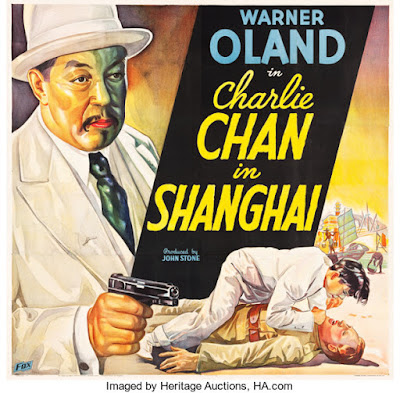
“My tween years were devoted to sneaking up late at night and watching whatever old movie I could find. One momentous night I was introduced to Inspector Charlie Chan, 60 summers young and 60 winters old, and his number one son, Lee in Charlie Chan in Shanghai.”

“The first scene in the movie had introduced me to Inspector Chan who seemed a movie detective worth following. Lee immediately impressed me with his good looks and enthusiasm. It's even more fun to solve a fictional crime if you have a crush on one of the detectives!”

“Immediately, we can sense the bond of affection between Charlie and his firstborn. Warner Oland and Keye Luke became close, with Oland a mentor to the young man, and Luke a fond protector to his often troubled older friend.”

“My admiration and affection for the actor runs deep, but my crush, the crush of that tween girl up late when she was supposed to be sleeping on a school night, is only for Lee Chan, #1 son.”


VISITING PARIS WITH INSPECTOR CHAN: Charlie Chan in Paris (1935) and City in Darkness (1939) 

“Charlie Chan in Reno… a terrific movie that could easily be paired with The Women for a great movie night.”

Of Harold Huber in Charlie Chan on Treasure Island: “Huber literally throws himself into the unaccustomed comic relief duties as a character that comes off like Inspector Clouseau's grandfather.”


Favourite movies: Charlie Chan at the Olympics (1937)

Charlie Chan at the Olympics is set amidst a background of political turmoil, contentious ideology and threats of violence at a sporting event that sees itself in a bubble apart from those things surrounding it. Perhaps that is the celebration that the Games should be, but can never be. The movie is an entertaining visit to the past with an uncomfortable connection to our present.”


AT THE CIRCUS BLOGATHON: Charlie Chan at the Circus (1936)

“One of the outstanding features of the character of Chan, as opposed to many other fictional crime-solvers, is the fact that he is a family man. A family man in a big way with 12 offspring. During the course of the series, he even becomes a grandfather (Charlie Chan in Honolulu). We don't generally see a lot of granddads going head to head with the criminal class.”

“One of the thrilling aspects of the movie is that it was filmed on the winter location of The Barnes Circus and utilized the sights, sounds, people and animals from day-to-day circus life.”


Horseathon: Charlie Chan at the Race Track (1936)

“Oland found an alter ego that touched his soul.  He approached the role of Inspector Chan through diligent study of Chinese history and philosophy and so fused his personality with that of Chan's that he became the character.  Enduring international fame was Oland's reward for such fidelity of purpose, especially in China, the land of the fictional detective's ancestors.”

“Keye Luke always spoke fondly and admiringly of Warner Oland in interviews, and refused to continue in the series after the death of his friend in 1938.”

“Charlie Chan 101 for Newbies:  If there is a young romantic couple, and there always is a young romantic couple, you can erase them from your suspect list.  They are included only to be young and romantic.”


Harold Huber

“He is a welcome sight in enjoyable crime programmers and most important to this child of the late show, he is a superstar in the Charlie Chan universe.”

Of his work in City of Darkness: “To Harold Huber fell the job of comic relief. I have acquaintances who do not care for his work in this movie. I am not of their mind. Perhaps it is because I like Huber or that I have a soft spot in my heart for those who toil as comic relief…I can't help but think of him as the emotional Pere de Clouseau, and I get a kick out of the work.”


Backstage Blogathon: Charlie Chan at the Opera (1936)

“Boris Karloff rightfully received top billing with Warner Oland in Charlie Chan at the Opera…Karloff's performance is touching and assured.  It also lays the groundwork for Maurice Cass' line, as Mr. Arnold, "I'm stage manager here and this opera's going on tonight even if Frankenstein walks in." 

Corny?  Perhaps, but delivered with unabashed gusto and always gets an appreciative chuckle.”


Beach Party Blogathon: The Black Camel (1931)

“When I read the Nancy Drew mystery The Secret of the Golden Pavilion as a young girl I longed to visit Hawaii.  Later on when I read Earl Derr Bigger's The House Without a Key my fondest wish was to visit Hawaii in the 1920s.  I imagine the closest I'll ever get to that far-fetched whim is in watching the 1931 Charlie Chan feature The Black Camel.”

“If I really could go back in time, I might have tea with Earl Derr Biggers and ask him about one of the plot points that has always bothered me concerning the clue of the ripped out newspaper photos.  If it didn't bother Biggers or his editors, it probably shouldn't bother me, but there it is.”


For Your Consideration: Sen Yung

“With only extra work in his background (Mr. Moto Takes a Chance and The Good Earth), Sen Yung was most happily cast with the new Chan, Sidney Toler. He proved adept at the comic enthusiasm which was Jimmy Chan's trademark and had a nice chemistry with star Toler. It is a pleasure watching him in the role today.”

“The Academy should have been taking note of the 24-year-old actor's work in William Wyler's adaption of W. Somerset Maugham's The Letter in 1940. As Ong Chi Seng, the law clerk with an agenda, Sen Yung steals scenes and gives the audience something to think about. While the British go about pretending the world is theirs, the unctuous young man reminds them that there is another world around them, one they cannot control. There is not a trace of the ebullient would-be detective in this fine characterization. It is a highlight in a film full of wonderful atmosphere and performances.”


Decorating with Boris

In which The Caftan Woman recounts acquiring this poster for her kitchen.

“As I spent a joyful couple of hours going through the wares of a shop it occurred to me that I - one of the world's noted Charlie Chan fans - I did not have a Charlie Chan poster among my collection. I turned to the vendor's assistant and, barely able to contain the excited anticipation from my voice, asked "Do you have Charlie Chan at the Opera"? "Why?" he responded. "What's so hot about Charlie Chan at the Opera?"

Taken aback may accurately describe my reaction to his query, but it was more than that. I was shocked…

"Perhaps," I responded politely, yet coldly, "if I used the full title card you will realize the folly of your question. I am speaking of Warner Oland vs. Boris Karloff in Charlie Chan at the Opera." Unimpressed, the lackey pointed in a vague direction. "Yeah, that's here somewhere."


THE HOLLYWOOD GANGSTERS BLOGTHON: Charlie Chan on Broadway (1937)

The movie world of Charlie Chan finds him often dealing with cunning murderers and spies, but Charlie Chan on Broadway is the only time in his 20th Century Fox period where he dealt with bona fide gangsters.”


And she ends with her 2011 second-place winning Haiku, a sublime piece:


The gathered suspects

Tremble 'neath Inspector's glare

You are murderer


Sailing Away on Charlie Chan's Murder Cruise, 1940

Published on her blog only weeks before she passed. 

“Charles Middleton and Claire Du Brey play the Watsons. Jimmy rightly calls them "bluenosers." They are killjoys and she claims to be psychic. Just the sort you want along on a cruise…

“It's all fun and games until there is another murder or two.”


Paddy Nolan-Hall touched so many bloggers and readers in the past 14 years of writing her blog.  I will continue to visit The Caftan Woman from time to time, the way we continue to rewatch favorite movies to visit our old friends on film.

Have a look at the other bloggers’ entries to this blogathon hereat this page.

Thank you for reading.

The Caftan Woman Blogathon -- NOW SHOWING


And we're off!

Welcome to THE CAFTAN WOMAN BLOGATHON - HONORING PATRICIA NOLAN-HALL!

Paddy, lover and scholar of classic films, friend to you and me, will always be a warm memory in our hearts.  Today, we turn our fandom of this wonderful blogger into a collection of posts in her honor.  Have at it, then.  Check out these posts below, and leave your link with your post in a comment here or at Lady Eve’s Reel Life . 

Be sure to visit each other’s posts and comment.  You know Paddy would.

***********************

Another Old Movie Blog -- The Case of Charlie Chan and The Caftan Woman

Make Mine Film Noir --   Union Station (1950)

A Shroud of Thoughts -- Perry Mason episode "The Case of the Final Fade-Out"

Once Upon a Screen -- Remember Caftan Woman and her Words

Lady Eve's Reel Life -- Champagne for Caesar (1950)

A Person in the Dark -- The Binding Ties Made of Film

Hometowns to Hollywood -- Portrait of Jennie (1948)


Laura's Miscellaneous Musings --  Has Anybody Seen My Gal? (1952)


Let Yourself Go...To Old Hollywood -- Ida Lupino as Television Director

The Stop Button -- Ball of Fire (1941)


Vienna's Classic Hollywood -- Paul Lukas


By Rich Watson -- Saturday Night at the Movies


Thursday, April 28, 2022

One week to go until the Caftan Woman's Blogathon!


One more week to go until we launch the Caftan Woman's Blogathon!  If you haven't signed up, or haven't chosen a topic yet, you still have time!

See you next Friday, May 6th!

Friday, April 22, 2022

Happy Birthday, chum.


 I hope the birthday cake in heaven is pretty spectacular, Paddy.   Blessings to your loved ones today.

Thursday, March 31, 2022

The Caftan Woman Blogathon – Honoring Patricia Nolan-Hall


“The Caftan Woman Blogathon – Honoring Patricia Nolan-Hall” will be hosted here at Another Old Movie Blog and by Patty at Lady Eve’s Reel Life on Friday, May 6th.

On March 7th, the classic film blogger world lost one of its greatest writers and champions of classic film, Patricia Nolan-Hall, also known as The Caftan Woman, the name of her delightful blog.  You can visit her blog here.

Paddy was very supportive of other bloggers, and eagerly contributed to many blogathons, always graciously commenting on the posts of others.  It seems fitting to celebrate her time with us with a special blogathon in her honor.

Here’s the banner above, designed by Patty Schneider, to place on your blog to advertise the blogathon. (The photo of Paddy is courtesy of her sister, Maureen Nolan, used by permission.)

The range of topics on which to write is wide open, since Paddy’s interest and knowledge of pop culture was quite broad.  You might post on a movie or TV show she liked and wrote about, a genre you both loved, or about any topic she discussed on her blog (it wasn’t always about TV or movies), or about a comment she might have left on your own blog. You may post on any music, TV, or films from the silent film era through the 1960s, or spotlight stars or character actors from those decades.  Share your memories, the laughs, and the inspiration of this witty and kindly woman.

You can name your topic by leaving a comment on this post.  A blogathon page with all the entries will be posted here at Another Old Movie Blog and Lady Eve’s Reel Life on Friday, May 6th.  When you publish your post, link back to that page and leave a comment with your link so we can update the roster.

Be sure to visit each other’s posts and comment.  You know Paddy would.

***********************

Another Old Movie Blog -- The Case of Charlie Chan and The Caftan Woman.

Make Mine Film Noir --   Union Station (1950)

A Shroud of Thoughts -- Perry Mason episode "The Case of the Final Fade-Out"

Once Upon a Screen -- Remember Caftan Woman and her Words

Lady Eve's Reel Life -- Champagne for Caesar (1950)

Pale Writer -- Our Dancing Daughters (1928)

A Person in the Dark -- The Binding Ties Made of Film

Hometowns to Hollywood -- TBD


Laura's Miscellaneous Musings --  Has Anybody Seen My Gal? (1952)


Let Yourself Go...To Old Hollywood -- Ida Lupino, TBD

The Stop Button -- Ball of Fire (1941)


Vienna's Classic Hollywood -- Paul Lukas


By Rich Watson -- Saturday Night at the Movies


Moon in Gemini -- Ride the High Country (1962)

Paula’s Cinema Club -- Powell & Pressburger

Realweegiemidget Reviews -- Comments by Caftan Woman

Dubism -- Caftan Woman’s Sports Education -- A Prime Example of Her Support for Bloggers 

Shadows and Satin -- Man of the West (1958)

Silver Screen Modes -- Treasure Island: From Page to Screen to Cable

Taking Up Room -- The Patsy (1928)

Movies Silently: William S. Hart -- TBD

Silver Screenings -- The Secret Garden (1949)

Outspoken & Freckled -- The Glass Bottom Boat (1966)

Silent-ology -- Supporting Actors of the Silent Era

The Old Hollywood Garden -- Paddy's positive impact, TBD

In The Good Old Days of Classic Hollywood -- The Proud Rebel  (1958)

Classic Film Observations & Obsessions -- Harry Carey, Sr. Film -- TBD

Rick’s Real/Reel Life -- The Women (1939)

Hometowns to Hollywood -- Betty Grable's Hometown

Spellbound with Beth Ann -- TBD

Crítica Retrô --  Fitzwilly (1967)

18 Cinema Lane -- The Song of Bernadette (1943)

Kristina at Speakeasy --  “An Appreciation” of Paddy

Friday, March 18, 2022

Peter Gunn meets Diahann Carroll - "Sing a Song of Murder"


Peter Gunn
(1958-1961) was a unique program, one would hope to say a forerunner in its genre, except that it was not a forerunner.  There has been nothing since to compare with it, it stands alone.


This is my entry in the 8th Annual Favorite TV Show Blogathon at the A Shroud of Thoughts blog, see more bloggers here.


Gunn was a private eye.  Both the character and the show were vastly stylistically different from private eye programs then or since.  Played by tall, handsome Craig Stevens, Gunn was intelligent, witty, dressed with tailored, conservative, Madison Avenue-sans-a-belt chic, more Ivy-leaguer than back-alley gumshoe.  Not that Gunn didn’t find himself tailed into back alleys, and there was plenty of shooting and punching in what was generally a half-hour show filled with requisite violence in between commercials. 

But Peter Gunn was not the usual glum, hard-drinking private eye who trusted neither dames nor the police, who were usually rivals.  Gunn enjoyed a monogamous relationship with girlfriend Edie, played by Lola Albright.  She was a singer at Mother’s bar and jazz club.  Mother was played by Hope Emerson in the first season, and by Minerva Urecal the last two seasons.

Gunn didn’t have an office with his name on the door.  Mother’s was his “office” where they took phone messages for him.  Gunn was a connoisseur of “cool” jazz that was flying eastward from California in those days.  Henry Mancini wrote the Peter Gunn theme, a tune so unrelentingly cool and forever identifiable with Peter.

There was jazz in each episode, and the start of the show usually featured a short ripple of thumping bass to glide us into the action, before a burst of trumpet flashed the title of the show across the screen.

Peter was not bitter, hardened like other TV or movie PI’s, but he was serious and questioning.  But with that slight amused smirk whenever he spoke to suspects, criminals, stool pigeons or even Mother and Edie, he seemed to find life an enjoyable and entertaining puzzle that he watched like a fly on the wall.


Perhaps this studied air contributed to his appearance of aloofness, though he was also engaged with his work, his ladylove – with whom scenes of sultry passion occur at astonishing sudden moments of simple “helloes.”


Rather than an adversarial relationship with the local police, Gunn had a teasing, but ultimately mutually respectful relationship with Lt. Jacoby, played with sarcasm that was somehow self-deprecating by the wonderful Herschel Bernardi.  They jabbed each other with brotherly insults, but always came to each other’s rescue.

There were others in Gunn’s orbit and his relationships with them show a lot about Craig Stevens’ deftness at playing the role, and at creator/producer/sometimes writer and director Blake Edwards’ intelligent creativity.  Gunn always smoothly sat down when talking to informant Babby, played by Billy Barty.  One suspects this was not just because Mr. Stevens was tall and Mr. Barty was a “little person,” but rather because the director knew that sitting to make himself less towering over the little man was part of Gunn’s empathetic character and not just for the convenience of a camera shot.  Gunn never uttered "small” jokes, and if he smiled it was because Babby was a pool shark of no little bravado, who gave valuable information but expected to be well paid for it like the businessman he was.

Gunn was inevitably courtly to women, and indeed, treated “Mother” protectively, like his mother.  For an ultra-cool guy who liked jazz, had an upscale apartment with tasteful works of art, Gunn was a square, and daring to be so may have been his coolest moments.  He charged a high fee for his talents, but sometimes did pro bono work if his heart was touched.  He was a conundrum, and that was the most special quality about him.  You couldn’t figure him out, and you’d come back episode after episode to try to do just that.


The episode I chose for this blogathon, “Sing a Song of Murder,” could be seen as a landmark episode in the history of television, but was just another day in the life of Peter Gunn.  Diahann Carroll guest stars as a lovely singer in swank jazz club, whose life is in danger.  She is the focal point of the episode.  It aired March 7, 1960, marking a breezy new decade in which Peter Gunn seemed more at home than the 1950s.  

In two years, Diahann Carroll would be the first Black actress to win Broadway’s Tony Award, and in eight more years, she would be the first female Black actress to star in her own television show in a non-stereotyped role:  Julia (1968-1971), but it had been only four years since Nat King Cole’s TV show debuted and was canceled, and opportunities for Black actresses mostly involved domestics.  It was no big deal having her on Peter Gunn; Pete took it for granted she belonged anywhere she wanted to be.


The show opens with a funeral graveside service breaking up, and Pete is left standing in the cold, gray cemetery, the leafless early spring trees and bare branches, the collar of his trench coat turned up.  It’s not a double-breasted trench coat like Bogie wore of another generation, it’s the lapel-less model of the modern man, and Pete does not wear a fedora.  Like JFK, the next President, Pete doesn’t wear hats.


The mournful sound of a clarinet draws him to a man seated by a monument.  He has contacted Gunn to meet him here at this funeral, the funeral of his wife.  He is a down-and-out musician.  He thinks his wife has been murdered and he wants Pete to find the killer.  He can’t pay much, but Pete gently says, “We’ll work it out.”  One can see by his expression he isn’t sure there’s really a case here, and it might just be that this poor slob, who feels guilty about being away from his wife for so long and not being able to support her because he’s been sick, just can’t accept that she died and it isn’t anyone’s fault.

Pete visits a couple of his sources, one a kooky hack musician, and the other a glum bartender, and both know something but tell him very reluctantly because they want to do the right thing but don’t know what the right thing is.  It’s a common malady in Pete’s world.

He is directed to visit a bar across the river.  Pete lives in a town that is always nameless and through which runs a working port river that is always shrouded in fog and full of dead bodies.  He pulls his flashy car up to the classy joint, and we see he is being followed.  Pete’s always being followed.


Inside, a gorgeous Diahann Carroll, triple-strand of pearls at her throat, sings the sad ballad “Don't Worry 'Bout Me.”  In this episode, Miss Carroll gets to sing two songs straight through, which is unusual because Pete’s girlfriend Edie usually only gets to sing clips of songs before the camera shifts to another dead body going in the river.

She is followed by a tight combo; the horn has a mute.  Pete, his superior knowledge of cool jazz, releases a slight, appreciative smile as he watches her.  When he tries to speak to her after her number, she tells him she must change and to wait at the bar. 

She never shows up.  Pete pumps the dour manager, who reluctantly gives him the address of her apartment, because he wants to help but doesn’t know what’s the right thing to do.


When Pete enters the apartment, she has bolted out the window and onto the fire escape, and when he catches her, they have a sad, breathy conversation, looking like Tony and Maria in each other’s arms on the fire escape, and we have her back story.

She’s the down-and-out clarinetist’s wife.  She faked her death.  He’s just gotten out of prison, a jealous monster who wants to kill her.  A shot rings out.  Pete has been followed here.  (But of course) and now the jealous husband knows where she is.


Since the show is only a half hour, it’s surprising how much happens in every episode.  We move from quick action scenes to quiet dialogue and exposition, from another body plunked into the river, to Lt. Jacoby’s office where we discover a few missing pieces of the story.  Ultimately, they set up a sting where Diahann Carroll will return to the jazz club and perform, and hopefully, draw out the would-be killer so they can catch him.  Edie’s worried about her, but Diahann faces facts that she’s never going to be able to get on with her life if she keeps running.


At the club that night, Pete teases Lt. Jacoby, who is wearing a false mustache and pretending to be a waiter.  There are other cops undercover here, too.  In an intriguing ceiling-to-floor shot, Diahann steps into the spotlight, and we see, from behind an unknown man’s shoulder, a pistol being loaded.  Is he a cop?  Maybe.  Maybe not.


Diahann sings “I’m Through with Love” and after the song, the jealous husband shows himself, but Lt. Jacoby gets his man.  Miss Carroll stays around to sing another set.


It’s just another night in the life of Peter Gunn, but a landmark night in television.

For more great posts on classic TV, visit the 8th Annual Favourite TV Show Blogathon at Terence Towles Canote's A Shroud of Thoughts blog here.

This one's for you, Paddy.

   ********************

Jacqueline T. Lynch is the author of Ann Blyth: Actress. Singer. Star. and Memories in Our Time - Hollywood Mirrors and Mimics the Twentieth Century. Her newspaper column on classic films, Silver Screen, Golden Memories is syndicated nationally.  Her new book, a collection of posts from this blog - Hollywood Fights Fascism - is available here on Amazon.

Tuesday, March 8, 2022

Patricia Nolan-Hall, a.k.a. The Caftan Woman - Requiescat in Pace


Twitter photo - posted by Maureen Nolan


The classic film blogging community is mourning the loss of Patricia Nolan-Hall, known as Paddy, known as The Caftan Woman.

She was a lady of intelligence, keen humor, and enormous generosity.  I’ve posted before on this wonderful person here and also here, and her kind and insightful comments to my posts are peppered throughout this blog, but to really appreciate her knowledge of classic film and television, you need to read her blog here.

My deepest condolences to her family and friends, most especially to her beloved children and husband whom she shared with us; but also, to the classic film bloggers who loved her, and for whom as well this is a heartbreaking loss. 

Photo from The Caftan Woman blog

It would be fitting to hold an annual blogathon in her name, since she participated in so many and was such a faithful and supportive commenter on other’s blog posts.

I loved her, and one of my wishes in life was to one day meet her in person. I will think of her all my days and with every old movie I sit down to watch, wondering what she might have thought of it. We are lucky that she left a written record of so many.  It is a testament to her noble spirit that so many in our classic film blogging community who never met her will miss her so much.  I hope that tribute of their love and respect for her might be of some small comfort to her family.

May angels guide her to her rightful place in heaven, now that her valiant struggle is over.  She was, as her father might say, “a dandy.”

Thursday, February 3, 2022

Hal Stanton - Grand Sheik - The Sons of the Desert


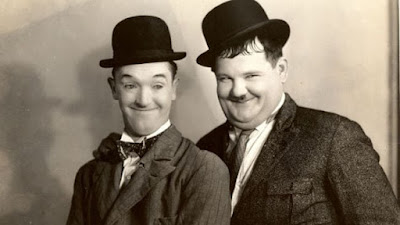
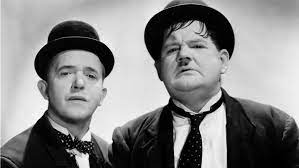
This is a tribute and a belated thank-you note to a gentleman who left me with warm and wonderful memories early in my childhood.  His name is Hal Stanton.  He was a big fan of Laurel and Hardy.

I've mentioned before on this blog that I never was really "introduced" to classic films as a child; there were just on TV, used as filler the way infomercials are now.  They were not curated, they were cut up with commercials, and they were on pretty much anytime -- at least until sign-off when TV went dark in the wee hours.  It was easy to become very familiar with classic films when I was young because they were easily accessible, and they were a daily part of free TV. 

Of course, in the 1960s, the 1940s were only "20 years ago," so the images we saw did not seem nearly as remote in the mists of time as they perhaps might today to a young person.

However, despite this world of old movies being easily navigable on a do-it-yourself basis, there were a few TV hosts out there who presented old movies, and Hal Stanton's beat was "The Wonderful World of Laurel and Hardy."  He hosted this show on Sunday afternoons from 1965 to 1968 on WWLP, Channel 22 in Springfield, Massachusetts.


Now, since I was only six years old in 1968, I suspect his show might have run in repeats afterward, just because I remember it so well.  My twin brother and I looked forward to the show and sat in front of the TV, mesmerized by the antics, with Mr. Stanton like an uncle figure making it seem that what we were watching was really important.  As I look back on those days, it seemed that John and I watched this show, just as we watched our favorite cartoons, in utter seriousness.  I don't remember laughing out loud at a cartoon until I was older, like maybe in my teens.  In early childhood, Laurel and Hardy going from job to job was, for me, a sober epic full of pitfalls and tragedies.  Like Dostoevsky, only with slapstick.

Hal Stanton lived his enjoyment of Laurel and Hardy.  He was Grand Sheik of the Night Owls "tent" of the international brotherhood of The Sons of the Desert.  He had joined in 1965, just about when his program started, and he founded the Night Owls branch of western Massachusetts.

Born in Pennsylvania, he later settled in western Mass., worked for a number of movie theaters, eventually retiring as an executive after a long career with Bay State Film Productions.  He was 86 when he passed in 1998.  Mr. Stanton actually corresponded with Stan Laurel for a couple years in the early 1960s and even spoke with him once by phone, which he recorded and played on his show.

There are, as I understand it, some 150 "tents" of The Sons of the Desert worldwide, and they gather to have a dinner and watch Laurel and Hardy films, with hearty toasts, and fez hats, and blazers with the club escutcheon, parodying the fraternal groups that Laurel and Hardy lampooned in The Sons of the Desert (1933).

Mr. Stanton was also a Shriner and a Mason, so perhaps he embraced the silliness of The Sons of the Desert with the aplomb of one who knows how fraternal organizations should be conducted.  Of course, The Sons of the Desert was not a service organization like the Shriners or the Masons, but it did do a kindness to two little kids watching solemnly on Sunday afternoons, as Stan Laurel and Oliver Hardy tried their best, once again, to get out of another scrape.

   ********************

Jacqueline T. Lynch is the author of Ann Blyth: Actress. Singer. Star. and Memories in Our Time - Hollywood Mirrors and Mimics the Twentieth Century. Her newspaper column on classic films, Silver Screen, Golden Memories is syndicated nationally.  Her new book, a collection of posts from this blog - Hollywood Fights Fascism - is available here on Amazon.

Thursday, January 20, 2022

Public Domain Day - 2022


Once again, annually, we have a look at this year’s batch of copyrighted films that as of January 1, 2022, will enter U.S. public domain.  This year includes movies made in 1926.  I would note that, additionally, this year some 400,000 sound recordings made before 1923 will enter public domain.

Some of the movies from 1926 that are now in public domain include:

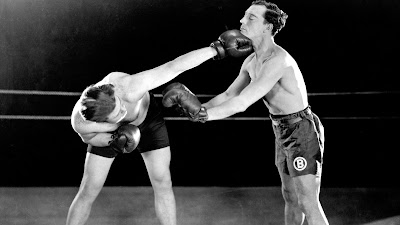
Battling Butler with Buster Keaton

The Son of the Sheik with Rudolph Valentino

Don Juan with John Barrymore, Mary Astor, and Warner Oland

3 Bad Men – which we covered here in this previous post.  

Beau Geste with Ronald Colman

La Bohème by King Vidor with Lillian Gish

Flesh and the Devil – John Gilbert and Greta Garbo

The General with Buster Keaton – which we covered here in this previous post.  

Here are previous posts on Public Domain Day 2020 and 2021.

   ********************

Jacqueline T. Lynch is the author of Ann Blyth: Actress. Singer. Star. and Memories in Our Time - Hollywood Mirrors and Mimics the Twentieth Century. Her newspaper column on classic films, Silver Screen, Golden Memories is syndicated nationally.  Her new book, a collection of posts from this blog - Hollywood Fights Fascism - is available here on Amazon.

Thursday, January 13, 2022

Requiescat in pace - Sidney Poitier


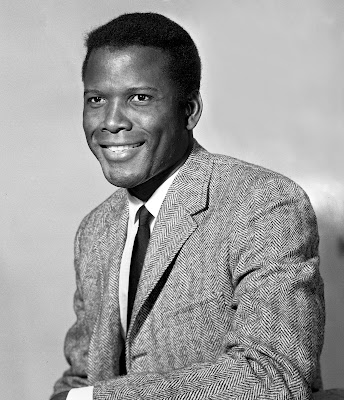
Sidney Poitier, a young Bahamian-American who failed his first acting audition when he was a teen because he could not read the script (was, as he recalled in interviews, tutored for weeks by an elderly Jewish waiter to learn to read and to pass his audition to join the American Negro Theater), became a giant in the acting profession, a leader in social causes, a diplomat, and a role model.

He was driven and he was talented, and he was truly great in that he aspired to and achieved greatness.  He can be admired for many achievements in his life, but what I will miss most about him is that he was a man of his era.  I will miss the movies of deep social comment that don't seem to be made anymore, and I will miss an era of elegance and glamor at the Oscars that has long since faded away under the auspices of a cruder generation that doesn't seem to know how to behave in such a venue, or indeed, in public.

I'm glad Sir Sidney came to us when he did, and was not struggling to launch his career in films in say, the 1930s when the kinds of films which he made in the 1950s and 1960s were not being made.  He was a man of his time, thankfully, and we are the better for that.


Thursday, January 6, 2022

Vigilance against evil.


The blog goes dark today in remembrance of the fascist coup attempted one year ago, the greatest threat to our democracy this country has ever known. Prayers for the arrest, indictment, and incarceration of all the filthy traitors who participated in any way.

Related Products