IMPRISON TRAITOR, PEDOPHILE, AND CONVICTED FELON TRUMP.

Thursday, August 8, 2013

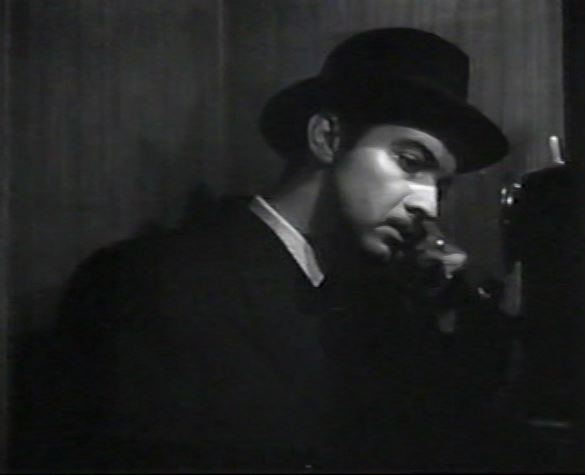
Adventure in Manhattan - 1936


Adventure in Manhattan (1936) is a strange mixture, not always successful, but intriguing, nevertheless, of drama and romantic comedy—and stretches our ability to suspend our disbelief simply because it is both suspenseful and comedic.
The movie pairs Jean Arthur and Joel McCrea for the first time (they would later be paired together in the magnificent The More the Merrier– 1943, which we discussed here).  Some comments I’ve noted express disappointment that Arthur and McCrea fail to live up to the Nick and Nora Charles image in this movie.  That’s because they’re not Nick and Nora Charles.
I sometimes wonder if we are not too mired in genre to an extent that we cannot accept hybrid.  I find it very odd that an audience that can accept films of fantasy and science fiction and are able to suspend their disbelief under the implausible circumstances of these kinds of films, yet cannot suspend their disbelief watching a movie which simply has both dramatic and comic elements to it at the same time.  We struggle to paste one label or the other on a film.  Adventure in Manhattan is both, sometimes alarmingly so.
This week and next were going to cover two movies that deal with stolen art.  Unlike films about bank heists that show thuggish gangsters, theft in the art world always seems to be done by gentlemen, or at least devil-may-care scamps.  We are perhaps left with the fallacy that no one really gets hurt in art theft, and that it is more or less a high-stakes gentleman’s game, like polo without the horses. But crime is done, people do get hurt, there are consequences, and these two films show us the difference in genre and how we accept genre.
The movie we’ll talk about next week is Crack-Up (1946), strictly noir, and the gentlemanly art of stealing art shown as a world of dark shadows and grim postwar angst, psychological terror, and a really mean trick.  It stars Pat O’Brien and Claire Trevor, and they are not Nick and Nora Charles, either.
Both films have plots that hinge on a really mean trick.
Adventure in Manhattan is part 1930s with a little hint of 1940s noir thrown in, quite unexpectedly, and this is what is most tantalizing about the film—and most unbalancing.  It seems to be a precursor of what will come, but quite unconsciously.  It is not trend-setting; it is only experimentation.


Joel McCrea is a writer of crime stories.  He writes newspaper columns on real-life crimes and mystery novels about famous cases.  He is very successful, very much in demand, and very well aware of his gifts and his success.  He’s charming and so confident that he drives everyone else around him nuts.  He’s the kind of guy who does everything perfectly.  You want to see him mess up just once to see if he’s real.
A series of art thefts and jewel robberies has occurred, and we are told this as the film starts with several flashing headlines and the blare of police sirens.  We are in New York City in the middle of the Great Depression.  

Thomas Mitchell is a newspaper editor, the kind of crabby, shrieking, in-your-face-palooka who wants a feature story on the crime wave.  He hires Joel McCrea to investigate and to write purple prose on the crime spree.
“Involve a woman in it!”
He’s getting a little ahead of us.  But we can tell by the cast of credits that the only woman listed is Jean Arthur, so there’s going to be a woman in it, and the job is all hers.
I wonder if newspaper offices are to thirties movies as living rooms are to fifties movies?
Enter Joel McCrea, know-it-all, laconic, wearing his fame like a kingly robe.  He presumes to sit right down at Thomas Mitchell’s typewriter, still wearing his hat and begins to weave a tale.  (I recall a funny line in the old Mary Tyler Moore Show where the character of Lou Grant tells Mary about the good old days when he used to work in a newsroom, and he said that they were real newsman because they wore their hats in the office.)
Mr. McCrea takes a break from his masterpiece, and heads to the local bar the reporters hang out, where he grabs a beer and a cheese sandwich, and where his fellow journalists are playing pool. One of the fellows is a playwright, played by hangdog Victor Kilian, who we last saw with Jean and Thomas Mitchell in Only Angels Have Wings (1939).  The play he is currently writing will figure a great deal in the story, but we don’t know that yet.  And neither does he.
McCrea is smooth and confident and chatters about the latest robbery, which aggravates the other reporters who just can’t seem to get any leads.  McCrea acts self-superior, lecturing them, but it’s not just arrogance.  He really is superior.  He’s much smarter than the fellows and he takes the route of solving the crimes by what today we would consider a rather modern tactic: he uses profiling. He tries to get into the head of the man he thinks is behind these crimes.  McCrea, interestingly, plays his character like a charming egghead, who knows people’s psychology, but does not have the social skills to get close to anyone himself.  For all his intelligence, he is socially inept and doesn’t know it.
He plays pool and makes fantastic shots, never missing one.  When he leaves, Mr. Kilian remarks, echoing the other guys’ thoughts, “How do you live with a guy like that?”
Jean Arthur enters the story at this point, and her work in this film, as usual, is deft and many layered. We’ve mentioned before that there’s no one like her for playing along that thin knife edge of comedy and drama, of evoking great pathos, even tragedy, and yet still being able to shine a ridiculous spotlight on her character.  In this movie, her character might be considered all over the place by some viewers because at times she is very dramatic, and at other times she is doing screwball comedy.  We struggle to find what pigeonhole to put her in.
This is probably the same difficulty that early directors and the studio head Harry Cohn had with Jean Arthur, until the mid-thirties when she began to hit her stride, showing that she can do these unusual characters that flourished in the Depression era like nobody else. She’s not doing Nora Charles.  She’s doing Jean Arthur.
We first see her walking down a crowded city street.  She is bundled up to the neck in a plain unflattering raincoat and her cloche hat is pulled down close over her eyes.  Droplets of rain dot her hat and shoulders as she sidles up to people quietly, with anxiety and embarrassment, but desperate, she begs for money.
Joel McCrea sees her.  Neither he, nor the movie audience of the day, is surprised to see woman trying to quietly ask for change on a city street corner.  But his attention is distracted by an automobile accident close by.  We hear the screech of tires, a crash and everyone walking on the crowded sidewalks rushes to the scene of the accident.  We see that Jean Arthur moves through the crowd and tries to get close to Joel McCrea, because it looked as if he might have given her some money only a moment before and she doesn’t want to lose him. Instead, she gets up to him and then disappears.  When the chaos dies down, he realizes his wallet is missing.  He looks around and sees Miss Arthur walking quickly away.  She has taken his wallet.
 
She gets into a taxi.  He gets into another and utters that immortal line “Follow that cab!”
She gets out at a beauty salon.  A beauty salon?  We would have expected anything but this, and from this point on the next series of scenes is nothing like we would’ve ever expected to see. 
And culminates in one of the most shocking scenes I’ve ever seen in a movie of this era.
Bess Flowers is one of the beauty shop attendants.  At least she has to work in this movie and is not just some party guest this time.
He waits for her to come out of shop because he wants to follow her to see what she is doing with his money.  She emerges beautifully coiffed and in a dazzling white outfit.  She gets into a cab.  He forces his way in, and she is embarrassed and nervous and wants to stall him from going to the police.  He is cynical and disbelieving of her pleas for help.  He has every intention of turning over to the cops, but he is a student of human nature, and he wants to make her wriggle on the hook while he dissects her emotions.  He does not really care about her plight; this is only another psychological game for him.
She tells him that she had to steal the money, because she’s waited three years for tonight.  She has an appointment to see someone and begs him to give her only the next few hours and then she will go with him to the police.  He is dubious, but she invites him to come with her because he doesn’t trust her.  It’s wonderful to see Jean Arthur in these scenes because of her sensitive ability to seem so complicated and yet so transparent.  I can think of so many other actresses who would put a hearts-and-flowers spin on the scene, like an orphan in a snowstorm. Jean just looks very real and very uncomfortable, as if her own words are being dragged out of her, as if the very act of giving plot exposition is killing her.
She tells him that she is going to visit her ex-husband.  He was very cruel to her and they were divorced.  She fell in love with another man, and ran away with him, but she is now separated from that man, and she is alone.  She had a daughter with her husband and he kept custody of the child.  Today is her daughter’s fourth birthday, and she is going to go visit her.  She had asked her husband repeatedly to allow her to see the child, but he always refused.  Finally, tonight, he’s allowing her to see her daughter.  Jean tells Joel, “I couldn’t let her see me the way I was.”
Her damsel in distress routine is very genuine, but it does not move Joel.  He has told his reporter friends that they get too sentimental in their stories, they forget to be objective and that is why he is always able to solve crimes.  
They arrive at her ex-husband’s mansion and the butler answers the door.  The husband is there, pompous and severe.  He allows Jean Arthur to go visit her daughter, and tells her the girl is in the next room.  Jean rushes into the room, leaving the ex-husband and Joel McCrea to size each other up in the foyer.  We think that the husband probably thinks that Joel McCrea is Jean’s latest lover.
Okay.  You know this thing I have about always giving out spoilers.  I’m not going to go into detail about the mystery of this story, or who the guilty person is.  But I have to go into detail about this scene that’s coming up because it shocked the socks off me.  If you do not want to get the surprise, run away from this paragraph as if you are running for your very life from the bulls of Pamplona.
Are they gone?  Good.  Now we can talk in whispers.
Just as we are about to smile at the way Joel McCrea realizes he is being mistaken for “the other man,” we hear Jean’s piercing scream from the other room.  Joel rushes into the room and we get a quick, sliding close-up on his shocked expression.
Then the camera shifts to the interior of the room and we see a small white child’s coffin dimly illuminated in the dark room.  Suddenly this has become a Universal horror picture.  We look around for Bela Lugosi.  Jean is prostrate on the floor, crying. 

Joel leads her away.  The pompous ass of a husband says that the child died the day before yesterday, so there would be no harm for her to have her visit from her mother, now.  He has exacted his final, most-heartbreaking revenge on his ex-wife.
This scene will cause you to offer up your favorite exclamation of alarm and dismay, perhaps several times.  You may even need a drink.  I recall myself saying to the TV, "I can't believe they did that."
The discomfort this scene causes the audience is remarkable and may be one of the greatest reasons why some viewers tend to see this film as a failed Nick and Nora Charles, because so much of the rest of it is funny and lighthearted, with teasing banter between Jean Arthur and Joel McCrea.  But this scene stands out like a sore thumb.  It is too much reality shoved into a cozy little romantic comedy world.  It is not movie-melodramatic, the way you might see the coffin in a monster movie, because it is real, and because it is Jean Arthur.  She has such a real presence in her films.  She is the woman on the Depression-era streets.  She’s the shop girl.  The newspaper reporter.  She’s the noble, the indefatigable and the downtrodden common woman.  And yet she still manages to be somehow ethereal and above us, if only for the purity of her conflicting emotions.
The next scene finds Jean in Joel’s apartment, lying on his bed, and he revives her with a drink. She really looks ill.  She is not the swooning type, but she really looks like she wants to die and doesn’t want to say so.  Joel tells her that she will stay here for the night and asks if there’s anything else he can do.  With difficulty, she tells him that she would like to have her daughter’s ring.
Mr. McCrea, with the relish for revenge, and the first real flush of emotion we’ve seen him display so far, says that he is only too happy to go back and face her ex-husband.  We imagine he wants to sock him.
When he goes back to the mansion, it is dark.  There are no lights in any of the windows and when he approaches the door, a night watchman questions him and asks him to leave.  Joel tells him that he was here only a little while ago speaking with the owner of the house.  The night watchman tells them that the owner is in Europe, and that the tenant to whom he is renting the home is not here right now.  And he kicks Joel out. 
Huh?  Is this a ghost story?
Now we have a different mystery on our hands, quite apart from the jewel heist.  Joel McCrea, with his inquisitive mind and his stubborn nature, is intrigued.  He sneaks back into the house and walks around in the dark.  He finds the child’s coffin, which has been tipped over one end on the floor.  There is no body inside.
We have definitely entered creepy movie territory.  Joel is then accosted by man with a gun, played by Reginald Owen.  They exchange words, and they also exchange neckties.
Neckties?  
The man with the gun admires Joel’s tie, and Joel, attempting to be cute and to distract him because he’s pointing a gun, tells him he can have it, and so they trade ties.
Is the guy with the gun a crackpot?  Or have we just crossed over back into screwball comedy?
 
Suddenly the lights come on and people come out of the woodwork.  They are Joel’s reporter buddies with Miss Arthur in tow.  She is an actress in Victor Kilian’s play and some of the others are actors in his cast.  It was all a practical joke.
Jean Arthur is rueful, feels guilty, but thanks Joel for being gallant enough to come to her aid. We can see that he is embarrassed and sore about it, but he is a gentleman and a good sport.  He offers to buy everybody drinks, and this the beginning of his teaming up with Jean Arthur. 
We also have a foreshadowing in the scene of who the real criminal is behind the robberies, and very shortly, the film tells us point-blank who the bad guys are, so there really isn’t much of a mystery for the viewer.  From now on, the movie is about how Joel McCrea cracks the case, and a lot of that has to do with how he also plots to get back at Jean Arthur for her trick on him.  Both subplots are intertwined.
Victor Kilian’s play also has a lot to do with the case.  It is a World War I melodrama and Jean Arthur plays a kind of Red Cross volunteer or ambulance driver.  We see her in a kind of uniform.  She is a good actress and she is a lady, not a chorus girl.  Listen to her voice in this movie.  It’s slightly lower than her usual squeak, the quality of her voice that Edward G. Robinson once commented was like freshly grated peppermint.  There is something wistful and sad about her, as if she is still wearing the cloak of her many damsel-in-distress roles of the twenties and early thirties.  She made five movies in 1936, including the magnificent Mr. Deeds Goes to Town.  She was starting to come into her own and Columbia started to realize this.
Another movie she made in 1936, The Ex-Mrs. Bradford, was the real Nick and Nora knockoff, with William Powell, the real Nick, as her costar.  We’ll talk about that one sometime or other.
Adventure in Manhattan seems to start to get off-kilter from this point on, but mainly perhaps because Joel McCrea was trying to keep Jean Arthur off-kilter.  He sets the tone for the whole movie by playing small jokes on her to make her exasperated.  He invites her to the Ritz for lunch, but brings her home to his apartment instead, which he says he calls the Ritz and they eat beans.  She ends up having to cook them herself.  Reginald Owen shows up.  He is a wealthy man about town and is also the angel in charge of producing Victor Kilian’s play.  
When he shows up unexpectedly for lunch, they invite them to have beans and they sit there, eating their beans, trading banter.  We’re deep in screwball comedy territory again.  At one point Mr. Owen wanders into Joel’s bedroom to admire the valuable and artistic furnishings—Joel has an eye for art, which is probably why he’s so good at finding art thieves.  All three of them go Joel’s bedroom and eat their plates of beans.
A climactic scene occurs with a robbery during a live performance of the play in which Jean is performing.  She stumbles on the bad guys backstage, and drags Victor Killian to help her investigate, because after all, when you’re really in trouble, you go to the nearest playwright.  I can’t tell you how many times people have asked me to fight crime.  It’s really annoying.  I’m just sitting down to dinner, and they’re at the door, just because I write plays and I’m in the neighborhood.
The shift between scenes of extreme horror and extreme silliness make this film seem like it’s swinging back and forth on a pendulum and we don’t know what to think of it—but isn’t that the very essence of a mystery, a suspense story?  It plays upon what we were expecting and does not deliver.  I think the ultimate joke is played on us.  The audience, unlike Joel McCrea, are not always good sports.
Come back next Thursday for Crack-Up, where, again, all is not what it seems, and this nearly sends Pat O’Brien into a mental breakdown in a psychological post-war art mystery.  But it’s noir, so we don’t take offense if we’re caught in the middle of a shell game. That’s to be expected.

Saturday, August 3, 2013

A woman's touch...


I decided to follow the example of Doris Day and Allyn Ann McLerie on TCM's showing of Calamity Jane last night to clean up my cabin a little bit and change the appearance of this blog.  I hope it will make for easier reading.  Content will be the same, only with less calories.

Thursday, August 1, 2013

Big Stars in Small Towns - Summer 1965


The heyday of summer theater was coming to the end of an era in the 1960s.  There's still plenty of it around today, especially in New England, where it is possible to see journeyman actors and established stars trod the boards of a simple barn-like playhouse. 
 
But the golden era from the late 1940s through the early 1960s gave us a profusion of really big stars traveling to really small towns to perform live.  Comedies and musicals were the big draw in this period.  These two ads are from two different summer playhouses in the Connecticut River Valley of western Massachusetts.  The Storrowton Music Fair, which played in tent, theatre-in-the-round style, was located in West Springfield.  Here Lee Remick starred this August week of 1965 in Annie Get Your Gun.  The most expensive seats were $3.95.
 
Under that, we see an ad for the Mt. Tom Playhouse, which was a simple wooden playhouse perched up on Mt. Tom in Holyoke, the city just north of West Springfield.  Dana Andrews starred in the comedy, A Remedy for Winter. 
 
They were river towns, small, and since the superhighway I-91 had not yet been constructed along this stretch, accessible by the older, more narrow, eatery-lined Route 5 that crawled up from Connecticut to Vermont parallel to the river.  It is far from the bright lights of Broadway, and a different world altogether from Hollywood. 
 
In the coming week, Van Johnson would star at Storrowton in Bye, Bye, Birdie.  The husband-and-wife team of Craig Stevens (late of his Peter Gunn gig) and Alexis Smith, would appear in the comedy Mary, Mary.
 
It would have been a treat to travel to Boston or New York to see any of these actors in these shows, but the thought of them coming to a neighborhood near you (or me, as the case may be), just blows my head off.  And for $3.95, on a cool summer evening, in a big tent, or up on the mountain with the wooden screen door slapping shut every time someone opened it (audience or actor making his entrance), keeping out the skeeters.
 
By the way, I'm planning to write a book on the Mt. Tom Playhouse, and the summer stock group, The Valley Players, that were in residence in the previous decades (Hal Holbrook created his Mark Twain one-man show here).  If you have any information, or know of someone who does, please drop me an email:  JacquelineTLynch@gmail.com.  Thanks.


Thursday, July 25, 2013

Clarence Brown - Director and Automotive Engineer


Clarence Brown, respected movie director during Hollywood’s glamour’s heyday, had a different career as a very young man.  How much influence the manufacturing city of Chicopee, Massachusetts, had upon his future choice of career in during the short time he lived here is unknown and probably negligible, but it is intriguing to observe how the fledging movie industry and the fledgling auto industry ran a parallel, and interdependent, course. 
Mr. Brown, before he ever knew what movies were, was employed by the Stevens-Duryea auto manufacturer in Chicopee.
Brown was born east of Chicopee in the town of Clinton, Massachusetts, in 1890.  The turn of the 20th century fast approaching, a menagerie of new innovations in science and art, and especially in new inventions, burst forth in such a stream of imagination that many qualities of the next century would find their prelude in this very decade. To narrow it down a little, both automobiles and moving pictures had their impetus in this frenetic decade called the Gay Nineties.
Both cars and movies have come to mean a great deal to us, and certainly to Clarence Brown.
While Brown was a small child, Frank and Charles Duryea were tinkering with their experimental gasoline-powered horseless carriage, the prototype for which was supposedly designed in their boardinghouse on Front Street in Chicopee. It didn’t take long for the auto industry to be off and running. The Overman Wheel Company in the section of town called Chicopee Falls was one of the country’s many new automobile factories; they were producing cars as early as 1900.
The men who designed and produced these marvelous machines were considered to be wizards of technology, dreamers, and rugged individualists. Clarence Brown may have fit into this mold, for surely he was a unique young man. Intelligent and gifted, he was allowed special permission to attend the University of Tennessee when he was only 15 years old.
While he studied engineering there, the threads of his future destiny were already forming for him thousands of miles away. In 1907, while Brown was away at college, the Duryea firm back in Chicopee contracted with the J. Stevens Arms plant in Chicopee Falls to produce their cars.
Stevens Arms company, postcard, Image Museum website, public domain
The following year the first movie theater in Chicopee opened. It was called the Gem, and it was located around the corner from the Stevens plant on Main Street. Any connection between these two newborn industries was unapparent at the time, and would even be to Brown at first.
His father, Larkin Brown, had run a cotton mill in Massachusetts, but when Clarence was a boy, the family moved south where his father continued in cotton textile manufacturing.  His father hoped that Clarence would go into the family business, but after graduating with two degrees at only 19 years old, the remarkable young man decided to follow his passion at the time—which was the new automobile craze.
He first went to Illinois to work at an automobile plant there, but soon came to Chicopee and the Duryea company around 1910.
Industry in the manufacturing town of Chicopee was diversified and booming at this time. Any number of products were produced here then, from foodstuffs to bicycles to clothing. Though we may think of the opportunities presented to the thousands of skilled and unskilled laborers who came here for work as represented by the huge influx of immigrants from Europe and Canada, Chicopee also became the proving ground for any number of professionals and “bright young men” who began their careers here.  One of them was Clarence Brown.
The Stevens-Duryea 1905 model
While Brown was working at the Stevens-Duryea auto plant, two more moving picture theaters opened up in the city. It would be tantalizing to think that Brown’s future fame as a director was born in a dark theater in Chicopee, but we’ll never know. Surely any interest he might have discovered in the flickers was put to the back of his mind, for about 1912 he left Chicopee. 
1912 advertisement
Brown is quoted in Kevin Brownlow’s The Parade’s Gone By…, “I became the traveling expert mechanic for Stevens-Duryea.  One of my calls was to a dealer in Birmingham, Alabama, who took a liking to me, and he set me up in a subsidiary company, called the Brown Motor Car Company. I had the agency for the Alco truck, the Stevens-Duryea, and the Hudson.  It was around this time—1913, 1914—that I became interested in the picture business.”
His favorite flickers at the time were produced by the Peerless Company, and Brown left Alabama and his business, and became an assistant to Maurice Tourneur, one of the directors for Peerless, whom he always credited with being his greatest teacher and directing mentor.
Years later Clarence Brown’s own films played in the new Chicopee theaters: the Rivoli, the Wernick, the Willow, and the Victoria—“second-run” neighborhood theaters which Brown never heard of because they were built after he left Chicopee.
Brown directed Greta Garbo in Anna Christie and Anna Karenina and five of her other films. His film A Free Soul made a star of Clark Gable, and his National Velvet introduced us to Elizabeth Taylor.  He gave us The Yearling, The White Cliffs of Dover, and Plymouth Adventure before retiring in 1953. He was nominated for a Best Director Academy Award five times.
Brown died in 1987 at 97 years old. Talent and ambition in one field brought him to Chicopee, but he made his mark in that other new industry in Hollywood.  And where would “the flickers” be without car chases?


A previous version of this article appeared in In Chicopee (a publication of the Holyoke Transcript-Telegram, Holyoke, Mass.) 1992.

Sources:
Brownlow, Kevin. The Parade’s Gone By… (University of California Press, 1976), pp.138-140.
Siegel, Scott and Barbara Siegel.  The Encyclopedia of Hollywood (NY: Facts on File, 1990) pp. 62-63.
Springfield (Massachusetts) Republican. September 19, 1937, p. 3E.
Thomas, Nicholas. Ed. International Directory of Films and Filmmakers: Directors, Vol. 7 (2nd ed. (Chicago and London: St. James Press, 1991), pp. 103-105.


Thursday, July 18, 2013

Angel's Flight Railway in the Movies


One scene in our look at "The Unfaithful" (1947) last week here--really delighted me and I thought I'd save that for this week.  It's this view of a funicular railway in downtown Los Angeles.   We see Marta Mitrovich, who plays the widow of Ann Sheridan's attacker, traveling home to her working-class neighborhood on this railway car, when she reads the news of her husband's death in the newspaper.


I don't suppose there's any reason to have this scene on this funicular, it has nothing to do with the plot, but it makes for a nice foray into Los Angeles sights, and "The Unfaithful" is full of them.  I remembered seeing this same funicular in "The Turning Point" (1952) -- a movie we'll have to discuss sometime or other.
 
 
In that movie, we see William Holden and Alexis Smith riding the steep railway as they ferret out a mystery. 
 
The funicular is called Angel's Flight Railway, and was built in the Bunker Hill area of downtown L.A. in 1901.  I understand it has been filmed in a handful of movies,
 
  Another shot from "The Turning Point"
 
The original Angel's Flight was dismantled in 1969 when the area underwent an extensive urban renewal project, and a lot of the, now rundown, but historically significant buildings in the neighborhood were demolished.
 
 
Here in "The Turning Point" the camera pans out the window and we can see an example of what the neighborhood looked like before it was demolished.
 
The funicular is only about two blocks long.  It was built at a time when the Bunker Hill area was fashionable.  It continued to be used as daily transportation by working-class people when the neighborhood demographics changed, and finally, torn down when the promise of the future came, as it did to so many cities, in the form of really ugly 1970s steel-and-concrete urban renewal projects.
 
 
Funny, though, that our wish to be modern fights our wish to be nostalgic.  Giving in, perhaps, to this secondary urge, as well as the desire to turn any attribute into a tourist attraction, the Angel's Flight was re-created a little bit south of where the original stood. 
 
You can read more about the controversial history of the new Angel's Flight Railway here, with some photos.
 
Another shot from "The Unfaithful"

Thursday, July 11, 2013

The Unfaithful - 1947


The Unfaithful (1947) is a superior movie to The Letter (1940). 
I just wanted to get your attention.  I’ve been away from this blog for a long time.  I’m still here.
But seriously, I really do prefer The Unfaithful to the much more well-known and deservedly lauded The Letter.  Pour yourself a cuppa and I’ll tell you why.  You don’t mind spoilers, do you?  I didn’t think so.
Both films are based on the story and subsequent stage play by W. Somerset Maugham, (went through a handful of other film versions as well) but The Unfaithful is a re-working of the story to fit into a different locale: post-war Los Angeles.  The original story, you’ll remember, is set in a Malaya rubber plantation.  The Letter stars Bette Davis and Herbert Marshall in the tale of an unfaithful wife, who murders her married lover, and then must hide the truth from her husband and the police.  The device that seals her fate and proves her guilt is a letter written to her lover.  Gale Sondergaard, who strikes fear into the hearts of everybody, not just in this movie—she probably struck fear into the hearts of people just walking down Wilshire Boulevard—is the dead man’s wife who holds the whip hand over Bette Davis.

Directed by William Wyler, The Letter is lush and mysterious, steamy and provocative, beginning with Miss Davis unblinkingly gunning down her lover.  We are plunked down at the edge of the jungle, under a tropical moon, where civilization, i.e. white European society, is represented in a dance at the Raffles Hotel in Singapore.  It is about guilt and revenge and racial stereotypes.  The famous line uttered by Bette Davis: “With all my heart, I still love the man I killed!” is still a shocker, an electric moment. 
But for me, the film is a marshmallow: all air, sticky, and without nourishment.  Even the impressive Miss Sondergaard reminds me of The Dragon Lady in the old Terry and the Pirates comic strip, and so the “mysterious orient” clichés that abound in this movie strike me as somewhat cartoonish.  I prefer The Unfaithful for several reasons.  Here we go:
Ann Sheridan is in the Bette Davis role, but unlike Davis—who we know is guilty from the very first moment in the film—Ann Sheridan’s guilt, her sin of being unfaithful, is not apparent until far into the movie.  We start with a happy Miss Sheridan speaking on the phone with her husband who is away on a business trip.  We see she is in love, and eagerly awaiting his return the next day.  We do not suspect her of an adulterous affair.  What we do learn about her comes through twists and turns, and by the end of the film, we see we do not know her at all.  In comparison, Bette Davis comes off as transparent, and I find her brittle rigidity, though compelling psychologically, still two-dimensional, even if we are shocked by her declaration at the end of the film.
Miss Sheridan attends a party thrown by her husband’s cousin, Eve Arden.  Any movie with Eve Arden is always better than a movie without Eve Arden.  Our Eve has a good role here.  We first meet her as a new divorcee who throws herself a Happy Divorce Party.  All her friends are there, and one who is not her friend: her ex-husband shows up, drunk and angry, and vents his bitterness before he is dragged away.  Douglas Kennedy has this small role.  We saw him previously in South of St. Louis (1949).
Miss Arden is raucous, crude, loud, and tasteless in the early part of the film, but she keeps popping up from time to time, and each time we see her, a little more of her hard shell gets peeled away and we discover by the end of the film she’s really a sad and lonely person, and a mensch.  She turns out to be a real pal to Sheridan and her husband, played by Zachary Scott, when they really need her.

Zachary Scott has a more interesting role than the character played by Herbert Marshall in The Letter.  Though I love Herbert Marshall, and though we feel great sympathy for him as the cuckolded husband of Bette Davis, we also can’t help but regard him as a sap.  She’s playing him like a fiddle.  The story, and the director, allows us to see right through Davis, but he has no such advantage and we may wonder how he could be so dense.
Mr. Scott is nobody’s fool, an enterprising builder taking advantage of the post-war boom.  He’s devoted to Sheridan, but when the clues of her guilt wipe the scales from his eyes, he’s determined to dump her and see her rot.  How quickly, and stunningly, love turns to hate.  It’s all passion in one form or another.
Lew Ayres plays their friend and lawyer in a role similar to James Stephenson in The Letter; likewise he is devoted to his friends, plays knight errant to the accused until he discovers her guilt and then fights his own disgust to be able to save her.
Most especially, I love that The Unfaithful is frankly and most purposefully without that fantasyland setting of the tropics.  It is set in a mundane and more familiar time and place.  (Although, I confess, as a New Englander, I find palm trees, even lined up in front of a shopping mall, extremely exotic.) This is a setting we recognize; these are people with whom we are familiar.  It brings this tumultuous story down to earth, with consequences that are real.  We must take their troubles more seriously because they may be our own.
This being a blog about how classic films teach us much about the eras in which they were made, I find The Unfaithful a very useful tool in examining the post-war era.  It’s got all the details.  The narrator tells us as the camera pans from the home of Sheridan and Scott to the palm-tree lined roadway, “The problem with which it deals belongs not to any one town, city or country, but is of our times.”  In this respect, the movie is less like The Letter and more like The Best Years of Our Lives.
The “problem,” it seems, is that so many marriages begun in haste during the romantic and rushed war years are ending in divorce.  Lew Ayres’ clients are mostly women seeking divorces, and he has mixed feelings about that: a desire to be successful, and yet a sense of disgust for his clients.  Eve Arden is his latest client and his latest victory in the courtroom. 
Ann Sheridan is the opposite of Eve Arden: she is a loving wife who waited patiently for her husband to return from war, who still waits patiently for him to return from every business trip.  She waits around a lot.  She and Eve Arden are not close friends; they are too different.  One is a lady and one is…not.
Things turn very bad for Ann and progressively get worse.  She arrives home from Eve Arden’s divorce party, and parks her car in the back of the house.  As she pulls into the drive, we see a man is watching her.  Instantly, the tone of the movie changes.  She walks to the front of the house and we see her silhouetted in the mist.  We watch her walk towards us, knowing the man is hiding, also watching her.  At her door, the man attacks her, pulls her into the darkened house.  We watch through the windows, from the street, a scene of terror and the sounds of struggle, and screams.  We don’t know what’s happened, but we’ve imagined the worst.
It’s the next morning and Zachary Scott lands at the airport, wondering why his wife isn’t there to pick him up.  I like the way the director, Vincent Sherman, takes his time and lets this scene play out.  He’s very good at developing these very tense scenes from ordinary situations.  Your stomach tightens when you see Ann Sheridan walking at night in her own driveway.  Your stomach tightens when you see Zachary Scott get bad news.  We’ve been there.  This is a large part of why I prefer this movie to The Letter—it brings high drama to smallest, quietest elements of what we know as “real” life.
Mr. Scott looks and looks around, finally goes to a phone booth to call home.  Because he’s closed the door of the booth, and because there are constant announcements on the public address system about flights, we barely hear his voice.  We strain to hear him—a nice dramatic touch over not hearing him at all.  It makes us an active participant.  We don’t know what he’s saying—just like we couldn’t see the attack except from yards away and through curtains.  By his expression, we realize somebody on the other end told him shocking news, and he rushes to find his checked luggage and get a cab.
The phone, we learn, was answered the by the police, and we see when he arrives that his home is chaotic with reporters, and police all around.  For the first time, we learn that Ann Sheridan is well and survived the attack, but that her attacker lies dead on the living room floor with an ornamental knife in him that Mr. Scott had brought back from Japan during the war.  That’s about all of the mysterious orient you’ll find in this movie.
When Miss Sheridan is interviewed in her bedroom by the police, with her husband and Lew Ayres at her side, we see that she is traumatized and miserable.  We knew Bette Davis’ distress was just an act, but Sheridan’s horror is real.  The million-dollar question is asked of her “Had you ever seen him before?”  She answers no, and we have no reason to doubt her.  Neither does her husband or her lawyer pal.  The police detective, played by John Hoyt, remains cynical, but that is his job.

The widow of the dead man, played by Marta Mitrovich, accuses Ann of murder. “You killed him!” She is not as scary as Gale Sondergaard, but she’s pretty worked up about it.

By the way, does anyone know who plays the stenographer in this scene?  She has no lines, but she looks familiar.  I love stenographers.  
The detective tells us that the dead man has no criminal record, that he was a sculptor.  His mind, and ours, turns to the question, why did he go to her house?  If robbery wasn’t his motive, we are left with a question of attempted rape, though nobody uses the word.  Ann Sheridan’s expression is our first clue that she’s not being completely honest, she’s withholding some information, but we have to find out the hard way.
Steven Geray plays a smarmy art dealer who contacts Lew Ayres about a bust of a woman, asking him if he wants to buy it.  It was sculpted by the dead sculptor guy.  The face is Ann Sheridan’s.
Ann lied.   The dead scupltor obviously knew her and she knew him, because we are told that this kind of piece would have to be modeled from real life.  He didn’t sculpt it from a photo of her.  I find Ann's scatterbrained, guilt-driven, panic-induced deceit much more understandable and appealing than Bette Davis' psychotic, chilly posturing, but that is not to say that one actress is better than the other in the role; it's just a preference for characterization. 
The art dealer is attempting to blackmail Mr. Ayres’ client, but our noble Lew isn’t having any of it.  He brushes off the smarmy art dealer and goes straight to Ann, who, reluctantly, relents and confesses she did know the dead guy.  It was during the war, and she hired him to do the sculpture, but after a few sittings, he got too personal and creepy and made her feel uncomfortable, so she avoided him and never went back.  He stalked her a few times, but when her husband came home from oversees, it scared the guy off.
Ann tells Lew she didn’t tell him or the police that she knew the guy because, “I was afraid of what people would say.”
Now Lew has to hammer home to her that what people say is not the problem.  The problem is if she knew the guy, a jury might think she let him into the house and murdered him, that it was not self-defense.  She’s frustratingly slow on the uptake about this.
Unless there's more to it that she isn't saying.  

And there is.  

Then Ann goes to the smarmy art dealer herself to pay the blackmail, but the widow doesn’t want her money.  She wants her to go to jail. 
Ann goes back to Lew Ayres in a panic, getting herself in deeper and deeper, and finally Lew understands, as do we, that she had more than a professional relationship with the sculptor.  She had a fling with him.
Lew, lawyer and bachelor, is disgusted.  “You’re no different from all the other cheating, conniving women who parade through my office.”  Now he strips the final layer away:  Did she kill him on purpose to shut him up?
We pause here to watch the how her web of lies has taken on a life of its own.  Smarmy art dealer still wants a cut of the blackmail money he thinks he’ll get, so he contacts Zachary Scott and meets him, like a spy movie, in MacArthur Park (no cake out in the rain here, so just never mind that), one of the many neato Los Angeles scenes we have in this movie.  He takes him to the widow’s run-down apartment and meets Ann’s sculpted likeness as the art dealer hammers him with the old Othello scenario about the treachery of women.  Zachary is crushed.
He goes home to have a showdown with Ann.  She tries to explain her loneliness during the war.  He blasts her, “Millions of women waited, they waited decently, loyally.  They didn’t cheat.”
Mr. Scott wants a divorce, but just as he’s about to storm out, the cops show up at the door to arrest Ann on suspicion of murder.  See, the cops discovered Zachary going to the widow’s apartment with the smarmy art dealer.   They know about the sculpture now.  The jig is up.
Our Lew, despite his profound disappointment in Ann, agrees to represent her at the murder trial, where the prosecuting attorney is our old pal, Jerome Cowan.
The trial sequence builds to a crescendo of self- knowledge—of Zachary about Ann, and of about himself and his failings as a husband.  We learn they knew each other two short weeks before they were married, and he was so eager to pursue his career on his return home, she became an afterthought.  We also learn, somewhat surprisingly, that she was a fashion editor for a magazine before the war, yet we are given the impression she does not have a career now.  She gave up a job like that to stay home and volunteer for the Red Cross?  That is an interesting subplot that is not pursued, however. 
Neither is it fleshed out the possibility that Lew Ayres may feel more than friendship and respect for Ann and could present as a romantic rival, which would have been intriguing, but no triangle happens. 
What we do have is the crime of the century—not the murder, and not just cheating on her husband, but cheating on a vet in a post-war climate that revered them.
Jerome Cowan asks us, “Is this a woman you can believe?”
But Lew Ayres, and the producers remind us, “She is not on trial for infidelity.”  Mr. Ayres, from his own professional perspective as a divorce lawyer counters: “How many personal tragedies occurred far from the battlefield,” and “If there had been no war, she would not be in this court today.”  So it’s the war’s fault.  We see Zachary Scott mulling this over.
The best summation of the story is handled by Eve Arden.  When the jury is out a long time, Zachary Scott goes over his cousin Eve’s house to wait.  The merry divorcee is spending a quiet evening alone, with a book, the radio, and a box of chocolates, still wisecracking, but softer and sympathetic.  Zachary tears up, and cries, and she softly replies, “I’m glad to see you acting like a human being for a change.” 
Though she was never best pals with Ann Sheridan, whom she regarded as too good to be true, she defends her, and Zachary is upset.  “Is it my fault I was sent overseas?”
“You knew you were going when you met her.  Let’s face it, that’s why you married her…what you wanted was a whirl and a memory.  You wanted a beautiful woman waiting for you, and you didn’t want anyone making time with her when you were away, so you hung up a no trespassing sign, like you’d stake a gold claim.  You didn’t marry her; you just took an option on her.”
“She could have said no.”
Eve continues her sane, and somewhat shocking for the times, rebuttal: “When the band was playing?  Listen, I was there.  I saw you making with that uniform and that ‘today we live’ routine.  And then you were off.”
Production on this movie was begun in late 1946.  Just a year after the war, and we’re already negating all that movie patriotism and sacrifice that got us through the worst of it.
Then a phone call lets them know that Ann has been acquitted by the jury.  Mr. Scott quietly says, “Oh.”  So that we are still not sure how the ending will be played.
With Lew Ayres seemingly guiding the shell-shocked couple to a negotiation, it ends with a cigarette on the couch, and the leaden film noir score suddenly lighter, giving us hope, a suggestion of gentleness, and we even hear bells pealing.
We are left with an indictment not of Ann Sheridan, but of the era, and that gave the audience then, and gives the viewer now, something to think about. 
“With all my heart, I still love the man I killed” is just a cheap thrill in comparison. 
And the ending of The Letter where Bette Davis is murdered was not in the original story.  This was tacked on by the stalwart keepers of the Production Code to see that a murderess and adulteress was punished.
Ann Sheridan, in The Unfaithful remarkably gets away with both a killing and adultery, and still holds our sympathy.  She’s rebuked, but still noble.  Way to go, Ann.  It would have been a great scene for the movie if Ann had discussed her affair,  what attracted her to the man and why she needed to be with him.  Perhaps the intimacy of her face and body being so closely studied in creating the sculpture was what seduced her.  But I guess you can push the Hays Office just so far.
You may now rebut.

Monday, July 1, 2013

Happy Canada Day -- and blog tour stop #6


Happy Canada Day to our friends yonder.  Stand up, blog readers, and sing along.  The words are here, so there's no excuse.

***


Related Products