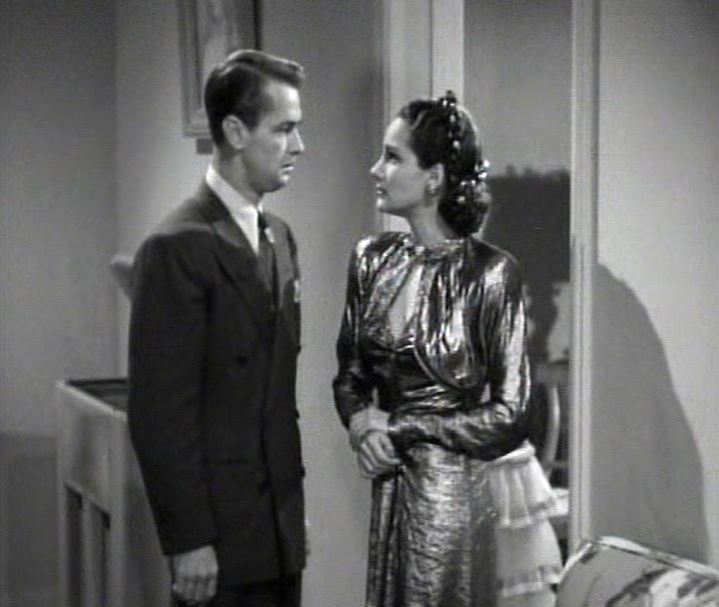
Marking the 75th anniversary of D-Day today, Turner Classic Movies is showing a roster of films related to this monumental event. Probably chief among them is The Longest Day (1962), which is of special interest to classic film fans because of its large cast of notables from the heyday of the studio system. I'm not sure that even with the recreation of the most horrible moments of battle we have come to understand or appreciate the significance of the military effort, equally parts poignant and Homeric.
Saving Private Ryan (1998), made long after the studio system ended but still boasting Everyman/star Tom Hanks to head the team, perhaps makes the best show of recreating the chaos and horror of the landings. Those sequences are heart-stopping. But for me, it is the end of the movie when Tom Hanks (oh, look, if you don't like spoilers, why do you even read this blog?) is mortally wounded and, in a haze of sincere and almost sardonic acknowledgement of his circumstances, tells Matt Damon, the Private Ryan whom Hanks and his men have come to save, "James, earn this. Earn it."
In the film's final moments, Harrison Young, who plays Ryan as an elderly man returns to the military cemetery at Normandy to pay tribute at the grave of Hanks's character, a scene which brings me to tears no matter how many times I've seen it. He speaks to the grave marker cross and, as if in defense, tells Hanks he has tried to live his life the best he could. When he and his family are about to leave, he asks his wife to tell him he's a good man.
This hints at the larger message of D-Day, when U.S., Canadian, and British troops desperately hurled themselves against Hitler's "Atlantic Wall" in a campaign long planned and not without problems and tragic mishaps. Thousands of men died, and all who participated knew that would happen. It was the beginning of the end of the grip of fascism on Europe, and Europeans, including young Anne Frank in her secret annex, prayed for the day to come, rejoiced when it did. Anne wrote in her diary, “'This is D Day,' the BBC announced at twelve. 'This is the day.' The invasion has begun.” Classic film fans are perhaps more aware than those who are not of the powerful idealism of that era, and of that generation that journalist and author Tom Brokaw justly coined, "The Greatest Generation." We can show the recreations of explosions in a movie made after the fact, made more successful at the box office by using famous actors, but the best way to learn from and cherish the event is to remember the idealism that made so many give up everything, including their own futures, for us to have a chance at ours. Now, fascism has taken foothold on our shores and in our government, even among some military personnel who dishonor their uniforms with political patches that announce their slavish allegiance to a man instead of the Constitution, and among civilians the Nazi emblems and thuggish imitators have unleashed idolatry unthinkable to those men struggling to reach the beaches, to stay alive a few more feet, and then a few more. Private Ryan was warned to earn their sacrifice, and he worried that he had not. We need to worry more about that. We cannot honor the service personnel of D-Day if we have squandered the gift of freedom from fascism and the world they saved just for us.
The Best Years of Our Lives, released in 1946 was, essentially, about 1946,
illustrating a year ironically more tenuous than celebratory, in a victorious
nation etched with anxiety about its future. The year 1946 means a little less
to us today, except as the start of the Baby Boom. We are fairly egocentric
about things like that.
Director William Wyler shows the problems of three
veterans: of Homer’s prosthetic hooks; of Al’s restless dissatisfaction with
his bank job and his ready relief in drink; and of Fred’s disillusionment that
the wife, home in the suburbs, and good job he thought would be waiting for him
after the war have fizzled out, one by one. Dana Andrews plays Fred, spending
much of the movie lugging around an overstuffed army suitcase, trying to find
“home.”
Wyler’s treatment of Homer, played by amputee
Harold Russell, was sensitive and straightforward. Homer pulls his hooks out
into view early in the film when he signs his name on a paper. We see Homer
shaking “hands” repeatedly through the film, knocking on doors, drinking,
eating, handling money in a billfold, never hiding his hooks but using them as
naturally and as often as he would his hands, even playfully banging out
“Chopsticks” in a piano duet. Wyler forces us to look at the hooks. In one
splendid scene, Homer visits his uncle’s bar, and feeling at home with his pals
and away from the nervousness of his family, proceeds to hold a conversation
while pushing his sailor hat back farther on his head, handling a beer in a
pilsner glass, shaking “hands,” and slamming his hook down on the bar as a man
might slam his fist to make a point. It is stupendous for its very naturalness
and simplicity.
The minor actors in The Best Years of Our Lives tell us even
more about the three veterans. Fred’s father, played by Roman Bohnen, has a
very brief but exceptionally moving scene as he reads aloud his son’s war
citations. Homer’s younger sister, not uncomfortable with his hooks like the
grownups, stares openly fascinated at them as children will. Ray Collins is
both pompous and subtly sinister as Al’s hypocritical boss. Hoagy Carmichael
plays the easygoing Uncle Butch, who gives Homer a sense of perspective.
It is left to the minor characters of Butch and
Al’s son, Rob, to introduce the post-war world for us by discussing the atom
bomb. The central characters are too preoccupied with jobs, and fitting into
their families, and fitting into their civilian clothes to care about the new
geopolitical realities. Rob refers to the recent enemy as “Japanese” with a
delicacy that eludes his veteran father, who persists in referring to them as
“Japs.”
Wyler, with subtle observation even manages to put
a toe across Hollywood’s color bar by training the camera’s eye on the
African-American ex-GI who waits to go home just as Al, Homer, and Fred must
wait at the ATC depot. A black soldier brings his family into Fred’s drug store
and is seen buying candy for his two children. The man standing in line next to
Fred at the unemployment office is an African American. It is as if Wyler hints
there is a parallel story here to the one of Al, Homer, and Fred, but we only
get a peek.
Another legacy to us comes from the man with the
flag pin on his lapel who challenges Homer to consider that a left-wing
conspiracy brought the nation to war. Al, played by Oscar winner Fredric March,
chides the stuffy bankers at his welcome home banquet of their suspicion of
“do-gooders” and “radicals.” Today, these salvos between right and left have
been diminished to a toxic cliché about blue states and red states. We are a nation fighting
a nearly 20-year-old war today, and many of us wear flag pins on our lapels, but
the civilian population has not been called upon to make sacrifices. Only
civilians who have loved ones in the military have made sacrifices. The rest
are untouched and uninvolved. It was not so in World War II.
In this film, the women the
three men have come home to are not diminished; is it their story, too. Al’s
wife Milly, played by Myrna Loy, and his daughter Peggy, played by Teresa
Wright, display heartsick fears and frank desires. One of the most memorable
scenes in the film is Fred’s nightmare, when a drunken Fred is put to bed by
Peggy, a young woman he met only hours before, suffers a nightmare from what
today would be called post-traumatic stress, and is comforted by Peggy, in her
bed, yet there is nothing sensationalized or exploitive about it.
It is a movie whose musical score, composed by
Hugo Friedhofer did not produce any catchy pop tunes, but captured each moment
of conscience the way a shadow follows a body. The otherworldly sensation of
Al’s first waking in his own bed after years of jungle is punctuated by the
musical score; the delicate strains of the refrain that opens the film and
reprises through every moment of tenderness or tension, a piece of music
unnamed but unmistakable, captures the moments and meanings that makes mere
lyrics inarticulate. The astonishing burst of brass ripple that begins the
airplane engine noise as Fred sits in the nose of a trashed plane, experiencing
a wartime flashback, all these musical incidents are by turns touching and
devastating.
The Best Years of Our Lives was made in the first year of the Baby Boom, and
now the Boomers are retiring, those that can. Their parents’ generation could
be no better represented than by Harold Russell, who enlisted the day after
Pearl Harbor, and later lost his hands. Two of the many Academy Awards won by
that film were won by him. As a senior citizen, he sold them both in 1992, to
pay for his wife’s medical bills. Retirement, as the Boomers are learning, also
has its horrors.
We can only imagine what lay in store for the
characters. There is no hint of the space race, the Civil Rights movement, or
Vietnam, and perhaps it is just that very perspective knowing what we know now
about the peace after the war, where we have succeeded as a nation and where we
have failed, that adds a certain eeriness of hindsight that matches Hugo
Friedhofer’s music.
There are no sure happy endings in this film. We
are never told if Al is going to get a grip on his reaching for a drink in an
awkward situation, but we know Milly will be there to support him. We see Homer
marry his sweetheart, but his triumph in adjusting to civilian life is tempered
by the real knowledge that he will never be able to turn a doorknob or button
his own shirt. He will always need a little help with some things.
We are never clearly told when the “best years”
were, if it was before the war, during the war, or the years yet to come. The
title is ambiguous. There is no fairy tale ending for Fred and Peggy, either.
Fred is the last one of the three to take off his uniform, when a job offer in
construction is finally made to him, and he symbolically puts the war behind
him by stripping off his bomber jacket to go to work.
When Fred and Peggy finally embrace at the end of
the film he tells her that it won’t be easy, that they will have to work, “get
kicked around.” It is the last line of the film, and not very romantic. She
beams a radiant smile, wondrous at only the positive side of his double-edged
declaration, completely ignoring the warning. We see the warning. We are still
imagining their uncertain future more than seventy years after the first year
of the big peace.
Only Angels Have Wings (1939) is a quintessential film of 1939, I would suggest for two reasons. First, its “boys’ own adventure” type story of a band of mail flyers in South America would be the end of the Depression era adventures, the last bit of intrigue in a far away land before World War II, a more gruesome adventure which would turn very young real-life fliers into men under horrific circumstances and in which many were killed -- not because the luck of the draw or the stern mistress of fate as in this movie, but because an enemy nation just as well equipped and just as determined, destroyed them. The aimless flyers in Only Angels Have Wings haven’t any such worries. They are not responsible for a nation’s freedom. They can’t even be responsible for themselves. Somewhere out there in the tropical mist, we are on the cusp of a more treacherous world, a more grown-up world. One gets the feeling Cary Grant is trying to hold it off as long as possible.
The second element that makes this movie such a prime example of 1939 is the presence of character actor Thomas Mitchell, who played in five of the top movies that golden year, all winners. Besides this one, he was in The Hunchback of Notre Dame (which we covered here), Gone with the Wind (which we covered here), Mr. Smith Goes to Washington (which we covered here), and Stagecoach, for which he won the Oscar for Best Supporting Actor. It’s not a 1939 film without Thomas Mitchell.
For classic movie buffs, 1939 has always been regarded as the banner year, when the Hollywood movie factories churned out on their assembly lines a greater than usual number of excellent films. This post is part of the Classic Movie Blog Association “Classic Films of 1939 Blogathon” which runs from May 15th through the 17th. Have a look here at the website for a listing of bloggers and their 1939 films. Looks like a lot of great reading.
In this essay, I’d like to look at Only Angels Have Wings through the prism of 1939 and not so much about what we know about that year, but what we may have forgotten about it. The biggest thing we often forget is that we’re watching current events. This film marks the end of a timeline in an era, though I rather imagine director Howard Hawks, himself a former flier, would not have recognized that when he made it. It had only been some 12 years previous to the making of this movie that Charles A. Lindbergh, “Lucky Lindy” flew the first non-stop solo flight across the Atlantic Ocean. That generation of seat-of-the-pants fliers like Lindy and Amelia Earhart, the Granville Brothers, and Bessie Coleman, were still part of the American popular culture; though some of them had already been killed in their daring exploits, their fame had not yet flown into history. These were still the days when airplane flight brought out the press and the newsreels cameras, where records made for huge headlines and parades. Most people alive in 1939 could remember a time when there were no airplanes.
A week or so after Only Angels Have Wings premiered in May 1939, an unusually large number of the original cast, including Cary Grant, Jean Arthur, Richard Barthelmess, Rita Hayworth, and Thomas Mitchell, and even some original actors in very minor roles, appeared in a radio script version broadcast by Lux Radio Theater. Have a listen to the show here, now in public domain, at the Internet Archive site. Scroll down the year 1939 until you get to May 29th.
Between the 2nd and 3rd acts, the show’s producer and host, Cecil B. DeMille, interviewed on radio hookup from New York City the captain of the Yankee Clipper that had just that week made headlines by inaugurating the first commercial airline service from the United States to Europe. This was not a movie stunt, this was real life. The four propeller engine plane held a crew of 14 and could carry 74 passengers, and the mail. The captain announced, “That means we have at last conquered the Atlantic.” The flight took 25 hours.
Here is a newsreel of the event (Remember to scroll down to the bottom of the page to mute the music so you can hear the video):
The world suddenly got smaller, and inter-continental travel got easier (if you consider a 25-hour flight in a propeller plane easy). Only Angels Have Wings, is a product of this world where pilots were regarded as daredevils and pioneers, not yet corporate executives or administrators.
There is an inherent comic book feel to this movie, though again, I’m sure Mr. Hawks did not intend that. Consider how the pilots wear their holstered side arms below the belts of their high-waisted pants, their cuffs rolled up to show their boots. Black leather jackets with faded World War I insignia, and broad-brimmed straw hats to suggest a rakishness that is permissible in a area of law by mutual consent, opportunities built on enormous risks, too much liquor and a few carefully chosen (by the director, at least) women. Except for these last two points, we might be watching a film version of the popular comic strips Terry and the Pirates or Smilin’Jack.
Here in this world of rattan shades and bamboo furniture, tropical birds and strumming guitars, Cary Grant is boss of a fledging airline running mail from a small port city of Barranca (you know you want to say it. Go ahead: “Calling Barranca, calling Barranca!”) to villages and mining camps far up the Andes. We are in South America, and the only premonition we get of the war to come is the Latin American music, which will have a huge impact beginning in the next year when after war broke out in Europe, we strengthened military and commercial ties with Latin America. The samba and the rumba were not far behind.
Jean Arthur stumbles into Barranca off a tramp steamer one tropical night that delivers a handful of passengers, and cargo, and mail for the plane. She is a piano player, who has left her last troupe of entertainers in Panama. She’s on her own, as free, or as lost, as the men she encounters in the base camp run by Dutchy, played by Sig Ruman. Most of the action of the film takes place in his bar/restaurant/hotel/air field. It is almost like Rick’s Café Americain in Casablanca (which we discussed here) only without the Nazis, or the refugees.
Casablanca, despite being almost entirely confined to Rick’s, gives us a closer look, and better acquaintance with the local setting and people. Only Angels Have Wings gives us only a brief look at the locals, when Jean Arthur enters another saloon that seems to cater only to them, and enjoys, and sings along with, vibrant Spanish music and dance. She is courageous enough to explore and appreciate. Cary Grant and his boys only buy drinks for, and we assume, sleep with, local girls from time to time. They don’t bother with the local culture too much. Their clubhouse is an island unto itself. An American 1939 fantasy.
Two happy go lucky fliers chat up Jean and bring her to their clubhouse for drinks and steaks, and take turns flirting with her. One, played by a young Noah Beery, Jr., is sent by the boss, Cary Grant, on a late night mail run, but there is bad weather and he returns in a risky landing. The film is barely ten minutes old and we have a ghastly crash while Grant, Miss Arthur, and Grant’s best pal, Thomas Mitchell look on, horrified.
Jean Arthur, sassy and street smart, is crushed by this tragedy, and finds herself equally exasperated with, and attracted to, flippant Cary Grant. In matters of everyday living she is in firm control and nobody’s fool, but in love…she is utterly helpless.
Mr. Grant plays the cynical, smart aleck leader. It would be interesting to have seen Humphrey Bogart in the role, to have his calm stoicism play against a jittery Jean Arthur. He would have given the character a soulfulness, a back story of pain and hard luck just in his glance. Bogie always walks in the door with his own back story, the way some actors might show up for auditions with their own costumes. Despite his veneer of danger, he has a code of honor, while Cary Grant has no such nobility. He is really a condescending rogue. He sizes up Jean Arthur with the taunting remark, “Chorus girl?”
But Cary Grant, as handsome as it gets and just coming off his hero-adventurer stint inGunga Din(1939) is right for the role in his charm, his boyish devil-may-care attitude, and especially his under-the-surface neediness. There is an inkling of brittleness to his bravado that is intriguing. He talks a great game of fatalistic acceptance of risk and death, but he clings to Thomas Mitchell as his chief emotional burden and his greatest friendship, for whom he takes heartsick responsibility and from whom he receives love and understanding he gets from no one else…until Jean Arthur comes along.
She is the lone woman who infiltrates the boys’ clubhouse. She says “Down the hatch” when she drinks her bourbon with Noah Beery, Jr. and Allyn Joslyn (for more on Allyn Joslyn, have a look at Caftan Woman’s recent post here), but she’s still a lady. She bristles at being passed along, and at being taken for granted. Eventually, she starts to blend in with the boys, after Cary Grant has shaken her, physically as well as emotionally, bawling her out for bawling the boys out when they display no mourning over the death of the flyer Joe Souther.
“Who’s Joe?” they scoff.
In a sweet bit of consoling, which is reprised later in the film, Victor Kilian, who plays the radio operator “Sparks,” confesses he got the same treatment when he was a newbie. Jean unburdens herself to the gentle, sad-faced Mr. Kilian,
“You know, all my life I’ve hated funerals. The fuss and bother never brings anybody back and it just spoils remembering them as they really are. And when I see people actually facing it that way, I act like a sap.”
She remembers the pain of her father’s sudden, violent death. She is alone in the world and so she grabs onto life with both hands, traveling by herself, not fearing to explore, or expose herself to emotional commitment. She is braver than Mr. Grant in this respect.
To make amends for her “unmanly” outburst of grief at Joe’s death, she wanders back into the bar and interrupts a jam session at the piano, taking over the keys herself, and banging out Sophie Tucker’s old theme song “Some of These Days.” Jean Arthur actually looks like she’s playing the piano here; she fakes it well. Most stars tinkling the ivories for a film role usually looked like they are mixing meatloaf with their hands.
Here’s the clip:
“Who’s Joe?” Grant tests her.
“Never heard of him.”
Later, alone at the piano as the bar empties out, she begins the leaden strains of “Lebestraum,” but catches herself before she gets too maudlin. Joe’s personal effects are brought in, only a handful of trinkets, and Cary Grant, per their ritual, allows anyone to take what they want. He offers the trinkets to Jean, and she takes a watch, the most expensive thing.
“You’ve got a good eye,” Grant sneers at her, insinuating that she is just a gold-digging chorus girl after all.
She gives him a look of disgust and mutters in a low voice, just short of growl, “Say, somebody must have given you an awful beating once.” It’s as good a putdown as anybody ever gave to Grant, and as truthful. He begins to change his opinion of her, for her honest challenge, and because she immediately gives the gift to the local girl who grieves the most for Joe. Grant is rebuffed, and impressed.
Miss Arthur is not far from the mark when she suggests someone has treated him badly. We get his version of a former love who tried to ground him with her possessiveness. It is also a warning to Jean not to try to do the same. He invites her to his room, and she accepts, but then he steers her out the door back to the boat. It’s a teasing game, and he blinks first. But when the fog clears and he must take the next mail plane out, he grabs her in a hasty kiss, and she is hooked. We know this, because she’s still there when he returns in the morning.
He irritably puts her off again, and she questions her own mixed up feelings and lack of judgment, “I don’t know whether this is me or another fella.”
Only Jean Arthur could say a line like that and be believed, just like she’s probably the only actress who can use interjections like “Hey!” “Say!”, “Gee whiz!” and “Jeepers” and have it sound profound.
There’s nobody that does that uncomfortable, “caught in the act” look quite like Jean.
But Grant is chafing over this clingy female, and the fear of commitment, and he demands she take the next boat, which won’t come until next week because, “Yes, they have no bananas” as Thomas Mitchell points out. Grant stomps away, and Jean is embarrassed and crestfallen.
“I’ve never quite made such a chump of myself.” Fortunately, Grant’s buddy becomes her buddy and he comforts her. Too bad she didn’t fall in love with Thomas Mitchell. (During the Lux Radio Theater broadcast of “Only Angels Have Wings,” Mr. DeMille thanked Jean Arthur and Thomas Mitchell for taking a week off from their current filming of Mr. Smith Goes to Washington to do the radio show.)
The movie shifts gears and we have the introduction of Richard Barthelmess, last seen here in Heroes for Sale (1933), as a new flier with a fake name and a mysterious past. Rita Hayworth is his pretty young wife. She doesn’t know that years before he piloted a plane that was going down in flames, and he bailed out, leaving his mechanic on board to die. Ever since then he has been shunned by other fliers.
He doesn’t know that she is Cary Grant’s former lover.
The subplots of this movie keep the pace moving nicely. Another subplot is Thomas Mitchell’s fading eyesight, which prompts Cary Grant to ground him. Mitchell is noble about it, accepting, and Cary Grant is torn up. His booting a chair across the room is his only expression of emotion about how badly he feels.
The mechanic who died in Richard Barthelmess’ plane was Thomas Mitchell’s younger brother. When Mr. Barthelmess is found out, he is shunned here, again, by these pilots, as he always is wherever he goes from job to job. He withstands Cary Grant’s barbs with stoic, self-deprecating sarcasm, but Grant offers him a few dangerous jobs one else will take to earn his boat passage out of here. Including flying nitroglycerin, which he drops on condors.
Barthelmess is great in this role, a man doomed by his own guilt, haunted and too self-punishing even to look for redemption. We look in his expressive dark eyes and maybe we recall the The Dawn Patrol (1933) and other hero roles not so many years ago, but seemingly a lifetime for this now middle-aged man.
Another element is keeping up the pace is the constant and subtle shifts into humor. There are glib remarks and pratfalls. The proud Spanish-speaking company doctor, played by Lucio Villegas, who Barthelmess is ordered to fly up to a mining camp to treat an injured man is insulted by the suggestion that it might be too dangerous, and spouts a soliloquy from Shakespeare about courage while Grant tries to placate him and shut him up.
Another element is the periodic flying scenes that take us breathlessly up the mountain passes and across rugged terrain in a craft that looks like to be little more than a wood crate with wings. The aerial photography is spectacular. Though some of it is models, it’s all breathtaking action. At one point, Barthelmess must take off from a narrow cliff with not enough room to taxi, so he taxis the plane right off the ledge and picks up the wind currents on the drop, like a kite, in a stomach-turning descent.
It is these successful daring tasks and precise flying that earns Barthelmess Grant’s grudging respect. Eventually, however, Rita Hayworth (Judy, Judy, Judy) wants to know why her husband is always treated like dirt. She is still in the dark about his past. We have a reunion scene between the former lovers Hayworth and Grant, but we can see that there are no more sparks between them. Miss Hayworth is in love with her husband, and Mr. Grant is just as fed up with her as when she tried to tame him.
It would have been more interesting, I think, to have Grant and Hayworth still attracted to each other, then the foursome would really be caught in a dilemma; each would be forced into making decisions about their lives instead of just letting things happen. Perhaps Howard Hawks felt he had enough subplots.
More humor when Grant catches the stumbling Jean Arthur eavesdropping on their conversation, and Jean slowly starts to enter the picture again, waiting out a nail-biting test flight of Grant’s that has her getting sick to her stomach. Again, comforted with kind words and a Bromo-Seltzer from Thomas Mitchell. She confides again her love of Grant to him.
“I know I’m a fool, but I can’t do anything about it,” she whimpers. She recognizes, and envies, Mitchell’s close relationship with Grant.
“You love him, don’t you, Kid?”
“Yes, I guess I do.”
“Why can’t I love him the way you do, sneer when he tries to kill himself, be proud when he doesn’t? Why couldn’t I be there to meet him when he got back? What do you do when he doesn’t come back when you expect him to?”
Mitchell’s tortured expression and body English tells us there’s been many a time he got sick with worry over Grant. “I go nuts.”
Another comic, but sexy scene is when Jean Arthur sneaks into Grant’s room so she can use his bathtub. Grant enters, and they bristle and irritate, and flirt, and laugh. Rita pops in, and a terrific jealous exchange between her and Jean:
“Maybe I’d better go,” Jean offers.
“No, please don’t,” Rita replies, with raised eyebrows and an arch expression.
“I really didn’t intend to.”
But Rita is not really jealous, she’s affirmed that she loves her husband and will let the past go.
Another comic bit when Grant sees Arthur limping and he picks her up in his arms. She tells him she’s not hurt, she just broke the heel of her shoe.
“Imagine,” she says, “Losing one heel right after another.” They kiss, and she promises there will be no tying him down or asking him to give up flying.
“You don’t have to be afraid of me anymore.” What a line, as comforting as it is accusing. The screenwriter gives her more gold,
“There’s nothing I can do about it, I just love you. That’s all. I feel the same way about you the Kid does.”
It’s an honest assessment of his relationship with Thomas Mitchell, who puts a coat over Grant’s shoulders on a chilly night, brings him coffee and worries that he doesn’t get enough sleep, lights his cigarettes. (Everybody seems to light Grant’s cigarettes in this movie.) He does what he can do for his chum, then he wanders into the background. It’s the kind of relationship with which Grant is comfortable, and the only kind he can accept from Jean.
He’s still not a committing kind of guy, but something happens to open up a place on Grant’s dance card.
Yeah, a great big old cast-iron spoiler here. Read on at your peril.
Another flight must be undertaken to meet a needed contract, but the only ones who can take this assignment are Barthelmess and Mitchell. Destiny takes a hand, and the man with the guilt, and the man with the hatred for the guilty party who got his kid brother killed are riding the skies together.
The plane runs into trouble, a fire on board, and they crash, but Barthelmess will not bail out this time. With superb flying, he brings the plane to the ground. He is badly burned, but Thomas Mitchell is fatally injured.
Afterwards, the fliers welcome Barthelmess into the fraternity and place a drink in his bandaged hands. Manuel Alvarez Maciste plays guitar and sings a sad Spanish tune that soothes and laments at the same time. Mitchell’s personal effects are laid out on the bar in a handkerchief. This time, Cary Grant does not cynically offer the goods to anyone. He takes the small bundle to his room to be alone with them.
It’s different with Mitchell. Nobody’s going to say, “Who’s the Kid?” at his death. Mr. Grant’s manly code of élan in the face of death does not extend to his dearest friend. Maybe he’s a hypocrite. Maybe he’s human. The men who call him “Papa” because he is their leader in their tight-knit male hierarchy will not see him cry, but Jean does.
Another smoothly comic bit when Jean, antsy and pacing outside Grant’s office just before she leaves for the boat meets with Victor Kilian again, who whispers to her,
“Aren’t you going to say goodbye to him? I think you ought to.”
Jean, surprised, clinging to hope, “You do?”
“I think he’d want you to.”
“You sure? I don’t mind doing it if you say so.”
“I do say so.”
“You do?”
With Kilian’s blessing, she enters Grant’s office, mumbling defensively that Kilian wanted her to.
It runs that knife edge between silliness and deeply touching.
She practically begs Grant to ask her to stay, but he vacillates. He wants her to stay, because he needs somebody. He’s just about to say something, when we hear from the radio once more:
“Calling Barranca! Calling Barranca!”
The weather clears, and there is one last chance to make their contract, so Grant scrambles to his plane. This time Jean’s plea has a disgusted, angry tone.
“I’m hard to get Geoff. All you have to do is ask me.”
He can’t, but he suggests they flip a coin, and it is not until after he leaves that she realizes it is Thomas Mitchell’s two-headed coin.
It’s the closest he can come to asking her to stay, and she does. We may wonder if she’s getting the short end of the stick staying with a man so emotionally close, or so proud, or so hurt, or so juvenile he cannot comfort her with a simple “I love you.” Maybe it’s because he doesn’t. If he’s inscrutable to Jean, he is to us as well.
But this is not a world of commitments, because commitment suggests the possibility of a future, and in Barranca we are only concerned with the here and now. There will be many hasty commitments made, clung to, and perhaps regretted during the war that will follow in only a few more months.
Does anybody else feel sorry for the guy in the mountain lookout post, all by himself through the entire movie? Played by Don “Red” Barry, poor “Tex” never gets any company, except his mule.
Only Angels Have Wings made such an impression of movie audiences of the day that “Calling Barranca!” was a punch line for a while. A few cartoons used the gag, including Tex Avery’sCeiling Hero (1940) and Saddle Silly (1941).
Perhaps some of you will remember the early 1980s TV show Tales of the Gold Monkey starring Stephen Collins. That was inspired by Only Angels Have Wings.
The banner year of 1939 gave us movies that were escapist in many ways, but inevitably truthful about who we were, and what we imagined about the world. Please have a look at the many other blogs participating in this blogathon. Special thanks to Becky of “Classic Becky’s Brain Food” and Page of “My Love of Old Hollywood” for organizing the fun.
Digital high-resolution television allows us to see every tiny flaw in the human face, and large-screen TVs let us see them really, really big. It's a kind of metaphor for the highly technological world we live in: the flaws and cracks in society are exposed, but with greater speed and convenience. And cost.
Personally, I was okay with a 13-inch black-and-white TV to watch old movies on back in the day. I considered myself lucky to have a second TV in the house when somebody else wanted to watch football. When VCRs came out -- any old movie fan of a certain age will tell you that was nirvana. I could collect my favorite movies and keep them "forever." No more waiting for Christmas to watch White Christmas. Then DVD, and the AMC and TCM channels and it seemed like the world was your oyster.
Now we have entered a Twilight Zone world where one cannot record off digital TV without a DVR. It is another sign of our growing service economy, where we do not own; we rent. A DVR is very convenient to use, but it is just another monthly bill to surmount. We cannot own our favorites "forever" anymore, and we have a limited number we can keep at one time, and recording anything off TV has become a decision of what do I want to jettison to catch this program for watching later?
For those of you who have become curators of your own classic film libraries, what is your reaction to discovering a rarity on the lineup of TCM and not being able to record it if you don't have DVR, or if your DVR is getting a little full? Wait for the entire "Joe McDoakes" series of shorts to come out on Blu-ray? (Okay, bad example. Nobody kills themselves scrambling to record Joe McDoakes.)
I wonder if there is more purchasing of titles on DVD and Blu-ray, or renting, or other services like Netflix? In using Internet services, are you concerned that your movie choices will ultimately be tracked and not just for advertising purposes? ("Watch this lady, Agent Smith -- she's seen White Christmas six times this month. Must be a radical. Keep an eye her.")
Do you feel as classic film fans this has reduced your autonomy, obviously your anonymity, if not your options?
In celebration of National Classic Movie Day, we join the 5 Favorite Films of the 1950s Blogathon hosted by Classic Film & TV Café.
To pick five favorite films is akin to limiting oneself to only a few items on a buffet when you really want to eat everything. So I won't suggest these are my only favorites, but I chose them because they represent something about that "mid-century" decade known for conformity and perhaps complacency, when really a lot more was going on under the surface, even though two of them are musicals, and two feature the loveliest new faces of the decade who would come to be icons--Audrey Hepburn and Grace Kelly.
Even in a delightful romantic comedy, Roman Holiday (1953) here, we get a glimpse of post-war Europe, of Rome, "The Eternal City" that had suffered under a fascist dictator, had endured the chaos and destruction of war in its villages, and yet mustered that, now tired, elegance of its monarchal past (and called out some real-life royals to play bit parts and wear their jewels). To the mix, we add a spritely modern princess who must balance her "untouchable" grace with a mission to "improve trade relations," and an American journalist whose cynicism takes a dive when his mission turns from exposing her to protecting her.
We linger on the post-war world again, this time in the U.S., with our next two films. First, White Christmas (1954) here, and then It's Always Fair Weather (1955) here. White Christmas, a lighthearted musical, still conveys home truths about the postwar world and the adjustment of veterans--even after a decade--to fit in with civilian life. This, and in It's Always Fair Weather show the comradeship of service buddies who find themselves husbands and fathers, trudging toward a new battle of finding fulfillment and success in an ever-stranger new world. They are no longer the young, innocent, and carefree recruits who gambled their lives on a better world. They won--the war and their own survival in it--but are they in a better world?
The theme is carried further with No Down Payment (1957) here, where the ex-servicemen grapple with suburbia and new frontiers of corporate opportunity and enslavement, of fitting in and never fitting in, and losing precious time.
Rear Window (1954) here shows another ex-vet whose once exciting life (as James Stewart and former Air Corps buddy Wendell Corey reminisce) has been reduced to four walls and a peek at his neighbors--and the sinister world he discovers there. I also like it because it's glamorous, sexy, and has one of the best sets in the movies.
Watching a symphony orchestra at work is like watching a magic
trick explained and yet still retain the mystery. One sees the component parts
of the music put together, each musician’s contribution to the whole, and being
able to see the machinery of it, if you will, is wonderfully dramatic. Music
from classic films, removed from their films in the setting of a symphony
performance, is revelatory.
I recently had the pleasure of attending an evening of theme
music from the movies—mostly classic films—performed by the Springfield
(Massachusetts) Symphony Orchestra, which is currently celebrating its 75th
anniversary. My thanks for the comp
ticket to my friend Shera Cohen, whose company, In
the Spotlight, reviews the arts in western New England.
Fans of classic films are usually extraordinarily well
informed about pretty much every facet of filmmaking in the studio era, and the
music—whether a sweeping theme or even incidental background music—is as
important to them as a favorite actor or director. Unlike other elements of
film, rather than intellectual analysis, the music evokes a purely emotional response. So it was at Springfield Symphony Hall and “Music Night with
Maestro Rhodes.” Along the same lines as
big-screen showings of classic films, this evening brought out not only
symphony regulars, but clearly an enthusiastic audience who recognized the
film scores.
Maestro Kevin Rhodes conducted and also interspersed between
the selections a bit of background information on the composers. His style of presentation was breezy,
lighthearted, and quite funny at times.
When he introduced composer Alex North’s “Prelude” from Cleopatra (1963), he remarked of its
suggestion of an exotic ancient world—and Elizabeth Taylor’s presence— “You can
just see the blue eyeshadow when you hear this one.”
Other composers included Alfred Newman, who was represented
not only by his music from Street Scene
of 1931 (which found its way into other films), but the familiar “20th
Century-Fox Fanfare,” which was a delightfully whimsical way to begin the show.
Max Steiner’s Warner Bros. fanfare, and theme from Gone with the Wind (1939)—of course—and Casablanca (1942) were favorites. The latter was especially stirring for its
intricate suggestion of Moroccan intrigue and the sudden swell of “La
Marseillaise.”
Works from greats Bernard Hermann, Elmer Bernstein (the
theme from The Magnificent Seven
tends to raise people out of their seats by at least a foot, and his “Suite”
from The Ten Commandments of 1956
concluded the program), and Miklos Rozsa—the percussionist’s lengthy solo on
the chimes in the “Prelude” from Ben Hur
(1959) is something I’ll remember the next time I see the film. Likewise, the kettle drums from the music
from 2001: A Space Odyssey (1968),
and a light sensation of dancing on the tambourine in Maurice Jarre’s Lawrence of Arabia (1962) kept our attention on the percussionists, whose effort we can see more vividly
perhaps than the player of a woodwind instrument.
There’s a certain gallant dash about smashing a couple cymbals together.
Films from later decades included the “Love Theme” from The Godfather (1972), Titanic (1997)—which included a stunningly
haunting refrain from the women of the Symphony Chorus first from up in the
loge and then on stage (I had no idea the Irish penny whistle ever made its way
into a symphony orchestra), and other modern hits, but probably the most
charming was when the maestro played a piano solo of the “Ragtime Medley” from The Sting (1973) and then joined by a single
clarinet, piccolo, trombone, and tuba to playfully embroider the delicate
ragtime theme. They were brought out to
the apron of the stage as if to delightfully demonstrate that only these
handful of musicians were required despite the complexity of the arrangement. They
belonged on a gazebo in a park in summer.
It was an evening of tribute to these composers whose
majestic music is so part and parcel of the films that one cannot be thought of
without the other. Watching people make
the already fondly familiar music in front of you makes the experience still
more intimate.
The Blue Dahlia (1946) is a story of betrayal. Alan Ladd is a
returning war vet in this film noir who arrives in Los Angeles fresh off the
bus with his two war buddies, played by Hugh Beaumont and William Bendix. Ladd
is the hero of the piece, if one can term the chief protagonist of a film noir
a hero, but his pals are as important to rounding out his character and even
driving the plot.
Ladd is not so much an
homme fatale in this film as would be, say, Howard Da Silva, who plays a
charming and venial nightclub owner, because Da Silva is the only person in the
film with the mystique, not just the brutish quality, of evil. Ladd is more a
victim who plods his way blindly through a web of betrayal until by the end of
the movie, we really don’t see him as much a hero as just the last man
standing. But the studio banked on his mystique when paired with Veronica Lake,
who is not so much a femme fatale here as another survivor on a dark journey, though
perhaps better equipped by nature for survival.
The three war buddies part
company early in the film and we are not given the indication that they will
see much of each other in postwar life, though Hugh Beaumont and William Bendix
will be joined at the hip because Bendix has suffered a serious head wound
which has left him fresh out of the VA hospital with headaches, confusion, and memory
loss. Hugh Beaumont, the steadier, responsible, quiet member of the group has
taken it upon himself to take charge of Bendix and be his keeper. It is a
thankless job as any caretaker can tell you, and just why he feels a sense of
responsibility towards Bendix we are never told but it is probably the only
example of self-sacrifice in a movie that is so rife with betrayal.
The only other example
of altruism is perhaps found in the character played by Veronica Lake, who
meets Alan Ladd when he is in trouble.
She is, we assume, attracted to him but keeps at a levelheaded distance
partly because she is still entangled with a mobster husband and partly because
Alan Ladd wants it that way. It is a kind of sacrifice. Later, she will
confront Howard Da Silva, her mobster husband from whom she is estranged, for
Ladd’s sake.
Veronica Lake does not
get much screen time but she will represent Alan Ladd's future, we, again,
assume, as the movie ends on a happier note that it began, which is certainly
not the norm for film noir
The movie begins on a
truly, inexplicably sad note. The Three Amigos enter the postwar world with a
sense of apprehension. This was common to veterans; we see this in other movies
including The Best Years of Our Lives
(1946), which we've covered in several blog posts, and Till the End of Time
(1946), which we will cover some time, but these fellows do not articulate
the reasons for their sense of doom. Hugh Beaumont has a reason to feel glum,
perhaps he foresees a rough road of responsibility for William Bendix and his
medical troubles and is stealing himself for a life as his guardian. Bendix,
with a hair-trigger temper to boot, is tough to manage. Of the three former
Navy flyers, he alone continues to wear his bomber jacket. The other men are
dressed in suits they somehow managed to find in the postwar clothing shortage.
When they park
themselves at a bar for a parting drink, Bendix remarks to Ladd, "Lucky
stiff, at least you've got a wife to come home to." And we see Hugh Beaumont
try to discreetly shut him up, something Beaumont will have to do several times
during this movie. There is some secret we don’t know.
Alan Ladd says only
"Here's to what was." And when they part, Hugh Beaumont, apparently
the watchman for all of them (no wonder he became Beaver’s dad), asks Ladd,
"Don't you think you ought to call her before you go home?"
Alan Ladd remarks with
a mysterious, defeated smile, "Maybe."
It is a foreshadowing
that Alan Ladd's home life is not all that it should be. We have a great deal of foreshadowing this
movie, it is like bread crumbs scattered in the forest and it helps us to keep
our trail, it helps us to find our way. It is a writer's device to point to whom
he wants us to trust and not to trust. There are no red herrings here or
tricks, but it will take you until the end of the movie to find out who the
real murderer is. There are several plausible witnesses because there is just
so much betrayal. The writer is Raymond Chandler, which is as fine a pedigree a
film noir movie could get.
Alan Ladd goes to his
wife's home, a swank hotel and bungalow complex that seems perhaps a bit more
than his allotment checks could have paid for and he stumbles upon a late
afternoon cocktail party in her apartment. The alcohol is flowing, someone is
playing “Accentuate the Positive” on a piano and people are dressed to the
nines, people with dubious integrity, seemingly without a care in the postwar
world.
We receive more
telegraphing of clues when Alan Ladd goes to the desk clerk and asks for his
wife's apartment and we see the bellhops and the desk clerk exchange arch
expressions as if they did not know that his wife was married and we may assume
that she has been carrying on with others. Alan Ladd knows nothing of this and
walks into the party. His wife, played by Doris Dowling in her fourth film, is
completely surprised, prickly, jittery, not knowing how to welcome him,
especially when she has her lover in the apartment, Howard Da Silva.
Da Silva is as smooth
and articulate a bad guy as ever graced a film noir. He runs a local nightclub
called the Blue Dahlia and his calling card is to present guests and lady loves
with massive arrangements of the large blue flowers. When Alan Ladd from behind
a door sees his wife with her arms around Da Silva, kissing him, Ladd
interrupts and slaps Da Silva across the mouth. Da Silva graciously backs down
and leaves. We will later discover, as he discusses with his partner in his
club, that he is perfectly willing to let Alan Ladd's wife return to her husband
because he is tired of her.
It’s easy to get tired
of the demanding, constantly angry, constantly drinking Doris Dowling. She
taunts Alan Ladd for striking Howard Da Silva, "You’re a hero. A hero can
get away with anything."
There is an inference
of self-entitlement which would still go against the grain of the newly postwar
country. Ladd, who plays scenes with a great deal of control and an appropriate
sense of weariness, retreats to the bedroom where he has only just begun to
unpack and he sees two photos in a double frame. One is his service photo and on the other is
a portrait of their deceased son, Dickie. Dickie died while still a baby. He
contemplates the photo; she had never sent him one.
When the guests leave,
hustled out, they are alone and Ladd tries to get her to put down her drink,
which seems to be attached her hand, so that they can talk. Her fit of temper
returns and she announces in a flippant manner that she is her own woman, that
she can do what she wants and see who she wants. He becomes angry and she
replies I could tell you something that would hurt you plenty. She regrets
immediately saying it but he presses her and in another fit of temper she
confesses that their son did not die of diphtheria as she had written to him
but that he was killed in a car crash. She had brought the baby to a party
because she did not want to stay home; she was drunk and wrecked the car and
Dickie died.
Ladd needs no more
info. He takes the photos and prepares to leave her for good, but for one
moment he pulls out his service revolver and she thinks he's going to kill her
but he says that she is not worth it and he tosses it to the couch and he
leaves in the pouring film noir Los Angeles rain.
The story is told with
a great deal of cutting back and forth between different characters and action
occurring simultaneously that is fast-paced and this is what makes the movie
successful. There are only so many ways you can tell a story, even something as
complicated and intriguing as a murder mystery, but for film noir it is not so
much the story but how stylistically it is told that makes the genre unique and
memorable.
We have a reference to
the postwar housing shortage when Bendix phones and relates that he and
Beaumont scored an apartment ahead of nineteen other guys because it is
Beaumont’s old apartment and the landlady liked him. See? Having good manners and being responsible pays
off.
Doris Dowling will
later phone Bendix at their new flat and confess Ladd has walked out on her. Why
this bothers her is unknown, as she seemed pretty well through with Ladd, but
Bendix, who is emotional and impulsive, leaves in the rain and shows up at her
swank hotel and bungalow complex to talk with her, and waits in the bar. She is there, but neither knows who the other
is or that they had just spoken to each other on the phone, and we have the
beginnings of a pickup.
The rain continues to
pound down, and during the evening, Bendix, as well as Da Silva will show up at
Dowling’s apartment. The house detective
played by Will Wright is always lurking around, spying on the action, so we
know what he knows.
It is more
foreshadowing, for when a murder has been committed, we see there are several
suspects, but the only thing we're sure of is that it wasn't Alan Llad because
when he left, she was still alive.
William Bendix
eventually returns home to the apartment he shares with Hugh Beaumont, soaked
to the skin from the rain, dazed, clearly troubled and doesn't remember much of
what he's done in the past couple of hours.
Meanwhile Alan Ladd
hitchhikes and gets picked up by Veronica Lake. We get a little bit of
foreshadowing about Veronica Lake, too. Her portrait is at Howard Da Silva's
nightclub and we are told that the they split up not because of a woman but
because she didn't like his shady dealings, and Da Silva’s the partner
confesses that she's evidently a wonderful woman and both agree that she is far
too good for Howard Da Silva. So by the time we meet Veronica Lake we are
already disposed to understand she is no gun moll. She is true blue and maybe
this is the first bit of good luck Alan Ladd runs across. However, there is no
romance. They say goodbye, they meet again, they say goodbye, and both discover
separately that the police are after Ladd for murder.
The movie is successful
at keeping us off balance and what is going to happen and who was going to end
up with who. We only know for sure that Alan Ladd is not a murderer and that
Veronica Lake is a nice person. As Hugh Beaumont says of him, "Whatever's the right thing to do, Johnny'll do it."
Alan Ladd's journey
through this movie is pretty much based on how other people react to him. His
wife does not want a life with him. When he discovers is wanted by the police,
he runs into a couple of petty thieves who take him to a flophouse to hide out
for a fee and they stab him in the back as does the fellow who runs the
flophouse played by Howard Freeman. Freeman betrays Ladd by going through his
belongings and asks for shakedown money to hide him from the cops.
Will Wright keeps
coming back and he shakes down everybody he can: Howard Da Silva, William
Bendix and Hugh Beaumont. Everybody
betrays everybody: When Howard Da
Silva's partner and another thug kidnap Alan Ladd, beat him up and take him to
a cabin in the woods, the bad guys betray each other. Interestingly, Doris
Dowling provides an ironic bit of wifely fealty by writing on the back of the
portrait of their baby some secret info about Howard Da Silva (betraying her
lover posthumously, quite a parlor trick).
Alan Ladd has seen
enough by half of the movie that when he runs into Veronica Lake again, he confesses his suspicion of her
and how "your timing’s good." She tells him "you'll have to
trust me." But, of course, he can't he can't trust anybody, not in this
movie.
Alan Ladd, in one sense,
is even betrayed by his old buddies. He goes to their apartment and they want
to hide him. Bendix wants to take it on the lam with Ladd, and Beaumont, who
was an attorney before the war, suggests turning himself in. Alan Ladd is
shocked to realize both his buddies think he actually did commit murder. He is
angered by that sense of betrayal. How could they know him so well and yet
think he would stoop to murder?!
The loose ends come
together when the police captain, played by Tom Powers, interrogates all and
sundry at Da Silva’s office in his night club. Bendix recalls the events he had
forgotten on the rainy night of his blackout, and now he thinks he’s the murderer.
Will Wright is suspected because he was always lurking around, he had
opportunity – though motive is never made clear to us.
At the movie’s
beginning, Mr. Wright takes a role similar to many he held over his long career
– a cantankerous and possibly shifty coot, but as the movie progresses, we see
it is the role of a lifetime for him. He is treated as over the hill and past
his prime by the cops and others, a has-been from the word go, but we are told
he is 57 years old and for those of us in that neighborhood, it is a bit
stinging to think that could have been seen as over the hill, especially since
he looks much older. In real life, Mr. Wright was actually 52 years old at the
time. Ouch.
Alan Ladd returns,
performs an irrelevant party trick to clear William Bendix from the charge of
murder, and we realize the cops have already cleared Ladd and found their
man. I’ll give you a break for once and
not spoil it, but it’s hardly a shock.
We're not sure what's
going to happen with Alan Ladd and Veronica Lake. They meet warily one last
time by her convertible waiting to say goodbye again (check out the B gasoline ration sticker and our previous post on the subject here), and the only
signpost we are given that it might not be goodbye permanently this time is
because William Bendix and Hugh Beaumont, who are waiting for him, give up and
walk away to the nearest bar. Alan Ladd may or may not catch up with them
later.
Neither Alan Ladd nor
Veronica Lake may be ready for a relationship at this time but unlike most film
noir movies, this movie ends with the hope of a new life of something better. Much
has been written about Lake’s and Ladd's screen partnership and I actually
preferred them in other roles in other movies. I think Veronica Lake was
brilliant in Sullivan's Travels(1941)
and in I Married a Witch (1942), discussed here, and So Proudly We Hail (1943) here. I think Alan Ladd was brilliant
in Shane (1951), discussed here. I don't think they
reached their full potential with each other.
I wouldn't say they
were a case of being mismatched, it isn't that. They were interesting to watch
as a pair but I think the reticence their characters showed each other in this
movie is something of a metaphor for their ability to connect with each other
as actors. Their meetings were always intriguing, their goodbyes were less than
dramatic. Film noir had a way of making the main characters somehow distant and
inaccessible and mystery was part of the genre. We weren't really supposed to
know them that well. They weren't supposed to be people with whom we could feel
entirely comfortable. Alan Ladd, with all his ambivalence and aloofness came to
be well-known as a film noir hero. Like
the character he plays in this movie, Ladd was more or less thrown into it and
stuck with it and he had to endure it until something else came along.
The most burdened
person, and most unexplained and therefore mysterious, in The Blue Dahlia, for my
money, is Hugh Beaumont. There should have been a Veronica Lake for him.