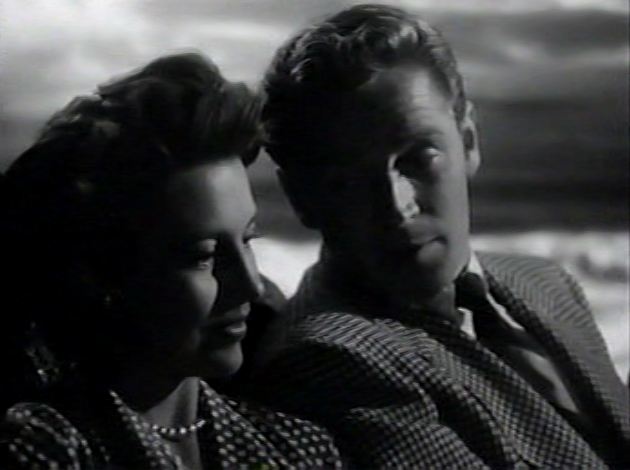
“This Happy Feeling” (1958) is a slight comedy, but viewed from a certain perspective, reflects a watershed in the careers of some its cast. The most curious aspect of a screen actor’s career must be that weird immortality granted by one’s image preserved on film. As much a curse as it is a blessing: most actors have a film or two they’d like to forget. Would they look back in hindsight upon this pleasant, though weak film with a sense of wonderment about what happened next in their careers and their lives?
The answer to
Monday’s picture trivia about the trio taking the stage bow are: Troy Donahue, Curt Jürgens, and Alexis Smith. This curtain call happens at the end of the movie.
The movie may be slight, but this post is still going to be long. You should have left in the first paragraph. Now it would be just too socially awkward to leave.
Curt Jürgens and Alexis Smith are veterans of the New York stage, and casual lovers. We begin with Mr. Jürgens meeting Miss Smith for lunch at a fashionable New York City restaurant, where he spies young Mr. Donahue, an up and coming actor, mobbed by fans. This sets up the simple message of the film: a generation gap. The old usurped by the young, both professionally in the theatre at this time, and personally.
Mr. Jürgens has given up the stage for a quieter life breeding horses on his Connecticut farm, much to the consternation of Alexis Smith and agent Hayden Rorke. Rorke began his film career, as more than a few men of his generation did, as an extra in
“This Is the Army” -- have a look at this previous post. You may remember him as the Colonel in “I Dream of Jeannie” on TV in the late 1960s.
Rorke and Miss Smith try to entice Jürgens with new play in which he will portray Troy Donahue’s father. Talk about salt on a wound.
Rorke and Smith down their cocktails anxiously when Jürgens asks about his part in the play.
Debbie Reynolds is the star of the movie. Even so, and even with the company of Troy Donahue and a very handsome (and very natural actor) John Saxon, the generation gap of this movie is told mainly through the viewpoint of Curt Jürgens, which is unexpected, considering this is a Debbie Reynolds vehicle. He is at times curmudgeonly, at times displays a more virile screen image than the younger men. He has some very intelligent lines to say about the matter of aging.
I also find the presence of Alexis Smith, and Mary Astor as John Saxon’s mother, punctuates the generation gap message in this movie in ways that went far beyond the script, and I think, the intention of the director. The four principal ladies of “This Happy Feeling” tell a lot about Hollywood and the aging process. More about that later.

The director, and writer of the screenplay, is Blake Edwards, long before his fame from the series of “Pink Panther” movies. He’s given us a script (based on a stage play) that has many good lines, but some conflict happens off screen, which only weakens the story, and there are many moments where dramatic intensity builds only to fizzle out. They refer to the playwright by name, but we never meet her. There are also a lot of one-sided phone conversations, which can be a problem. The movie was shot in CinemaScope. Some nice angles, but also some sloppy shots with actors obstructed by table lamps. Few closeups, which is maddening. Closeups didn't always look good in CinemaScope.

In this shot, you see Alexis Smith and Mary Astor seated at a café table outdoors, and the center of our attention is the pole between them holding up the umbrella. A composition problem not entirely due to pan and scan -- though the print I’ve seen, and these screen caps, are from a “pan and scan”, and that really does account for some of the awkward images, obviously not the director’s or cinematographer’s fault. I’d like to see what it looks like reissued in letterbox. Don’t know if that will ever happen. I don’t think it’s on DVD.
I think CinemaScope was more wide perspective than we needed for a movie that takes place mostly in bedrooms.
Speaking of bedrooms, this movie seems like one big pajama party. Curt in his jammies.
Debbie in Curt’s jammies (see our post here on
Women in Men’s Jammies).
John Saxon talking on the phone in his own jammies.
Debbie in her own jammies, later on a nightgown.
Okay. Enough stalling. Here’s the plot. (“Now with 10% more spoilers!”)
Debbie, a receptionist for a dentist, is taken to a house party by her boss, played by Joe Flynn. (Like Hayden Rorke noted above, a 1960s TV military man -- you probably best remember him as Captain Binghamton on “McHale’s Navy”.) He’s had too much to drink and starts to paw her in the library. This is one of those movie sets where a living room looks as large as a museum gallery.
John Saxon, a strapping lad, is also a guest at this party. He lives down the street. He comes to Debbie’s rescue when she asks him to drive her to the train station so she can go back home to Brooklyn.
I like how he refers to the train not as “the train”, but as “The Hartford, New Haven and New York”. Grand old railroad. You see the logo on the side of the passenger car in another scene when Curt Jürgens takes her to the train. This part, at least, must have been filmed in Connecticut.
It is pouring rain, and when Saxon suggests she get out of her wet clothes, she goes berserk, jumps out of the car, runs around screaming, falls in a brook, and ends up a couple doors down at Curt Jürgens’ place.
“You are staining my beautiful carpet as no dog would dare to stain it!” He also suggests she get out of her wet clothes, and she goes berserk some more. Eventually, she is calmed by brandy, and spends the night in his guest room.
He invites her to become his secretary and live here at his horse farm. Her living at the farm is the talk of the neighborhood. We are told. We never actually see scenes of malicious gossip, so it doesn’t really have as much punch as it should. Debbie Reynolds begins the movie in such a shrill, overly dramatic way that she seems only annoying and we lose sympathy for her. She has to fight to get it back, but since the generation gap story is told from Jürgens’ viewpoint, he really becomes more sympathetic than she.
Jürgens and Saxon, who are neighbors, have a nice father-son relationship that becomes adversarial when they both pursue Miss Reynolds.
Continually hammered at both as an actor and as a man about his age, he begins to consider the idea of the pretty, young Miss Reynolds as a romantic partner. She has a crush on him, so it wouldn’t take much to woo her. However, at the 11th hour, Curt decides that the whole thing is inappropriate, and he discourages her from any romantic notions with a cute scene wherein he recites lines from a play he has done. She has no idea that his “goodbye” is a well-rehearsed performance.
So pleased with his success, after he leaves her he takes a ceremonious actor’s bow, and seems to hear applause in his imagination. We want to pat him on the back, too.
He decides to return to the theatre and play Troy Donahue’s father. That he leaves Debbie Reynolds to John Saxon and goes back to the worldly Alexis Smith is probably the best thing about this movie. So many films of the late 1950s give us the rather icky scenario of aging Hollywood actors paired with ingénues, and it seems for a while it’s going to happen again here. A pleasant surprise.
A few good scenes:
When Curt Jürgens dismisses the new generation Method actors, he spits invective, “I just don’t
dig it.”
He complains, “The theatre has changed…This is the age of dirty T-shirts and motorcycle jackets. It’s a whole new breed of
cat. An entirely new set of requirements. If you don’t know Method or the intricacies of a new role, psycho-schizoid personality, and how to mumble, slouch, and pick your nose, you haven’t got a chance.”
(I’ve long wanted to do a post on actors from Hollywood’s Golden Age working in 1960s films, but I’m still gathering suspects. Maybe later on this year.)
Estelle Winwood plays Mr. Jürgens’ housekeeper, who wanders around slightly intoxicated, cigarette dangling from her mouth. A seagull, which she has mistakenly shot, follows her around with slavish devotion. He frequently eavesdrops on the conversations of the other actors.
Lots of pretty stuff to look at. Cocktail parties with squared-off handkerchiefs in the breast pocket. Smoking jackets, and breakfast on the terrace. A black tie country club dance. (Where one of those Connecticut clubwomen who talks between clenched teeth in that supposedly upper crust manner compliments Jürgens’ rhumba as “wicked”. Good Massachusetts girl than I am, I must correct this line. It should be “wicked good”.)
A running gag on Jürgens throwing out his back. Miss Winwood vigorously employs some torturous chiropractic maneuvers to cure him (while he is in his jammies), which leads to a reference to the Mau Mau Rebellion going on in Kenya at that time. I was pleased, as I always am, to find a topical reference in the movie -- but I was disappointed they did not cut to a shot of the Mau Mau rebels talking on telephones, wearing Curt Jürgens’ pajamas. Felt like I was led down the garden path on that one.
Jürgens’ home, even though placed in Connecticut does not, for once, look like a Hollywood version of a cutesy “colonial farmhouse.” There are some equestrian trophies around the place, but it’s mostly modern furnishings and architecture. It looks like a 1960s TV sitcom home. I love his great, big, burgundy convertible. Anybody know what model car this is? John Saxon calls it a “$10,000 buggy.”
A good shot is when Alexis Smith opens the door to leave Jürgens’ house, and the seagull pops in. I wonder how many times this had to be done in order for her to say her line “On a day like this, why aren’t you at the beach?” while he waddles around her and hits his mark directly in the foreground. Good timing. Pros, both of them.
As they await their curtain call, Alexis Smith invites Jürgens to a private “bacchanalia” at her apartment after the show. He accepts with a pat to her bum just as the curtain opens. Then they become different people, both more humble and more superior, taking their bows with all the dignity due to an actor on stage. Even Estelle Winwood instantly assumes that pretend dignity when taking a bow -- caught onstage trying to retrieve her wandering gull.
Now to the real-life generation gap, though perhaps not a gap as much as a series of cracks that eventually swallows careers. Unless one can leap over them.
According to the
American Film Institute website, this movie was shot from September to November 1957, released in June 1958. Debbie Reynolds was pregnant during the filming, her son born February 1958. One may assume it was a good time for her, a new baby, a flourishing film career, her song “Tammy” from the film of the year before, “Tammy and the Bachelor” soared up the charts as the number one hit.
By the end of 1958, however, she and her husband, Eddie Fisher would separate. They divorced the next year over his affair with Elizabeth Taylor, all conducted in a most painfully public manner.
She had played ingénues for years. Twenty-five at the time of this movie, she was probably too old to continue convincing us of her innocence. In the movie, she coyly asks Jürgens to guess her age. He needles her by suggesting she is 30, or 32.
“It’s a lie!” she bristles. Kiss of death, to be sure.
"Seems odd to note that Debbie Reynolds in 'This Happy Feeling" will be
supported by such veteran actresses as Mary Astor, Alexis Smith and Estelle Winwood..." wrote columnist Danton Walker just before the film's release (
Reading Eagle April 11, 1958).
Alexis Smith, some 11 years her senior, but still only 36 during “This Happy Feeling”, is plunged prematurely into that awkward abyss between starring roles and character roles. However, as was typical with Miss Smith, she outshines the lead, and makes her handful of minutes in this movie count. When Debbie Reynolds becomes smitten with Curt, Alexis assumes the jealous other woman part, but her jealously is tinged with bemusement. Her sexuality is adult, and classy. She is more playful than competitive, and always far more riveting.
She has a brief scene on the phone, talking to Jürgens (not the Mau Mau rebels, dang). She tries to entice him to come to her apartment.
“I built a fire and I’m sort of glowing,” a purr wrapped around a giggle, lying on throw pillows strewn before the fireplace. She’s a volcano in color-coordinated chiffon neck scarves. Ice princess? I should say not.
Another scene where she meets Debbie for the first time: Debbie, in Jürgens’ pajamas (of course), is greeted archly, with suspicion by Alexis, seated on the couch. When the interaction between them becomes more prickly, Alexis stands, unfolding herself to her full height, towering over the petite Miss Reynolds.
It’s a comical image, (I wonder if more funny than the director intended?) but though Debbie looks her usual adorable self in oversized pajamas, striving for dignity among these sarcastic theatre types, she really loses out in the contest. Alexis, just by standing up, looks superior, emotionally, psychologically, and physically. Positioned between Jürgens and Smith, Debbie Reynolds seems like a little girl, their daughter, and represents more a problem child than a romantic rival.
Another funny Smith scene, for its unexpectedness, takes place at an equestrian competition. (How Reynolds could fail to notice dashing John Saxon in those riding clothes is beyond me. A fine broth of a boy.) Debbie sees Alexis standing among the audience, and politely nods to her.
The camera cuts to Alexis sticking her tongue out at Debbie. So much for classy, but it’s a hoot.
Alexis’ next turn at bat on screen would be an even smaller role in “The Young Philadelphians” the following year. She would not return to the movies until the 1970s, after a stint on Broadway made her a star again. Wait for it….
see this previous post.
Though Curt Jürgens owns this film, we might say it did more for the career of another gentleman not even in the movie. This is Craig Stevens, the husband of Alexis Smith. He visited her on set, and met director Blake Edwards. When Edwards cast his hit TV show that debuted in 1958, “Peter Gunn”, he offered Mr. Stevens the lead role as the suave private eye. It lifted Stevens’ B-movie career out of the doldrums.
Troy Donahue, the heartthrob in this movie, has no lines. He’s just an ornament to represent the New Actor. His career was definitely on the ascendant; his day would come. Soon.
Debbie Reynolds made only one film in the 1970s, as the voice of Charlotte in the animated feature “Charlotte’s Web” (1973). However, like Alexis, she also had some good luck with Broadway. The fading 25-year old ingénue and the fading 36-year-old actress in her prime of 1957 would come to have more in common professionally than either realized at the time. So it is -- with either carefully, or clumsily-woven acting careers -- it doesn’t matter. The clock ticks on.
Mary Astor, who won the Best Supporting Actress Oscar in 1941, is the most poignant example of the generation gap played out by the ladies of “This Happy Feeling.” She was 51 when this movie was filmed, but seems like a dowager in her brief scenes. In her day, she had played both ingénue and sexy mature other woman; now looking older than her years, heavier, and somewhat lost among the smart alecks around her. Estelle Winwood, her senior by 23 years, creates a bigger bang.
Miss Astor was busier these days writing. In 1959, she published her autobiography, “My Story”, which frankly discussed her tumultuous private life, though not a lot about her career. She made that one telling, now famous, observation:
“There are five stages in the life of an actor: Who's Mary Astor? Get me Mary Astor. Get me a Mary Astor Type. Get me a young Mary Astor. Who's Mary Astor?”
Along with her autobiography, she penned several novels. In 1971, the year Alexis Smith conquered Broadway in the musical, “Follies”, Mary Astor published her second volume of memoirs, "A Life On Film".
Who's Mary Astor? She more than answered the question.
In that same year, she went to the Motion Picture & Television Country House, a retirement home for members of the film and television industry. She was 65 years old, frail from a heart condition. She spent the rest of her life there.
Estelle Winwood, who played oddballs more often than not, broke the mold in real life, too. After a stage career on London’s West End, she began in films in her 50s, and was 74 years old at the time of this movie. She was still making movies in the 1970s. She died in 1984 at 101 years old.
It’s good to have an anomaly from time to time. It keeps the usual familiar statistics about loss of appeal, loss of prestige, loss of health, loss of earning power as we age at arms’ length. Where they belong.
Then again, as someone who spent “This Happy Feeling” being trailed by a seagull, Miss Winwood, like a lot of screen actors, may have felt that immortality was for the birds.