IMPRISON TRAITOR, PEDOPHILE, AND CONVICTED FELON TRUMP.

Monday, February 6, 2012

Curtain Up, Light the Lights


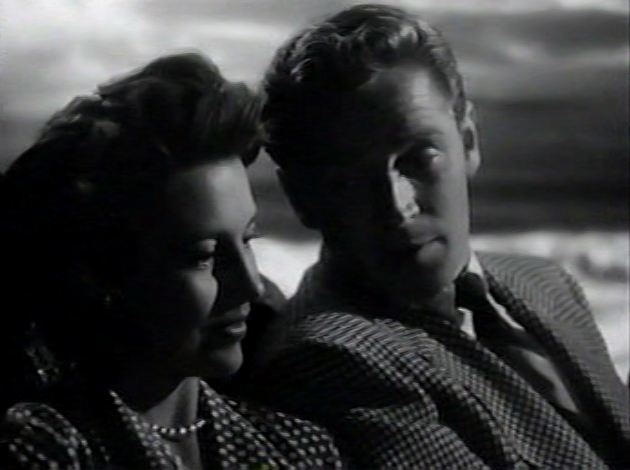
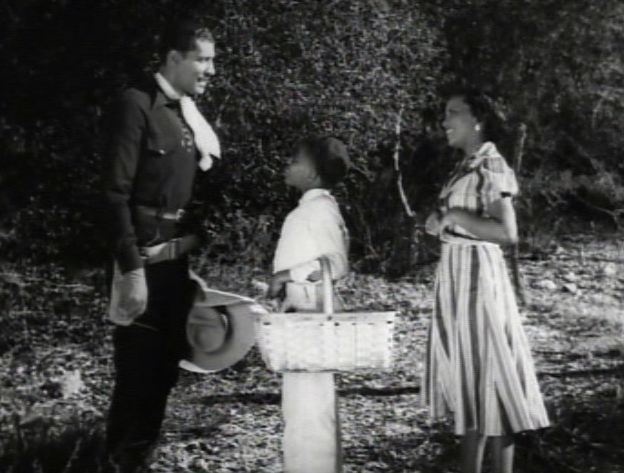
Can you name these three actors and this move?  We'll be talking about it on Thursday. 


See you then.  (Applause, applause, applause.)

Thursday, February 2, 2012

Tension - 1949


Tension (1949) stretches the limit of tolerance in the rocky marriage of a mousy pharmacist, and becomes the plaything of a savvy detective solving a murder.

Actually, it’s the rubber band that’s the plaything of Barry Sullivan as the detective. He uses one as a visual aid in the first few moments of the film, breaking the fourth wall, speaking to us directly. He tells us that by manipulating tension, he breaks down criminals.

“Everybody’s got a breaking point.” At several points in the film, he takes out another trusty rubber band and stretches it in his fingers to remind us.

Plausibility is stretched, too, at times, but it’s a fun movie as a post-War period piece, and for the careful, deliberate way we see a one man walk to the precipice of doom, and then make a choice. This is Richard Basehart, a really fine actor especially adept at fragile, sensitive men struggling with inner turmoil. The first half of the movie belongs to him. We don’t even see Barry Sullivan again until the second half. The first half sets up the crime, or what we think is going to be the crime, and the second half follows Mr. Sullivan’s actions to solve it.

Mr. Basehart is Warren Quimby, a mousy name for a mousy guy. He works the night shift at the all-night drugstore in a post-war southern California where suburban sprawl is pulling highways after it like a loose thread unraveling. Where Malibu beach houses are inevitably the scenes of trysts, and murder.


Basehart is married to Audrey Totter, whose bread and butter in those days was B-noir bad dames. She sulks, she pouts, and holds out for what she wants, which is always more. She goes to the movies at night while her husband works, and gets picked up by guys with flashy cars, and by one guy in particular. He is Lloyd Gough, a liquor salesman in a pinstripe suit and a perpetual cigar clamped in a plastic tip between his teeth. She calls him a big man, and he thinks he is.

Mr. Basehart worries about his wife being alone -- or rather, not being alone -- while he is working. Calls the movie theater to see when the show ended, checking up on her. Fears that when he goes upstairs to their little apartment she won’t be there some night. We might think him a fool and deride his obsession with a woman so unworthy of him. But, that is because we are the audience and we are omniscient. When she enters a room, we hear the blaring, bluesy saxophone music that is her signature. In old movies, a sax equals sex, and a saxophone follows her everywhere.


She flirts with her husband’s employee, played by Tom D’Andrea, a stalwart palooka who mans the lunch counter at the drug store. Though he always respectfully refers to Basehart as Mr. Quimby, we might conclude he is his only friend. Mr. D’Andrea has no use for the boss’s wife. He sees her for what she is, a woman who does not finish her hamburger, and pushes it aside for pie with whipped cream on it instead.

Nice girls finish their supper before they have dessert.

But Basehart dotes on her. His puppy dog devotion is tested constantly, and only once does he seem to bristle under her rudeness. This comes when he surprises her with a ride to a housing development where he has put a down payment on a tract home. The treeless, orderly suburban subdivision is dotted with identical modern ranch homes. His handsome, boyish face beams as if he is offering her Shangri La. She won’t even get out of the car. When he counts off the selling points, including a dishwasher, she leans on the car horn over his talking, like a petulant teenager who refuses to listen to what she does not want to hear.

For a moment he turns and glares back at her, and we wonder if he finally sees how contemptible she is.

But, obsessions make us helpless.  He shuts up and gets dutifully back in the car. He has lost our respect. He never had hers.

One night all that’s left on their bed in the apartment above the drugstore is her doll with the frozen expression on her porcelain face, much like Audrey Totter’s perpetual scowl is chiseled on her pretty pale, porcelain countenance.

When she returns, it is only to pack. She and her dolly go to live in the liquor salesman’s beach house.

But Richard Basehart can’t let go. He goes to the beach, stomping in his loafers on the sand to ask her to return. He is such an annoying pest -- even we have to admit it -- that Liquor Salesman Lloyd punches him from here to next Tuesday. When Basehart retreats, his glasses broken, the “big man” calls him a four-eyed punk.

By the way, if you don’t want spoilers, you should have gotten off at that last exit.

Mr. Basehart goes to the eye doctor and gets a new pair of spectacles. They cost $5.

Five dollars. In a word, cripes.

Then Basehart begins to work on a germ of an idea of killing Liquor Salesman Lloyd for humiliating him in front of his wife.

It’s a plan worked out carefully, with us in on his thought processes. He decides to create a fake identity, and have that fake person do the killing, and then fade away into nothing. He goes back to the eye doc for a set of contact lenses, because he has seen a poster there that announces contact lenses will make him a new man.

He chooses a fake name, a fake profession as traveling salesman, and rents a furnished apartment in another part of town. He will live there only on weekends to lay down an alibi. It’s a logical process, and it’s interesting that his crime of passion can be so purposeful and practical. It says a lot about his character, a little man who plods along, works hard, and plans his future with precision. His passion now isn’t really for her; that’s dimming fast. His passion is for taking his methodical personality and using it for one big showy deed.

But his plan begins to unravel, like the miles of California highway, but the unforeseen complications turn out to be a good thing. He doesn’t see it at first, but eventually he will.

Foremost among the unforeseen complications is his new neighbor, played by Cyd Charisse in a non-dancing role. She is quite literally the girl next door, wholesome, winsome, elegant in her very fresh-faced appearance, and falling fast for the quiet little guy in contact lenses. He wishes for, more than succumbs to, the idea of a life with her. He holds himself a little aloof because he has a nasty job to do, and he thinks maybe he still loves his wife. He is afraid of getting too close to the lovely Cyd, and does not want to involve her in what he is beginning to see is a real mess.

But Basehart is a man who finishes what he starts, so he finally picks the day to go kill Liquor Salesman Lloyd.

A very dramatic scene, and nicely played out, is when he slips into the darkened beach house at night and finds Lloyd Gough asleep in a chair. He is alone. Perfect. About to impale him with an implement from the outdoor barbecue (which Lloyd had threatened him with earlier -- Basehart is keen on the fine details of revenge) -- Basehart suddenly notices Audrey Totter’s dolly on the table.

Audrey isn’t here.

Audrey isn’t here.

The scales fall from his eyes, and Richard Basehart sees she has taken a night off from Liquor Salesman Lloyd to pursue, or be pursued by, another “big man.”

Lloyd wakes, stunned to see Basehart about to jab him with a very large pointy thing. Basehart gets his revenge, but in a way he never expected. Like the old saying, the best revenge is living well.

“I must have been crazy. She’s not worth it. If it hadn’t have been you, it’d be some other guy.”

He gloats over Lloyd, who we see is clearly humiliated that she’s bored with him already.

“She’s all yours,” Basehart says with a sneer, and we can sense the weight off his shoulders and the rejoicing in his soul now that he is emotionally and psychologically free of that rude woman who doesn’t finish her hamburgers. Now he is free to love Cyd and start his life over.

Until the moment he’s shaving the next day, and Audrey Totter shows up in his bathroom mirror. We can hear the sax.

She is loving, contrite, and wants him to take her back.

Liquor Salesman Lloyd has been found murdered. Mr. Basehart’s nightmare is only beginning.

Barry Sullivan, and his rubber band collection, finally returns -- we had forgotten about him -- and he brings his partner, William Conrad, to solve the crime. Always fun to see William Conrad.

The rest of the movie is his show. We saw the crime plotted in the first half of the movie, and Sullivan dismantles the scenario in the second half. It’s a very interesting telling of a story, if a little hard to swallow here and there, including Sullivan’s phoney romancing of Audrey Totter to trick her and keep her off balance.

Some things I like:

First of all, the drugstore. I know the exteriors were shot in and around Culver City and Malibu, but I don’t know where. Film locations are Robby Cress’ specialty. If you haven’t seen his blog, check out Dear Old Hollywood here.

I don’t know about the interior of this drugstore set. My gut feeling is it’s a real store, because it is so wonderfully packed to the gills with everything a drugstore sold at that time, with the lunch counter and the somewhat worn-looking diamond pattern of floor tile. It almost seems too detailed for a set on a soundstage. But I don’t know.

I like how when Basehart is searching for a fake name for his new identity, he picks the surname Sothern, because he sees Ann Sothern on the cover of "Screen Digest” magazine.

A young boy of Asian ancestry, and a pretty young African-American woman are among the patrons having their prescriptions filled by Basehart. They are minor roles, but these two individuals should be noted for their not being stereotypes. Also, William Conrad’s name is Edgar Gonzales; we see a police detective with a Spanish surname, also not stereotyped. These three characters are presented naturally, as being all-American, and that is perhaps what is most effective.

Note when his friendly and ever-talkative counter man sidles up to Basehart with the newspaper, commenting on the news, “They’re still at it, trying to figure out who owns Germany, who owns the atom bombs…” See our series on Uneasy Victors about America’s involvement in post-War Germany as seen through the movies -- A Foreign Affair, The Big Lift, and Judgment at Nuremberg.

Most especially, I love the scene where Barry Sullivan takes Cyd Charisse to Basehart’s drugstore. She still thinks he is her Paul Sothern - neighbor, and prospective husband. She does not yet know he is Warren Quimby, murder suspect. When her sweetie seemed to disappear into thin air, she notified Missing Persons and gave them a photo. Through that action, the police were able to identify Warren Quimby as Paul Sothern, the man they were looking for in the murder of Liquor Salesman Lloyd.

Basehart’s not arrested yet, but he knows he’s being watched. It’s a wonderfully tense scene when Barry Sullivan, who just loves messing with people and causing TENSION, “introduces” Cyd to Basehart under the pretense of stopping in for coffee at the lunch counter. Both are shocked to see each other, Cyd is even more shocked to see him wearing his $5 glasses as Warren Quimby, Pharmacist and Murder Suspect.

But neither acknowledges they know each other. They pretend to be strangers while Sullivan plays them like a fiddle, also pretending not to know they are connected. Miss Charisse and Mr. Basehart want to protect each other, and struggle with their emotions. Sullivan needles them both a bit, especially Cyd, when he rapturously talks about Basehart’s gorgeous wife.

We wait for Cyd Charisse to lose it, hurt or outraged to learn that her boyfriend is already married -- which is even more insulting than being a murderer, too.

But, she’s too much a lady. She swallows her distress, and play acts disinterest.

At one point Cyd, deeply offended by Sullivan’s manipulation, tells him off without ever admitting she knows Basehart. Then in a rising voice as she’s about to stomp out of the place, she turns to Basehart,

“And you do make wonderful coffee!” What she means is I’ll never betray you no matter what, but that’s what comes out of her mouth. Exquisite.

Another fun scene is when Barry Sullivan pulls a similar trick on Audrey Totter. He brings her to Basehart’s furnished apartment and tells her Basehart’s been romancing the neighbor lady. Audrey is no Cyd, and she blows her top in an instant, furious at the thought that the husband she had been two-timing was two-timing her.

“Why that four-eyed little pill pusher!” She is deliciously jealous. She tells Sullivan all about how Basehart murdered Liquor Salesman Lloyd.

Now Sullivan has everyone where he wants them, and pulls one final stunt to unmask the murderer, because so far all he has is hearsay and his gut instincts.

Audrey Totter’s final exit is accompanied by the sultry notes of a sax.

A saxophone never plays like that when I enter or exit a room. I wish it would sometimes.

I have only two questions about this movie. One, the reason for the murder is never really explained, or else I missed it.

And how does Audrey Totter manage to keep such a slim, tiny figure with all those burgers and wedges of pie with whipped cream on them? There’s a shot of her in those high-waisted trousers of the day that is quite stunning.

Maybe it’s because she doesn’t finish her burger.

*********

Monday, January 30, 2012

Running Board Answers

Thanks so much for those who wracked their brains to come up with some answers for our look at running boards last Thursday, and well done.

Yes, the publicity photo is Joan Crawford back in the early days of her career.

A - “Conflict” with Alexis Smith and Charles Drake (I can never fool Caftan Woman). This is one of my favorite scenes in the movie, only because they are both sitting on opposite running boards. Yes, I am that easily pleased. Have a look here for our previous post on “Conflict.”

B - The Three Stooges in “How High is Up” (1940). This was one of my favorites in childhood because they lived under their car. Yes, I am that easily pleased. They are tinkers by trade, but find themselves accidentally hired to work as riveters on a construction site.  Only if you are a fan of the Stooges will this make any sense.

C - This one wasn’t quite fair of me. I don’t know the actor sitting in frustration on the running board, but it’s from the Laurel and Hardy short “Highway Havoc”. The unknown gentleman and his companions are only a few of many motorists in a highway traffic jam made worse by the boys.  If anyone had actually been able to answer this one, I would have turned over the keys to this blog.

D -Fred MacMurray in “Remember the Night” (1940). Must have been a good year for running boards. Have a look at our previous post here.

Thursday, January 26, 2012

On Running Boards


Oh, running boards, how wonderful they were.  How stylish, and yet functional.  The above photo is not from a movie, but is a publicity shot.  Can you name the actress?

And while we're at it, name the following actors and actresses, and films, in which these famous running boards appear.  There are so many things you can do on a running board....

 a

Proposing marriage on dual running boards.  Is there anything in the world so romantic?


b

You can have your pals help you take off your sweater while you are sitting on a running board.

c

You can express consternation and your profound disillusionment with life while sitting on a running board.


d

Or, you can just milk a cow.

Truly, the possibilities are endless.

Monday, January 23, 2012

More Than a Secretary - 1936


“More Than a Secretary” (1936) is like a time travel adventure.  It is impossible to watch this movie about the editor of a fitness magazine without being reminded of the all-pervasive diet industry and social consciousness about health today.  The setting is1930s screwball patter, and man-crazy dumb blondes who connive to marry (or be kept by) their bosses. We travel back and forth through time in every scene, reevaluating our perspective, old and new.

Today’s post is part of the Comedy Classics Blogathon sponsored by the Classic Movie Blog Association. Have a look here for a schedule of the other participating blogs.

January, typically a month for resolutions about changing one’s life, and being deluged with diet and fitness ads and infomercials, is an especially fitting time to watch Jean Arthur try to change herself.  She runs up against the extremely high standards of George Brent.

Mr. Brent plays the editor of “Body and Brain” magazine, who runs his office and his personal life with the discipline of a professional health guru. In 1936, however, when this movie was made, he is seen as a freak. Much of the comedy is derived by sensible Jean Arthur’s bewildered reactions to his diet and exercise regimen.  He pulls raw carrots out of his desk drawer and chomps on them like Bugs Bunny.

Jean is the co-owner (along with reliable sidekick Ruth Donnelly) of a secretarial school. We first see them in their classrooms droning repetitious typing dictation for their students, who pound away at clunky black manual typewriters the size of Buicks. I must confess, I view this scene with some fondness. It is how I learned to type. That quick brown fox and lazy dog are old pals of mine.

In fact, considering how much I type and have typed through the decades since, that one semester of Typing 101 in high school was probably the most beneficial and practical class I ever took.

And working for so many years (ago) on a manual typewriter, I have fingers like Hercules. I continually wear out flimsy plastic computer keyboards. I run through them like Kleenex. I could crush you like a bug.

But Jean’s and Ruth’s students, or at least some of them, do not envision decades of typing, or any career at all. They are there to learn the skills that will get them jobs as executive secretaries to rich businessmen, and then marry them. Or be kept as mistresses.

This is student Dorothea Kent’s objective.

Dorothea Kent comes pretty close to stealing this movie.

She had a less than stellar career in B-movies as the dumb friend, but here her “Maisie” character, despite the high-pitched whine and clueless attitude, is really quite street-smart and self-sufficient. She knows what she wants, and she goes out and gets it. Also, coloring her dumb blonde act is a biting nastiness that makes her fascinating, even as you want to club her for her blatant rudeness to Jean. Her supposedly obtuse double entendres are perfectly executed. She blithely but with a spin of sophistication talks of the corporate head to whom she finally becomes…indispensible. “You’ll never know how he leans on me.”

Charles Halton plays the head man who eventually gets Miss Kent on a rent-to-own basis. He had a long career on screen as a fussy, humorless, officious type, but he began on the New York stage and had trained at the New York Academy of Dramatic Arts.

Ruth Donnelly, too, had spent her earlier years on Broadway, but came west as did so many when the Depression hit and movies became less demeaning to those on the “legitimate” stage. The two of them would spend their careers as bit players in a studio system which would guarantee them work as “types” but rarely challenge them.

For Jean Arthur, 1936 was a busy year. In this one year she did five movies. Along with this one there was “The Plainsman” (see our previous post here), “The Ex-Mrs. Bradford”, “Adventure in Manhattan” and “Mr. Deeds Goes to Town”. Each role was different, and we see that though the studio system could be something like a conveyor belt of sameness in roles for many actors and actresses, Jean refused to cooperate with studio head Harry Cohn enough times to forge her own mark on her career.

Here her portrayal is of the career businesswoman who falls for the boss -- exactly what she cautions her students against, preferring that they take the honorable tack of learning proper business skills.  She seems a more somber character than what we are used to seeing in her screwball roles.

It is as if she is still working through the transition of so many earlier roles where she played the sad but forthright heroine seeking love (“Danger Signals” 1930) or justice (“Party Wire” - 1935) to the working girl whose delightful sense of irony is her self-preservation (“Public Hero #1” - 1935) and (“If You Could Only Cook” - 1935).

The further along in her career she got, the more of the world’s troubles she took on her shoulders and she became the moral compass of screwball comedies. “Mr. Deeds” and “Mr. Smith” were ahead of her, but by then she would be ready for them.

Here she has George Brent, who might not seem like the answer to this frustrated businesswoman’s prayers.  We last saw Mr. Brent here in "My Reputation".   I think I really prefer him in light comedy to drama.  He has nice touch with slightly absurd characters.  Here, his delightfully serious naiveté, despite the science of his health beliefs, both maddens and appeals to her.

She visits his office because he has fired so many of her graduates. He is very demanding. He is pleased by her business suit and spectacles, thinking she is brainy and serious.  People who wear glasses are usually very brainy and also quite glamorous. 

What was I talking about?  Oh, yeah.   George.  Jean.  He mistakes her for another applicant, and brusquely runs her through a quick job interview. Intrigued, she decides to play along and take the job, and see what this weirdo is all about.

Much to the consternation of her business partner, Ruth Donnelly, who wonders why she would leave her business to take a lousy $25 a week job.

We see, before Ruth does, before Jean does, that she is smitten with George Brent.

He has a good role here, and plays it most charmingly. He is intelligent and disciplined, two qualities which Jean admires, being both herself, but he is also a little out of touch with the real world, and this is what mystifies and intrigues her. Soon, he grows dependent on her capability in the office, which compliments his own need for order.  It is not until very late in the movie that he realizes he loves her.

Jean has to jump through a lot of hoops before that happens. First, there is his confounding health regimen which he imposes on his staff. His right-hand man, Lionel Stander, a body builder straight from the gym, puts the office workers through morning calisthenics. Brent opens the windows and breathes deeply, ordering Jean to follow along with deep knee bends and provocative lunges.


He treats to her a lunch of a bran muffin, and a vegetarian supper. I think my favorite line is when, half-starved she buys groceries on the way home and, tired about hearing how her regular diet is bad for her, plucks an enormous raw steak out of her shopping bag. Just before dropping it in the frying pan, gives it an enthusiastic kiss,

“Steak, come kill mama!”

Much of George Brent’s health regimen is used for comic effect, too ridiculous in 1936 to be taken seriously. Today, in a US where obesity has become common, many people watching this film now probably are on diet restrictions for various medical concerns. What was once freakish became fad, and now has become a matter of life or death for a lot of people.

Another facet of George Brent’s rigid outlook is his refusal to use images in his magazine that are sexual. He is a proponent of bodily grace and physical perfection, but the idea of using cheesecake to illustrate his articles is abhorrent to him. Jean has to turn him around on this one and convince him that a little glamour will sell more magazines.

Today, our magazines images (as well as articles) are examples as to how sex sells. Poor George would be aghast.

But George’s modern ideas on health and Victorian ideas on how to sell it are only the least of Jean’s problems. Dorothea Kent comes back into her life with a vengeance.

Her boss, whose wife is returning from Europe, must get rid of her for a while, and palms her off on the unwitting George Brent.  Mr. Brent hasn’t the sophistication to deal with so avid a man-chaser and so inept a secretary as our Dorothea. He is overwhelmed by her, and hasn’t the mettle to send her packing.

He succumbs to her…charms.


He makes Jean his assistant editor to keep both ladies happy, and Jean makes good at this new challenge, but is crushed that he now spends his days, and nights, with Dorothea. Dorothea has another good scene where she insults Jean through the sheerest gauze of innocence, “And you actually thinking you had a chance with him,” she laughs. You want to sock her.

Jean is more angry at herself for not being able to compete with such fluff. In her way, she is very much like George Brent, a lover of order and routine, a hard worker, and a social misfit. She quits, and there are layers to her disgusted remark to Brent, “You’re such a fool.”

Here George finally figures out he loves her and wants her back. He pushes the ambitious Dorothea Kent onto the big boss, Charles Halton.

A couple of fun period items in this movie - Brent’s Art Deco office furniture, and the trailer or “land yacht” Jean and Ruth buy to travel and start over.


Ruth exclaims, “If I’d known how much fun it was to quick work, I wouldn’t have slaved the last 18 years without a vacation.”

Jean shows us how not to park a car with a land yacht attached to the back of it.


I love George Brent’s look when Dorothea Kent returns unexpectedly just as Jean is about to come back into his life. It is a priceless expression of horror and dread. All he needs is one of Curly’s “Nyah, Nyah, Nyah” groans of anxiety to complete it.

The scene where, brooking no more nonsense, Jean (“The time has come.”) spanks Dorothea like the naughty child she is, and tells her that, “I can’t bear looking at you!” -- is a resounding moment of screwball retribution.


A cute ending, and one in which Jean finally gets to shed her somber mood, is when she’s about to explode and cut into Brent, but the morning calisthenics interrupt her. Like the other office automatons, when given the order by Lionel Stander to inhale and begin the stretching exercises, she unthinkingly extends her arms. Brent grabs her in a cuddle, and her “exhale” position is to wrap her arms around him.

See? Exercise is good for you. It makes you feel better.


Don’t forget to check out the other great posts in the Comedy Classics Blogathon.

Saturday, January 21, 2012

Off Topic - Book Sale

This is to announce that TODAY and TOMORROW only, my time-travel adventure novel MYTHS OF THE MODERN MAN will be FREE exclusively on Amazon.com.  This is an ebook, which can be downloaded to your Kindle or your computer via Kindle PC software (which is also free from Amazon).    Read a couple reviews here at the Library Thing website.

Thursday, January 19, 2012

Comedy Classics Blogathon


This is to announce next week's "comedy classics" blogathon, sponsored by the Classic Movie Blog Association. 

On Monday, we're going to take on "More Than a Secretary" (1936) with Jean Arthur, George Brent, Ruth Donnelly, Dorothea Kent, and Lionel Stander.   Jean plays the owner of a secretarial school who becomes the secretary of the editor of a health magazine.  It's typical 1930s screwball, and yet curiously far-seeing when we get a load of editor George Brent's healthy lifestyle.

Visit the Classic Movie Blog Association website here for a list of the other participating blogs.

Monday, January 16, 2012

Two-Gun Man from Harlem - 1938


Two-Gun Man from Harlem (1938) creates a world for us that is both strange and familiar, an image placed over another image. We see a separate world, but it is our world and we are at home here, even if we are not cowboys, even if we are not Black, even if we are not white.

This movie is one of a handful of B-westerns starring Herb Jeffries, and the first of a series of three featuring him playing the cowboy called Bob Blake. We discussed Mr. Jeffries in this previous post, how his stature as The Bronze Buckaroo, the Singing Cowboy of the Black Cinema in the 1930s put him on par with the likes of Gene Autry and a posse of others who were all white and all more famous.


The Bronze Buckaroo traveled in somewhat different circles. He rode the range in movie houses that played to African-American audiences. General audiences, i.e. theaters where patrons were either mostly white, or, as in the South, all white, were not shown these films.

They missed out on something big, those white patrons. A simple message a lot of them would have to wait another 20 or 30 years to hear, and under much more turbulent circumstances. If they had only seen Herb Jeffries riding into town on his white horse to save the day, heard him sing “I’m a Happy Cowboy”, one wonders if the battles for social justice fought in the streets and on the back of the bus, and at the lunch counter would have been necessary.

Not that Two-Gun Man from Harlem was the greatest movie in the world. It wasn’t even the greatest movie in the small neighborhood movie houses where it played. It was typical B-western.

That is its charm, and the very magic of its power.

Herb Jeffries is the hero. We know that because he’s jaw-droppingly handsome, he’s taller than everybody else, and he wears a white hat. He’s no great actor - none of the singing cowboys were, although in this movie he gets to play a dual role. As the gunfighter “The Deacon” he looks like he’s having a blast.

Manton Moreland is his shorter, funnier brother. He is sly and loyal, and a lot smarter than most cowboy sidekicks. He tells a story to divert the bad guys, about Lot’s wife. Only in his rambling version, Salt Lake City is the result of the biblical curse.

Mae Turner is the ranch owner’s wife, who is unfaithful and tries to lure our Herb. Failing that, she frames him for murder. Unlike most of the other awkward and wooden performances here, Miss Turner had stage training at the University of California, and played Lady Macbeth among her professional roles. She knew how to do evil ladies.

Spencer Williams, who would go on to write and produce in Black Cinema, played Butch, the bad guy who did the bidding, for a hefty fee, of Clarence Brooks. He gives a quite natural performance and has great screen presence.

Mr. Brooks played the head bad guy, a man of means and just plain mean. He tries to buy the love of the beautiful young ingénue, played by Marguerite Whitten. He is as oily as Snidely Whiplash.

Miss Whitten is the guardian of her younger brother, Matthew “Stymie” Beard, who you’ll recognize as one of the Little Rascals. Here, he’s a funny, talkative, know-it-all kid who hero-worships Herb Jeffries.

And who wouldn’t?

That’s all pretty standard for a B-western. The writing is stilted and corny. The acting isn’t the best. The production values are distinctly low budget. Even the fight scenes are funny because they lack proper choreography, and the sound effect of the punching sounds a lot somebody slapping a tennis ball against a garage wall.

But look again. Jess “Jesse” Lee Brooks, one of the finest actors and singers of his generation (see this previous post with a clip of his “Let My People Go” in “Sullivan’s Travels”), plays the sheriff.

He is a man of authority, no-nonsense, steely-eyed, but fair. You can put your life in his hands. He always gets his man.

Films exhibited for “general” audiences did not show dark-skinned sheriffs. Nor dark-skinned rapacious landowners paying off henchmen. Nor dark-skinned cowboy heroes.

Which is why when offered a chance to “pass” in the movies, light-skinned Herb Jeffries, who was of mixed African and European heritage on his father’s side, and Irish on his mother’s side, refused. He did one better and wore darker makeup on screen. Mr. Jeffries reasoning was:

"In those days, my driving force was being a hero to children who didn't have any heroes to identify with," Jeffries says in a quote from his website. "I felt that dark-skinned children could identify with me and, in The Bronze Buckaroo they could have a hero. Many people don't realize (to this very day) that in the Old West, one out of every three cowboys was a Black... and there were many Mexican cowboys, too."

The familiar image of the B-western types: the hero, the villain, the pretty girl, the hero-worshiping little boy, and the loyal sidekick, they are all played out here by Black people. African-American audiences could enjoy the same storybook sagebrush fare as the “general” audiences without fear of being demeaned or stereotyped, this time.

White audiences, however, missed out on a revelation. The hero, the villain, the pretty girl, the hero-worshiping little boy were all people they knew very well. They saw them all the time at the movies.  The only difference -- the only difference -- was skin color.

About ten minutes into the movie, one sees that is no difference at all.

Powerful stuff, and not what some people wanted to hear.

For more on Herb Jeffries, have a look at his website.

Wishing you a meaningful Martin Luther King, Jr. Day.

Related Products